‘Reel master’ Rahul Gandhi responsible for disruption in House, says BJP MP

'Reel master' Rahul Gandhi responsible for disruption in House, says BJP MP
The BJP has criticized opposition parties for disrupting parliamentary proceedings

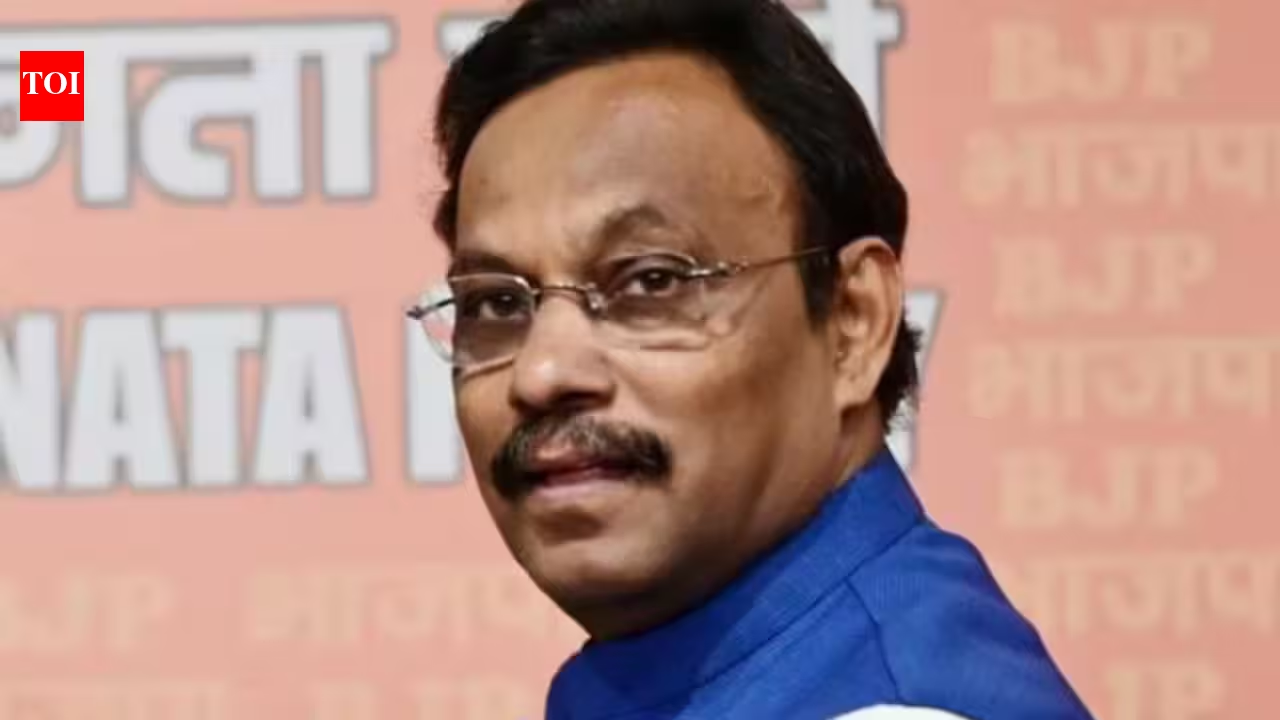
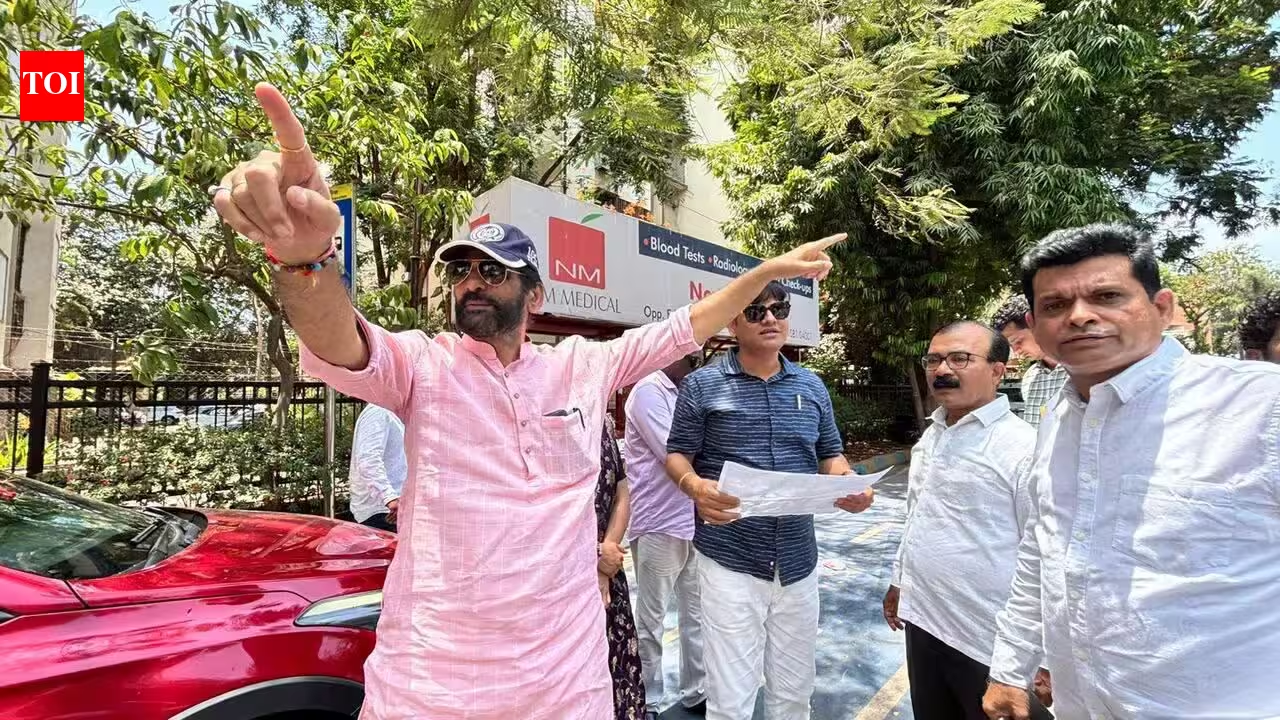
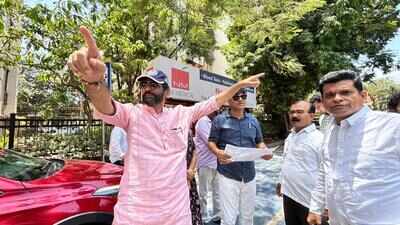
MUMBAI: The BJP has slammed opposition for disrupting Parliament and demanded opposition leader Rahul Gandhi take financial responsibility for wasted parliamentary time. BJP Rajya Sabha MP Vinod Tawde termed Gandhi a “reel master”, holding him responsible for the disruption.CM Devendra Fadnavis said the opposition does not have the courage to face Parliament. “They are bhagode (fugitives). If they had faith in the Constitution they would have been holding discussions.”Tawde expressed disappointment over monsoon session being a washout. He pointed out House could only function for 39 per cent of its time.

Marathi mandate for drivers sparks debate over penalties and livelihood

Marathi mandate for drivers sparks debate over penalties and livelihood
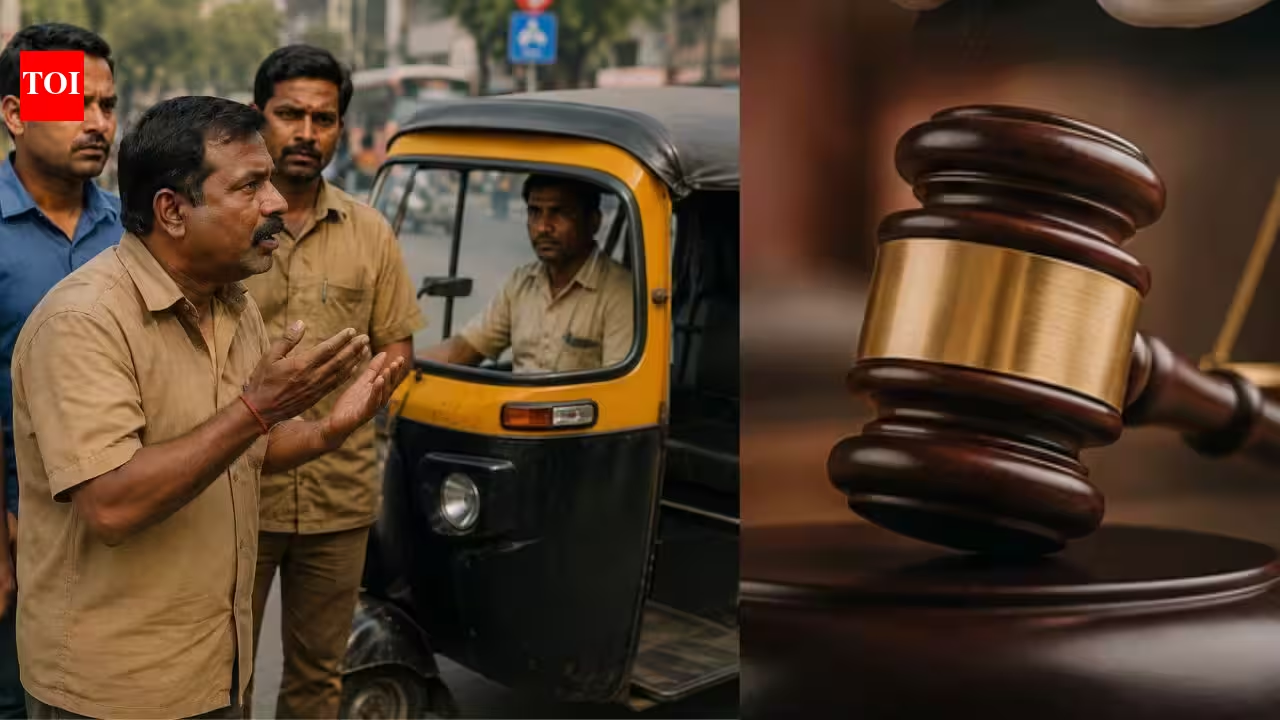
Maharashtra’s new Marathi language rule for drivers is facing significant opposition (AI image used for representational purpose only)

MUMBAI: As Maharashtra moves to implement mandatory Marathi proficiency for autorickshaw, taxi and app-based cab drivers after Independence Day, the policy has drawn a mixed response. While most drivers support the promotion of Marathi and acknowledge the importance of knowing the local language, many are questioning the penalties attached to the new rules.For thousands of auto and taxi operators, driving is the sole source of income for their families. Drivers fear a three-month suspension could have serious financial consequences, affecting household expenses, children’s studies and elderly dependents’ well-being.Many have urged the govt to adopt a more supportive and practical approach. Instead of immediate suspensions, drivers suggest that those lacking Marathi proficiency should be required to attend language classes and be given adequate time to improve. They argue language acquisition is a gradual process that cannot be enforced overnight.Adding to their concerns are complaints about the implementation process itself. Drivers attending mandatory Marathi language training and tests at the Mumbai Central Regional Transport Office (RTO) have reported long queues, delays and difficulties in obtaining completion certificates. Many claim the process is forcing them to lose valuable working days and income.According to drivers, nearly 70-80% of commuters communicate in Hindi while hiring an autorickshaw or taxi. “Passengers typically ask about destinations, fares and routes in Hindi and continue using the language while giving directions during the journey,” said Irfan Mohammed, a driver from Bandra. Even many Marathi-speaking passengers often switch to Hindi while instructing drivers to take a particular road, make a turn or use a flyover, said Brij Mishra, an auto driver from Mulund. “If commuters start speaking Marathi with us, we will learn much faster,” said another.When contacted, transport minister Pratap Sarnaik said, “The Marathi language rule for drivers was on paper for many years, but was never implemented. We are not forcing anyone to master the language -it’s just functional Marathi required for basic conversation with passengers. We are happy that over 1.1 lakh drivers have undergone special training with the help of several tutors across the state,” he said, adding he agreed with drivers when they said commuters should also converse in Marathi, especially locals.

Mumbai Water Metro, Bandstand revamp, Mandwa jetty work get Maharashtra Maritime Board push

Mumbai Water Metro, Bandstand revamp, Mandwa jetty work get Maharashtra Maritime Board push
The Bandra Bandstand project is aimed at improving a heavily used waterfront recreation and tourism zone

Mumbai: Mumbai’s waterways and western waterfront could see a fresh infrastructure push, with the Maharashtra Maritime Board clearing key steps for the Mumbai Water Metro, work at the Radio Club and a makeover of Bandra Bandstand, while also approving repairs and strengthening of the passenger jetty at Mandwa.The decisions, taken at a meeting chaired by fisheries and ports minister and Maharashtra Maritime Board chairperson Nitesh Rane, are significant for Mumbai and MMR as the city looks to expand water-based mobility and improve public-facing waterfront infrastructure.Water Metro: tendering gets focusThe board directed that the tendering process for the Mumbai Water Metro be conducted in a transparent, rule-compliant and competitive manner. The project is envisaged as an additional water-based transport option for Mumbai and the MMR, potentially helping shift a part of passenger movement to waterways.The latest decision, however, is primarily an administrative push for the tendering process; it does not by itself mean that water-metro services are ready to begin. The pace of implementation will depend on the tender process and subsequent project execution.Bandstand to get public amenitiesFor Bandra residents and visitors, the board approved maintenance and repair works at Bandra Bandstand, including a garden, benches, an amphitheatre and other public facilities. The facilities can be provided through outsourcing.The project is aimed at improving a heavily used waterfront recreation and tourism zone. For citizens, the key issue will be whether the promised amenities are maintained properly and remain accessible and safe after implementation.The board also approved the issuance of a work order for the Radio Club project in south Mumbai and directed that the work be completed within schedule and to prescribed quality standards.Mandwa jetty: safety, capacity in focusThe Mandwa passenger jetty in Raigad has been approved for repairs and strengthening. The decision is particularly relevant to Mumbai–Mandwa passengers and the wider Alibaug tourism economy, with the board citing passenger safety and increasing traffic as priorities.The quality and timely completion of the strengthening work will be important for a facility that serves as a key gateway for visitors travelling from Mumbai towards Alibaug and the Konkan coast.Dighi gets shipbuilding cluster pushBeyond Mumbai, the board approved a greenfield shipbuilding cluster at Dighi in Raigad, with tenders to be submitted by August 20.The proposed cluster is intended to attract investment in shipbuilding and related industries, provide common infrastructure and create employment. Its success will depend on actual investor participation, supporting infrastructure, clearances and timely execution.The board also approved the acquisition of land and an approach road required for the Goa Shipyard project at Satkondi in Ratnagiri, aimed at improving access to the project.Maritime Board seeks more revenueThe meeting also placed considerable emphasis on the board’s finances. Rane directed officials to prepare a structured plan to increase revenue by making better use of MMB-owned land and other assets.The board approved leasing out stalls and setting up stalls on its land, with instructions that allotment and lease processes should remain transparent and comply with applicable rules.Officials were also directed to expedite pending projects, tenders and administrative procedures and avoid unnecessary delays.For Mumbai and the Konkan, the decisions collectively point to a wider attempt to use the state’s coastline not only for ports and shipping but also for urban water transport, tourism, commercial activity and shipbuilding. The real test, however, will be how quickly the approvals move from boardroom decisions to projects that citizens and businesses can actually use.

How can IMA challenge law permitting homeopaths to practise allopathy?

State in Bombay high court: How can IMA challenge law permitting homeopaths to practise allopathy?

Mumbai: State govt on Thursday questioned the Indian Medical Association’s legal right to challenge amendments to two Acts that introduced the Certificate Course in Modern Pharmacology (CCMP) and allowed homeopaths to practise allopathy.“How are they aggrieved by this Act?” asked advocate general Milind Sathe, arguing before a special bench of Justices Riyaz Chagla and Farhan Dubash. The 2014 amendments were made to Maharashtra Medical Council Act and Maharashtra Medical Practitioners Act.Sathe argued that IMA is a “voluntary” association of doctors and has failed to show how it has suffered any “legal” injury because of the amendments. He said IMA cannot challenge the constitutional validity of a law merely on the ground that it disagrees with its provisions. He said it must demonstrate its locus standi and legal injury before asking HC to examine the validity of the legislation.Sathe also argued that IMA’s challenge is not based on any alleged violation of the fundamental right of doctors to practise their profession. “Is it the case (of the petitioner) their practice is being affected?” he asked. He also pointed out there was no challenge to the amendments based on Article 19 (1) (g) which protects the right to profession. Instead, IMA had questioned the state’s legislative competence to make amendments to both Acts. Sathe urged HC not to decide the validity of a law in a vacuum, “when the petitioner itself has not shown how it is affected by it.”IMA has challenged the legal framework permitting CCMP practitioners to practise allopathy. The state replied that the Maharashtra law creates a separate state-level registration regime and the provisions have existed as part of the state legislation since 1965. Also, Indian Medical Council Act regulates recognised qualifications for modern medicine at the Central level, while registration to practise in Maharashtra is governed by the state law.In Sept 2025, HC refused to stay registrations of CCMP practitioners, while making them subject to the final outcome of the main petition. It had also directed CCMP practitioners not to exceed their prescribed competency and to refer serious cases to fully qualified allopathy doctors. The arguments will continue on Friday.

Friends, kin pool Rs 45k to fly body of slain Mumbai security guard home

Friends, kin pool Rs 45k to fly body of slain Mumbai security guard home
Manoj Yadav, a native of MP, was strangled to death in the early hours of Aug 2

Mumbai: Friends, relatives and family members pooled Rs 45,000 to book flight tickets to take the body of 35-year-old security guard Manoj Yadav to his family in Itauri village in Madhya Pradesh, which borders UP, after he was strangled to death and his body was dumped in a water tank.Yadav, who worked for the past two years at the 10-storeyed Abhijit residential building in Vile Parle (West), was on night duty when the murder took place on Aug 1. He was killed in the early hours of Aug 2, before four men attempted a dacoity on a sixth-floor flat belonging to a businessman where the fifth accused, cook Jogeshwar Mallik (38), was employed.The Andheri Court extended the custody of the five accused till Aug 18 after completing their seven days on Thursday. The accused were Mallik, Vijay Gonjare, security guard Sharad Yerudkar (43) and his brother Mahadev (35), a farmer from Kolhapur, and Aniket Bornak (30), also a security guard.Police arrested the five on August 7 after the Juhu police team cracked the case using technical analysis following the interrogation of Mallik (38). Police said Mallik and Gonjare (41), a renowned film director’s driver, worked out the plan for the last two-and-a-half years, believing the robbery would help them resolve their debts and loans. Mallik, who lived in Khardhanda with his family and hailed from Madhubani in Bihar, had a Rs 35,000 loan taken for a vehicle purchase, while Gonjare had debts of Rs 8.5 lakh taken as loan and to pay credit card dues.Yadav was the sole bread-winner for his elderly parents, his wife Saraswati Devi and three children, including a seven-year-old son and two younger daughters. His wife, brother Vinod and elderly parents were not in a state to talk. The final rites was performed at his home village. “Yadav did not go to his native place for the last two years. The famliy wanted to see his body to perform the last rites. But financially they are totally broke and depended on my brother’s income he earned working at two places as guard. His younger brother Vinod and his cousin reached Mumbai after learning about the incident. However, they did not have the money and the body was also in bad shape with foul smell started emanating. Finally, friends, relatives and family members from native village pooled money through GPay to Vinod’s account and he booked three tickets on August 4 to fly back to MP where the final rites was performed. According to our capacity we contributed money in range from Rs1000 to Rs5000 to book three flight tickets ,” victim’s cousin brother Balaram Yadav (32), a driver by profession and stayed at Chakala in Andheri (East), told TOI on Thursday.A Juhu police officer said the businessman’s family, where Mallik worked for the past 15 years, remained traumatised after learning that their cook was behind the guard’s murder and had planned to kill them after robbing them, despite their support when police detained him. “Mallik gave the original key to the driver, Gonjare, six months earlier to use it in opening the door lock of the businessman flat on the sixth floor and exchanged it with a duplicate key, but they failed to open the lock on August 2 with the original key,” the officer said.Police said the businessman’s family was lucky because when they checked the keys, the duplicate key was functional while the original, which the cook stole, was non-functional on the day the accused attempted the dacoity.Police booked the five for murder, causing disappearance of evidence, and dacoity attempt. Police said the four accused, excluding Mallik, tied Yadav’s hands behind his back with a cloth rope, and after strangling him to death, threw his body into a water-filled tank on the ground floor of the building and closed the iron lid of the tank after partying.


Mumbai man gets 10-year jail term for stabbing woman over rejected proposal, attacking cop

Mumbai man gets 10-year jail term for stabbing woman over rejected proposal, attacking cop
The court relied on the deposition of the woman, her mother, the injured police constable, medical officers and panch witnesses

Mumbai: Noting that the rising incidents of attacks on police personnel and violence against girls arising from one-sided love are deeply concerning, over four years after a brutal knife attack on a woman and an intervening police constable, a sessions court on Thursday convicted and sentenced a 36-year-old salesman to 10 years’ rigorous imprisonment for attempt to murder. The accused, Anil Babar, was upset as the woman had rejected his marriage proposal. “Such acts reflect a dangerous disregard for law, consent and human dignity. Strict legal action, timely intervention and greater awareness are essential to prevent such incidents and ensure the safety of both police personnel and women,” additional sessions judge RS Aradhye said.The judge also sentenced Babar to three years for stalking, five years for voluntarily causing grievous hurt to a public servant, one year for assaulting a public servant, two years for criminal intimidation and six months’ simple imprisonment under the Maharashtra Police Act. All sentences will run concurrently. “Even if for the sake of argument, it is accepted that there is a love affair between the victim and the accused, but that does not give any right or authority to the accused to assault the victim or any other person for the fulfillment of his proposal of marriage,” the judge said.The prosecution said Babar and the woman lived in the same locality at Salt Pan Road in Wadala East. According to the court record, Babar had developed “one-sided affection” for the woman and repeatedly proposed marriage, but the woman rejected the proposal. The crime occurred on the morning of May 4, 2022. Babar had been stalking the victim and continuously pressuring the victim for marriage despite previous police complaints. Around 10.30 am, the woman left home for work but forgot her mobile phone. Her mother followed to hand on the phone and saw Babar allegedly trying to stop the woman near Barkat Ali Bus Stop and Pooja Junction. When the victim refused to speak with the attacker, Babar pulled out a knife concealed in a waistband and inflicted severe stab wounds to the victim’s abdomen, back and arm. Police Constable Mayur Patil, who was on duty nearby, rushed to the scene to stop the assault. During the rescue attempt, Babar attacked the constable, severely slashing the officer’s hand. Other police personnel eventually disarmed Babar by striking the attacker’s hand with a wooden stick. Both the victim and the constable required prolonged hospitalisation and surgery.The woman was taken to KEM Hospital, where she remained admitted for 10 days and underwent surgery. Patil was treated at Wockhardt Hospital.The court relied on the deposition of the woman, her mother, the injured police constable, medical officers and panch witnesses.On the charge of attempt to murder, the court observed that the absence of fatal injury was not decisive. “The essentials are knowledge and intention of accused while committing the crime and if death were caused by that specific act,” the judge said.The court also held that the attack on the police constable was proved through the bandobast duty order and medical evidence. The judgement said the order showing Patil’s deployment at Kadaria Trust Mosque, Barkat Ali Nagar, Pooja Junction, was “more than sufficient for holding that…Patil was, on the day of incident at the relevant time discharging his duty as a public servant.”Before sentencing, public prosecutor Ranjana Budhwant sought maximum punishment, saying the offence arose out of a one-sided love affair and was also directed against police machinery.“This is the grave offence which the accused committed in the depression of failure in a love affair and brutally attacked the victim, as well as not leaving the Police Constable who tried to intervene in the matter. Therefore, taking into consideration the above-said facts and mitigating circumstances against the accused, I am of the view that in such a matter, if a lenient view is taken, it goes wrong message in society so the severe punishment provided for each offence will meet the ends of justice,” the judge said.Babar has been in custody since the day of the incident. The court directed that set-off be given for the period already spent in jail.

Netas slam Thane Ring Metro authorities over late public consultation, seek review

Netas slam Thane Ring Metro authorities over late public consultation, seek review

Thane: BJP MLA Sanjay Kelkar on Wednesday hit out at Maha-Metro for seeking residents’ objections and suggestions only after work on the Integral Ring Metro project had begun, questioning why citizens and key stakeholders were not consulted before the project secured crucial approvals from various central and state agencies.The meeting, held a week after Deputy chief minister Eknath Shinde directed officials to undertake citizen outreach, was attended by representatives from Hiranandani Estate, Chendani Koliwada, Upvan and citizen group Wake Up Thanekar.TOI was the first to highlight residents’ opposition to the manner in which the ring metro project was being executed without adequate citizen consultation.“Even if the project is delayed by four months, it is acceptable, but its implementation must ensure minimum disruption and maximum benefit to citizens,” Kelkar said. He pointed out that 29 commercial units in Upvan, some operating for nearly 50 years, face displacement under the initial alignment. Officials have assured that the affected businesses will be re-established in the same area, he said.Meanwhile, the Thane NCP has sought a discussion on the project at next week’s General Body Meeting, questioning how a project of such scale could proceed without addressing citizens’ objections.In a letter, NCP group leader Najeeb Mulla has demanded a mayor-led committee comprising experts, office-bearers and representatives of all political parties to review the project and submit its report within 45–60 days. The party has also sought a halt to ongoing work until the review is completed, arguing that public funds must not be committed without examining the route, displacement, citizen concerns and Thane’s future transport needs.Citizen group ‘Wake Up Thanekar’ has also urged the authorities to temporarily freeze work on the Ring Metro project till the Kasarwadavli-Wadala Metro 4 line is made operational and other civic infra projects like freeway extension along the Ghodbunder and Eastern Express highways in the city are completed.

UK businessman re-arrested in fresh cheating case after securing bail

UK businessman re-arrested in fresh cheating case after securing bail

Mumbai: Nishit Patel, a UK-based businessman who was granted conditional bail from a sessions court on Wednesday in a cheating case, has been arrested in another case by the police.He was granted bail in a case where he along with others was accused of duping actor Javed Jaffrey and his wife of Rs 17 crore. Soon after his release from Arthur Road Jail, Patel was arrested by the police .In the fresh case, police arrested Patel for allegedly cheating a luxury watch dealer of over Rs 92 lakh by taking delivery of three high-end watches and failing to make the promised payments. The complainant alleged that on February 13, Patel selected a Hublot watch worth ₹Rs 18.65 lakh and a Franck Muller watch worth Rs 19.38 lakh.The complaint further stated that Patel returned to the shop on February 14 and purchased another Franck Muller watch valued at Rs 54.49 lakh. He allegedly assured the shop that the payment would be made immediately through RTGS. However, the RTGS payment was never received.Meanwhile, in the Jaffrey cheating case, the Bombay high court has granted interim protection from arrest to assistant commissioner Mahesh Patil, one of the accused. Patil has approached the high court seeking anticipatory bail, contending that he is ready to turn approver.

What India’s development rankings are missing

Maharashtra 4th in HDI, but last in ‘good years’: What India’s development rankings are missing

Mumbai: Maharashtra may rank among India’s more progressive states in terms of life expectancy and purchasing power, but its older residents spend far fewer of their remaining years in good health and well-being, says a new study from the International Institute for Population Sciences (IIPS), Deonar.Published in ‘Social Indicators Research’, the study ranks Maharashtra 21st among 21 states on a relatively new measure called ‘Years of Good Life’ (YoGL) for people aged 60. “This is surprising because Maharashtra ranks fourth on the Human Development Index (HDI),’’ said Prof Dr Srinivas Goli at IIPS and one of the study’s authors.It’s the first time the YoGL indicator, designed to go beyond GDP and HDI, has been calculated for India’s states. YoGL counts a year as “good” when four conditions are met: the person is above poverty, has no functional limitations, is free from cognitive impairment and is satisfied with life.Researchers from IIPS, the University of Vienna and Princeton University used data from the Longitudinal Ageing Study in India and mortality data from the Sample Registration System to estimate YoGL across 21 states.At the national level, a 60-year-old man can expect about 8.2 good years out of 17.5 remaining years, while a woman can expect only 5.7 good years out of 19. Urban residents can expect 9.2 good years, compared with 6.1 for rural residents. Rural women are the most vulnerable, with just 4.6 good years out of 18.5 remaining years.Punjab tops on every count, with men recording 12.9 good years at 60. Kerala does best by rural women, who get 10.1 good years. West Bengal records the lowest figure for women, 3.8 years, and Bihar is weak — even its urban residents manage only 7.5.The Maharashtra figures are worrisome. Rural women aged 60 can expect just 2.7 good years— the lowest share among the states studied. Across Maharashtra, only about 21% of women’s remaining life at 60 is expected to be “good”.The researchers describe Maharashtra as an “urban health paradox”. While healthcare infrastructure concentrated in major cities may contribute to longevity gains, sections of the population, including rural residents and slum dwellers, face functional limitations and poverty.“Men and women are losing good life through completely different doors,” said study’s lead author Dr Ruchira Chakraborty. “For men it is the body — heavy manual work and chronic disease that erode functional health early. For women it is cognition, and that traces back decades, to schooling they never received.’’She, however, said southern states, which invested in girls’ education generations ago, are collecting the “dividend now in sharper, healthier older women”.

Maharashtra amends Private Universities Act to include medical colleges, two contenders await approval

Maharashtra amends Private Universities Act to include medical colleges, two contenders await approval
The amendment, passed recently, for the first time allows the establishment of private health sciences’ universities in the state

Mumbai: Medical colleges aiming to become private universities in Maharashtra must be functioning for more than 20 years. Additionally, they should have a NAAC A+ grade or above and offer postgraduate courses in at least 50% of their disciplines, and these programmes must have been operational for at least 10 years. These were some of the conditions laid down in the eligibility criteria prescribed under an amendment to the Maharashtra Private Universities (Establishment and Regulation) Act, 2023.The amendment, passed recently, for the first time allows the establishment of private health sciences’ universities in the state. Till now, private universities were permitted to offer only higher and technical education courses, under the Act.Dr Vithalrao Vikhe Patil Foundation’s Medical College in Ahilyanagar and NKP Salve Institute of Medical Sciences and Research Centre in Nagpur have submitted their detailed project reports (DPRs) and are being considered for the private university status.The Act allows these universities to fix their own fees, conduct their own examinations, and confer their own degrees. As per the Act of 2023, private universities are not entitled for any financial assistance from govt and its students cannot claim any scholarship.While admissions in these universities will be based on NEET scores too, medical education secretary Dheeraj Kumar said that as per Supreme Court directives, admissions will be through common counselling, either through the state CET cell’s process or the central one conducted by the Medical Counselling Committee (MCC). “We have written to the National Medical Commission (NMC) and are awaiting their response. If not through MCC, the state cell will carry out the process,” he said.As of now, the colleges have been included in the state’s counselling process, with a disclaimer. Another official added that students will soon get clarity on this year’s admission process.After proposals from a few trusts last year, a committee was formed with representatives from higher education and medical education departments to amend the law to include health science colleges. After the amendment, a scrutiny committee was set up two weeks ago with additional three experts from the medical field to consider the two DPRs.Under the amended law, the trust must have a recognised medical college with an A+ grade in NAAC and a CGPA of 3.01 or higher. The process also requires a no-objection certificate from the Maharashtra University of Health Sciences (MUHS). The institutions will no longer remain under the MUHS.The Act will also cover health science courses such as dental, ayurveda, homeopathy, physiotherapy, nursing, occupational therapy, para medical and other allied science courses. These institutions will continue to be governed by the respective regulatory bodies such as NMC and Indian Nursing Council, among others.In the note citing reasons for the amendment, higher and technical education minister Chandrakant Patil had mentioned, “Health science courses have been started in private universities in other states in the country. There are demands from many institutions to establish private health science universities in the state. The govt considers it expedient to allow private institutes conducting health science courses having long standing experience and excellence, to establish private universities in the state.Who can become a private health science university?* Medical colleges functioning for over 20 years* Colleges with NAAC A+ grade* More than 50% specialty departments, operational for at least 10 yearsHow many contenders this year?* Dr Vithalrao Vikhe Patil Foundation’s Medical College in Ahilyanagar and NKP Salve Institute of Medical Sciences and Research Centre in NagpurWhat will it mean for students?* Universities to fix their own fees, no regulation by FRA* No scholarships or any financial assistance to students* Colleges will no longer be affiliated to Maharashtra University of Health Sciences* Admissions will be through common counselling, either state’s CET cell or Medical Counselling Committee. Clarity in a few days for the current year’s admissions