

1,100-page chargesheet filed in Mumbai train murder case; Govt Railway Police seeks special prosecutor
1,100-page chargesheet filed in Mumbai train murder case; Govt Railway Police seeks special prosecutor
21-year-old Mayank Lohar was killed by a co-traveller on a local train over a trivial dispute on keeping the compartment door shut. His family has demanded strictest punishment possible for the perpetrator

Mumbai: The Govt Railway Police (GRP) on Wednesday submitted a 1,100-page-long chargesheet before a magistrate court in the murder of a 21-year-old commuter, Mayank Lohar, by a co-traveller, Roshan Suvarna, over an argument about keeping a train compartment door open amid heavy rain.GRP has requested that the case be fast-tracked and a special public prosecutor be appointed, given the heinous nature of the crime.The chargesheet contains statements of 68 witnesses. Among these are six to seven prime witnesses who were present in the first-class compartment of the Nalasopara-bound fast local train on June 23 when Suvarna stabbed Lohar. Eyewitnesses recounted that Suvarna was visibly drunk. He wanted to keep the door of the compartment open, but rainwater was entering inside and Lohar shut it. There was a heated exchange of words between the two and Suvarna landed the first blow on Lohar, who retaliated in defence. Shortly, a few other passengers sent away Suvarna to another exit. Subsequently, he took a large knife from his bag and went over to Lohar, stabbing him in his chest and abdomen.One of the passengers filmed the moment, also capturing the blood-soaked compartment. The video clip forms crucial evidence in the case. Suvarna hopped off the train at Borivli station and threw away the knife. He was arrested from Panvel while he was trying to leave the city the next day. The chargesheet contains the statement of a restaurant manager whose colleagues found the 17.5-cm-long knife dumped in a lane outside Borivli (W) station. Forensic analysis confirmed the knife found in the lane was the one used in the murder. Police have also recorded the statement of a friend of Suvarna’s who works with an e-commerce platform and from whom Suvarna had picked up two knives. He kept the small knife at this workplace for making barcode labels and carried the large knife in his bag for seven months until the crime.


Maharashtra FDA suspends licences of 4 outlets of pizza chain, including three in Mumbai

Maharashtra FDA suspends licences of 4 outlets of pizza chain, including three in Mumbai
In Mumbai, FDA inspectors suspended the licences of three Domino’s branches located in Vile Parle West, Borivli West, and Ghatkopar’s R-City Mall

Mumbai: Four Domino’s outlets across the state, including three in Mumbai, had their food licences suspended on Wednesday as the Food and Drug Administration (FDA) began inspections of chain outlets.A total of 104 checks were carried out at prominent food chains, and outlets such as Starbucks, McDonald’s, KFC, Pizza Hut, Subway, Burger King, and Monginis were inspected. Of these, two received a ‘stop business’ notice, served when a food establishment is operating without a valid licence. A total of 95 outlets were served improvement notices, and five food business licences were suspended.In Mumbai, inspectors suspended the licences of three Domino’s branches located in Vile Parle West, Borivli West, and Ghatkopar’s R-City Mall. These outlets had severe lapses, such as active pest infestations, dirty kitchen floors and backdoors, lack of proper temperature monitoring for frozen foods, and missing records for water testing and employee hygiene facilities.A Karad outlet operated by Sapphire Foods India Ltd, which operates KFC and Taco Bell, also had its licence suspended. Along with Domino’s Malkapur unit in Satara district, these branches faced action for poor compliance and hygiene issues, as well as for keeping condiments like sauces, chili flakes, and oregano with missing expiry dates.The statewide drive also included the inspection of 120 hotels, restaurants, and dhabas, resulting in 54 improvement notices and 11 additional licence suspensions. The licences of two dhabas in Bhandup — Gulsan Da Punjabi Dhaba and Mumbai Metro Dhaba — were suspended over severe hygiene violations as well as foul water, inadequate ventilation, and lack of pest control.Authorities additionally seized stocks of substandard milk and dairy products, loose edible oils, and banned items like gutka and pan masala.

Family of four killed in Ghatkopar landslide

Mumbai dream ends in tragedy: Family of four killed in Ghatkopar landslide

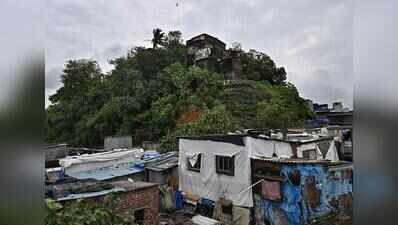
Mumbai: The Ghatkopar landslide wiped out an entire family that had arrived in Mumbai just four days ago, hoping to make a fresh start.Arif Shaikh, a tailor by profession, had moved to Ashok Nagar in Ghatkopar West with his wife Marjina and two young children, Mannat and Aban. His sister was already living in the area. His father Mohammed Ali, who lives in Titwala, was inconsolable at the post-mortem centre at Rajawadi Hospital. “I sent my son to Mumbai believing he would build a better future for his family. Today, I am returning to take back the bodies of my son, daughter-in-law and two grandchildren,” he said with tears in his eyes.The family, originally from Jaunpur, had come to Mumbai in search of a better life and a more secure future for their children. Relatives said Arif was optimistic about finding work and had high hopes of building a better life for his family. His wife, a homemaker, also wanted to look at doing odd jobs to help her husband financially.Rubina, who was Marjina’s sister, said that the family had barely begun settling into their new life when tragedy struck. “They had rented a small place here because I and Arif’s sister were already living in the area. A day after they arrived, we took them around the city and showed them Mumbai. We never imagined that just days later, we would lose all four of them,” she said. Rubina’s husband, Khurshid, who works at film shoot sites, had called Arif to Mumbai and helped him find the low-rent accommodation near the hill. “They had come with so many hopes of starting afresh,” she said.

30 lakh voters in Mumbai and 1.8 crore in Maharashtra untraced in SIR so far

30 lakh voters in Mumbai and 1.8 crore in Maharashtra untraced in SIR so far

Mumbai: With just five days left to submit enumeration forms for the special intensive revision, as many as 1.8 crore voters in the state and 30 lakh in Mumbai have not been traced so far. It means their names could be deleted from the draft electoral roll.This accounts for 29.6% of the voters in Mumbai and 18.4% in the state. Their enumeration forms are classified as “uncollected” and they are now on the list of absent, shifted, dead or duplicate (ASDD) voters.To give these untraced electors a chance, chief electoral officer S Chockalingam said that the list of ASDD voters has been published on district websites since Wednesday. “The public and political parties can check the names and report if the voter has been traced,” he said.He said that the untraced voters in the state were within the 13% to 20% range in the SIR across the country. And that a higher proportion of uncollected forms in urban areas was the norm owing to migration and shifting of residences within the city. “In Bengaluru, the uncollected forms were around 50% while in Chennai it was around 25% of the total voters,” said Chockalingam.Around 36 lakh voters, or 3.7%, in the state are yet to be categorised ,which means the proportion of uncollected forms could change.When asked if the untraced voters will be deleted, Chockalingam said, “We cannot say they will be left out. It means they were not present in the first place.”Within Mumbai, untraced voters were highest in the Sion-Koliwada assembly constituency (43.2%), which has a large slum population. This was followed by Mankhurd-Shivaji Nagar (42.2%), which has a large section of Muslims and slum-dwellers. Then came Worli (40.4%), which has multiple high-rises and a chunk of both Marathi and cosmopolitan voters.Uncollected forms were also high in the wealthy constituency of Malabar Hill (39.8%) as well as Mumbadevi (39.3%), which has a large segment of buildings undergoing redevelopment.“It has been difficult to trace voters in Mumbadevi because of redevelopment since many have shifted out to other areas. Also, the state’s booth level officers were not effective in reaching the voters,” said Mumbadevi MLA Amin Patel from the Congress.The draft voter list will be published on August 24 and suggestions and objections will be invited till September 23. “After the draft list is published, voters can make changes in their names and addresses. People can apply to be added to or deleted from the voter list. And 18-year-olds can register to vote,” said Chockalingam.From August 24 to October 22, the election authorities can send notices to those on the draft roll for documents needed. This will apply to those whose names were not mapped to the 2002 voter list. The final voter list after the SIR will be published on October 27.

238 AC locals for Mumbai to made at 3 railway factories for faster deliveries

238 AC locals for Mumbai to made at 3 railway factories for faster deliveries
The tender floated in Sept 2025 has been junked

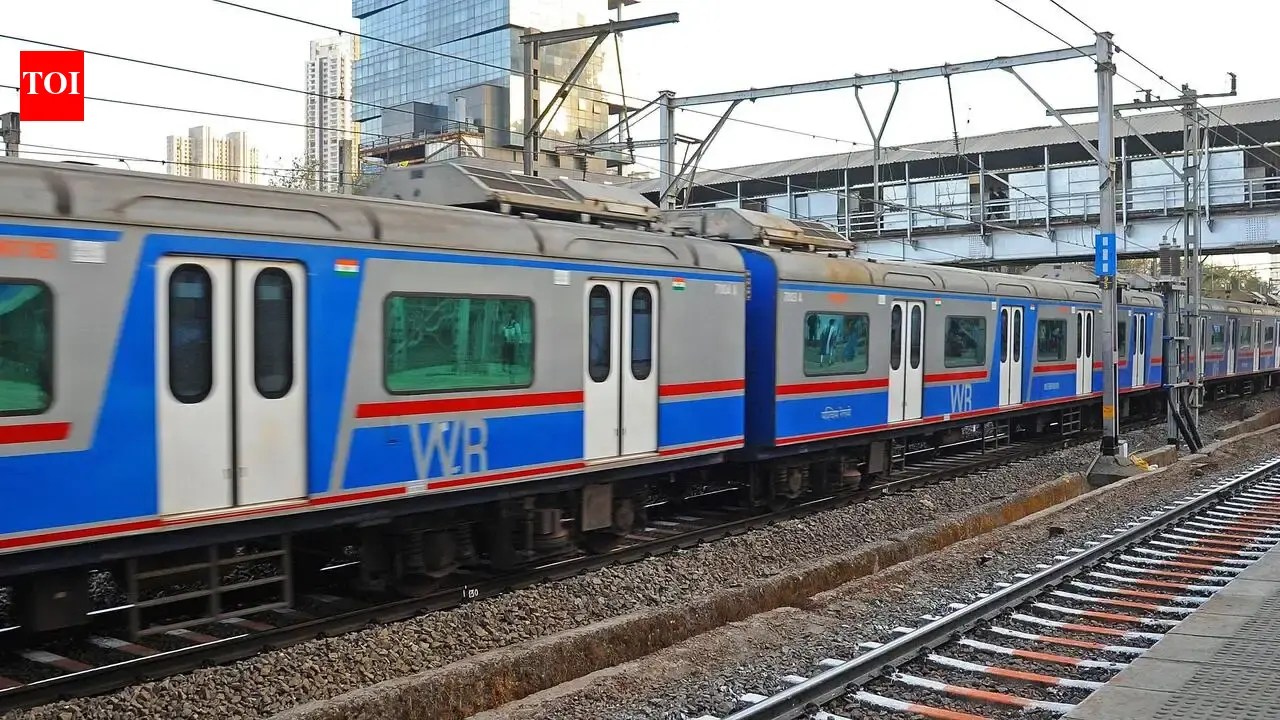
Mumbai: Mumbai Rail Vikas Corporation (MRVC) has decided to fast-track the procurement of 238 AC local train rakes by getting them manufactured simultaneously at three existing Indian Railways production units, instead of pursuing a tender route that could have delayed deliveries by several years.The Rs 21,646-crore tender, floated in Sept 2025 under Mumbai Urban Transport Project (MUTP)-3 and MUTP-3A, also covered associated maintenance facilities. Of the 238, 47 rakes were planned under MUTP-3 and 191 under MUTP-3A.Under the original plan, the 47 MUTP-3 AC locals were expected to start arriving in 2021-22 and the 191 under MUTP-3A from 2023-24. But repeated delays in finalising the tender pushed the programme further off schedule. Prospective bidders indicated that they would require about three years to commence series production as they would have to first establish manufacturing facilities, making the first set of deliveries likely possible only by 2033-34.On social media, railway minister Ashwini Vaishnaw said, “…The previous procurement model was facing major hurdles, stretching the timeline… That is unacceptable to us. We have now decided to alter the approach…”The tendering process has now been dropped, with MRVC opting to use existing railway manufacturing facilities to accelerate production. The 238 rakes will be manufactured simultaneously at Integral Coach Factory, Chennai; Rail Coach Factory, Kapurthala; and Modern Coach Factory, Raebareli.The parallel manufacturing strategy is expected to bring forward the delivery schedule substantially, with the first AC rake targeted for 2027 and the entire fleet expected to be received by 2030.The decision comes as Mumbai’s suburban railway network undergoes a major capacity expansion. Around Rs 22,000 crore is being invested in projects involving new corridors, additional railway lines, extension of platforms to accommodate 15-coach trains and yard remodelling. Several capacity augmentation works under MUTP-2 and MUTP-3 are expected to be completed by 2029.MRVC CMD Vilas Wadekar said the revised approach was aimed at aligning the induction of AC rakes with the commissioning of new corridors, additional lines and other capacity augmentation works. “Mumbai local is not merely a mode of transport; it is the lifeline of Mumbai and an integral part of the city’s everyday life,” Wadekar said.

4 arrested in Mumbai for generating fake documents for govt identity cards like PAN and Aadhaar

4 arrested in Mumbai for generating fake documents for govt identity cards like PAN and Aadhaar

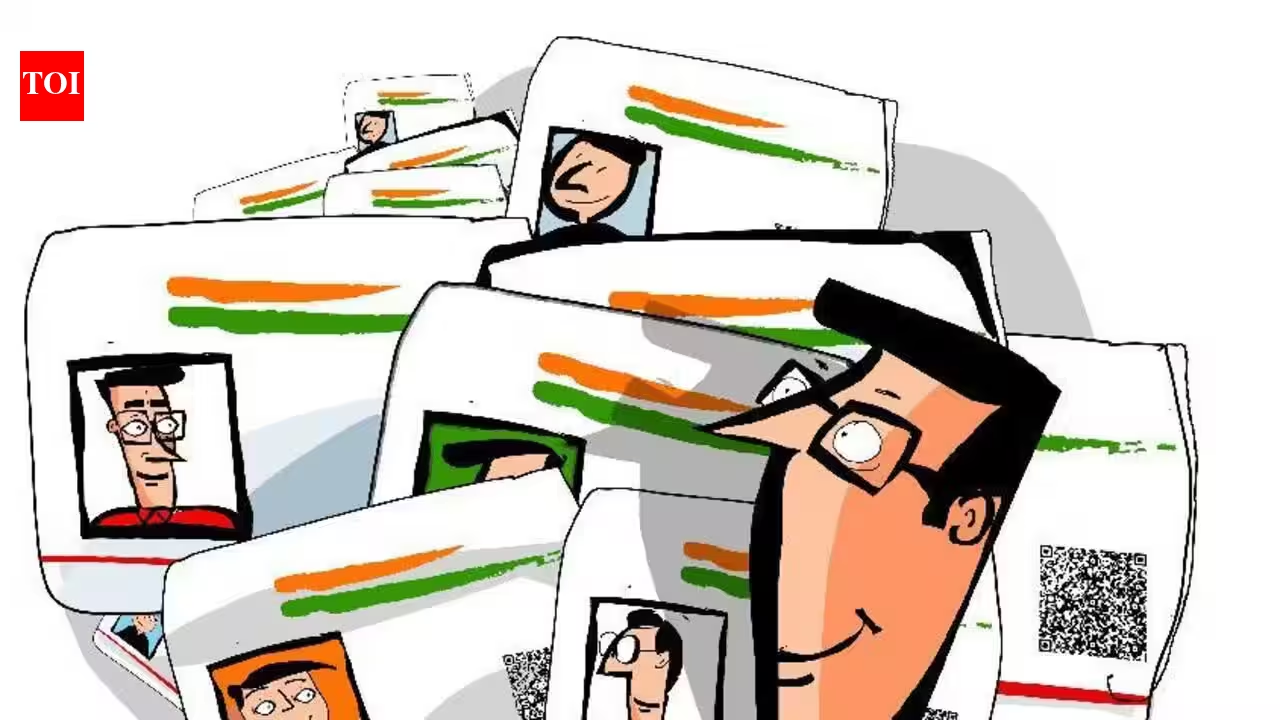
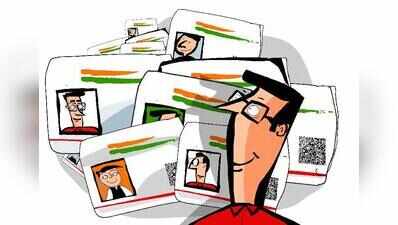
Mumbai: Dahisar Police busted a racket where fake documents were being generated and used for getting Aadhaar cards and PAN cards made. Two people were arrested. Through information obtained from them, the police raided an Aadhaar centre in Kandivli and arrested two more people.DCP Gajanan Rajmane said the police seized 32 fake birth certificates, school and college leaving certificates and stamps from the two accused—Surajkumar Yadav and Upendra Singh.Further, the police recovered 14 fake birth certificates, seven fake domicile certificates, 26 fake medical policies and three fake citizenship documents from the Aadhaar centre at Kandivli. The duo arrested from the Aadhaar centre are Satyam Mishra and Akash Patva.

Bombay high court stays BMC move to take possession of ‘leased’ YMCA playground at Mumbai Central

Bombay high court stays BMC move to take possession of ‘leased’ YMCA playground at Mumbai Central
The Bombay high court bench, expressing surprise at the civic action, orally commented that BMC’s move appears to be at the instance of the local corporator

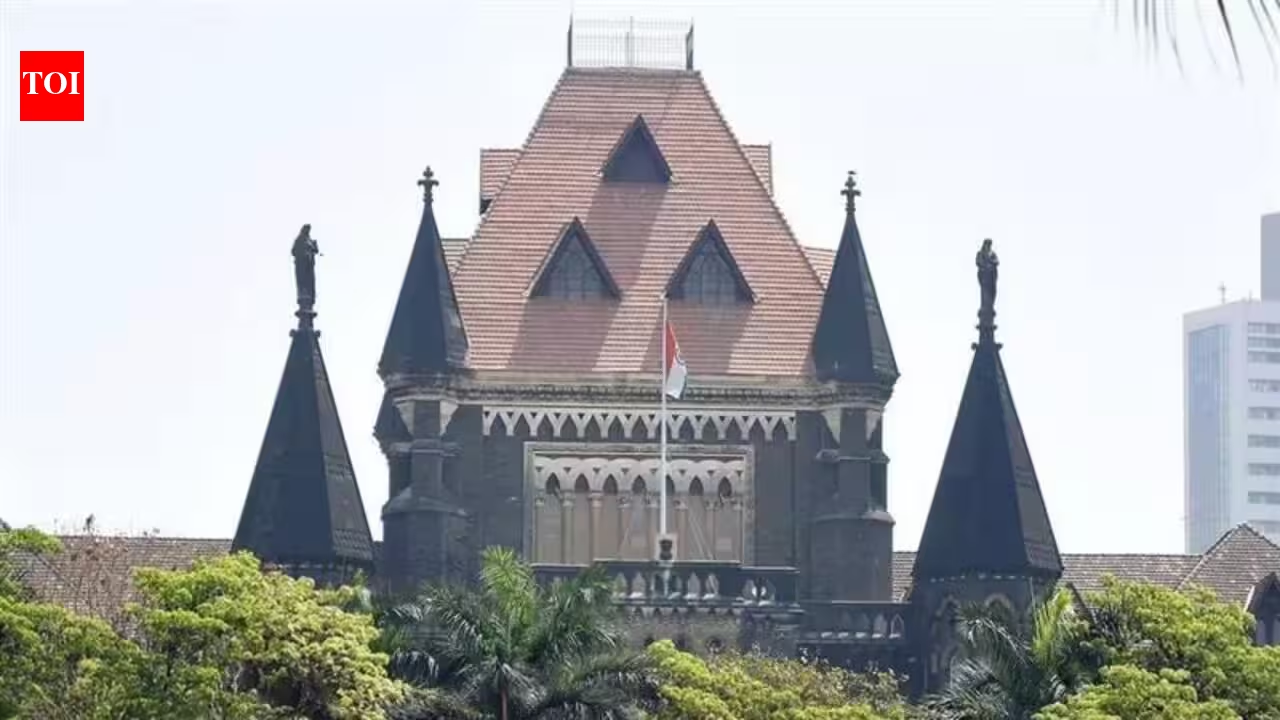
Mumbai: The Bombay high court on Wednesday stayed BMC’s decision to take back possession of a playground at Mumbai Central which Young Men’s Christian Association (YMCA) said was leased out to it in 1928.The HC was hearing YMCA’s plea seeking urgent intervention, fearing immediate loss of possession of Abdul Rehman Sufi Maidan or Jhoola Maidan, formerly known as Willingdon ground, and the gymnasium built on it in 1964 following BMC nod.The civic counsel said the BMC was due to take possession of the playground and gymnasium on Wednesday as the local corporator had received a complaint.The HC bench of Justices A S Gadkari and Kamal Khata, expressing surprise at the civic action, orally commented that BMC’s move appears to be at the instance of the corporator. When the bench asked the BMC counsel why it wanted to take the property from YMCA and who it wanted to give it to, there was no reply.The BMC will file a reply in two weeks.The issue arose in March 2026, said the YMCA, when the BMC issued a notice asking how it was in possession of the gymnasium building and alleged that the premises were not properly maintained. The YMCA said it replied to the notice, but on July 21, sans a hearing, the BMC issued a letter stating that it would take possession of the gymnasium in seven days.On August 7, the BMC sent a team to take possession of the premises, advocate Joel Carlos for YMCA submitted while seeking a stay. YMCA said a few policemen also visited and said possession would be taken on or before August 12 by the BMC with help of the police department, the petition claimed.The petition also stated that the BMC had given Willingdon ground to YMCA on lease on March 19, 1928, and it has been paying rent since then.In 2007, when the BMC said it had lost the rent collection document, the YMCA provided it. It did so again in 2012, when BMC wrote to ask about the construction of the gymnasium building as it claimed to have lost the documents, the petition stated.In 2017, the YMCA said, it obtained permission for installing an electricity meter, and in 2021, it informed the BMC of having completed structural repairs to the building.The YMCA said as an organisation, which since 1875 has been working to uplift the underprivileged people, it promoted sports, physical fitness and youth development activities and even sent several athletes for national level competitions, helping the underprivileged secure jobs under the sports quota.

Property agent’s ‘vegetarians only’ claim for Mumbai flat triggers ‘food apartheid’ debate

Property agent’s ‘vegetarians only’ claim for Mumbai flat triggers ‘food apartheid’ debate
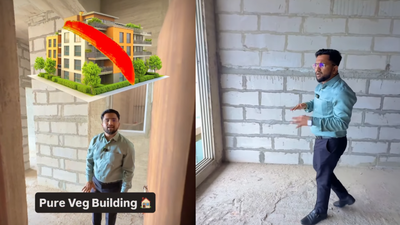
A viral video shows a real estate agent stating vegetarian-only buyers for a Mumbai flat

MUMBAI: A viral video of a real estate agent claiming that only vegetarians are allowed to purchase flats in a posh upcoming high-rise in south Mumbai’s Tardeo area has sparked strong reactions.Some social media users described the development as a case of Mumbai’s cosmopolitan character giving way to “food apartheid”, alleging that housing societies are restricting people’s food choices.The agent, Bhavesh Kaware, who goes by the moniker “propertytransactionguru” on Instagram, posted the video on the platform, news agency PTI reporetd.In it, he said that the 2BHK flat in the building would be sold for Rs 6.5 crore, but only vegetarians would be allowed to buy it.“This is Mumbai of the Marathi people. It belongs to the Agari-Koli community and to the toiling, common people of Maharashtra,” said one of the social media users.“Who are you to decide what someone eats or doesn’t eat in Mumbai? Denying someone a home just because they eat fish, mutton, or chicken isn’t merely an arbitrary act of granting or withholding housing but shows overt social discrimination,” he said.“Will it now be decided whether someone who has eaten fish for generations in Mumbai gets a home or not based on what’s on their plate? Those who discriminate must be taught a lesson,” he said.There have been several much-publicised instances of such discrimination over the past few years, PTI reported.Bollywood actor Saif Ali Khan had revealed that when he was looking for a house in 2012 after his marriage to Kareena Kapoor, he was turned away by several housing societies.In 2014, actor Emraan Hashmi said that a posh housing society had rejected his application.(With agency inputs)

PMAY falters in Mumbai as land prices, lack of bank credit leave 10,000-15,000 MHADA homes unallocated

PMAY falters in Mumbai as land prices, lack of bank credit leave 10,000-15,000 MHADA homes unallocated

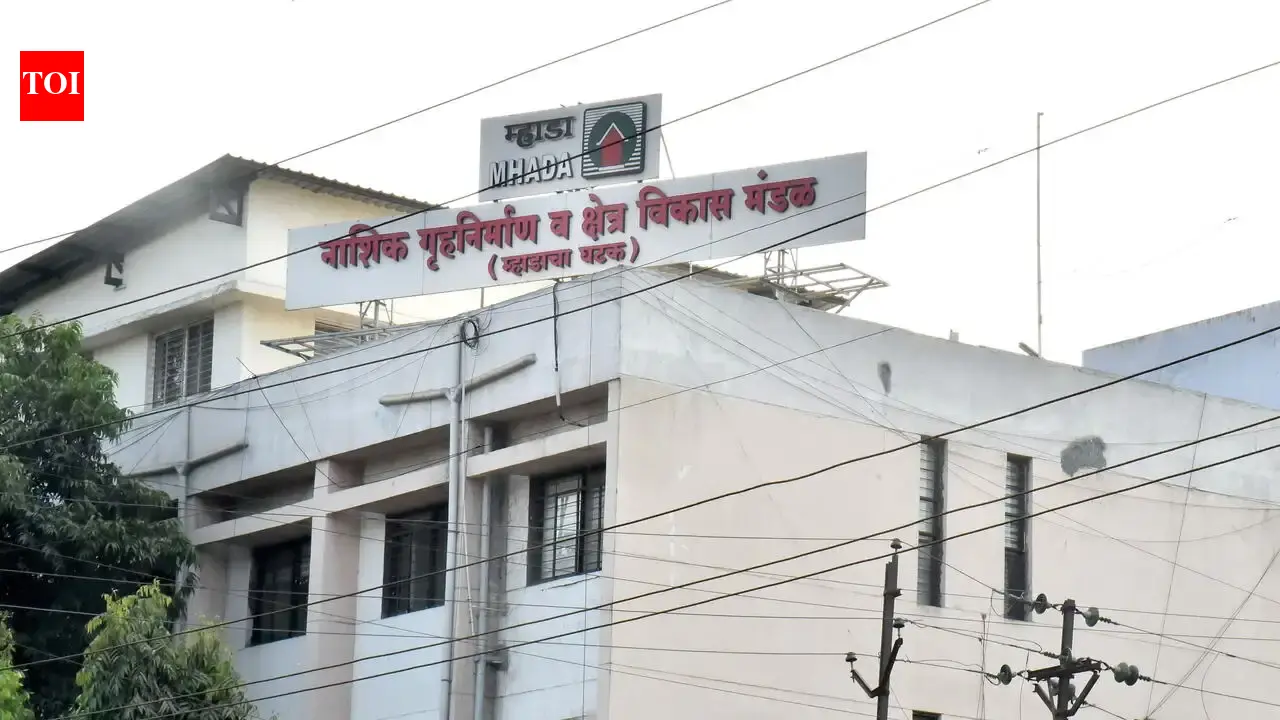
Mumbai: The Pradhan Mantri Awas Yojana (PMAY) has struggled to make a significant dent in Mumbai’s affordable housing crisis, with high land costs and the inability of applicants with irregular incomes to secure bank loans emerging as major roadblocks, said MHADA CEO Sanjeev Jaiswal at the BRICS Friendship Cities conclave on Wednesday.Jaiswal said the problem was particularly acute in the Mumbai Metropolitan Region (MMR), where MHADA has constructed nearly 50,000 homes under its housing initiatives, but has been unable to allot between 10,000 and 15,000 of them because prospective beneficiaries could not arrange financing.“MHADA has constructed close to 50,000 homes in the larger MMR area, but 10-15,000 of these homes we are not able to allocate because individuals were not able to secure funding from banks,” Jaiswal said during a session on housing.He said the experience highlighted a key limitation in implementing PMAY in Mumbai. While the scheme provides a subsidy of Rs 2.5 lakh to eligible beneficiaries, the subsidy alone is insufficient to bridge the gap between the cost of a home and the amount that many low-income households can raise through formal financing.“PMAY provides a subsidy of Rs 2.5 lakh and if the houses constructed in Titwala, Kalyan etc cost anywhere between Rs 12 lakh and Rs 15 lakh,” Jaiswal said, adding that the remaining amount often becomes difficult for beneficiaries to finance.The issue is compounded in Mumbai and the MMR by high land prices, which make affordable housing projects considerably more expensive than in other parts of the state. As a result, even with government assistance, the cost of a dwelling can remain beyond the borrowing capacity of the intended beneficiaries, said Jaiswal.According to him, a significant section of potential beneficiaries earn through informal or irregular employment and therefore do not have the stable monthly income, documented earnings or credit profile required by banks to sanction housing loans. Poor CIBIL scores can further limit their access to formal credit.Around 3 lakh homes have been constructed across Maharashtra under the PMAY scheme.

Catholic Church and Christian NGOs urge Centre to withdraw ‘draconian’ FCRA Amendment Bill

Catholic Church and Christian NGOs urge Centre to withdraw 'draconian' FCRA Amendment Bill
The proposed Foreign Contribution Regulation Amendment Bill faces significant opposition from Christian groups. (Representative image)

MUMBAI: Even as the Centre referred the proposed Foreign Contribution (Regulation) Amendment Bill, 2026 to a 31-member JPC (joint parliamentary committee) Wednesday, the Catholic Church as well as Christian NGOs and activists expressed serious concern over the Bill.Archbishop emeritus of Bombay Oswald Cardinal Gracias wrote to Union home minister Amit Shah, relaying the concern expressed by priests and nuns who work with marginalised communities that their work could be stopped. “Ground level legislation depends on interpretation and implementation,” he wrote. He urged Shah to not rush the Bill and instead have a wider discussion with the Christian community.The archdiocese of Bombay warned that “the new framework risks moving beyond legitimate regulation towards excessive State control over charitable, educational and religious institutions”. It called for the Bill’s withdrawal.Auxiliary bishop Savio Fernandes questioned if the Bill amounted to “regulation or state control”. He wrote, “The practical consequences could be profound. The State could assume control over schools, hospitals, buildings… created wholly or partly with foreign contributions. National interest and institutional autonomy are not competing values. Both can be protected through clear standards, due process… A govt that seeks accountability from civil society must itself remain accountable… The Bill deserves careful reconsideration.”NGOs say the Bill empowers officials to seize Christian properties and assets. Dolphy Dsouza, spokesperson of the Bombay Catholic Sabha termed the “draconian FCRA amendments an ill-conceived move and a tool to weaponize FCRA to harass NGOs which provide humanitarian aid to vulnerable sections where even govts have failed to reach out.”He said, “One of the amendments is also a backdoor method to acquire NGO’s properties. This comes closely after the anti-conversion laws in 13 states terrorising minorities. The Centre continues to have misplaced priorities when the country is facing poverty, lack of educational facilities and unemployment. We demand the Bill’s withdrawal.”Godfrey Pimenta of Watchdog Foundation said, “Granting a govt-appointed authority the power to take over unutilised foreign contribution funds and assets merely because FCRA registration has lapsed risks becoming an instrument of control and asset seizure. This Act is draconian and must be scrapped.”Melwyn Fernandes of the Association of Concerned Catholics reacted to Wednesday’s development. “Finally the Central govt has been forced to heed the opposition parties by appointing a JPC. The Bill should not be rushed into finalization. Charitable organisations must be heard.”