Two injured as 25-year-old chawl room collapses in Maharashtra

Two injured as 25-year-old chawl room collapses in Maharashtra
Two residents were Injured as part of the Chawl Room Collapsed early Friday in Thane’s Brahmand

Thane: Two residents were injured after a portion of their room at the 25-year-old Ramchandra Nagar Chawl in Brahmand, Manpada, collapsed around 3 am on Friday.As the remaining portion of the structure was found to be in a potentially dangerous condition, the municipal officials have temporarily evacuated three adjoining rooms. “A team from the Majiwada-Manpada Ward Committee will inspect the structure and assess its stability before recommending further action,” officials said.The incident that comes close on the heels of a similar mishap in the vicinity last month that claimed the life of a child and left his family members injured has raised concerns about the claims of the municipal administration to keep an eye on all weak structures and ensure timely evacuation.“The ground below the structure also subsided, leading to the partial collapse of the structure that fell on the residents. The injured in the Friday incident have been identified as Suresh Gaikwad (31) and Vaishali Gaikwad (28), who suffered injuries to their legs,” informed Yasin Tadvi, in charge of the Regional Disaster Management Cell (RDMC).

Babus who don’t leave Mumbai quarters to not get house rent and travel allowance

Babus who don’t leave Mumbai quarters to not get house rent and travel allowance

Mumbai: With several officers not vacating govt quarters in Mumbai even after being posted outside Mumbai, the state govt has now decided that unless these employees produce a certificate from General Administration Department (GAD) that they have vacated their Mumbai quarters, they would not be given house rent allowance and travel allowance after transfer.“If it is found that house rent allowance and travel expenses have been paid to an employee without him/her vacating their quarters in Mumbai, its recovery should be done. It will be mandatory for the employees who have been transferred to Mumbai but have not accepted govt residence to issue a certificate from the drawing and disbursing officer stating that they are not availing the benefit of govt residence after being transferred outside Mumbai too,” officials said.Last month, a scramble broke out in Mahayuti over allotment of bungalows to newly elected Legislative Council chairperson Sachin Ahir. Ahir, who joined Eknath Shinde-led Shiv Sena recently, was allotted Raigad (A-6) bungalow opposite Mantralaya, but the order was cancelled and Ahir was allotted a flat in Suniti building because Raigad is still being used by former minister Ravindra Chavan, who is now the state BJP president. While Chavan was PWD minister in the previous Mahayuti govt, he is no longer a minister in the current govt since 2024. After getting elected, Ahir was eyeing Purandar (C-3) bungalow, which was occupied by his predecessor Sena MLC Neelam Gorhe, but before Ahir could take over, Deputy Speaker Anna Bansode of NCP staked claim over Purandar and got it allotted for himself.

Central Railway to take 15-car local services to 54 from August 15

Central Railway to take 15-car local services to 54 from August 15
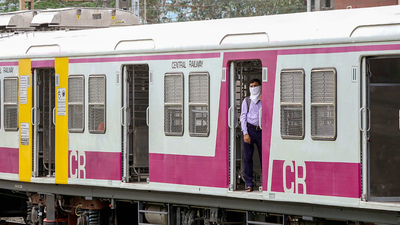
(Image used for representative) Starting August 15, Central Railway is set to launch 15-car local train services, significantly enhancing travel options for commuters

MUMBAI: Central Railway is set to expand its 15-car local train operations from Independence Day, upgrading 22 additional 12-car services on the main line and taking the total number of 15-car services to 54. The longer trains will operate from August 15 on the CSMT-Karjat/Khopoli South East line, benefiting commuters travelling to and from Ambarnath, Badlapur, Karjat and Khopoli.The addition of three coaches to each of the 22 services will increase the passenger-carrying capacity of every upgraded service by 25%, according to Central Railway. The railway has included services during the morning and evening peak periods as part of the latest expansion.Among the down services being upgraded are the Dadar-Khopoli local departing at 7.43am, CSMT-Karjat services at 9.57am and 2.45pm, three Karjat-Khopoli services between 10.40am and 1.15pm, a CSMT-Badlapur local at 4.42pm, and CSMT-Ambarnath and CSMT-Karjat services departing at 7.42pm and 7.50pm, respectively. Two late-night services — CSMT-Khopoli at 10.57pm and CSMT-Ambarnath at 12.05am — will also be upgraded, with both being converted from slow to fast services.In the up direction, the upgraded services include the Khopoli-Dadar local at 4.50am, Ambarnath-CSMT at 8.27am, Khopoli-Karjat at 10am, 11.20am and 12.40pm, Karjat-CSMT at 12.23pm, 5.33pm and 10.03pm, Khopoli-CSMT at 1.48pm, Badlapur-CSMT at 6.17pm and Ambarnath-Dadar at 9.07pm.Central Railway said the latest upgrade includes two morning peak services — the Ambarnath-CSMT local departing at 8.27am and Khopoli-Karjat at 10am — and two evening peak services — the CSMT-Ambarnath at 7.42pm and CSMT-Karjat at 7.50pm.The expansion will also bring operational changes. The KP2 Khopoli-Parel local will now run as a Khopoli-Dadar service, departing at 4.50am, while the KP3 Parel-Khopoli local will become a Dadar-Khopoli service, departing at 7.43am. The A59 CSMT-Ambarnath service will become a Dadar-Ambarnath 15-car local, departing Dadar at 11.23pm. The latter will remain cancelled on Saturdays for maintenance.Central Railway first introduced 15-car locals in 2012 with 16 services. Six more were added in 2019, taking the total to 22. Ten additional services were upgraded in July 2026, taking the number to 32. The latest 22 will push the figure to 54, while the overall number of suburban services will remain unchanged at 1,820.

BMC opens online single-window system for Ganeshotsav pandal permissions

BMC opens online single-window system for Ganeshotsav pandal permissions
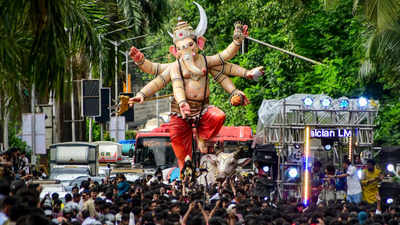
The BMC has launched an online system for Ganeshotsav pandal permissions and NOCs

MUMBAI: BMC on Friday launched its online single-window system for facilitating permissions to he issued to Ganeshotsav mandals and obtain no-objection certificates (NOCs) from the local and traffic police through a computerised process.Ganeshotsav will be celebrated on September 14 this year.The civic system will remain operational from August 14 to September 13. Pandal permissions for Ganeshotsav will be valid till September 26.Mandals can apply through the BMC website under the “For Citizens – Pandal (Public Ganeshotsav/Navratri Festival/Other Festivals)” facility. Applications will first be scrutinised by the concerned ward office, after which NOCs from the local police and traffic police will be obtained online.For new mandals seeking permission for the first time on public or private land, the application will subsequently be placed before the zonal deputy commissioner for approval. Once approved, the mandal will have to pay a Rs 100 fee, following which the ward office will issue the permission.The civic body has also provided an online renewal facility for mandals that already have five-year permissions. Their sites will be physically verified by the ward office to ensure that the location and area match the approved permission before police and traffic NOCs are obtained.Mandals that had obtained only a one-year permission in 2025 have been given the option of applying either for a one-year permission for 2026 or a five-year permission for 2026-30.The BMC has also made participation in a one-day training programme mandatory for two volunteers from every public Ganeshotsav mandal. The training will cover crowd management, fire safety and first aid, among other issues.Meanwhile, the civic body has reiterated that mandals must not dig holes on roads or footpaths to erect pandals. It has urged organisers to adopt techniques that allow pandals to be erected without excavation. Action will be taken against those found digging roads or footpaths for pandal construction.Mandals will also have to comply with fire-safety requirements, licensing and advertising regulations, as well as health-related directives issued by the government to prevent the spread of communicable diseases.For public Navratri celebrations, applications for pandal permissions can be submitted from September 10 to October 10, with permissions valid till October 21.

BMC panel clears Mulund dumping ground land for Dharavi redevelopment casting yard

BMC panel clears Mulund dumping ground land for Dharavi redevelopment casting yard
File photo of Mulund dumping ground

MUMBAI: A proposal to lease around 15 acres of reclaimed land at the Mulund dumping ground to the Dharavi Redevelopment Project (DRP) for five years faced was passed by the Shiv Sena-BJP-led improvement committee panel. The proposal faced stiff opposition from Shiv Sena (UBT) and Congress members at the meeting held on Friday.The land sanctioned is proposed to be used for setting up a casting yard, a precast element manufacturing facility and a ready-mix concrete (RMC) plant for the Dharavi redevelopment project. Shiv Sena (UBT) corporator and committee chairperson Sandhya Doshi said all members were given an opportunity to express their views before the proposal was sanctioned.Opposing the proposal, UBT leader Vishaka Raut said Mulund residents would not accept the decision. “Mulund people will never forgive the ruling party for passing for this,” she said.Congress party leader Ashraf Azmi questioned why the civic body had not invited tenders in the open market for the land. “Why give the land without calling for tenders? This raises questions of favouritism.”Congress corporator Sachin Padwal said the RMC plant should instead be located in Dharavi. “The travel from Dharavi to Mulund will be too far. History has shown that public land which has gone in the past has never come back,” he said.Padwal also alleged that several reservation changes had been made in the past six months. “In six months, there have been 42 proposals only for reservation changes. The next generation will not forgive the ruling party,” he said.Congress corporator from Andheri BMC Meher Haider also questioned the manner in which civic land was being allotted. “You cannot give municipal public land to any private party without a tender,” she said.Bandra West corporator Raja Rahebar Khan at the meeting recalled that how a space in Bandra West had earlier been provided for the Bandra Worli sea Link-related works, and subsequently was sold to Adani ” he said.Defending the proposal, Mulund corporator Prakash Gangadhare said the land was being provided for the benefit of the Dharavi redevelopment project. “Please see the terms and conditions,” he told the opposition party corporators.BJP corporator Aneesh Makwaney said the opposition was attempting to stall a project aimed at improving living conditions in Dharavi.“I think Dharavi people are living in poor conditions. Our government is trying to improve the condition of Dharavi and you are trying to halt development, which includes construction of a casting yard. We are planning to give pucca houses,” Makwaney said.He added that due process had been followed in the allotment of the land.

Bombay HC to state govt

Aggressively implement sterilisation for stray dogs: Bombay HC to state govt

MUMBAI: Flagging the rising population of stray dogs, Bombay high court on Friday asked the State govt to “aggressively” implement the animal birth control programme.“Instead of trying to catch hold of the growing number of (stray) dogs, you have to catch hold of the adult dogs so that it is ensured that they are sterilised… If you stop the growth, rest all falls in line,’ said Acting Chief Justice Ravindra Ghuge and Justice Gautam.The court was hearing a suo motu petition following the Supreme Court’s May 19 judgment . The apex court had refused the pleas of animal lovers and animal rights groups to stay its order for removal of stray dogs from public institutions including hospitals, schools and colleges. SC had directed HCs to register a suo motu case to monitor the implementation of its order by state and union territory governments and ensure compliance within their jurisdiction.During the hearing, the judges said the State administration must realise that if it implements the ABC programme aggressively, there will be no growth of stray dogs. “If every dog is sterilised through the ABC programme, there can be no procreation,’’ said Justice Ghuge.The judges also emphasised the need to catch hold of adult dogs. “ If there is no birth of puppies later, then you are nipping the disease in the bud. Otherwise …you will start trying to find out what is to be done about stray dogs, anti-rabies, this, that,” said Justice Ghuge.He gave the example of Aurangabad High Court saying after sterilising dogs, “you will find hardly 3 to 4 dogs.” The judges said if the population growth of dogs is stopped, other tasks ease. “But if the population is growing, your problems are growing. You have to basically concentrate on the ABC programme. Once that is vigorously implemented, there is no further growth of dogs,’’ Justice Ghuge added.The State’s advocate O A Chandurkar said State’s affidavit mentions ABC programme. The judges granted him time to place on record further compliance affidavit and adjourned the hearing to September 11.

Corporators question BMC’s approach to hawker crackdown

Corporators question BMC’s approach to hawker crackdown

MUMBAI: Corporators cutting across party lines have expressed concern over the manner in which the BMC is carrying out its ongoing action against hawkers encroaching on footpaths, alleging that the drive is arbitrary and suffers from poor execution at the ward level. While corporators broadly backed the ‘Pedestrian First’ initiative, they questioned the way enforcement was being carried out, particularly against hawkers who have been issued QR-coded identity cards by the civic body.BJP corporator Sheetal Gambir said hawkers found occupying excessive space should be asked to reduce their encroachment rather than being repeatedly penalised. “If a hawker is found to be encroaching on the footpath, he should be asked to lessen the space and not be repeatedly penalised. These corporators are coming back to us asking for money to pay the fines too as they are left with no money,” she said.UBT Shiv Sena corporator Deepmala Bhade questioned the BMC’s decision to act against hawkers after issuing them QR-coded identity cards. “QR-coded ID cards were issued to hawkers in our presence and now the BMC is acting against these same hawkers. Then what was the point of distributing these cards?” she asked.BJP corporator Preeti Satam said civic agencies were themselves creating hurdles in implementing the Pedestrian First campaign. She pointed to the lack of JCB machines during enforcement action and said she was informed that the citywide JCB contract had ended on August 9. “In P South there is only one JCB. Where will it act?” she asked.BJP corporator Makrand Narwekar said there was a clear intent among the BMC’s senior leadership to make Mumbai more pedestrian-friendly, but alleged that the same urgency was missing among officials at the lower levels.Congress corporator Tulip Miranda questioned the purpose of QR-coded IDs if they offered no protection to hawkers. “Then why give the QR code itself? Mumbaikars who have been doing business for years are being harassed. We have made the provisions but execution is nil,” she said.The BMC, however, defended its approach, saying the action was not selective. Additional municipal commissioner Prajakta Lavangare Verma said wards had been directed to identify priority footpaths around schools, hospitals and metro stations and ensure pedestrian access.“We are not selectively acting against anyone in particular. We are uniformly cracking down against unauthorised hawkers only,” she said adding that BMC has also created a dashboard to monitor enforcement, with ward officials expected to update details of action taken.

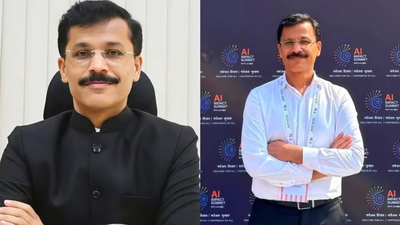
Tukaram Mundhe, the no-nonsense IAS officer leading Maharashtra’s food safety crackdown

Tukaram Mundhe, the no-nonsense IAS officer leading Maharashtra’s food safety crackdown
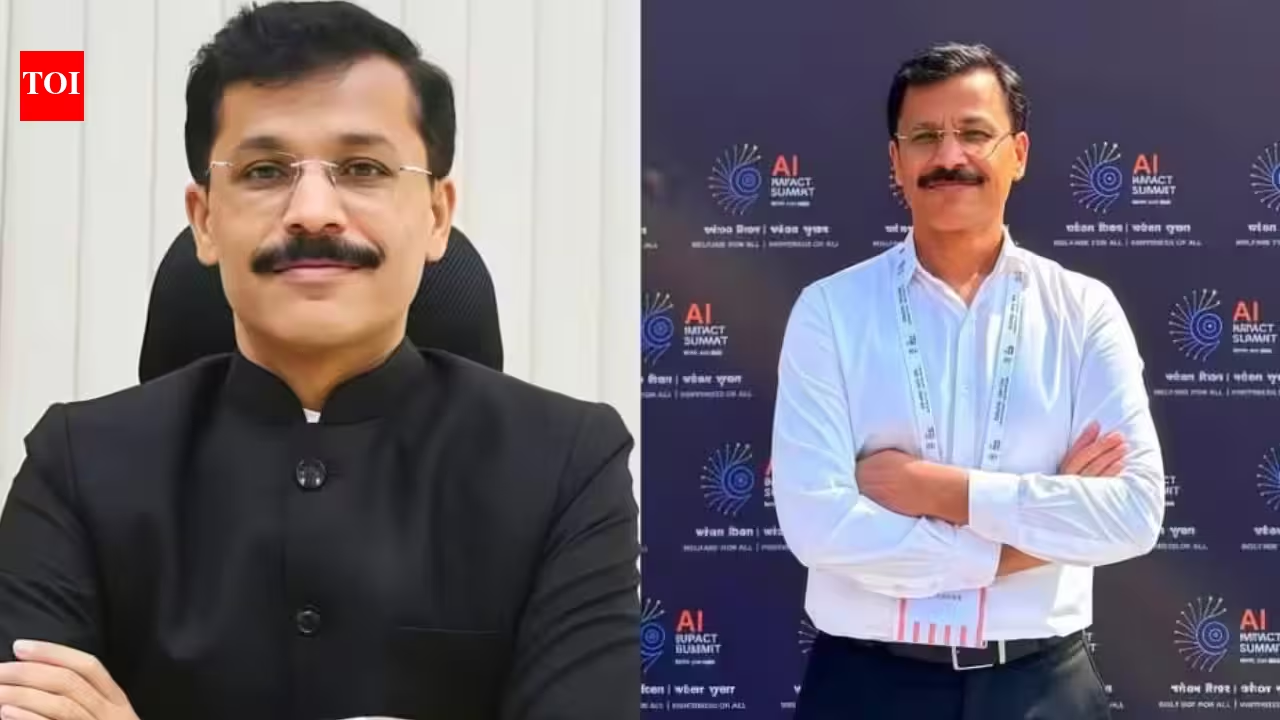
Tukaram Mundhe, Maharashtra’s ‘Singham’ for his tough approach to administration

MUMBAI: From crowded kitchens and storerooms to government canteens and food businesses, Maharashtra’s food safety machinery has been stepping up inspections under FDA commissioner Tukaram Mundhe, an IAS officer whose career has been marked by frequent transfers but whose approach to enforcement has remained uncompromising.The inspections have thrown up problems even at some of Mumbai’s well-known food establishments. Officials have reported pest-control and hygiene violations at K Rustom & Co. in Churchgate, while Noor Mohammadi in Bhendi Bazaar was flagged over hygiene and storage-related shortcomings.At Parsi Dairy Farm, inspectors found fungal growth and raw materials stored near mould-affected walls. Shalimar was also cited for multiple hygiene and storage lapses.At Flint and Wara, inspectors seized allegedly mislabelled products and destroyed expired food stock, according to the information provided. The action has brought attention to conditions that may remain hidden from customers who primarily associate these establishments with their reputation, longevity and popularity.The crackdown, however, extends well beyond Mumbai’s famous eateries. The Maharashtra FDA has been inspecting restaurants, milk suppliers, manufacturers and drug businesses across the state. The department says it has carried out 1,131 inspections, seized food stocks worth nearly Rs 50 crore, including more than 1.6 lakh litres of allegedly adulterated milk, and suspended the licences of 56 restaurants.And at the centre of this enforcement drive is Tukaram Mundhe, the 2005-batch IAS officer known for taking on entrenched interests and maintaining a firm approach to administration.The officer behind Maharashtra’s food safety crackdownMundhe took charge as Maharashtra FDA Commissioner on May 25 and subsequently launched a statewide enforcement campaign focusing on adulteration, hygiene violations and businesses operating without proper licences.The commissioner has made it clear that enforcement will not be limited to what is visible on a customer’s plate.“Adulterated food, poisonous liquor and substandard food products are putting people’s health at risk. The FDA has started a toll-free number for complaints and is receiving an enthusiastic response from citizens. Inspections are being conducted as per rules everywhere, from the High Court canteen to government offices,” he said.Mundhe has also stressed that food safety cannot depend entirely on inspections. In his view, the system works only when businesses comply with regulations, regulators enforce those rules effectively and consumers remain alert.Accustomed to transfersMundhe’s reputation for taking tough administrative positions comes against the backdrop of an unusually long list of postings.He was transferred by the Maharashtra government on March 31, marking his 25th posting in a 21-year bureaucratic career, according to a PTI report. He had earlier served as secretary in the Divyang Kalyan Department before being moved to the Disaster Management, Rehabilitation and Revenue and Forest Department.A June PTI report said Mundhe was also replaced as the guardian secretary of Parbhani, where he had been holding additional charge.Repeated transfers, however, appear not to have altered his approach to public service.Asked about the frequent changes in his postings, Mundhe said: “Frequent transfers do not trouble me. In fact, change is an integral part of progress. The more transfers I have, the more opportunities I get to bring about positive changes.”That attitude has become a recurring part of his public image: a bureaucrat who continues to push his priorities despite being moved from one assignment to another.Beyond files and enforcementMundhe has also spoken publicly about subjects extending beyond administration and enforcement.In a recent social media post after his mother’s death, he said his family had “consciously adopted a sensitive and rational approach inspired by scientific thinking” while carrying out her final rites.After the cremation in their native Tadsonga village in Beed, the family chose to bury the ashes on their agricultural land and plant a banyan tree rather than immerse them in water. They also completed the ceremonies within three days instead of following the traditional 10th and 13th-day rituals.“Nature is the creator and the supreme force of this universe. Protecting, nurturing and respecting nature is the truest form of devotion and tribute,” Mundhe wrote.He said the banyan tree would allow his mother’s love and blessings to remain for generations.Message to Gen ZMundhe has also used his public appearances to speak about young people, urging them not to simply follow popular trends.“Do not blindly follow others. Learn the good qualities from everyone, but create your own identity. Instead of merely drifting with the current, make efforts to bring about positive change in society,” he said.He has also warned about excessive digital consumption, saying the attention span of young people has fallen while screen time has increased.“In the digital age, the attention span of the younger generation has come down to around eight seconds, while screen time has increased to eight or nine hours. Do not merely scroll through reels on social media; think. Be prepared to work hard and create your own identity,” he said.For now, his most visible battle is elsewhere — in kitchens, warehouses, food-processing units, restaurants and supply chains across Maharashtra. Under Mundhe, the FDA’s message is that a familiar name, a long-standing reputation or a loyal customer base cannot by itself guarantee that food is safe.Tukaram Mundhe’s career journey

  • 2005-batch IAS officer
    Mundhe belongs to the 2005 batch of the Indian Administrative Service.
  • Maharashtra FDA chief
    He took charge as Commissioner of the Food and Drug Administration on May 25.
  • Statewide crackdown
    His tenure at the FDA has seen inspections targeting restaurants, milk suppliers, manufacturers and drug businesses.
  • 1,131 inspections
    The department says it has conducted 1,131 inspections under the ongoing enforcement campaign.
  • 56 restaurant licences suspended
    The FDA says licences of 56 restaurants have been suspended.
  • 25th posting
    Mundhe’s March transfer was described by PTI as his 24th posting in a 21-year bureaucratic career.
  • Scientific outlook
    Following his mother’s death, Mundhe publicly spoke about his family’s decision to adopt what he described as a scientific and environmentally conscious approach to the final rites.
  • A strong message to young people
    Mundhe has urged Gen Z to resist blindly following trends, reduce excessive social-media consumption and build an independent identity.

Fake Amul, Gokul milk racket busted in Mumbai, 74 litres adulterated milk seized

Fake Amul, Gokul milk racket busted in Mumbai, 74 litres adulterated milk seized
Man caught adulterating milk with impure water in Mumbai

MUMBAI: Mumbai Police have busted a milk adulteration racket in Kandivali East, with a 48-year-old man allegedly caught red-handed while adulterating branded milk with impure water and preparing it for sale.The Detection Squad of Samta Nagar police raided a residence in Kandivali East and seized 74 litres of adulterated milk bearing Amul and Gokul labels, along with material allegedly used for adulteration and counterfeit empty milk pouches.Police said the accused was allegedly mixing impure water into branded milk before preparing it for sale. A case has been registered under relevant provisions of the Bharatiya Nyaya Sanhita (BNS) and the Food Safety and Standards Act, and the accused has been arrested.The raid comes amid a wider probe into the alleged sale of adulterated milk in Mumbai and its suburbs.

Earlier probe uncovered counterfeit milk-packet network

In a related case, the Mumbai crime branch had earlier busted an alleged racket involved in adulterating milk and selling it in counterfeit packets of reputed brands, including Amul and Gokul.Acting on a tip-off, Unit 12 of the crime branch raided premises in Dahisar East on July 9, where police allegedly found milk packets of reputed brands being cut open, diluted with dirty water and resealed before being sold to consumers.Police seized around 470 litres of milk worth Rs 29,750, 13,000 counterfeit empty Amul milk bags, plastic material, equipment used for adulterating milk and four mobile phones worth Rs 10.79 lakh.During the investigation, police identified the alleged main accused and arrested him in Telangana. His interrogation allegedly led investigators to a factory at Lakshmi Industrial Estate, Valiv Phata, Vasai East, Palghar, where counterfeit Amul milk bags were allegedly being manufactured.Police seized fake Amul bags and machinery allegedly used to manufacture the counterfeit packaging, collectively valued at around Rs 10 lakh.The four arrested were identified as Lingya Ganta (42), Saidul Jingli (33), Yadya Batulla (46) and Ramul Bodopalli (65).Police said the alleged main accused had been supplying counterfeit milk bags to people involved in milk adulteration in Mumbai and its suburbs since 2021. The investigation, police said, helped uncover the network allegedly involved in manufacturing fake packaging and selling adulterated milk.A case was registered at Dahisar police station under relevant provisions of the Bharatiya Nyaya Sanhita and the Food Safety and Standards Act.

What is trending in Mumbai today

Marathi rule for drivers, waterfront projects and a murder case: What is trending in Mumbai today
From Marathi rules for drivers to waterfront projects and a murder case

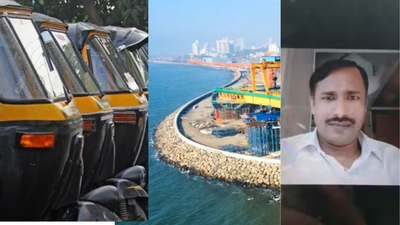
MUMBAI: Mumbai’s biggest local talking points today range from Maharashtra’s new language requirement for commercial drivers to a fresh infrastructure push along the city’s waterfront.Autorickshaw, taxi and app-based cab drivers are preparing for Marathi proficiency requirements, with field testing scheduled to begin from August 16. The move has triggered debate over penalties, livelihoods and the practical challenges faced by drivers.At the same time, the Maharashtra Maritime Board has cleared several major waterfront projects, including work linked to the proposed Mumbai Water Metro, Bandstand redevelopment and the Mandwa jetty.The projects could strengthen water-based connectivity and tourism infrastructure in the Mumbai region.

Marathi test puts drivers under pressure

Drivers and cabbies are scrambling to improve their Marathi skills ahead of the field test. The requirement is emerging as a major issue for Mumbai’s large migrant-driver workforce, with concerns about whether language proficiency should determine their ability to continue operating.

Waterfront infrastructure gets push

Mumbai’s coastline is also back in focus after the Maritime Board cleared infrastructure proposals involving the Water Metro, Bandstand and Mandwa. The projects are being viewed as part of a broader effort to expand Mumbai’s use of waterways and improve waterfront facilities.

Security guard murder case

A human-interest crime story is also drawing attention. Friends and relatives pooled Rs 45,000 to fly the body of security guard Manoj Yadav, who was allegedly strangled in Mumbai earlier this month, back to his family in Madhya Pradesh.