Maha govt’s decision on PoP idol immersion bid to protect big mandals: HC told | Mumbai News

Maha govt’s decision on PoP idol immersion bid to protect big mandals: HC told

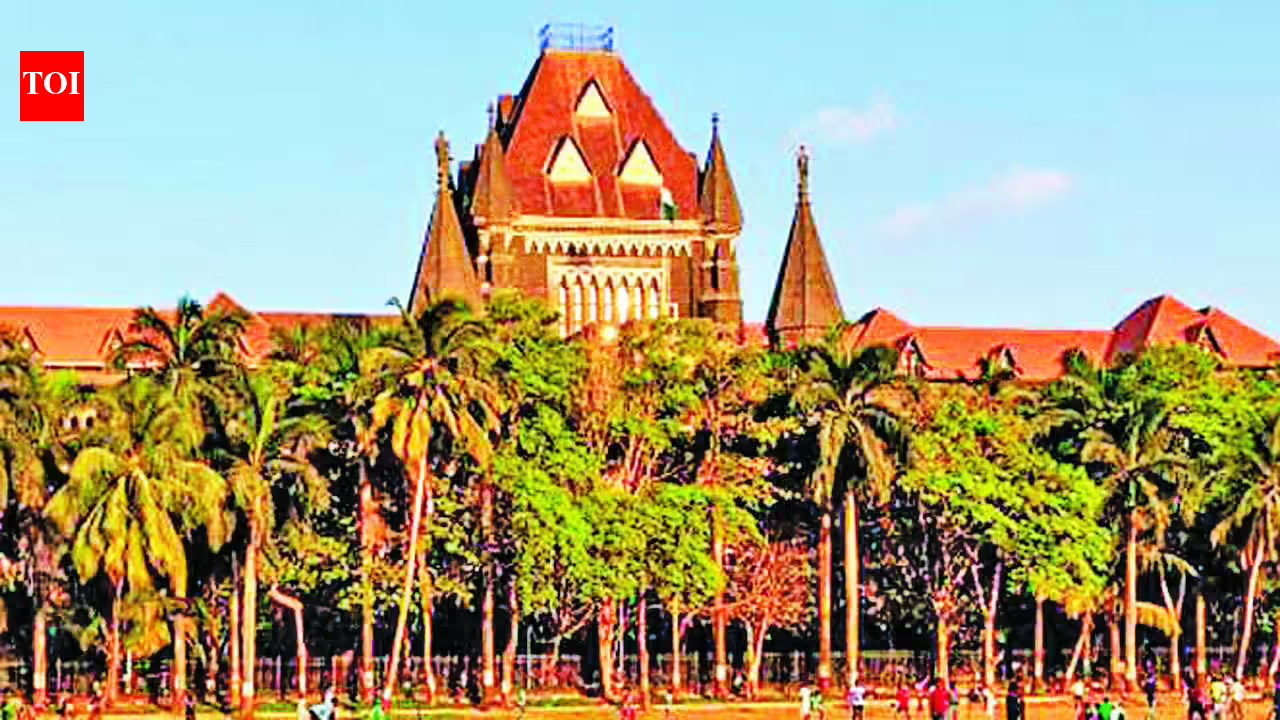
Mumbai: The state government took a decision to allow plaster of Paris (PoP) idols above 6 feet to be immersed in natural water bodies to “protect” big Ganesh mandals, PIL petitioners told the Bombay High Court on Friday.Justices Ajey Gadkari and Kamal Khata were hearing a public interest litigation by two activists and nine clay Ganpati idol makers to enforce Central Pollution Control Board’s May 2020 revised guidelines that banned manufacture, sale and immersion of PoP idols. They also challenged the state govt’s August 2025 guidelines/policy permitting idols above 6 feet to be immersed in natural water bodies such as rivers, lakes and seas.Senior advocate S M Gorwadkar, representing an association of PoP idol makers, said the Centre should take a decision as there is a conflict between CPCB’s 2020 guidelines and the state’s policy on immersion. Senior advocate Mihir Desai, for the PIL petitioners, argued that HC can pass orders in public interest for protection of the environment. He said even if there were no CPCB guidelines, HC could still pass directions. He pointed out that since 2008, the HC has been passing orders on pollution due to PoP idol immersion.Desai further said “everybody is proceeding” on the footing that the 2020 guidelines are binding, courts have upheld it and across the country the guidelines are being implemented. He then said the state government is “possibly under pressure…as there are various expectations especially by big mandals.” “They came to a conclusion that we have to protect big mandals and we are going to allow PoP idols,’’ he added.Desai stressed that CPCB’s guidelines supersede the state’s policy. “Since everybody says PoP causes pollution, therefore we have to treat them as binding. Right to Environment is part of Article 21 (Right to Life),” he said. The hearing will continue on Monday.

Maharashtra government orders medical panels in private hospitals for passive euthanasia cases | Mumbai News

Maharashtra government orders medical panels in private hospitals for passive euthanasia cases

Mumbai: The Maharashtra government has laid down a framework for constituting primary and secondary medical boards in private hospitals to implement Supreme Court guidelines on end-of-life decisions or ‘living will’ and withdrawal of life-sustaining treatment in terminally ill patients.The framework, part of a Government Resolution (GR) issued by the state public health department follows the Supreme Court’s March 11, 2026 judgment in the case of Harish Rana, who had remained in a severely incapacitated state for 13 years and was unable to communicate or express pain. The apex court permitted withdrawal of clinically assisted nutrition, hydration and other life support measures in accordance with his advance directive. Rana was shifted to AIIMS, New Delhi, where he passed away on March 24.The Supreme Court’s judgment in the Rana case had reiterated that decisions on withdrawing life-sustaining treatment in accordance with a patient’s advance directive or living will must be examined and approved by designated medical boards.Passive euthanasia entails withdrawal or withholding of life-sustaining medical treatment to allow a natural death.The GR stated that the Supreme Court, while referring to its Common Cause judgment, had made it mandatory that whenever treatment is proposed to be withdrawn in accordance with a patient’s living will, approval of both a primary and a secondary medical board is necessary.The state had already constituted such boards in government hospitals through a GR issued on November 29, 2024, and has now extended the mechanism to private hospitals, it said.According to the order, the primary medical board in a private hospital will be constituted by the hospital’s medical director, chief executive officer or medical superintendent, and comprise the hospital administrator as chairperson, the treating medical expert, a critical care specialist, and a senior physician or surgeon.The secondary medical board will be constituted under the district civil surgeon for hospitals outside Mumbai and the Mumbai Suburban districts.In Mumbai and Mumbai Suburban, the medical superintendent of the state-run JJ Hospital will be part of the process.The board will include the hospital’s medical director as chairperson, the treating doctor, two subject experts with more than five years of experience, an empanelled external specialist nominated by the district civil surgeon, and the district civil surgeon.The government has also directed district civil surgeons to prepare panels of registered medical practitioners from their respective districts for nomination as external experts on the secondary medical boards.It has further instructed district authorities to bring the GR to the notice of all private hospitals in their jurisdictions.

Tata Memorial Hospital study on papaya pill raising platelet count during chemotherapy under scrutiny | Mumbai News

Tata Memorial Hospital study on papaya pill raising platelet count during chemotherapy under scrutiny

Mumbai: A new research article by Tata Memorial Hospital (TMH) claiming that papaya leaf extract pills help raise platelet count in chemotherapy patients has come under global scrutiny.The Journal of Global Oncology, a peer-reviewed medical journal that published TMH’s paper a few days ago, is “investigating” the study after Kochi-based hepatologist Dr Cyriac Abby Philips —widely known as ‘The Liver Doc’ on social media for his work debunking pseudoscience—requested it to conduct an internal review.The online version of the research paper now carries a disclaimer: “The journal has been alerted to potential concerns regarding the reproducibility and clinical interpretation of the reported findings in this article and is currently investigating. Readers should interpret with caution.”The study began with 219 patients, but after excluding certain individuals, the researchers narrowed the final count to 198, with 69 in placebo. They ultimately concluded that while longer follow-up is required, their findings suggest that the pills are an affordable intervention for chemotherapy-induced thrombocytopenia (low platelet count) and may help maintain chemotherapy intensity.This is one point of contention raised by Dr Philips. He noted that in the group taking the papaya pills, the researchers removed patients who did not recover before calculating the final results. “You can see the number of patients who recovered stays frozen at 83, while the denominator (total number of people in the study) shrinks from 146 down to 129,” he explained.By removing only the failures while leaving every success in place, the researchers effectively lifted the papaya extract’s recovery rate from about 57% to about 64% without a single additional patient actually recovering, Dr Philips added. Besides, he noted that in the placebo group, some patients who did recover were excluded from the final analysis.The study’s lead author Dr Vikas Ostwal said, “The journal has reached out to us with queries, which we are currently addressing as part of standard protocol. We are confident in our research. Our patients have been receiving the extract pills, and their platelet counts have consistently risen by day 4, give or take a day.”The pills for the trial were provided by Micro Labs Private Ltd, and the study received extramural grants from Zydus Pharma Pvt Ltd and Lupin Pharma Pvt Ltd; the latter also sells the extract pills under the brand name ‘Caripapa‘. Dr Ostwal said while the researchers were aware of the funding sources, none of them, including himself, knew that one of the funders sold these pills.Dr Philips also raised concerns that the study’s primary endpoint was moved from day 7 to day 4. A trial’s primary endpoint must be fixed before results are analysed. He noted that the original registration and protocols defined the primary endpoint as ‘platelet recovery by day 7′, yet day 4—which was intended only as an interim check—was used instead.“A trial produces endless data,” Dr Philips said. “If researchers decide after seeing the results what counts as the ‘primary’ endpoint, they can almost always find a positive outcome by pure chance. Deciding in advance is what separates real science from a lucky guess. It is the reason we trust a study’s findings when outcomes are positive.”A biostatistician retired from a public health institution concurred, saying that altering a primary endpoint post-analysis, combined with the exclusions in both arms, is a “red flag” that undermines the reliability of the study. “There could be a clinical benefit that the doctors observed and tried to fit into the data; on paper, there is certainly an issue.”Dr Amar Jesani, one of the founders of Indian Journal of Medical Ethics and former member of the ethics committee at Tata Hospital, said, “There can always be differences of opinion. Science cannot be without conflict. What is not acceptable is something that is done unscientifically, which has to be proved in this case. One way to move forward is for Tata Memorial Hospital to release raw, anonymised data into the public domain.Experts said while the journal’s investigation will be vital, a fresh clinical trial would help prove or disprove the findings.Meanwhile, Dr Philips said a famous institutional name produces a halo effect for journals. “Peer review was never built to catch fabrication or arithmetic that does not add up,” he said. “It runs on an assumption of good faith.”TMH director Dr Sudeep Gupta was unavailable for comment.


Mumbai court grants anticipatory bail to businessman in Rs 65cr Mithi river scam | Mumbai News

Mumbai court grants anticipatory bail to businessman in Rs 65cr Mithi river scam

Mumbai: A sessions court on Friday granted anticipatory bail to businessman Lokesh Onkarlal Jain in connection with the Rs 65 crore desilting scam involving the Mithi river probed by the Economic Offences Wing (EOW). Rejecting the need for custody, Additional Sessions Judge NG Shukla noted that the alleged conspiracy was said to have begun in 2020, while Jain’s contract was for the period 2023 to 2025. The judge observed, “Thus, at the outset, there is no role of the applicant in the alleged conspiracy. The allegation against the applicant regarding forgery of hire agreement and other forged documents submitted to the BMC is independent from the allegation of conspiracy.” Jain, a partner of Bhumika Transport, had approached the court, apprehending arrest.The prosecution alleged that contractors involved in the Mithi river desilting project submitted forged documents, false memoranda of understanding relating to dumping grounds, forged land records and Aadhaar cards, causing a wrongful loss of about Rs 65 crore to the BMC.The EOW alleged that Jain’s firm received Rs 24.49 crore from the BMC by submitting forged documents relating to desilting work. The agency also alleged that Jain entered into a forged hire agreement for specialised desilting machines with a company linked to co-accused Ketan Kadam, though the company had allegedly not purchased those machines. It was further alleged that forged MoUs with landowners, including deceased persons, were submitted for dumping silt.Jain’s lawyers argued that the tender conditions permitted hiring of machines and required contractors to submit assurance documents from manufacturers or suppliers. The defence submitted that the machines were in fact used for the desilting work and that BMC officials had inspected the work from time to time. The defence also relied on the work completion certificate issued by the civic body, which recorded that 1.87 lakh metric tonnes of material had been removed and transported, with the work marked satisfactory.On the allegation of forged dumping-ground MoUs, the defence said Jain had appointed a subcontractor, Kalpesh Corporation, through Arvind Purohit, to handle documents and related work, and that the BMC had been informed about the arrangement. The prosecution opposed bail and argued that custodial interrogation was necessary to trace the source of the alleged forged MoUs, Aadhaar cards and transport records.Granting relief, the court said, “I find that custodial interrogation of the applicant is not required. The documents submitted by the applicant along with tender and during the work of desilting to the officers of SWD (Storm Water Drains) are already seized by the investigating officer from the concerned officer of SWD. In such circumstances, nothing is to be seized from the applicant,” the judge said.

They brought penguins, we’ll bring lions: Mayor’s swipe at Shiv Sena | Mumbai News

They brought penguins, we’ll bring lions: Mayor’s swipe at Shiv Sena
Mayor Ritu Tawade visited the sports facility

Richa PintoMumbai: Mayor Ritu Tawde on Friday took a swipe at the UBT Shiv Sena while renewing her efforts to bring lions to the Byculla zoo, declaring, “If they brought penguins, we will bring lions.The Byculla gardens and zoo currently has 25 birds.Worli MLA Aaditya Thackeray backed the proposal to bring penguins to Mumbai zoo, which is the only zoo in the country to have these flightless birds. Eight Humboldt penguins — three male and five female — were brought into Mumbai’s Jijabai Bhosale Udyaan and zoo in Byculla on July 26, 2016. The penguins were brought from Coex Aquarium, Seoul, in South Korea.Tawde said she was even willing to visit Gujarat’s Sakkarbaug Zoo personally if required to expedite the transfer of lions. Tawde said she decided to revive the proposal after learning that the lion enclosure at the Veermata Jijabai Bhosale Botanical Garden and Zoo remained vacant for four years despite being ready. She has initiated the process to secure the necessary approvals.Zoo authorities said they have informed Sakkarbaug Zoo that they are willing to exchange three pairs of capuchin monkeys for a pair of lions and are awaiting a response from the Gujarat zoo. Officials said they are keen to acquire young lions so they can be bred at the Byculla zoo, helping establish a sustainable captive population. Procuring the capuchin monkeys is expected to cost around Rs 70-80 lakh. Authorities are hopeful the lions could arrive by the end of the year.While the Gujarat zoo is seeking animals in exchange, in the past, Byculla zoo authorities sought that the lions be given to them as a donation. In Jan 2025, the Byculla zoo formally wrote to Gujarat’s principal chief conservator of forests seeking a pair of Asiatic lions as a donation. Earlier proposals also ran into hurdles. On one occasion, Sakkarbaug sought zebras in exchange, but the proposal could not proceed as the Mumbai zoo does not house zebras. In 2019, Maharashtra chief minister Devendra Fadnavis also wrote to the Gujarat chief minister’s office requesting lions for Mumbai, but the move did not fructify.

4-storey building tilts in Nalasopara, residents evacuated | Mumbai News

4-storey building tilts in Nalasopara, residents evacuated
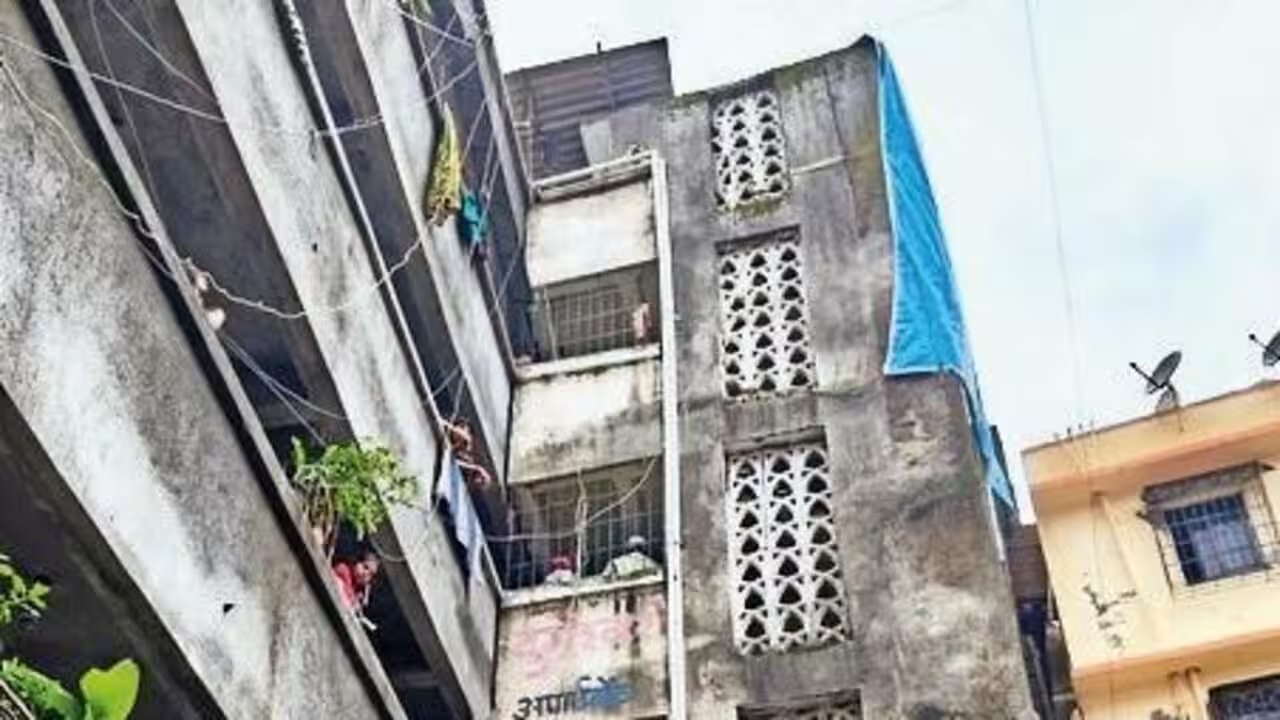
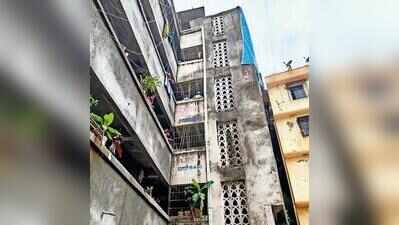
Residents of Durgeshwari Apartment in Om Nagar noticed that the ageing building had tilted to one side and alerted the Vasai-Virar Municipal Corporation

Mumbai: Panic gripped residents of a housing society in Nalasopara East on Friday evening after a four-storey building developed a tilt, prompting authorities to evacuate all occupants amid fears of a collapse.The incident took place around 6pm at Durgeshwari Apartment in Om Nagar. Residents noticed that the ageing building had tilted to one side and alerted the Vasai-Virar City Municipal Corporation (VVCMC). Fire brigade personnel rushed to the spot and launched an evacuation operation after assessing the structure as potentially unsafe.The rescue operation lasted for nearly an hour, during which all residents were safely evacuated. The surrounding area was also cordoned off as a precaution. No injuries were reported.Chief Fire Officer Rohan More of VVCMC said the building is old and nearly half of its residents had already vacated their flats due to its deteriorating condition. “Considering the ongoing monsoon and the possibility of the structure becoming more unstable, we decided to evacuate the remaining occupants as a precautionary measure,” More said.He added that a structural audit would determine whether the building is fit for habitation. “Our preliminary inspection revealed extensive plaster damage and multiple cracks at several locations in the structure. Until the structural audit is completed, it cannot be declared safe for occupancy,” he said.The evacuated residents have been shifted to a municipal relief shelter, where arrangements for accommodation, food and other essential facilities have been made, officials said.

Mumbai zoo penguin count rises to 25 after four chicks declared healthy | Mumbai News

Mumbai zoo penguin count rises to 25 after four chicks declared healthy
(Left to right) Leo, Bella and Lily

Mumbai: The Humboldt penguin colony at Mumbai’s Veermata Jijabai Bhosale Botanical Garden and Zoo has grown from 21 to 25, with the civic body revealing that four chicks born over the past year have now been declared healthy and added to the public count.Zoo officials said the births were deliberately kept under wraps until the chicks were stable. A male penguin, Pikachu, was born in Oct 2025, followed by a female, Lily, in Jan 2026. Two more chicks, Leo and Bella, were born in Feb.Zoo officials said Pikachu, Leo and Bella are the offspring of penguins Donald and Daisy, while Lily was born to Popeye and Olive.With the latest additions, the existing penguin enclosure has reached its designed capacity of 25 birds, prompting the zoo authorities to plan an expansion of the facility.Officials said the current penguin habitat, spread over around 2,000 sq ft, will be expanded to 3,000 sq ft, increasing its capacity from 25 to 40 penguins. The expansion will be achieved by integrating an adjoining space within the existing facility, and work for the project is already underway.During the integration, likely to begin towards the end of the year, all 25 penguins may be shifted to the zoo’s quarantine facility for about two to three months. Officials said the penguin exhibit is likely to remain closed to visitors during this period.The growing penguin population has also prompted the zoo to explore relocating some birds. Officials said the zoo had approached other zoological parks across the country, initially proposing exchanges and later even offering penguins as donations. However, there has been little interest.“The infrastructure required to house Humboldt penguins is highly specialised and expensive. Maintaining the habitat involves advanced temperature control, water filtration and veterinary care, which many zoos are not equipped for,” a civic official said.In July 2023, the BMC had written to Nehru Zoological Park in Hyderabad, listing one male and one female Humboldt penguin among seven species proposed for exchange. However, no proposal has materialised so far.The penguins, introduced to Byculla Zoo in 2016 from South Korea, have emerged as the zoo’s biggest attraction, drawing thousands of visitors every week and contributing significantly to its revenue.

BMC plans scientific survey to classify Mumbai’s trees by risk level after monsoon crash incidents | Mumbai News

BMC plans scientific survey to classify Mumbai’s trees by risk level after monsoon crash incidents

Mumbai: In the wake of a spate of tree fall incidents during the recent heavy rain spell, BMC has initiated work on a scientific action plan to classify Mumbai’s trees based on their risk level and create a comprehensive database on their health, age and structural condition.At a meeting held at the BMC headquarters, the civic administration, tree experts, botanists and environmentalists discussed conducting a ward-wise survey of trees with the help of botany students and experts. The survey will classify roadside trees as highly hazardous, hazardous or healthy, based on their condition and structural stability.The BMC will also explore whether mechanically supporting roadside trees that have developed a dangerous lean can help prevent accidents.An 11-year-old boy, Vihaan Srivastava, died on June 30 when a tree came crashing down on the school bus that he was travelling in.Civic data shows that 830 trees fell across Mumbai between June 22 and July 6, including 480 on private properties, following spells of strong winds. During the same period, the city also recorded 1,238 branch-fall incidents, of which 709 occurred on private plots.Officials said the proposed survey would help create a scientific database containing details such as the tree’s species, age, health, structural condition, estimated lifespan and other relevant parameters. The data is expected to guide future pruning, maintenance and risk mitigation measures.The meeting also recommended preparing a handbook on tree conservation and maintenance for citizens and civic officials, while emphasising that compensatory plantation for trees felled due to development projects should, as far as possible, take place within Mumbai using suitable native species and adequate growing space.Another key proposal was to develop a standard operating procedure (SOP) for scientific pruning of trees, adopt modern equipment and provide regular training to civic staff. The BMC also plans to frame guidelines for pruning trees located on private properties.Experts stressed that whenever a tree falls, the focus should be on scientifically investigating the underlying causes—including soil conditions, root health, drainage, available space for root growth and structural stability—instead of merely removing the fallen tree.The meeting also discussed developing biodiversity zones across the city, identifying suitable locations for roadside plantations, increasing bamboo plantations where feasible and preparing long-term tree management strategies keeping climate change in mind.Officials said the suggestions would be examined before a detailed action plan is finalised and implemented in phases.

Western Railway seeks Kandivali defence land for MMR’s biggest long-distance rail terminal | Mumbai News

Western Railway seeks Kandivali defence land for MMR's biggest long-distance rail terminal
Western Railway will seek the Defence Ministry’s approval for the transfer of the land identified for the project. (File Photo)

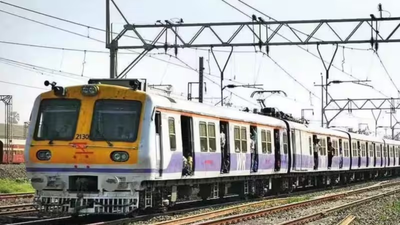
MUMBAI: Western Railway is planning to propose the setting up of the Mumbai Metropolitan Region’s largest long-distance railway terminal at Kandivali, a project aimed at easing congestion at Mumbai Central and Bandra Terminus while creating capacity for 54 additional mail and express trains every day.The proposal is still in the formulation stage internally, and it is learnt that once it is finalised, Western Railway will seek the Defence Ministry’s approval for the transfer of the land identified for the project.Sources in the Railways said the new terminal could cater to around one lakh additional passengers daily and improve connectivity for travellers heading to Gujarat, Rajasthan, Madhya Pradesh, Uttar Pradesh and Bihar. Around 80% of Mumbai’s long-distance trains currently originate from or terminate at Mumbai Central and Bandra Terminus, leaving little room to introduce new services.The proposed terminal is planned on a 1,100-metre by 400-metre plot near Kandivali Goods Yard, which railway officials say is large enough to accommodate nine platforms, pit lines and train maintenance facilities. The land, however, belongs to the Defence Ministry. A joint inspection of the site was conducted on February 11, 2025, following which the Railways submitted a formal proposal seeking its transfer.A second parcel measuring 700 metres by 600 metres between Kandivali and Malad has also been identified. Owing to its smaller size, it is proposed to be used for supporting infrastructure such as stabling and pit lines.According to the plan, the terminal will have nine platforms, each 625 metres long, six additional railway lines for train stabling and maintenance, and a 750-metre passenger deck above the platforms. The facility will also have direct connectivity to Kandivali railway station, the Mumbai-Ahmedabad Highway and the city’s road network.“We need new terminals to increase the number of long-distance trains serving the Mumbai region. The Kandivali proposal will also be discussed with the Defence Ministry,” said a senior official, requesting anonymity.

Fake website used to cheat members of holiday resort chain | Mumbai News

Fake website used to cheat members of holiday resort chain

Mumbai: The nodal cyber police have registered an FIR against unidentified fraudsters for creating fake websites and email addresses resembling those of Mahindra Holidays & Resorts India Ltd (MHRIL) and offering membership upgrades and annual subscription fee discounts.The MHRIL operates hospitality services across India through its official website, clubmahindra.com, offering membership packages ranging from Rs 1.60 lakh to Rs 15 lakh. Members are required to pay an annual renewal subscription of Rs 18,000 to Rs 22,000.The fraud came to light on June 23, after a Club Mahindra member, Rajtesh Ganguly, informed the company that he had paid Rs 1.26 lakh on May 16 for membership upgrade but had received no confirmation. An internal verification showed that the company had neither received the payment nor any request for the upgrade. Police said several others had also been duped.The company’s IT team subsequently detected and blocked a fraudulent domain, mahindraholidaysandresorts.com. However, investigators found that another deceptive domain, mahindraholidaysandresort.com, was registered the very next day.The complaint states that fraudsters used the fake email address and posed as company representatives, including a person identifying himself as ‘Suniel’ using mobile and another claiming to be relationship manager ‘Manish Pandey’. They allegedly contacted existing Club Mahindra members with false offers of discounted annual subscription fees and membership upgrades.Several customers, including Shashi Sharma, Mohit Saxena, Asit Rana, Ajay Agarwal, Nimal Goyal and Pradeep Bohra, reportedly transferred money after being deceived. Police said the money was routed through third-party payment gateways. The company clarified that these gateways are not authorised to collect membership fees or annual subscription fees on its behalf.The complaint further alleges that the accused created fake electronic records and impersonated company officials as part of a criminal conspiracy to cheat customers.