
A question many ask: Why does Mumbai lack space for dissent | Mumbai News
A question many ask: Why does Mumbai lack space for dissent
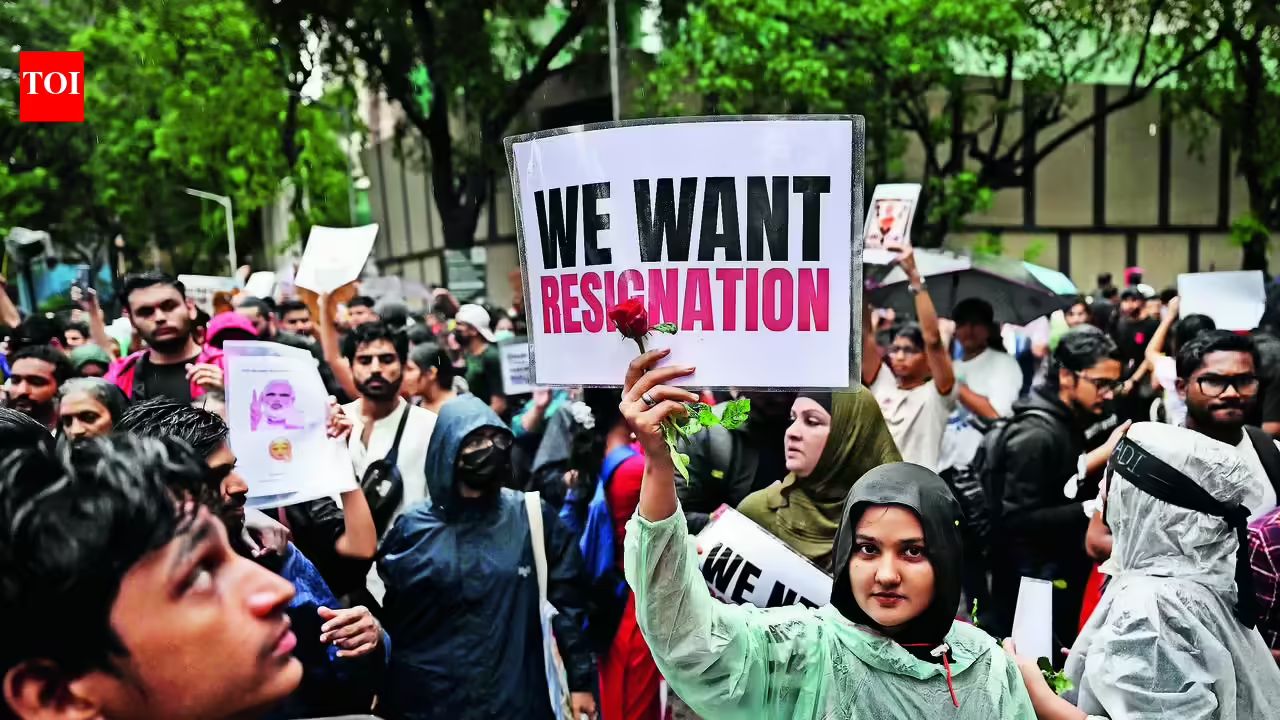
Mumbai, July 22, 2026: More than 1,000 students and demonstrators gathered at Shivaji Park in Mumbai on Wednesday, braving heavy monsoon rain as part of a protest led by the social media-driven Cockroach Janta Party (CJP) movement. Protesters carrying placards and the Indian national flag raised slogans demanding accountability over alleged irregularities in the NEET examination and called for the resignation of Union Education Minister Dharmendra Pradhan. The demonstration was held in solidarity with ongoing protests at Jantar Mantar in New Delhi. Tensions escalated as police moved in to disperse the gathering, with hundreds of protesters detained and taken away in police vehicles, while demonstrators continued chanting slogans demanding justice, accountability and reforms in the education system.

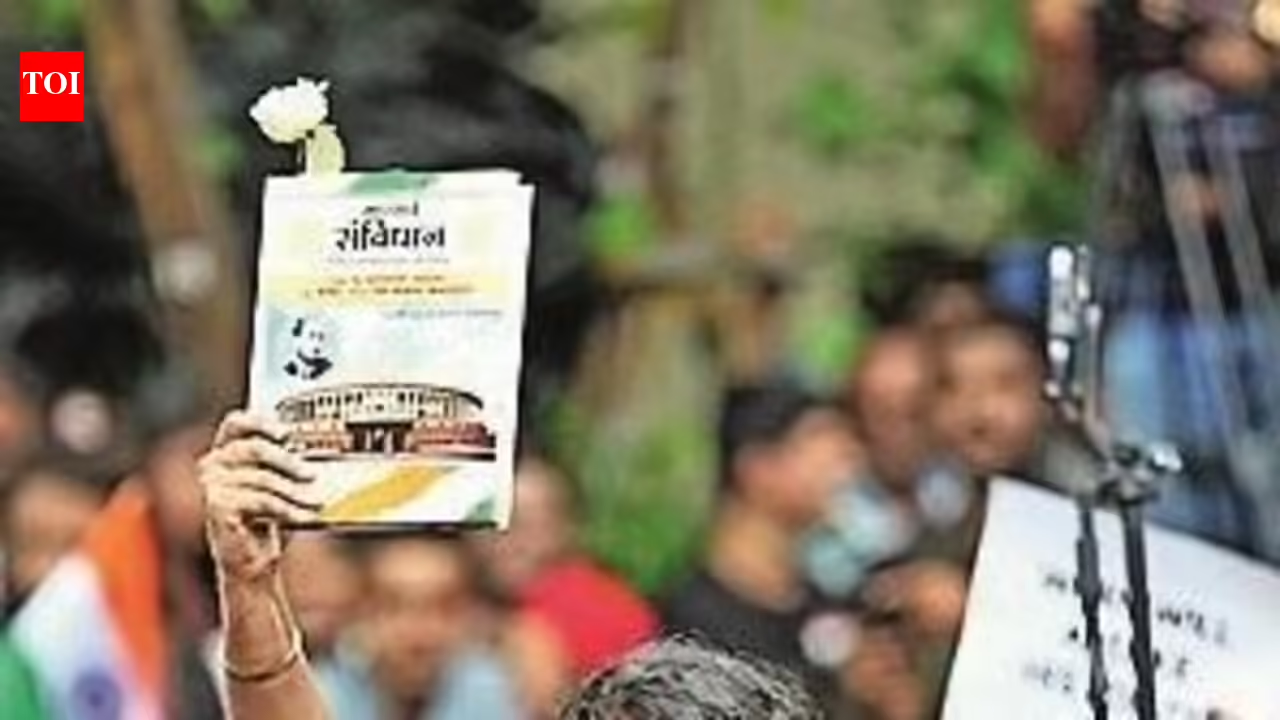
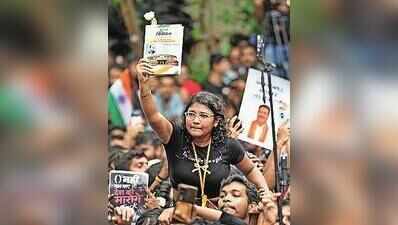
Not far from a statue of BR Ambedkar, the architect of India’s Constitution, stood a 35-year-old woman holding a copy of the document. The NGO worker joining the students’ protest near Chembur’s Dr Babasaheb Ambedkar Garden, looked unfazed by a last-minute relocation. Chembur was one of many pockets where demonstrations sprang up after organisers said police had rescinded permission for Azad Maidan, the city’s only officially designated protest site. “Protests are by their very nature disruptive. The point is to get the govt to listen to you,” she said. “So, having a designated space defeats the purpose, right? Wouldn’t it mean giving the police more control over the protest?”Her question goes to the heart of the question. The city has a notified protest ground in Azad Maidan, but it’s highly regulated and requires prior police permission and places limits on the size of the gathering as well as the timings. It’s a designated space that struggles to be seen. “Azad Maidan is like a black hole,” says Amita Bhattacharya, who took part in the Aarey agitation. “People walking on the road next to the Maidan also don’t get to know that a protest is going on in the Maidan.” So, the harder question is whether dissent can ever be contained within such a space by issuing prohibitory orders.Mumbai has a long history of political mobilisation. August Kranti Maidan, then Gowalia Tank, witnessed Mahatma Gandhi’s ‘Do or Die’ call in 1942. The city later saw the Royal Indian Navy uprising, the Samyukta Maharashtra movement, Datta Samant’s 1982 textile strike, Dalit Panther mobilisations and, more recently, anti-CAA protests playing out across open grounds.What the city lacked though was a legally recognised venue for public dissent. Azad Maidan became that space almost by default. Its location—close to Mantralaya, Bombay High Court and CST—made it the natural endpoint for marches. In 1997, after residents around Nariman Point complained about noise and traffic disruption near Mantralaya, the high court passed an interim order directing protest marches to culminate there. The arrangement was meant to be temporary. Instead, it governed Mumbai for nearly three decades.It took until March 2025 for the court to direct the state to notify Azad Maidan as the city’s designated protest site. The Public Meetings, Agitations and Processions Rules, 2025, however, turned it into a highly regulated space requiring permission, limiting protests from 9 am to 6 pm on working days, a cap of 5,000 participants, no indefinite occupations, and curbs during festivals, legislative sessions, VIP movement or on security grounds.The rules were almost immediately tested. The Manoj Jarange-led Maratha reservation agitation, though permitted only at Azad Maidan, spilled over into south Mumbai, bringing traffic to a standstill. This sharpened the older debate around the lack of sufficient public spaces for dissent.Around the world, democracies wrestle with the same tension: how to protect the right to protest while managing the disruption it inevitably causes. New York, for instance, has no equivalent of Azad Maidan or Jantar Mantar — peaceful assembly on streets, sidewalks and in parks is broadly protected without a permit, and only marches that block traffic or use amplified sound need one. But that openness too has limits: when Occupy Wall Street protesters tried to hold Zuccotti Park overnight in 2011, police cleared the encampment, and a court later let them return only without tents or sleeping bags.Urban scholar Tali Hatuka has argued that protest does not strictly need a sanctioned space at all: in situations of extreme grievance, people find ways around whatever barriers exist. What cities can do, in Hatuka’s view, is keep public space open rather than fenced.In Mumbai, though, accessible public spaces are on the decline. Pankaj Joshi, Principal Director, Urban Centre Mumbai, says Mumbai has roughly 1.2 square metres of public open space per person, far below cities such as Singapore, which provides around 39 sq m per resident. India’s own URDPFI planning guidelines recommend 10-12 sq m of open space per person — suggesting Mumbai’s shrinking public spaces are not an inevitable consequence of high population density, but rather the result of faulty urban planning. “Recently, the govt has begun diluting open spaces further by allowing developers to construct on playgrounds and recreation grounds through provisions in DCPR,” says Joshi.Oamkar, a youth who took part in the recent protests, says access to most public spaces in Mumbai is controlled. “What we need is open spaces where we can simply gather.”
Offers of free legal, med aid online give Mumbai protesters relief | Mumbai News

Offers of free legal, med aid online give Mumbai protesters relief
A group of lawyers said it had got hundreds of calls in three days

Mumbai: Amid student protests seeking the resignation of Union education minister Dharmendra Pradhan across the city, Instagram has become a vital tool for disseminating information. This includes pamphlets with legal aid and medical contacts as well as basic details such as venues and dates of demonstrations.One such Google Drive link was created by therapist Aishwarya Chawla, who circulated the contacts of lawyers and mental health professionals for major cities in case protesters needed help. Its ‘know your rights’ document was compiled by a law student from Delhi University, which starts with a message: “Detention may restrict your movement, but it cannot confine your voice. Stand firm, know your rights, and remember that an entire community of legal minds is working tirelessly to secure your due process.For Mumbai, a team of nine lawyers from Bombay high court signed up to provide free legal aid to any protester. One such lawyer, Vikrant Khare, said the legal team had received hundreds of calls over the last three days. “A few of us got together after the police violence in Delhi to be of help to students in Mumbai in case a similar situation happened.” He said there were multiple cases of police violence against students, along with unlawful detentions, across the city.Another lawyer, Srushti More, said many protesters learnt about the legal aid after seeing lawyers visit police stations to rescue detainees, spread through word of mouth and social media. “Our numbers quickly went on Cockroach Janta Party pages and among social media users with mass following. We are glad we could help. There have been instances where people were kept in police stations from morning till late evening,” she said.

Thane district records 60% voter enumeration under SIR exercise | Mumbai News

Thane district records 60% voter enumeration under SIR exercise
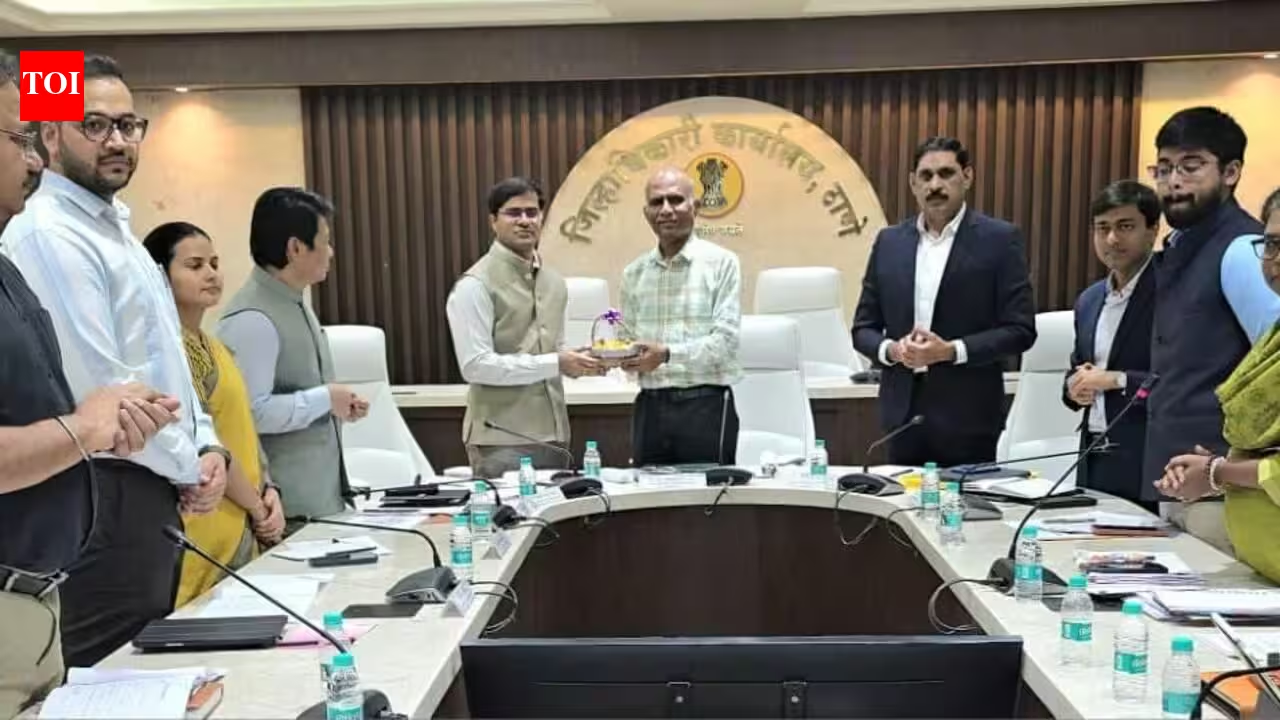
Maharashtra Chief Electoral Officer and Additional Chief Secretary S. Chockalingam on Thursday conducted a review of SIR process in Thane

Thane: Nearly six out of every 10 voters in Thane district have received enumeration forms under the Election Commission’s Special Intensive Revision (SIR) exercise, a constituency-wise review of the ongoing process revealed.The review, conducted by Maharashtra chief electoral officer and additional chief secretary S. Chockalingam on Thursday, showed that Owala-Majiwada and Bhiwandi Rural Assembly constituencies recorded the highest distribution of enumeration forms, while Kalyan Rural and Kalyan West reported the lowest numbers so far. Chockalingam, during his address to officials, directed them to ensure completion of the revision of all stages within the prescribed timeline and maintain continuous monitoring of field-level work.“Officials have been instructed to ensure that Booth Level Officers (BLOs) conduct door-to-door verification, accurately fill enumeration forms, verify documents, process applications on time and clear pending cases. Authorities have also been told to remove ineligible entries strictly as per rules while ensuring that no eligible voter is left out,” an official present for the meet said.Meanwhile, even as the authorities push to complete the revision within the deadline, voters and political leaders raised concerns over difficulties in the process.NCP (SP) MLA Jitendra Awhad highlighted the case of a senior medical professional whose name was allegedly missing from the electoral roll despite having voted for several decades. In a video message shared on social media, Awhad questioned how elderly voters could be expected to stand in queues to locate their names and submit documents, including identity proofs of parents who have passed away.“I am a voter for decades, and am I expected to search my name standing in queues? They are also asking for documents of my father, who passed away years ago,” the professional said.On the other side of the suburbs, Shiv Sena (UBT)’s Rohidas Munde raised questions over the implementation of door-to-door verification in Diva. He alleged that instead of BLOs visiting voters’ homes, the process was increasingly dependent on special camps.“The purpose of SIR is physical verification of voters to check whether they still reside at the given address, have migrated or are deceased. If the process is limited to camps, senior citizens, persons with disabilities and those unable to visit may be excluded,” Munde said.

Shared auto not workplace: HC quashes action under POSH Act against bank employee | Mumbai News

Shared auto not workplace: HC quashes action under POSH Act against bank employee
Bombay HC Bombay High Court at Mumbai is one of the oldest High Courts of India

Mumbai: The Bombay high court has set aside an order against a bank employee for sexual harassment under the POSH Act as the alleged offence took place in a shared auto that does not fall under the definition of “workplace.” The share-auto was not a ride that was employer-arranged and hence doesn’t fall under the definition of workplace under the Sexual Harassment of Women at Workplace (Prevention, Prohibition and Redressal) Act (POSH).The internal committee of a company or an organisation can entertain a complaint of an aggrieved woman of being subjected to sexual harassment only at the “workplace”, said the HC ruling by Justices Suman Shyam and F P Pooniwalla. The banker had moved the HC against the decision.In March 2023, the bank employee was travelling to his office in BKC from Kurla railway station in a shared auto. He was in the middle seat between the complainant woman and another passenger. The ride was bumpy due to bad roads and at times, his left hand must have touched her bag which she carried on her right arm, his lawyer argued. She stopped the ride and allegedly abused him and “abruptly” sprayed pepper spray into his eyes, alleging that he touched her inappropriately, said his plea. A crowd gathered, the auto driver asked everyone to sit back and proceed to the destination. He said she claimed to be related to an ex-public servant and called him, the police, her colleagues to “come and hit” him. The police arrived, took him to the police station and registered a case of sexual harassment under the Indian Penal Code.The HC said it has not gone into merits of the controversy of whether he had sexually harassed her in the shared auto or not.She also lodged a complaint with the internal committee or IC of her company. The IC forwarded the complaint to his employer. A probe was held and the bank’s internal committee found him “guilty of sexual harassment” and recommended “action as per service rules” against him. The bank’s IC concluded that the shared auto ride was indeed ‘workplace,’ as it invoked Section 2(o)(v) of POSH Act. The section stated that any place visited by the employee arising out of or during employment, including transportation by the employer for undertaking the journey, would mean a “workplace”.His counsel Anand Pande said the IC has erred since the transportation ought to have been provided by the employer, which the auto was not. The HC said, “It can be seen that Section 2(o)(v) includes within the meaning of “workplace” transportation by the employer for undertaking a journey to any place visited by the employee arising out of or during the course of employment. Therefore, in order to fall within the meaning of “workplace”, the transportation has to be provided by the employer,” which the bench said was not the case in this matter. The IC had not jurisdiction to entertain her complaint and pass an order, since the alleged incident did not occur at a ‘workplace’, HC held.

Chief electoral officer reviews Thane’s preparedness for Special Intensive Revision (SIR) | Mumbai News

Chief electoral officer reviews Thane’s preparedness for Special Intensive Revision (SIR)
Maharashtra Chief Electoral Officer and Additional Chief Secretary S. Chockalingam on Thursday conducted a review of SIR process in Thane

Thane: Nearly six out of every 10 voters in Thane district have received enumeration forms under the Election Commission’s Special Intensive Revision (SIR) exercise, a constituency-wise review of the ongoing process revealed.The review, conducted by Maharashtra chief electoral officer and additional chief secretary S. Chockalingam on Thursday, showed that Owala-Majiwada and Bhiwandi Rural Assembly constituencies recorded the highest distribution of enumeration forms, while Kalyan Rural and Kalyan West reported the lowest numbers so far. Chockalingam, during his address to officials, directed them to ensure completion of the revision of all stages within the prescribed timeline and maintain continuous monitoring of field-level work.“Officials have been instructed to ensure that Booth Level Officers (BLOs) conduct door-to-door verification, accurately fill enumeration forms, verify documents, process applications on time and clear pending cases. Authorities have also been told to remove ineligible entries strictly as per rules while ensuring that no eligible voter is left out,” an official present for the meet said.Meanwhile, even as the authorities push to complete the revision within the deadline, voters and political leaders raised concerns over difficulties in the process.NCP (SP) MLA Jitendra Awhad highlighted the case of a senior medical professional whose name was allegedly missing from the electoral roll despite having voted for several decades. In a video message shared on social media, Awhad questioned how elderly voters could be expected to stand in queues to locate their names and submit documents, including identity proofs of parents who have passed away.“I am a voter for decades, and am I expected to search my name standing in queues? They are also asking for documents of my father, who passed away years ago,” the professional said.On the other side of the suburbs, Shiv Sena (UBT)’s Rohidas Munde raised questions over the implementation of door-to-door verification in Diva. He alleged that instead of BLOs visiting voters’ homes, the process was increasingly dependent on special camps.“The purpose of SIR is physical verification of voters to check whether they still reside at the given address, have migrated or are deceased. If the process is limited to camps, senior citizens, persons with disabilities and those unable to visit may be excluded,” Munde said.

3 dead, 244 rescued, 1,500 evacuated as floods continue to batter Palghar | Mumbai News

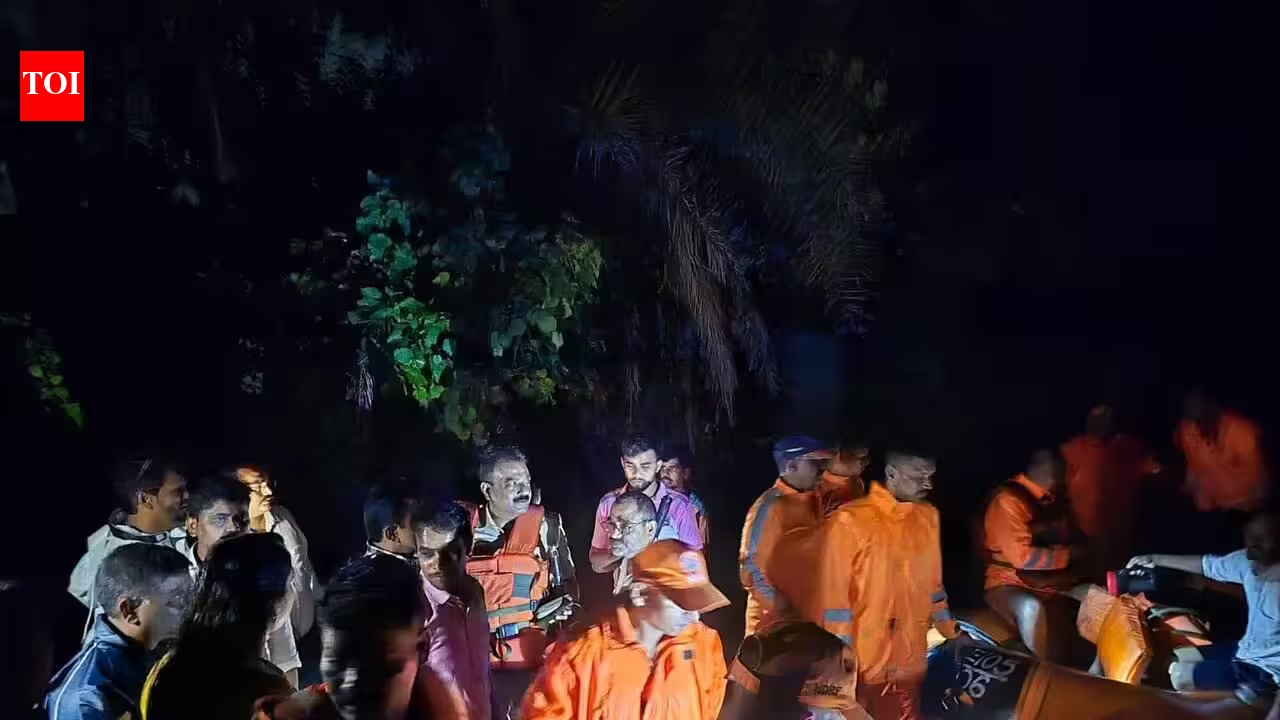
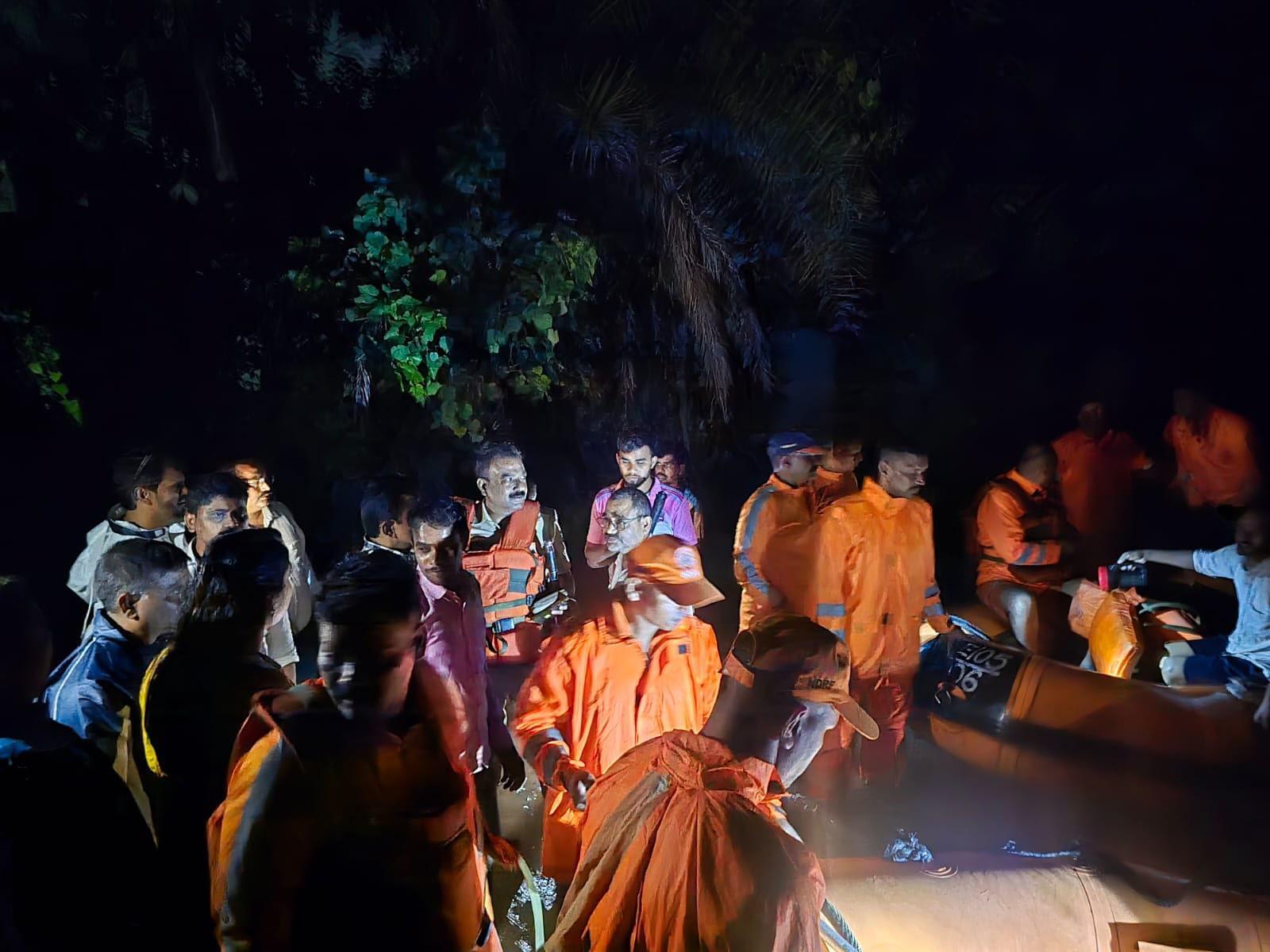
Palghar: Flood conditions continued to prevail across Palghar district on Friday despite a reduction in rainfall, leaving three people dead in Dahanu, and with several villages remaining cut off and without electricity. Rescue teams evacuated 244 people stranded by floodwaters, while nearly 1,500 residents were shifted to safer locations as authorities continued relief operations.The heavy rain over the past few days has severely affected Dahanu, Talasari and Palghar talukas, submerging roads, damaging bridges and culverts, and disrupting connectivity to several villages.The three people who lost their lives in rain-related incidents in Dahanu taluka include Jagdish Machhi, 39, who was swept away in floodwaters, and Rupesh Dhadga, 30, who died after slipping into a waterlogged area while on his way to his farmland. The identity of the third deceased person is yet to be established, officials said.Four teams of the National Disaster Response Force (NDRF) were deployed for rescue and relief operations across the district. In a joint operation, the NDRF and the Vasai-Virar Municipal Corporation’s fire brigade rescued 244 people and two animals from Gunjale, Kirat and the S Crane Factory area.Flooding also disrupted road traffic at several locations. Traffic on stretches of National Highway 48, including the Talasari-Ahmedabad carriageway, as well as on several state highways and major district roads, was temporarily suspended after roads were inundated, culverts were washed away, landslides occurred and trees fell on roadways.The torrential rain caused extensive damage to MSEDCL‘s power distribution infrastructure. A total of 97 high- and low-tension electricity poles collapsed, while around nine kilometres of power lines were damaged. In addition, 25 distribution transformers and 10 power feeders were affected, leaving several villages without electricity. MSEDCL said efforts were underway to restore power supply across the district by Saturday.The public works infrastructure also suffered significant damage. Nearly 29.45 km of roads have been damaged, while 24 cross-drainage structures and causeways and six bridges have been affected. The preliminary cost of restoration has been estimated at Rs 13.5 crore.District collector Dr Indurani Jakhad said the administration was closely monitoring the situation and that rescue, relief and restoration work was continuing on a war footing.Vasai-Virar faced a second consecutive day of complete disruption in water supply on Friday as power supply to key water treatment facilities remained unrestored too.Heavy rainfall over the past three to four days has knocked out electricity at the Suryanagar Water Treatment Plant at Kavdasa, the old and new Surya dam water supply schemes at the Maswan pumping station, and the Dhuktan Water Treatment Plant. The outage has brought the city’s water distribution system to a standstill.
Mumbai FDA Shuts Down Four Bakeries for Food Safety Violations | Mumbai News

Mumbai FDA Shuts Down Four Bakeries for Food Safety Violations

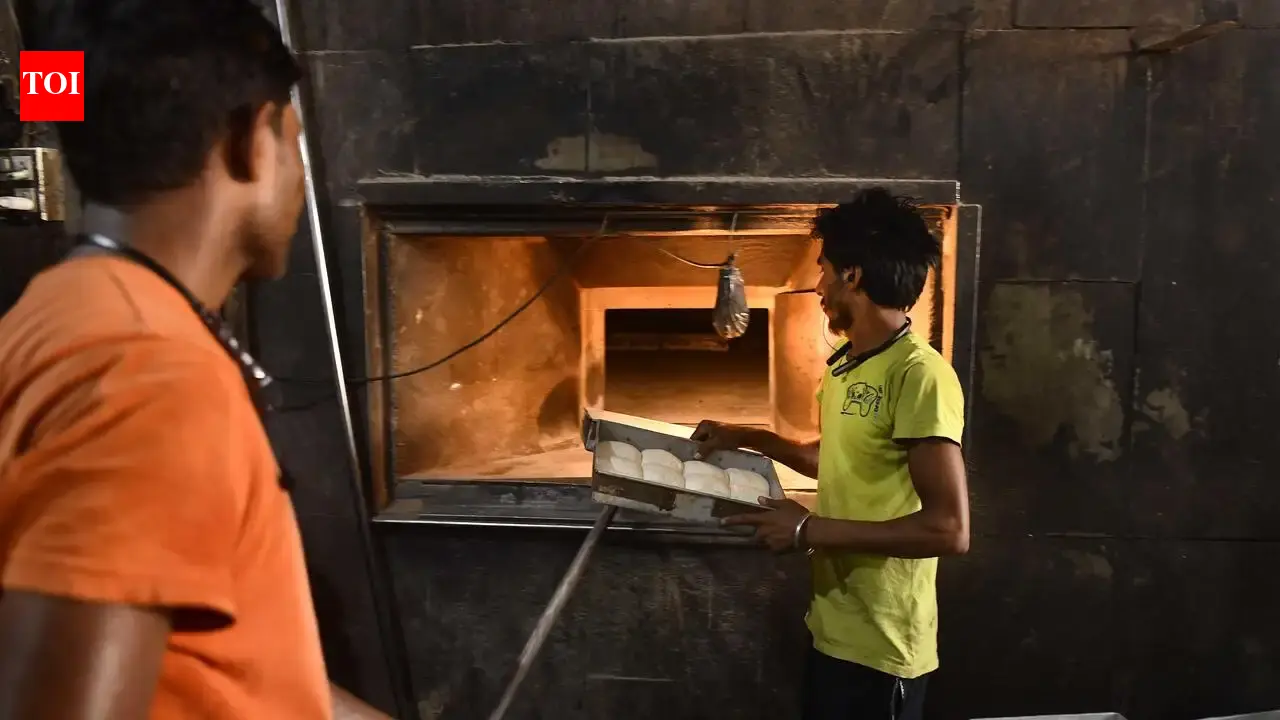
Mumbai: After cracking down on the illegal sale of gutka, unhygienic restaurants and milk adulteration, the Food and Drug Administration (FDA) has turned its attention to bakeries across Mumbai.During a special drive covering 34 bakeries, FDA officials found several establishments operating without mandatory registration or licences, besides detecting food safety and hygiene violations.The FDA issued closure notices to four bakeries: Bengaluru Iyengar Bakery (Kalachowkie), Golden Bakery (Chirag Nagar, Ghatkopar West), Mirza & Sons Bakery (Vikhroli West) and Big Bite Bakery (Akurli Road, Kandivali East). In addition, the FDA suspended the licences of five bakeries with immediate effect, issued improvement notices to 22 bakeries, while three establishments were fined for violating food safety norms.The FDA directed bakery owners to strictly comply with the Food Safety and Standards Act, 2006, and related regulations, warning that similar inspections and action against violators will continue.

Kalyan ground sought for student stir, KDMC gives it for match | Mumbai News

Kalyan ground sought for student stir, KDMC gives it for match
CJP members at a press conference in Kalyan on Friday

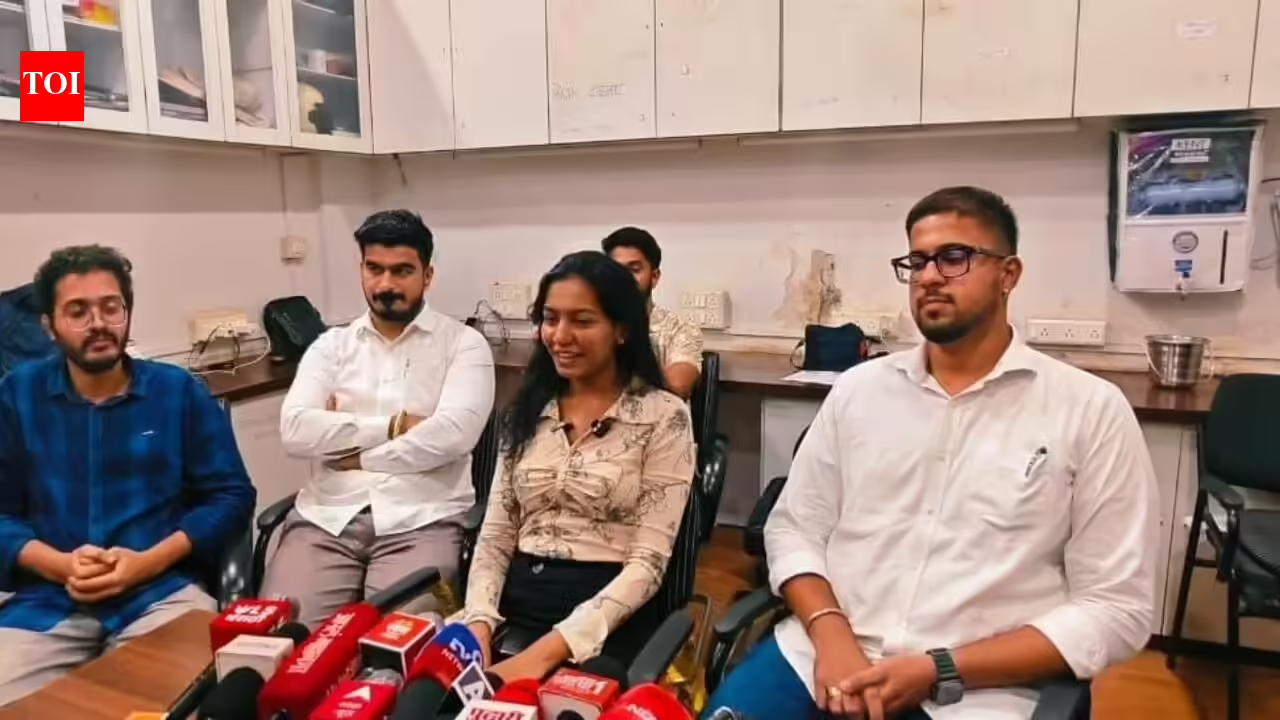
Kalyan: A controversy erupted after Kalyan-Dombivli Municipal Corporation (KDMC) allowed a cricket tournament to be held on a sports ground in Kalyan on Saturday amid a students-led group’s plan for a peaceful protest backed by Cockroach Janta Party (CJP) there the same day.The organisers claimed they had procured police permission for the protest, but at the time of going to press, police officials said their request had neither been granted nor rejected. Civic authorities said the ground maintained by KDMC is specifically meant for sports activities.According to one of the organisers, Durvesh Borgaonkar, who is linked with CJP, the initial plan was to hold a peaceful protest demanding the resignation of Union education minister Dharmendra Pradhan at Subhash Maidan in Kalyan, but they changed the venue to Phadke Ground, keeping in mind potential traffic congestion owing to the stir.The organisers claimed they submitted applications seeking permission to both KDMC and police. KDMC, however, allotted the ground for a cricket tournament, reportedly organised by persons associated with BJP.“Who plays cricket on a muddy ground during heavy rains? Those who wish to play are free to do so, but we will carry out our protest peacefully from noon to 5pm,” Borgaonkar said.Congress’s group leader in KDMC Kanchan Kulkarni alleged that the civic administration had prioritised the cricket event to suppress students’ democratic right to protest. She said her party will support the protest.The organisers said they expect students from Kalyan, Dombivli, Thane and Shahapur to participate in the protest. Shiv Sena and BJP hold the majority in KDMC.

Navi Mumbai teen crowned India No 1 and Asia No 2 in Under-14 Tennis | Mumbai News

Navi Mumbai teen crowned India No 1 and Asia No 2 in Under-14 Tennis

Navi Mumbai: A trainee at Nerul Gymkhana, Aarav Chhallani, became India’s number one and Asia’s number two player in the boys’ under-14 tennis rankings after a series of strong performances over the last few months. Chhallani’s rise began in April this year at the Asian Category 1 and under-14 tournament in Jaipur, where he won the singles title and finished doubles runner-up. The result earned him key ranking points and pushed him to India’s top seed in May.He then produced a three-week run on the Asian Tennis Federation circuit, adding further points against leading junior players across the region. In China, at ATF Grade A-East Asia, he won the doubles title and reached the singles semi-finals. In Uzbekistan, at ATF Category A-Central Asia, he finished as doubles finalist. In Hyderabad, at ATF Grade A-South Asia, he won the doubles title and was singles runner-up.With these consistent results, Chhallani secured the Asia number two position while consolidating his place as India’s top under-14 player. “I am extremely grateful to my coach Gitesh Awasthi for accompanying me to every tournament and supporting me on and off the court. Thanks to my parents for their sacrifices, to my sponsors for their constant support, and to Nerul Gymkhana for providing world-class facilities and the perfect environment to train and compete,” said Chhallani.He further said that this achievement motivates him to work even harder and make India proud. Vikas Shetty, general secretary of Nerul Gymkhana, said Chhallani’s progress reflected the training environment at the academy. “Training under Awasthi, Chhallani’s success is a reflection of his dedication, discipline, and the strong coaching system behind him. This is a proud moment for the Nerul Gymkhana family and for Indian tennis. We are confident that even greater milestones lie ahead,” said Shetty.

Rs 41 crore footbridge to connect Bandra metro and railway stations | Mumbai News

Rs 41 crore footbridge to connect Bandra metro and railway stations
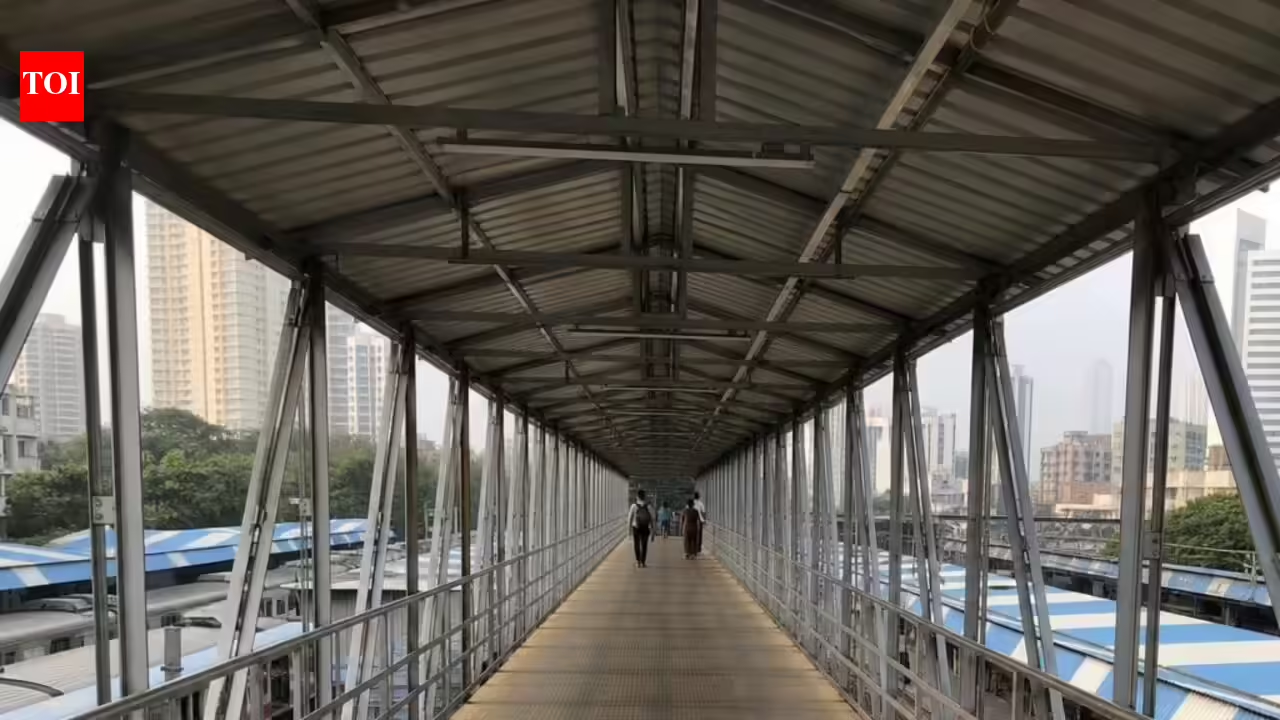
The foot overbridge will restore pedestrian connectivity lost after the demolition of the skywalk linking Bandra railway station (west) with the Lucky Hotel junction on SV Road

Mumbai: The Mumbai Metropolitan Region Development Authority (MMRDA) has awarded a Rs 40.99-crore contract for the construction of a 278-metre-long foot overbridge linking the upcoming Bandra station on Metro Line 2B with Bandra suburban railway station, improving interchange between the city’s metro and suburban rail networks.The contract has been awarded to RK Madhani & Co, with the Letter of Acceptance already issued. The project is scheduled to be completed within 18 months.The foot overbridge will restore pedestrian connectivity lost after the demolition of the skywalk linking Bandra railway station (west) with the Lucky Hotel junction on SV Road, which was removed to facilitate Metro construction.Once completed, the bridge is expected to provide commuters with a safer and more seamless transfer between the Metro Line 2B corridor and Mumbai’s suburban railway network, reducing the need to negotiate busy surface roads.The contract also includes a five-year defect liability and maintenance period following the completion of construction.