
Fourth-year programmes face bumpy rollout in Mumbai University | Mumbai News
Fourth-year programmes face bumpy rollout in Mumbai University

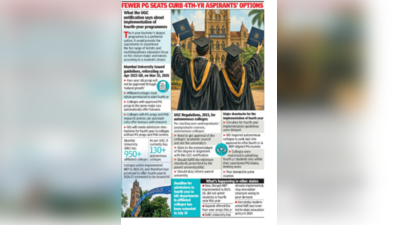
Mumbai: Bindu Goswami (name changed), a BA student from a city college, along with many of her classmates, planned to pursue the fourth year of the undergraduate programme. When she enrolled in 2023-24, the course was marketed as a four-year degree with the flexibility to exit after three years. Aspiring to build a career in clinical psychology, she was convinced that the four-year honours programme would help her academic and global career prospects.In April, though, the college informed students it would not be able to admit all eligible aspirants to the fourth year. Faced with limited options, Goswami is now considering taking a gap year.While Mumbai University was among the first few universities in the country to implement the National Education Policy (NEP) in its entirety in 2023-24, the rollout of its four-year undergraduate programme for the first batch has fallen short of expectations. Initially, colleges reported limited student interest, with only around 15%-20% of each batch opting to pursue the fourth year. However, even colleges that were willing to offer the programme to these students were unable to do so after the university issued its implementation guidelines.In April, a college principal said, instead of devising a way to make the implementation smoother across colleges, the university stated that colleges with postgraduate departments in those majors will only be allowed to offer the fourth year. “The govt and the UGC policy recommended that the university should come up with a mechanism for courses where colleges do not have postgraduate departments. Instead, the university made it mandatory for autonomous colleges to seek permission from the university’s academic council to start PG programmes, which it never did to date,” said the principal.MU has more than 950 affiliated colleges, including around 130 autonomous ones. When NEP was introduced in 2023-24, it was implemented only in the autonomous colleges at the time, estimated to be around 65-70. While less than 10% of the university’s affiliated colleges have their first NEP batch reaching the fourth year this academic year, these colleges account for a large share of the university’s student population.In another circular, the MU directed colleges to restrict the intake of fourth year within the sanctioned capacity of the PG programmes. “With this condition, colleges will be forced to prioritise their PG admissions, as we would not want our seats to go vacant in the second year,” said a principal.Principal of Jai Hind College Vijay Dabholkar said the college planned the fourth year for self-financed programmes, even tie-ups with foreign universities, as initially there was no mandate on having PG departments. “But when this was made a prerequisite, we decided not to offer it this year. It was a setback for students who were interested. We do not wish to disturb our master’s programmes, which are doing well,” he said.At Mithibai College, the administration divided the PG intake proportionately for master’s students and the ones who are keen on exiting after fourth year. “There was a demand for courses such as psychology, microbiology and computer science, but we had to limit the intake,” said principal Krutika Desai. She also is unsure why the fourth-year admissions are being considered as fresh admissions and students’ details are being uploaded on the portal when it is expected to be a natural progression.Anushree Lokur, principal of Ramnarain Ruia College, said the college has reserved a few seats across all postgraduate programmes, as most seats are filled during the master’s admissions process. “For many courses, the number of applications for the fourth-year honours is low. In others, such as psychology and some science programmes, we have seen a decent interest among students, but we are unable to accommodate everyone because very few seats remain after master’s admissions,” Lokur said.A university official, though, said there was not much demand and for students who are keen on pursuing the fourth-year honours programme, there are other options, including the Mumbai University departments, where seats were available. He added detailed guidelines for courses without PG departments will be issued next year and approval will be granted in advance, when a majority of colleges will have their fourth-year batch.


IMA to decide on statewide strike over assault on doctors on Sunday | Mumbai News

IMA to decide on statewide strike over assault on doctors on Sunday

Mumbai: The Indian Medical Association (IMA), Maharashtra, will announce on Sunday whether it will go ahead with the proposed statewide token strike by doctors on Monday. However, several local medical associations said they would not participate in the strike after the Bombay High Court cancelled the bail granted to the accused in the assault on doctors at Dombivli’s Shastrinagar Municipal Hospital.A state IMA office-bearer said, “A meeting of all stakeholders, including representatives of the councils of Ayurveda, nursing, physiotherapy and pharmacy, will be held early on Sunday. A joint decision will be announced soon after.”Meanwhile, the Association of Medical Consultants (AMC) withdrew its strike call on Saturday evening. “We do not know whether the Acting Chief Justice acted on the basis of our representation or other information, but we could not ignore his appeal. Hence, we have withdrawn the strike,” said AMC office-bearer Dr Sudhir Naik.Dr Santosh Kadam of the IMA said the state body’s decision on the proposed strike would be taken after Sunday’s meeting with other healthcare organisations.

Sharad Pawar backs Sonam Wangchuk protest, says Centre ‘acting as a spectator’ | Mumbai News

Sharad Pawar backs Sonam Wangchuk protest, says Centre 'acting as a spectator'

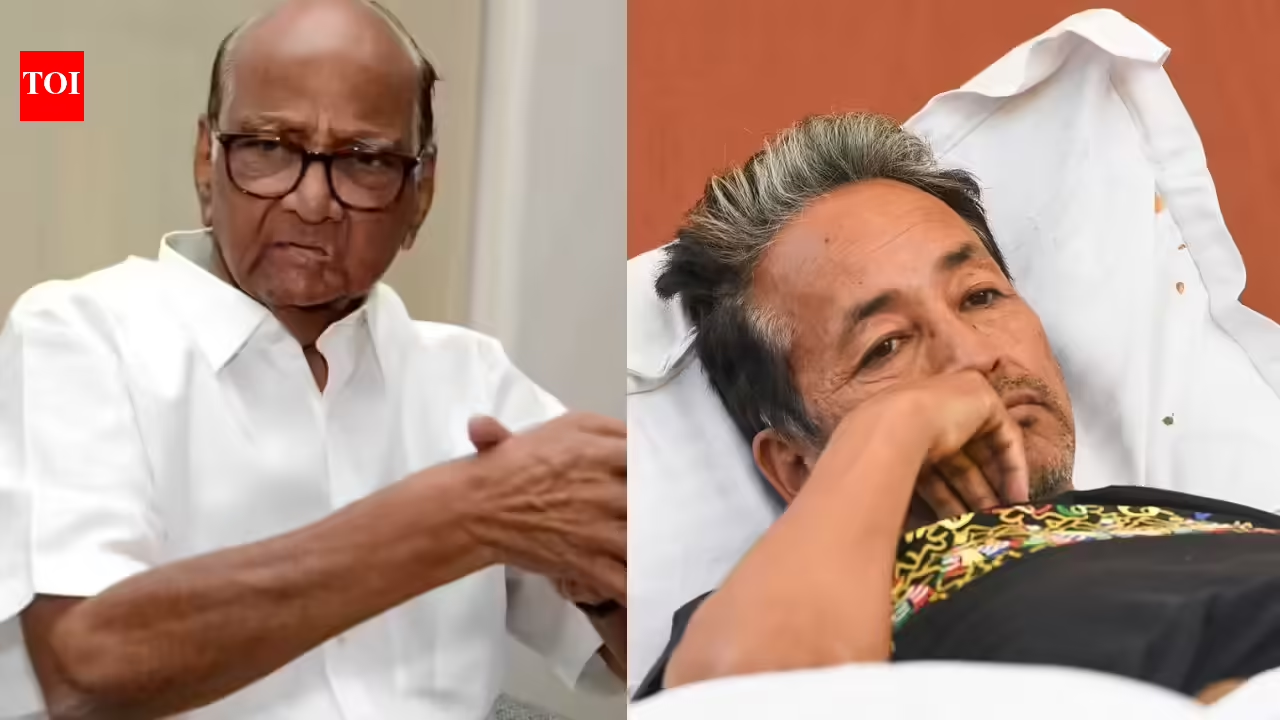
MUMBAI: Nationalist Congress Party (Sharadchandra Pawar) chief Sharad Pawar on Saturday came out in support of activist Sonam Wangchuk and the students’ agitation, accusing the Centre of displaying “indifference” towards the ongoing protest and failing to engage with the demonstrators despite the agitation continuing for nearly three weeks.Addressing a press conference, Pawar said the future of thousands of students was at stake and urged the Union government to arrive at an appropriate solution instead of remaining a “mute spectator”.“The protesters have been demanding that the Centre find a suitable resolution, but the government is merely watching from the sidelines. As a political party, we will continue to support Sonam Wangchuk’s demands,” Pawar said.Expressing concern over Wangchuk’s prolonged hunger strike, the veteran leader said efforts should be made to ensure that the fast ends at the earliest, while making it clear that the larger movement should continue until the issues raised by the protesters are addressed.Pawar said leaders from the Congress, the NCP (Sharadchandra Pawar) and several organisations associated with social justice movements had extended support to the agitation.He also criticised the Centre for what he described as its lack of outreach to the protesters.“The protesters’ demands are legitimate and are in the interest of students. Even after 20 days, the Central government has not sent its representatives to the protest site. This reflects its indifference,” Pawar said.Accusing the government of ignoring the issue, Pawar remarked that the Centre was behaving “as if it had blindfolded itself” to the concerns being raised by Wangchuk and the protesters.The Rajya Sabha MP said he would raise the matter in Parliament and seek priority discussion on the issue.Sonam Wangchuk has been leading the protest over issues concerning Ladakh, with students and supporters joining the agitation. Pawar’s intervention adds to the political backing the movement has received from opposition parties, even as they urge the Centre to initiate dialogue and find an early resolution.

Man drowns in Tansa river near Vasai in Maharashtra | Mumbai News

Man drowns in Tansa river near Vasai in Maharashtra

Vasai: A 34-year-old man drowned in the Tansa river near Khanivade village off the Mumbai-Ahmedabad Highway while bathing on Friday evening. His body was found floating in the river on Saturday morning.The deceased, identified as Sanju Tukaram Gavte, 34, was a resident of Jabarpada in Pelhar. He was currently staying with his aunt in the Khanivade-Hedavde area, police said.According to preliminary investigations, Gavte went to the Tansa river for a bath on Friday evening. He is suspected to have drowned after misjudging the depth of the water.His body was spotted floating in the river on Saturday morning, and local residents alerted the police. Mandvi police subsequently recovered the body and initiated the required legal formalities.An accidental death report (ADR) has been registered at the Mandvi police station, and further investigations are underway.

Body of man swept away in floodwaters in Maharashtra found after 12 days | Mumbai News

Body of man swept away in floodwaters in Maharashtra found after 12 days

Vasai: The body of a 40-year-old man who was swept away in a drain during the recent torrential rains in Vasai-Virar was recovered in a decomposed state from a creek in Virar, 12 days after he went missing. With the latest recovery, the rain-related death toll in the Vasai-Virar region has risen to 11.Torrential rainfall during the first week of July triggered widespread flooding across Vasai-Virar, inundating residential areas and causing several water bodies, drains and dams to overflow. While some people were washed away by strong currents, others drowned in floodwaters. Search operations for those reported missing have continued even after the floodwaters receded.The deceased has been identified as Makbool Shaikh, 40, a resident of New Haribha Chawl in Chandan Sar, Virar East. His decomposed body was found on Friday in the creek behind the Regional Transport Office (RTO) in Chandansar.According to police, Shaikh went missing on July 6, when he reportedly slipped near the Papadkhind dam in Virar East and was swept away by a swollen drain during heavy rain. A missing person complaint was registered at the Virar police station, and search teams have been looking for him since then.Police said the body was recovered after an extensive search operation. With the recovery, the death toll from the recent floods in Vasai-Virar has risen to 11.

Fatty pancreas now a disease linked to diabetes and cancer | Mumbai News

Fatty pancreas now a disease linked to diabetes and cancer

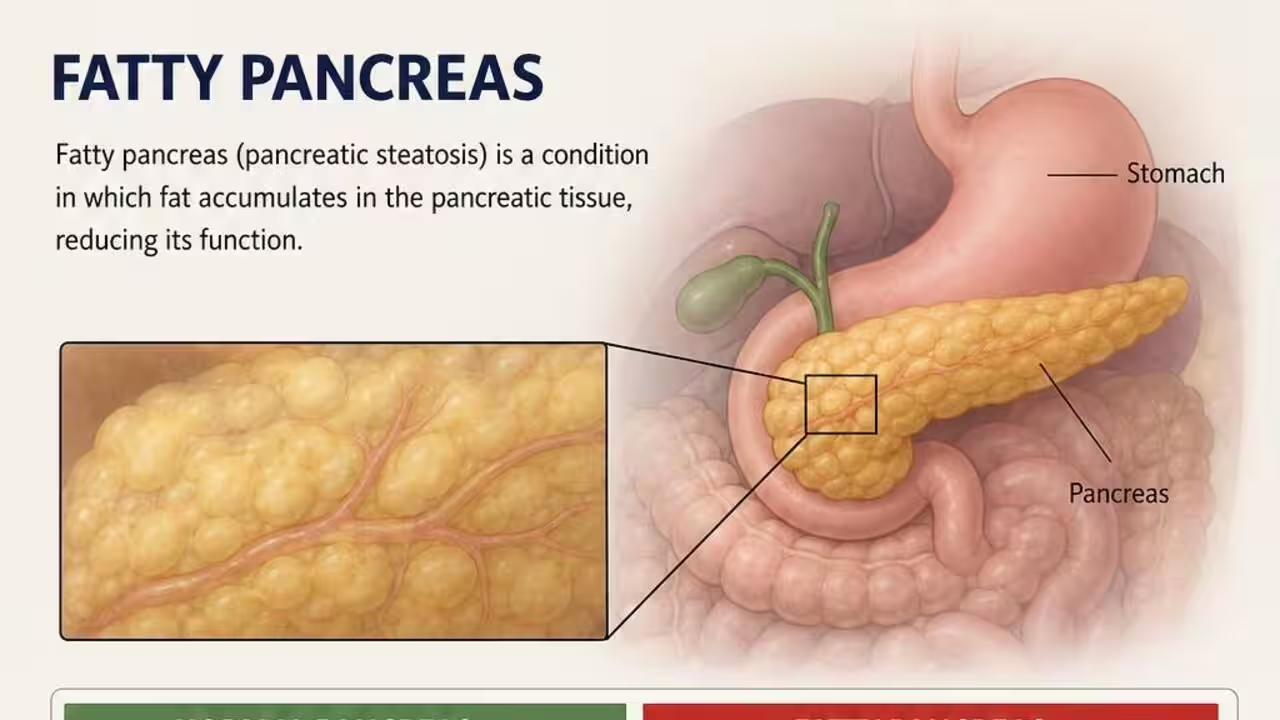
Mumbai: An international panel of experts has, for the first time, recognised fatty pancreas disorder (FPD) as a distinct disease, ending decades of uncertainty over whether excess fat in the pancreas is merely an incidental finding or a clinically significant condition.Called the Melbourne Consensus, the statement published in the ‘Nature Reviews: Gastroenterology & Hepatology’ warned that fatty pancreas could increase the risk of pancreatitis, pancreatic cancer and type 2 diabetes.The consensus distinguishes intrapancreatic fat deposition (IPFD), which is the amount of fat within the pancreas, from FPD, a disease in which excess fat damages the pancreatic structure and function through inflammation, scarring (fibrosis) and fat-induced damage. Although small amounts of pancreatic fat are normal and increase with age, excessive fat could even develop in lean individuals because of genetic, environmental and lifestyle factors.Although pancreatic fat has been recognised for decades, doctors have debated whether it is simply an incidental imaging finding or a disease in its own right. The Melbourne Consensus now classifies it as a distinct disorder and outlines how it should be diagnosed.“Pancreatic fat is difficult to assess with ultrasound, while MRI is expensive and largely confined to research settings,” said senior Delhi-based diabetologist Dr Anoop Misra, who was part of the global panel that worked on the consensus document. The panel recommends MRI-based proton density fat fraction as the preferred method to quantify pancreatic fat.Misra said the consensus has important implications for India, where pancreatic fat may contribute to the country’s high burden of diabetes. “One of our research papers, which is the only such study from India so far, shows that fat accumulation in the pancreas goes hand-in-hand with liver fat. Reducing both is important for controlling, and in some people even reversing, type 2 diabetes,” he said.Excess pancreatic fat is an issue because it triggers inflammation and damages insulin-producing beta cells, reducing the body’s ability to produce insulin.On the bright side, the experts said pancreatic fat is modifiable. “A calorie deficit of about 500 kcal a day or a 6%-10% weight loss in people with obesity can reduce pancreatic fat,” according to the paper. Mediterranean-style or lower-carbohydrate, higher-protein diets, along with regular aerobic and strength training, could also help.The paper noted that GLP-1 receptor agonists and SGLT2 inhibitors have been shown to reduce pancreatic fat by about 1.6% and 1.4%, respectively, after three to six months. However, these drugs should not specifically be prescribed to treat pancreatic fat, the paper added.A senior endocrinologist from Mumbai said that treatment for fatty pancreas should focus on the underlying conditions, such as unhealthy diet, insulin resistance, obesity, physical inactivity, smoking and heavy alcohol use. However, he added that fatty pancreas could even occur in people with a normal BMI.

No two classes of citizens: Bombay HC warns against illegal home modifications, directs state to frame guidelines | Mumbai News

No two classes of citizens: Bombay HC warns against illegal home modifications, directs state to frame guidelines

Mumbai: Observing that now-a-days flat owners “commonly” carry out alterations to cover open terraces or modify residential premises, the Bombay High Court this week directed Maharashtra government to come up with comprehensive guidelines to specify the types of permissible alterations in individual flats or buildings.“There cannot be two classes of citizens: those who obey the law and those who openly disregard it. Nor can the law be enforced selectively against only those whose violations are reported, while other illegalities are allowed to continue merely because no objections have been raised,’’ the HC division bench of Justices AS Gadkari and Kamal Khata observed in a July 16 ruling.“Large-scale unauthorised constructions cannot be permitted to continue merely because similar illegalities have been committed by several persons,’’ the bench said, while directing Panvel Municipal Corporation (PMC) to order immediate demolition of an illegal enclosure of open-to-sky terraces and an 800 sq ft illegal room constructed in a Kalamboli building.HC said it hears many cases of illegal constructions within flats, and “in many cases,’’ they continue either due to civic inaction or “apparent official acquiescence’’. “This is indeed a regrettable state of affairs,’’ said the bench, and asked why should a law-abiding citizen comply with rules when “unabashed’’ illegalities “continue unabated” due to ineffective action and is “also facilitated” by status quo orders from civil courts.In 2024, a petition before the HC sought demolition of the illegal enclosure and constructions by a flat owner in his flat “under the garb of renovations’’, a floor below the petitioner’s. These unauthorised constructions, which included breaking down walls and enclosing open space sans any permission from civic authorities, have an adverse impact on structural stability of the building, the petitioner argued, adding that no action was taken by the managing committee of the housing society for reasons best known to them despite complaints since 2019.The civic body admitted that the enclosure of open terraces were unauthorised and were demolished in 2021, following which the flat owner sought permission and erected a temporary shed and also obtained a status quo order from a trial court in October 2022.The flat owner said the alterations were made by previous flat owner and hence he is unaware of their legal status, but added that “most people’’ covered the terraces and he was “being singled out unfairly.’’The HC said often now a days, flat owners install protective grills, sheds or cover open terraces or alter partitions with wooden or gypsum sheets. When alterations are done before Occupancy Certificate is granted, it causes delay and litigation with builders, said the bench adding, “ There appears to be no clear or readily accessible and economical procedure governing the grant of permission for such works.’’In the absence of clear guidelines and any inexpensive or accessible process to obtain permission, citizens opt for the easier course of unauthorised alterations, the HC observed. “This cannot and does not justify the illegality, but it highlights the need for a transparent and workable regulatory mechanism,’’ the judgment authored by Justice Gadkari said.The case revealed several such alterations in the Kalamboli building as pointed out, said HC.The HC said when framed, the “regulatory framework must distinguish between alterations, which do not affect the structural stability or safety of the building and alterations capable of structurally weakening the building, endangering its occupants.”The HC, however, directed that “law must operate equally against all persons. Unless and until an appropriate regulatory framework is introduced, every construction or alteration carried out without the permission required by the existing law must be dealt with in accordance with law.’’While directing action against one flat, HC directed PMC to examine and take appropriate action against all similar unauthorised constructions it identified. “Municipal law must be applied uniformly and equally to all concerned,’’ the HC directed.

Severed human leg found under train coach at Chhatrapati Shivaji Maharaj Terminus in Mumbai | Mumbai News

Severed human leg found under train coach at Chhatrapati Shivaji Maharaj Terminus in Mumbai

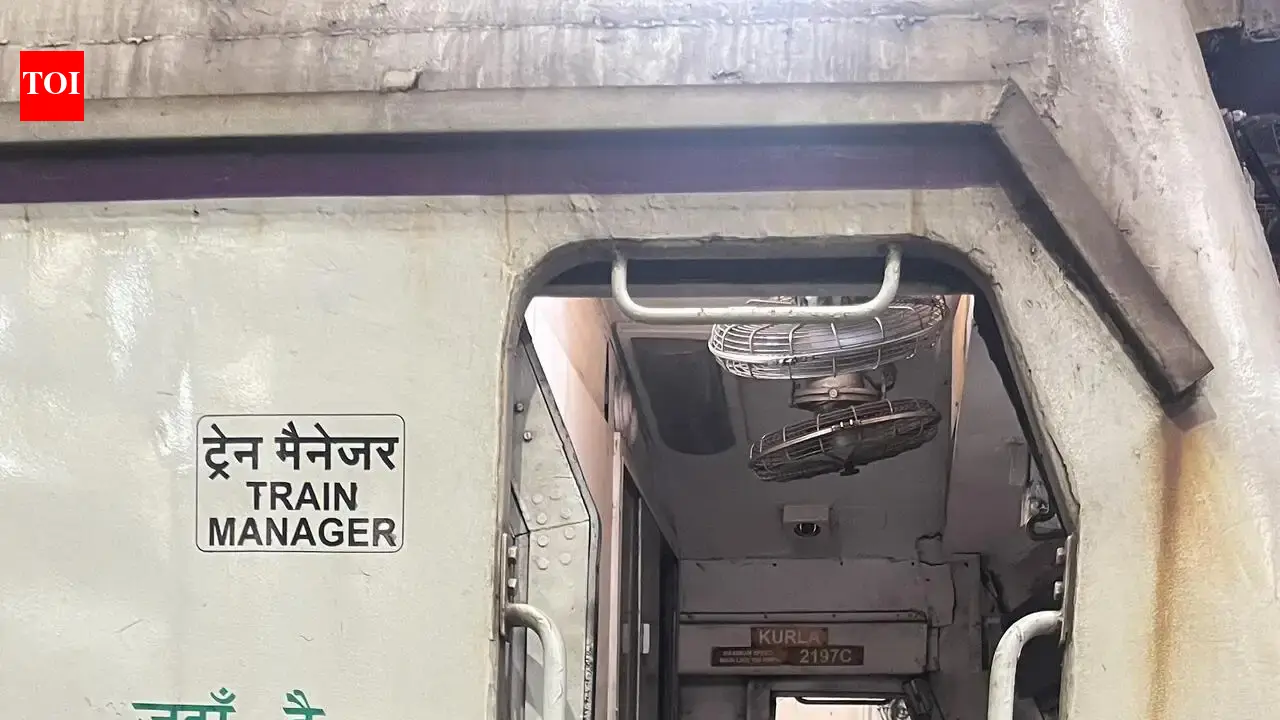
Mumbai: A severed human leg was found entangled under a long-distance train coach at CSMT on Friday. The limb was sent to St George’s Hospital by the Govt Railway Police (GRP), and an investigation was started.During the maintenance of 11058 UP Amritsar–CSMT Express train on July 17, the on-duty maintenance staff, during the undergear examination of the coach, noticed an amputated human body part (most likely a leg below the knee) entangled under Coach M2. The Railway Protection Force (RPF) and GRP were informed immediately through the station manager. The GRP rushed to the spot for panchanama and other formalities, and the body part was sent to St George’s Govt Hospital for further action. It is likely to be a case of a person being run over in an accident. The matter is being thoroughly investigated for the likely location of incident between the originating station (Amritsar) and the destination (CSMT),” said a statement from the Central Railway.

In Mumbai, Juhu locals launch plastic recycling initiative | Mumbai News

In Mumbai, Juhu locals launch plastic recycling initiative

Mumbai: In a bid to tackle the growing menace of plastic and electronic waste, residents of Juhu will launch Project CPR (Community Plastic Recycling) on Sunday at Birla Garden, where permanent collection bins for plastic and e-waste will be installed.The initiative, spearheaded by the Golden Citizen Trust, Ward 69 and the Juhu Citizens Welfare Group (JCWG), will be inaugurated at 8 am on Sunday. As part of the drive, two dedicated bins—one for plastic waste and another for e-waste—will be placed at Birla Garden.Residents will be able to deposit waste every Tuesday and Saturday between 8 am and 7 pm. Organisers have urged citizens to ensure that plastic waste is cleaned and dried before being placed in the bins to facilitate recycling.The collected waste will be picked up by NGO Project Mumbai and sent to authorised recyclers, with the aim of ensuring that none of it ends up in landfills.The campaign seeks to encourage source segregation and responsible disposal of waste while addressing concerns over plastic pollution and improper handling of e-waste, both of which pose significant environmental and public health risks.Organisers said they hope the initiative will serve as a model for community-led waste management and encourage greater public participation in recycling efforts across the city.

Navi Mumbai family turns tragedy into gift of life, donated organs save 4 patients | Mumbai News

Navi Mumbai family turns tragedy into gift of life, donated organs save 4 patients

Navi Mumbai: A Vashi family who lost their 22-year-old daughter helped save the lives of four patients on Thursday, said Zonal Transplant Coordination Centre (ZTCC) officials.Mumbai metropolitan region has so far seen 39 cadaver donations this year, which have resulted in 100 patients getting a fresh lease of life.ZTCC officials said the Vashi donor suffered “hypoxic brain damage due to hanging” on Monday, and was declared brain dead at MGM Hospital in Vashi a couple of days later. Brain death is an irreversible condition but provides a window period for organ donation.The donor’s father, a 50-year-old grocery store owner in Vashigaon, told TOI on Saturday, “In 2023, when my daughter was in second year BCom, her scooty skidded and she sustained a leg ligament tear. She could not attend college for over six months, after which she told me that she does not want to continue education.” She then started assisting her father at the grocery store.The father said that after her suicide on Monday night, he enquired with her close friend, who told him that his daughter was severely depressed. “She never spoke to us about it,” he said. She was immediately admitted to MGM Hospital, where the doctors declared her brain dead after a CT scan. The family was counselled about brain death and organ donation. “On July 16, we decided to donate her heart, liver and kidneys,” he added.Shashikant Chandekar, senior inspector of Vashi, said, “In the incident of death by suicide of the donor, prima facie, we have registered an accidental death case, which is being probed further. The deceased’s mobile call data record and WhatsApp messages will be obtained and the persons with whom she was regularly communicating will be inquired into.”