

Aggregator Firms Must Register by September 1 or Face Stringent Action: Transport Minister Pratap Sarnaik | Mumbai News

Aggregator Firms Must Register by September 1 or Face Stringent Action: Transport Minister Pratap Sarnaik

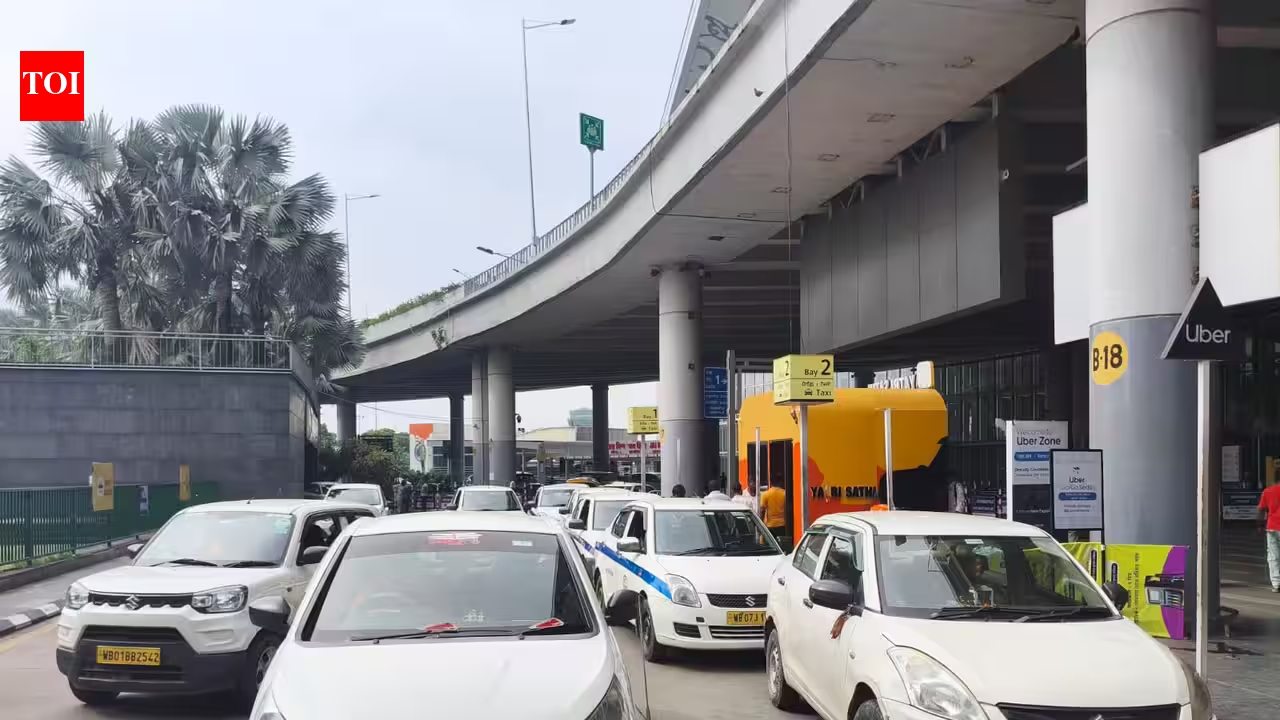
Mumbai: The Maharashtra government has warned all app-based mobility aggregators operating in the state to complete their registration under the newly notified Aggregator Policy by September 1, 2026, failing which strict legal action will be initiated against companies running passenger transport services without authorization.Issuing a strong message to app-based transport platforms, transport minister Pratap Sarnaik on Thursday said the state is committed to ensuring that passenger transport services remain safe, transparent and fully compliant with regulatory norms. He emphasized that unregistered aggregators or entities operating outside the framework of the law will not be allowed to continue services after the deadline.With app-based mobility services witnessing rapid growth across Maharashtra and being relied upon by millions of commuters daily, the government is moving to establish greater accountability among aggregator companies. The policy seeks to ensure passenger safety, verify the legitimacy of vehicles and drivers, and define the responsibilities of digital mobility platforms.“Technology-driven services must benefit citizens, but no one will be permitted to bypass the law in the name of convenience and compromise passenger safety,” Sarnaik said.Under the state’s Aggregator Policy 2026, all aggregator companies will be required to register with the Transport Department through the prescribed process. Vehicles attached to aggregator platforms must possess valid permits and registration documents. Additionally, all bikes, autorickshaws and cabs used for commercial passenger transport must be legally registered and authorized as commercial vehicles.The minister clarified that private or unauthorized vehicles cannot be used for commercial passenger transport without a valid aggregator licence. Any such operations found violating the regulations will attract enforcement action.The policy also mandates adequate insurance coverage for vehicles operating under aggregator platforms. Companies have been directed to establish and maintain robust passenger-safety mechanisms during rides and create systems necessary to provide services in accordance with statutory norms. The Transport Department has been instructed to ensure strict compliance with these provisions.Highlighting the government’s priorities, Sarnaik said passengers remain at the centre of the transport ecosystem and are entitled to safe, reliable and lawful services.“Government is not opposed to the aggregator business model. However, these services must operate within the framework of the law. All companies should complete the registration process before September 1. Any illegal passenger transport activity detected thereafter will invite strict legal action against both the concerned aggregator entities and vehicles without any leniency,” he said.The Maharashtra government maintains that the objective of the policy is not only to regulate the rapidly expanding aggregator sector but also to protect the interests of compliant operators, drivers and passengers. Authorities believe that enforcing uniform standards will enhance commuter confidence while creating a level playing field for legitimate service providers.The minister has urged all aggregator companies not to wait until the final deadline and instead complete documentation and compliance requirements at the earliest to avoid regulatory action.Ends


General Insurance Council issues hospital admission norms for fever cases; doctors fear insurers may use them to reject claims | Mumbai News

General Insurance Council issues hospital admission norms for fever cases; doctors fear insurers may use them to reject claims
The advisory says admission should be based on “medical need rather than fever alone”. Patients with uncomplicated fever can usually be on an outpatient basis, it says, while prescribing admission criteria for viral fever, pneumonia and acute gastroenteritis

Mumbai: In a move aimed at curbing “unnecessary hospitalisation” and rising health insurance claims, General Insurance Council (GI Council) has issued clinical guidelines advising hospitals and nursing homes on when patients with common fevers and infectious diseases should be admitted and considered eligible for cashless insurance.The advisory says admission should be based on “medical need rather than fever alone”. Patients with uncomplicated fever can usually be on an outpatient basis, it says, while prescribing admission criteria for viral fever, pneumonia and acute gastroenteritis.GI Council is an industry association.The move has alarmed doctors and nursing home owners, who fear insurers could use the advisory to deny cashless approvals and reject claims, particularly at smaller hospitals.However, Dr S Prakash, GIC’s CEO (Health Insurance Ecosystem), told TOI the document is only advisory. “We respect clinical judgement,” he said, “but we want to avoid scenarios where a patient is admitted on the first day of high fever when a confirmatory test can only be done on the third day.”He said, “Every monsoon, insurance companies receive hundreds of claims that appear to misuse the privilege of health insurance. This isn’t unique to India; it happens globally. There is hence a need for guidance on which patients genuinely require hospitalisation.” This is not a restrictive document but an effort to promote rational hospitalisations, he added.The advisory recommends admission only for patients with warning signs such as persistent high fever, breathing difficulty, dehydration, altered consciousness, organ dysfunction or other serious complications. It also covers elderly patients with significant comorbidities, children with seizures, lethargy, inability to feed, severe malnutrition or prolonged fever, and those with danger signs such as bleeding, repeated vomiting and severe abdominal pain.It cites recommendations of Indian Medical Association (IMA), Indian Council of Medical Research (ICMR), World Health Organization (WHO), National Health Mission (NHM) and Union health ministry.An industry executive said that the reduction of fraud, abuse and wastage was required to keep health insurance affordable since claims had to be paid out of premium collected.Dr Deepak Baid, who runs a hospital in Ghatkopar, said the advisory sets benchmarks for hospital admissions. “Medicine isn’t a pure science. If we don’t admit a patient today and the patient deteriorates tomorrow, it could further strain the doctor-patient relationship. We cannot blindly apply Western insurance standards here,” he said.Gautam Khanna, CEO of Hinduja Hospital and president of Association of Hospitals, described the document as advisory rather than mandatory. “We have discussed it with our members. It is up to individual hospitals whether to follow it,” he said.Dr Sudhir Naik, trustee of Association of Medical Consultants and a nursing home owner, said, “While GIC says clinical judgement remains supreme, the document could become a weapon in the hands of insurance companies to deny claims.” He added that the worst affected would be patients visiting smaller hospitals which may not have the negotiating power of corporate hospitals for “fever packages”.