
For Mumbai’s homeless, monsoon isn’t a season, it’s a crisis | Mumbai News

For Mumbai’s homeless, monsoon isn’t a season, it’s a crisis
Babu Samir Das and his wife Sapna stay on P D’Mello Road

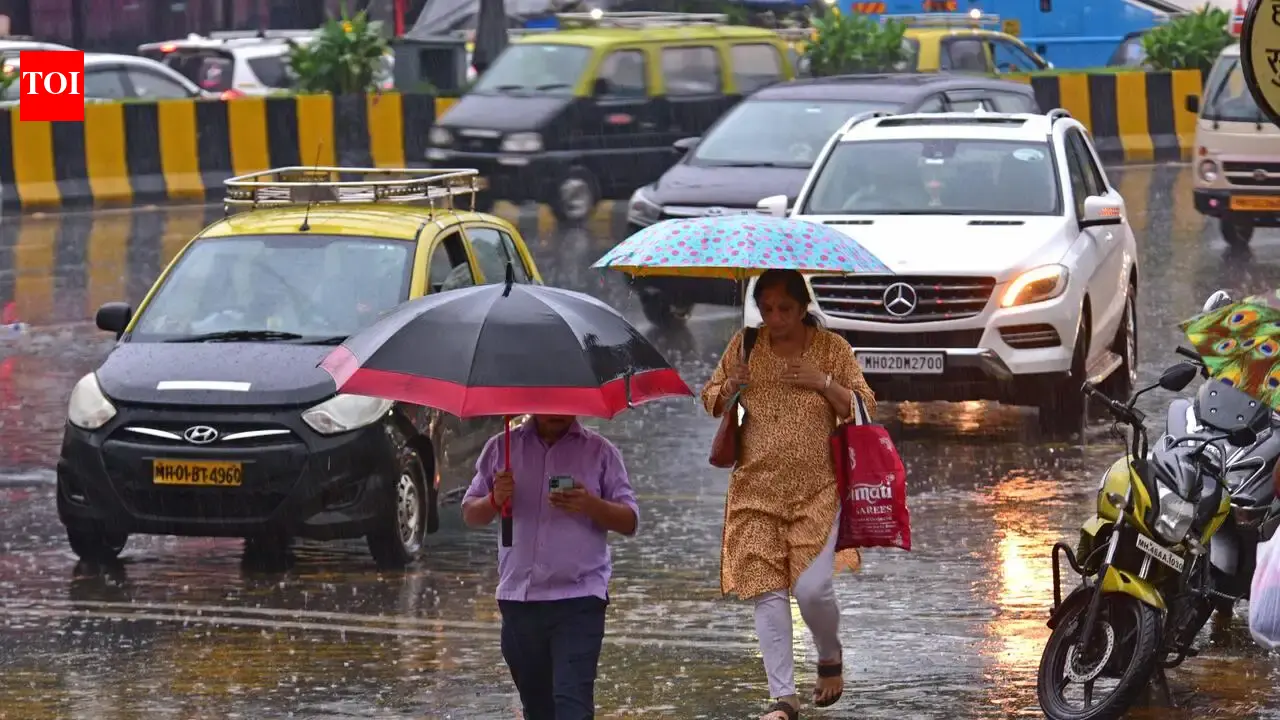
In Bandra East, Shabbir Khan (33) has stacked a month’s worth of dry firewood beneath the plastic-sheet shelter that eight members of his family call home. Once monsoon arrives, dry wood becomes nearly impossible to find.“We need it to cook whatever we have. This stock will last us a month,” said Khan, a daily wager from Banda village in Maharashtra who earns Rs 8,000–10,000 a month while living on a footpath.But rain is only one of his worries. “I lost my two-week-old child to diarrhoea two years ago. Children get malaria too because water stays accumulated for weeks, and nobody cleans it. It gets filthy.”Unlike Khan, Dadar’s barefoot ragpicker Mukesh Jha (27) has no fixed place to sleep. A BA graduate from Bihar, he earns barely Rs 150 a day collecting discarded bottles. Rains make even that uncertain. “People don’t buy as many bottles during monsoon, so I don’t find enough to sell. Many times, I sleep without eating anything.”On the streets, danger follows Jha every night. “Drug addicts come asking for tobacco or gutkha. If I wake up, it’s fine. But if I’m fast asleep, they use blades to empty my pockets.” Since arriving two years ago, he has been robbed twice, beaten and forced to beg.In Navi Mumbai, Vinodha Bhosle (40) from Amravati has come with her family for daily wage work, which often involves cleaning gutters before the monsoon. A couple earns Rs 1,000 a day, while an individual is paid Rs 500. “We come every summer and usually return before the rains, but this year our dues haven’t been cleared,” she said.Recent rain submerged the family’s shanties, pushing them under a bridge. “The contractor is not helping us. Yesterday, civic officials came, yelled at us and told us to leave. Aren’t we doing this work for them and for the city?”Half-blind Altesha Pawar (40), also from drought-hit Amravati, faces the same trap — stranded by unpaid wages, shelter destroyed by rain. “I wear my husband’s clothes while mine dry. I cannot fall sick; nobody will help.”Mumbai has over 1.5 lakh homeless but only 23 night shelters with space for around 2,500. Most are designed for individuals, forcing families to remain on pavements.Sitaram Shelar, director of Centre for Promoting Democracy, says the city’s homeless are not addicts or mentally ill, but workers who keep Mumbai running.. “The biggest misconception is viewing homelessness through a Western lens. This is nothing but caste bias. The homeless clean drains, recycle waste, and do much of the city’s dirtiest work. Mumbai depends on their labour but denies them basic facilities, turning survival into exploitation.He notes that while summers have grown harsher, monsoon remains the sharpest pain point. “Extreme heat is getting worse, but at least you can find shade. The rains take away everything: shelter, dry food, livelihood, dignity. There is no hiding from monsoon when you have no roof.”Shelar said nearly 85% of Mumbai’s homeless are from Maharashtra and around 70% belong to historically marginalised denotified and nomadic tribes like Pardhis, Lamanis, and Vanjaris that continue to face systemic exclusion.“Not one homeless family we surveyed had benefited from Ladki Bahin or Pradhan Mantri Awas Yojana. Is this a coincidence?” he asked.For some, homelessness has become a permanent condition. On South Mumbai’s P D’Mello Road, Babu Samir Das (70) and his wife Sapna (50) have lived on the pavement for 25 years. Monsoon means less police harassment, but harder survival. “We stay awake all night fixing the plastic whenever water starts seeping in.” He refuses to leave the spot as it rarely floods and is near a hospital, where he feels safer living with his wife and their dog.Despite Supreme Court mandates recognising shelter as part of right to life under Article 21, Mumbai continues to rely on a handful of shelters that cannot accommodate even a fraction of those living on its streets. “If BMC can build a coastal road, it can certainly build 24/7 family shelters,” Shelar said. Referring to the 25,000 homes built under Mahatma Gandhi Path Kranti Yojana, he said the problem is not resources but intent.“The government’s focus should be on permanent housing. But I know nothing will happen. I have lost faith in those elected to govern.”For Jha, the promises of India’s financial capital have long faded. “They stole my bags, they beat me and took my phone,” he said.“Mumbai turned a graduate into a beggar.”

Farmers’ body plans nationwide stir over farm distress, trade pacts; Mumbai meet backs jail bharo campaign | Mumbai News

Farmers' body plans nationwide stir over farm distress, trade pacts; Mumbai meet backs jail bharo campaign
A nationwide Jail Bharo campaign involving farmers, workers and agricultural labourers has been planned on August 10 at district headquarters across the country, AIKS leaders said.

MUMBAI: Raising concerns over growing agrarian distress, the All India Kisan Sabha (AIKS) on Monday announced a series of nationwide agitations, including participation in a countrywide Jail Bharo movement on August 10, following a two-day meeting of its Central Kisan Committee in Mumbai.The meeting, attended by farmers’ leaders from across the country at the YMCA Centre on June 28-29, resolved to intensify protests over what the organisation described as worsening conditions faced by farmers due to government policies.In a statement issued after the meeting, AIKS said key issues discussed included falling farmgate prices, rising cultivation costs, crop insurance concerns, land acquisition, fertiliser shortages, alleged shortcomings in farm loan waiver schemes, sugarcane pricing, and what it termed attempts to weaken the role of the Food Corporation of India (FCI).The organisation also expressed concerns over the possible impact of the proposed India-US, India-European Union and India-New Zealand free trade agreements on Indian agriculture, saying these issues would form the basis of its nationwide campaign.In Maharashtra, where farmers continue to face challenges such as fluctuating crop prices, demands for a remunerative minimum support price (MSP), delayed crop insurance settlements and irrigation issues, the resolutions are expected to add momentum to ongoing agrarian concerns.AIKS said it would strengthen coordination with other farmers’ organisations and participate in the National Convention of the Samyukta Kisan Morcha (SKM) scheduled in Delhi on July 28 to formulate a broader strategy.The organisation also decided to build closer coordination between farmers and workers by participating in the National Struggle Convention, jointly organised by SKM and central trade unions on July 29 against what it termed “anti-people policies” of the government.A nationwide Jail Bharo campaign involving farmers, workers and agricultural labourers has been planned on August 10 at district headquarters across the country to press for their demands. AIKS said it would mobilise members in large numbers.As part of celebrations marking 90 years since its formation, AIKS announced that programmes would be organised across the country. On November 15, the birth anniversary of tribal freedom fighter Birsa Munda, the organisation plans to hoist AIKS flags and hold meetings, seminars and cultural programmes in villages highlighting farmers’ issues.The next national conference of AIKS will be held in Nalgonda, Telangana, from November 18 to 21.

Four missing Mumbra minors traced in UP within 24 hours; friend detained | Mumbai News

Four missing Mumbra minors traced in UP within 24 hours; friend detained

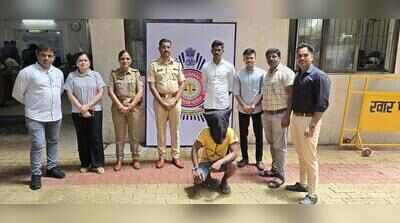
Thane: Four minors, including three girls aged between 15 and 17 and a 13-year-old boy, who went missing from Mumbra after leaving home on the pretext of attending classes and a friend’s birthday celebration, were traced within 24 hours by the Mumbra police from Lucknow in Uttar Pradesh. Police also detained their 20-year-old friend for questioning.Police said the children left their homes on June 25, informing their families they would attend classes and celebrate a friend’s birthday before returning. However, fearing they would be scolded for staying out late, they allegedly decided not to return home. With the help of their 20-year-old friend, they travelled to Uttar Pradesh, police said.After a missing complaint was registered on June 26, the Mumbra police launched a search operation, examining CCTV footage from railway stations, including Mumbra, Thane, Kalyan, Kurla and Ghatkopar. The breakthrough came after one of the missing children’s mobile phones was switched on, enabling investigators to trace the group to Lucknow.A police team rushed to Uttar Pradesh and rescued the four minors from the Mandi area of Lucknow. Police said another member of the group, who is a major, was traced in Kanpur. All the children have since been reunited with their families.Police said no untoward incident took place during the period they were missing and that all of them were found safe and unharmed. The role of Khan is being investigated, and he remains detained for questioning. Police are also verifying his antecedents, including an assault case reportedly registered against him in Lucknow. Further investigation is underway.

TET leak when papers were on way to Washim, Jalna & Latur: Cops | Mumbai News

TET leak when papers were on way to Washim, Jalna & Latur: Cops

Pradeep GuptaBhiwandi: The probe into the state Teacher Eligibility Test (TET) paper leak has revealed that the papers may have been leaked while being transported from a printing press in Uttar Pradesh to exam centres in Maharashtra, prompting Thane police to launch a multi-state hunt for the alleged mastermind Bjiender Gupta and his associates. Police have begun the process of issuing a lookout notice for Gupta and another accused who is on the run.According to investigators, the Maharashtra State Council of Examination had entrusted printing of TET papers to Mahim Patran Pvt Ltd, an Agra-based company with a corporate office in Delhi that has reportedly been printing papers for the council for nearly 25 years. After printing, the papers were despatched under security to exam centres across Maharashtra.Police said that by analysing QR codes printed on the four leaked papers recovered from the arrested accused, they found three were meant for exam centres in Washim, Jalna and Latur districts. Investigators suspect the papers were leaked somewhere between the Agra printing facility and their destinations in Maharashtra. Papers recovered from the accused were photocopies of the originals.“We are tracing every link in the movement of the papers to identify where the security breach occurred,” an officer said.The probe is currently centred on the alleged mastermind Gupta, a resident of Samastipur, Bihar. According to investigators, Gupta has been accused in several paper leak cases registered in different states over the years. Police believe his interrogation will be crucial in identifying the source of the leak.Police are also searching for Kapil Dahiya, another key suspect who was with the three arrested accused—Rajiv Shah, Akash Kumar and Dhiraj Singh—in Bhiwandi on the day cops caught them with the papers. But before the police raid, he allegedly left for Pune to negotiate the sale of the leaked papers. After allegedly learning his associates had been arrested, Dahiya is believed to have returned to Mumbai and boarded a flight to Delhi.According to police sources, undercover officers posing as prospective buyers contacted the accused and negotiated a deal for four leaked TET papers—Marathi, Hindi, social science and maths. The accused allegedly demanded Rs 1.25 crore. After the officers agreed to pay Rs 25 lakh as advance, the accused allegedly produced the papers, following which the police team caught them.Investigators said Rajiv Shah and Akash Kumar, both residents of Bihar, were allegedly in contact with Gupta and were in possession of papers, while Dhiraj Singh and Dahiya, both from Haryana, were responsible for negotiating deals with prospective buyers.The probe has also brought family members of the accused to Bhiwandi. A family friend of Akash Kumar, Nitesh Singh, who travelled from Patna, claimed Akash had left home telling his parents he was going to appear for an exam. According to the family, Akash is the only son of his parents, holds a BCom degree, and had been preparing for govt exams. His father works as supervisor at a four-wheeler showroom, while his mother has been unwell for some time.Relatives of Dhiraj Singh said he belongs to a family of farmers in Panipat, worked in a private company and after the death of his parents was supporting his younger brother and sister, both of whom were preparing for govt jobs.Dhiraj’s lawyer Satinder Redhu alleged that Gupta, known for allegedly promising govt jobs, had taken money from Dhiraj on the assurance of arranging employment. The family claimed Gupta may have falsely implicated Dhiraj.The third arrested accused, Rajiv Shah, is married and holds a BSc degree in physics, while Dahiya is the son of a retired army serviceman.“The investigation so far indicates Bijender Gupta is the main accused. Once he is arrested, we expect to establish how the papers were leaked, who assisted the accused and whether more people are involved,” DCP Pawan Bansod of Thane police said.

BMC plans Rs 14.7-cr backup power system at Bhandup plant to prevent water cuts | Mumbai News

BMC plans Rs 14.7-cr backup power system at Bhandup plant to prevent water cuts

Mumbai: In a bid to ensure power failures do not disrupt Mumbai’s water supply, the BMC has proposed setting up a backup power transformer at its Bhandup water treatment complex, which supplies nearly 80% of the city’s drinking water.The proposal, to be tabled before the Standing Committee on Wednesday, seeks approval to spend Rs 14.67 crore on installing an additional 110 KV power transformer along with associated switchgear at the Bhandup electrical substation.The move comes against the backdrop of the recent recurring power outages in the city. Civic officials said the additional transformer will ensure water treatment and pumping operations continue uninterrupted even if one transformer develops a technical fault.Mumbai receives around 4,100 million litres per day (MLD) of water from seven lakes—Upper Vaitarna, Middle Vaitarna, Modak Sagar, Tansa, Bhatsa, Vihar and Tulsi. The water is treated at facilities in Bhandup, Panjrapur, Vihar and Tulsi before being distributed across the city.Of the total supply, the Bhandup water treatment complex alone treats nearly 3,000 MLD, making it the backbone of Mumbai’s water distribution network. The complex comprises the original 1,910-MLD treatment plant and a 900-MLD facility commissioned in 2014, making it one of the largest water treatment plants in Asia.Officials said uninterrupted electricity is critical to the functioning of the Bhandup complex. The proposed backup transformer will ensure that if one transformer fails, the second can immediately take over, preventing interruptions in water treatment and supply. The proposal states that strengthening the electrical infrastructure at Bhandup is essential to safeguard the city’s water supply system and avoid water cuts arising from technical failures in the power network.

Thrashed, 2 kids flee ashram school, rescued at Dadar station | Mumbai News

Thrashed, 2 kids flee ashram school, rescued at Dadar station
Two minors ran away from an ashram school in the western suburbs after being assaulted

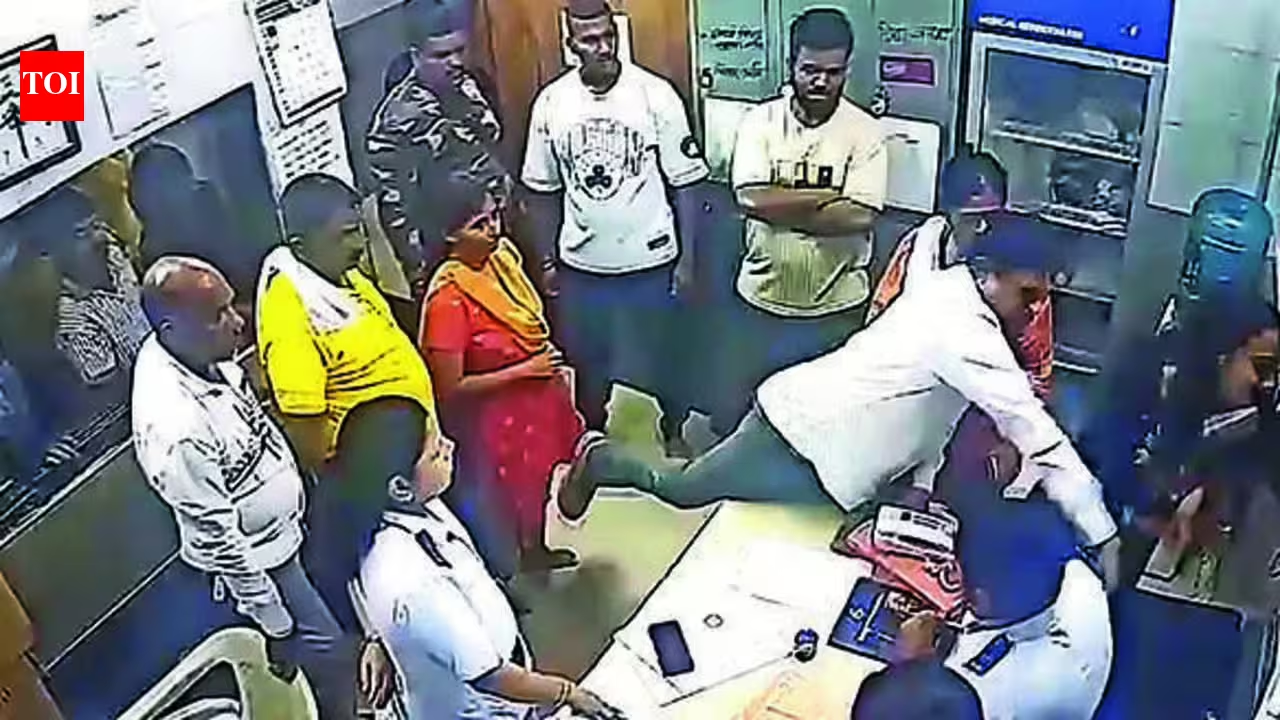
Mumbai: An FIR has been lodged against the manager of an ashram school in the western suburbs for allegedly physically assaulting two boys, aged 11 and 14, which forced them to flee in the dead of night earlier this month.A passenger found the children at Dadar station as they were planning to board a train to Ahilyanagar and took them to GRP. They are currently at a govt shelter.The 11-year-old told police he used to live in the eastern suburbs with his parents and studied till Class 4 in a civic school. Fed up with his parents fighting often, he went to live with his grandmother. Last Sept, his father died and his mother enrolled him at the ashram school.The child and a cousin, who also stayed at the ashram school, were assigned the task of filling up water at 4am every day. On June 8, they finished the task from 4am-5am and went back to bed. The 11-year-old was assigned kitchen duty at 6am, but he and his cousin failed to wake up on time.The 21-year-old manager, who is physically challenged and wears a prosthetic, hit the cousin with a bottle. He then entered the kitchen where the 11-year-old was working, hit him twice on the back, grabbed him by his neck, and slapped him multiple times. The boy later confided in his 14-year-old friend, whose task was to purchase vegetables from a vendor.The two decided to escape. The older boy borrowed Rs 100 from the vendor. Late one night, the two slipped out of the school and took a lift from an auto driver till the nearest station. They boarded a local train and got off at Dadar station.The 11-year-old wanted to travel to Ahilyanagar to be with his mother. As the two began enquiring about tickets, a passenger spotted them and took them to Dadar GRP.GRP learnt about the abuse, got them to speak to their parents over phone, and sent them for medical examinations. The FIR was lodged under relevant sections of Juvenile Justice Act and BNS and the case transferred to local police recently.

All govt exams to go online from next year, govt considering slapping MCOCA on TET paper leak accused: School edu min | Mumbai News

All govt exams to go online from next year, govt considering slapping MCOCA on TET paper leak accused: School edu min

Mumbai: From next year, all exams conducted by the state govt will be held online, school education minister Dada Bhuse announced in the Maharashtra assembly on Monday. A committee has been formed under state chief secretary Rajesh Agarwal to create the necessary infrastructure to conduct online examinations. Bhuse added that all those found guilty in the TET paper leak case will be tried under the Maharashtra Control of Organised Crime Act (MCOCA) after making appropriate changes in the law.Brijkishor Zanwar, public relations officer for the school education department, said “the committee has been formed to look into how all exams like the TET conducted by various departments and ministries can be conducted online.”The TET examination, scheduled for Sunday, was postponed on Saturday, after the alleged paper leak surfaced.Speaking on the paper leak, BJP MLA Sudhir Mungantiwar in the assembly asked why the question papers were printed in Agra when currency notes are printed in Nashik, demanding that all question papers be printed within Maharashtra. He alleged that outsiders were involved and no Maharashtrians were part of the leak.Bhuse said the state govt was serious about the matter and an SIT has been formed and three teams have been sent outside the state – one to Delhi, two to Bihar and one to Haryana – to probe the crime.Earlier in the day, the opposition held a demonstration outside the state assembly demanding the resignation of state education minister Dada Bhuse.Congress legislator Vijay Wadettiwar alleged in the assembly that “the main accused in the TET case (at the time of the TET paper leak in 2018), Abhishek Savrikar, was involved in a similar case but was given respectful entry into the ruling party.”Wadettiwar stated that the paper leaks have affected six lakh teachers and hurt the state’s reputation.Shiv Sena (UBT)’s Bhaskar Jadhav said, “The reputation of Maharashtra is suffering because of paper leaks. Even in the NEET exam, seven of the 11 accused were from Maharashtra.”On the setting up of the committee, Madhav Suryavanshi of the Shikshan Vikas Manch at the Yashwantrao Chavan Centre stated, “Such committees are always set up and they are only a mirage to show the govt is doing something. Similarly, in 2018, the TET paper was leaked, a committee was formed, and reports were prepared, yet nothing came of it and we are back in the same place. Fundamentally what needs to happen is that the paper-setters need to change. They have been the same for years. Also, a multi-set system of question papers should be created each year for better security.”

BMC to get IIT-B to audit four railway FOBs in Mumbai flagged as unsafe | Mumbai News

BMC to get IIT-B to audit four railway FOBs in Mumbai flagged as unsafe

Mumbai: Four pedestrian bridges over railway tracks in south and central Mumbai, flagged as unsafe by the railways, will undergo structural audits by IIT Bombay, with the BMC set to seek approval from the civic standing committee to pay the IIT-Bombay institute Rs 12 lakh in advance for the exercise.The proposal, which will be placed before the Standing Committee on July 1, pertains to structural audits of four foot overbridges at Masjid Bandar and Matunga-Dharavi. The bridges include two FOBs at Masjid Bandar and two at Matunga-Dharavi.According to the civic administration, the railways have informed the BMC that the bridges are in a dangerous condition and require reconstruction. Before any decision is taken on rebuilding them, the BMC has proposed an independent structural assessment through IIT Bombay. The decision follows directions issued by the additional municipal commissioner (projects) during a meeting with railway authorities on April 21 this year.The BMC has proposed appointing IIT Bombay directly, without inviting competitive tenders, citing the institute’s technical expertise and the specialised nature of the work. Under the amended Mumbai Municipal Corporation Act, works exceeding Rs 3 lakh are ordinarily required to be tendered. However, the civic body has sought relaxation from this provision under Section 72(3), arguing that no useful purpose would be served by floating public tenders for such a specialised assignment.IIT Bombay has quoted a fee of Rs 12 lakh for carrying out the structural audit and has sought full advance payment before commencing the study. The structural audit will help determine the condition of the bridges and whether reconstruction is warranted. The expenditure will be met from the bridge department’s budgetary allocation for 2026-27.Many FOBs in the city are jointly owned and maintained by the railways and the BMC under a 50:50 cost-sharing arrangement.

Inspection drive to enforce Marathi from Std 1 to 10 in all boards, says Maharashtra education minister | Mumbai News

Inspection drive to enforce Marathi from Std 1 to 10 in all boards, says Maharashtra education minister
Education minister Dada Bhuse

Mumbai: State education minister Dada Bhuse announced in the assembly on Monday that the government would undertake a special inspection drive to enforce the teaching of Marathi in all boards in the state from Standards 1 to 10. This includes central boards and international boards like the IB and IGCSE.“If any violations are found during the inspections, strict action will be taken against the schools and officials concerned,” Bhuse said. He said that schools are expected to conduct examinations in each standard.He urged MLAs to inform the state about violations to the mandatory Marathi language rule in their constituencies.The issue was raised during a question by BJP MLA Atul Bhatkalkar, who flagged concerns over several schools allegedly not implementing the mandatory teaching of Marathi.Shiv Sena (UBT) MLA Varun Sardesai alleged that some IB schools had declared that they would not teach Marathi. “How many schools have been sent notices by the government?” he asked.Shiv Sena UBT MLA Sunil Prabhu claimed that several schools taught Marathi but did not conduct exams in the subject.Bhuse said, “The state made it mandatory to teach Marathi in schools from Standards 1 to 10 since 2020. The first violation invites a notice. After that, the penalty is a Rs 1 lakh fine.”In April 2026, the government had introduced a new rule stating that the licence of schools which violate the rule will also be revoked.Bhuse spoke about the inclusion of the history of Chhatrapati Shivaji Maharaj in school textbooks, stating that the coverage had been significantly expanded.He said that while textbooks of other education boards earlier devoted only about one-and-a-half columns to Chhatrapati Shivaji Maharaj, the content has now been expanded to 22 pages with the approval of the Centre, enabling students to know more about the Maratha king.In the council, concerns were raised over a decline in the number of Marathi-medium schools in Mumbai from 461 to 337. Legislators pointed to a growing preference among parents for English-medium schooling, citing the perceived importance of English in a globalised era as a key driver behind the shift.An MLC said that several Marathi schools face dwindling enrolment, with some being merged into English-medium institutions. As per norms, schools with fewer than 20 students are not allotted teachers, often leading to closure. Poor infrastructure and conditions in some Marathi schools across the state have further accelerated migration to private English-medium institutions.Members also flagged the impact on teachers, many of whom face displacement. An MLC stressed that even schools with small enrolment should be supported, urging the government to ensure teachers are provided and Marathi-medium schools are not shut down.(With inputs from Somit Sen)

Mumbai residents can now report illegal hawking through BMC WhatsApp chatbot | Mumbai News

Mumbai residents can now report illegal hawking through BMC WhatsApp chatbot
The initiative is part of the BMCs efforts to strengthen technology-driven grievance redressal mechanisms.

MUMBAI: Citizens can now report illegal hawking across Mumbai through the BMC’s WhatsApp chatbot, with the civic body introducing a dedicated complaint option following directions from the Bombay high court.The new feature has been added to the BMC’s WhatsApp chatbot on 8999-22-8999, allowing citizens to upload the location and a live photograph of unauthorised hawking spots to help civic officials take prompt action.The initiative is part of the civic body’s efforts to strengthen technology-driven grievance redressal mechanisms.Until now, citizens could register complaints related to roads, potholes and other civic issues through the BMC’s 1916 helpline, social media platforms and the WhatsApp chatbot. However, complaints related to different municipal departments were often handled through separate systems.To streamline the process, the BMC recently launched MyBMC MARG (Management and Redressal of Grievances), an integrated platform aimed at bringing multiple civic complaints under a single interface.As part of compliance with the High Court’s directions, the civic body has now added illegal hawking complaints to the WhatsApp chatbot. Citizens can register complaints by selecting the “Hawker – Nuisance of Illegal Hawking” option, after which they can share the exact location and upload a live photograph of the encroachment.Officials said the new facility will make it easier for citizens to report illegal hawking and help ward offices respond more quickly to complaints.