No liquor shop next door without society’s say-so: Maharashtra govt plugs loophole, grants NOC veto to housing complexes | Mumbai News

No liquor shop next door without society’s say-so: Maharashtra govt plugs loophole, grants NOC veto to housing complexes
The new rules explicitly target legal ambiguities used in the past by liquor traders.

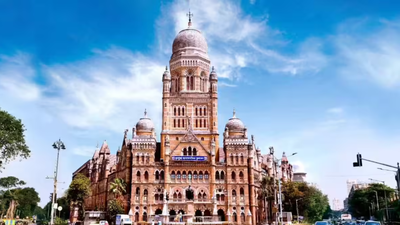
MUMBAI: In a major win for urban residents across Maharashtra, the state government has officially handed cooperative housing societies the power to veto liquor shops from moving into their premises. Under a fresh notification issued by the Home Department, liquor vendors looking to relocate their outlets to residential or residential-cum-commercial complexes will now strictly require a No-Objection Certificate (NOC) from the registered housing society.The decision comes after years of friction between housing societies and liquor vendors in urban hubs like Mumbai, Thane, and Pune. Residents have long complained about the nuisance of off-license liquor shops opening on their building ground floors—citing safety concerns, crowding, illegal parking, and disturbance to neighborhood peace. Previously, license holders often exploited procedural gaps or secured approvals before a housing society was fully formed, leaving flat owners with little legal recourse once the shop was operational.Plugging the partial OC loopholeThe new rules explicitly target legal ambiguities used in the past by liquor traders. Under the amendments to both the Bombay Foreign Liquor Rules, 1953, and the Maharashtra Country Liquor Rules, 1973—titled the 2026 Amendment Rules—the NOC requirement applies directly to FL-2 (foreign liquor off-consumption) and CL-3 (country liquor) licenses.Crucially, the government has mandated that an NOC from the society remains compulsory even if a complex has only received a Partial Occupancy Certificate (POC). In Mumbai’s real estate market, builders frequently hand over lower floors or commercial wings while upper floors remain under construction. By requiring an NOC at the Partial OC stage, the state prevents vendors from quietly setting up shop before flat buyers formally organize their managing committees.Fair balance for retailersWhile the notification empowers housing societies, it also offers operational clarity to business owners. To prevent societies from using annual renewals as leverage for extortion or ongoing disputes, the rule states that once a shop successfully relocates after obtaining the initial NOC, the license holder will not need to seek a fresh NOC every year.Signed by deputy secretary Ravindra Aute under the orders of the Governor of Maharashtra, the notification was brought into force immediately by invoking special powers under Section 143 of the Maharashtra Prohibition Act, 1949, bypassing the usual prior publication process to ensure immediate relief.Mixed reactions across the cityThe notification has evoked sharp and contrasting reactions from citizen groups and business owners.Housing society federations have hailed the amendment as a historic victory for residential rights. “For years, commercial space owners sold or rented ground-floor units to liquor shops without consulting the residents living right above them. The nuisance of drunken crowds and late-night commotion was borne by families. Making the NOC mandatory—even at the Partial OC stage—finally gives flat owners a direct say in shaping their living environment,” said Mr.Ramesh Prabhu, chairman, Maharashtra Societies Welfare Association (MahaSewa).Conversely, liquor retail trade associations expressed deep concern, arguing that the mandatory NOC could lead to moral policing and administrative roadblocks. “While we welcome the waiver on annual NOC renewals, putting relocation permissions entirely at the mercy of housing society committees will make finding suitable commercial premises almost impossible,” noted a senior representative of the wine and liquor traders and retailers associations.“Housing societies often refuse permission indiscriminately due to social stigma, even when a business fully complies with all state excise and municipal safety laws. As most of the old buildings and slums are going under SRA or redevelopment, many liquor stores will have to shut down and shift. This new rule will make it very difficult for them to open in new places. As of now also there are atleast 3/4 shops that are shut from last 2/3 years even after paying the annual renewal fee. Government should bring out a special policy of shifting for liquor stores going under redevelopment or SRA,” members added.

Will launch protest against ‘takeover’ of Mumbai’s open spaces: Aaditya Thackeray | Mumbai News

Will launch protest against ‘takeover’ of Mumbai’s open spaces: Aaditya Thackeray
Aaditya Thackeray appealed to Mumbaikars to join the protest

Mumbai: Shiv Sena (UBT) MLA Aaditya Thackeray said he will lead a protest march of resident groups against the alleged takeover of three open spaces in Juhu and Andheri West by a Vile Parle trust led by BJP MLC Amrish Patel.He appealed to Mumbaikars, political parties and associations/housing societies/ALMs to join the protest.Thackeray said locals had suddenly been deemed “trespassers” by the BJP MLC-run trust.“…BJP wants Mumbai’s open spaces to be grabbed by its friends to be constructed on… 16 acres of Mumbai’s open spaces are being handed over to a BJP MLC, 2 of them free and 1 at a paltry sum. CM stands with the trust, not with Mumbai. What a shame,” he said in a post on X.Last month, resident groups and activists wrote to CM Devendra Fadnavis seeking cancellation of the allotment of three Mhada and BMC plots to Shri Vile Parle Kelawani Mandal. They sought that the plots be kept open and accessible to the public at all times in line with Development Plan 2034.Patel has said there were no irregularities in the allotments and sports facilities will be built on the plots.

No liquor shop next door without society’s say-so: Maharashtra government plugs loophole, grants NOC veto to housing complexes | Mumbai News

No liquor shop next door without society’s say-so: Maharashtra government plugs loophole, grants NOC veto to housing complexes
File pic for representational purpose only

Mumbai: In a major win for urban residents across Maharashtra, the state government has officially handed cooperative housing societies the power to veto liquor shops from moving into their premises. Under a fresh notification issued by the state home department, liquor vendors looking to relocate their outlets to residential or residential-cum-commercial complexes will now strictly require a No-Objection Certificate (NOC) from the registered housing society.The decision comes after years of friction between housing societies and liquor vendors in urban hubs like Mumbai, Thane, and Pune. Residents have long complained about the nuisance of off-licence liquor shops opening on their building ground floors—citing safety concerns, crowding, illegal parking, and disturbance to neighborhood peace. Previously, license holders often exploited procedural gaps or secured approvals before a housing society was fully formed, leaving flat owners with little legal recourse once the shop was operational.Plugging the Partial OC LoopholeThe new rules explicitly target legal ambiguities used in the past by liquor traders. Under the amendments to both the Bombay Foreign Liquor Rules, 1953, and the Maharashtra Country Liquor Rules, 1973 — titled the 2026 Amendment Rules — the NOC requirement applies directly to FL-2 (foreign liquor off-consumption) and CL-3 (country liquor) licences.Crucially, the government has mandated that an NOC from the society remains compulsory even if a complex has only received a Partial Occupancy Certificate (OC). In Mumbai’s real estate market, builders frequently hand over lower floors or commercial wings while upper floors remain under construction. By requiring an NOC at the Partial OC stage, the state government prevents vendors from quietly setting up shop before flat buyers formally organise their managing committees.Fair Balance for RetailersWhile the notification empowers housing societies, it also offers operational clarity to business owners. To prevent societies from using annual renewals as leverage for extortion or ongoing disputes, the rule states that once a shop successfully relocates after obtaining the initial NOC, the license holder will not need to seek a fresh NOC every year.Signed by deputy secretary Ravindra Aute under the orders of the Governor of Maharashtra, the notification was brought into force immediately by invoking special powers under Section 143 of the Maharashtra Prohibition Act, 1949, bypassing the usual prior publication process to ensure immediate relief.Mixed Reactions Across MumbaiThe notification has evoked sharp and contrasting reactions from citizen groups and business owners.Housing society federations have hailed the amendment as a historic victory for residential rights. “For years, commercial space owners sold or rented ground-floor units to liquor shops without consulting the residents living right above them. The nuisance of drunken crowds and late-night commotion was borne by families. Making the NOC mandatory — even at the Partial OC stage — finally gives flat owners a direct say in shaping their living environment,” said Ramesh Prabhu, chairman, Maharashtra Societies Welfare Association.Conversely, liquor retail trade associations expressed deep concern, arguing that the mandatory NOC could lead to moral policing and administrative roadblocks. “While we welcome the waiver on annual NOC renewals, putting relocation permissions entirely at the mercy of housing society committees will make finding suitable commercial premises almost impossible,” said a senior representative of the wine and liquor traders and retailers associations.“Housing societies often refuse permission indiscriminately due to social stigma, even when a business fully complies with all state excise and municipal safety laws. As most of the old buildings and slums are going under SRA or redevelopment, many liquor stores will have to shut down and shift. This new rule will make it very difficult for them to open in new places. As of now also there are at least 3-4 shops that are shut from the last 2 to 3 years even after paying the annual renewal fee. Government should bring out a special policy of shifting for liquor stores going under redevelopment or SRA,” members added.

Domestic help steals Rs 47L gold coins & jewellery, held at Mumbai airport | Mumbai News

Domestic help steals Rs 47L gold coins & jewellery, held at Mumbai airport
The entire stolen property was recovered

Mumbai: A 26-year-old domestic help was recently arrested from the city airport for allegedly stealing 120-year-old British royal cypher coins and gold jewellery worth Rs 46.8 lakh from the Amboli home of a share trader, where he worked for a decade.The accused, Rahul Kumar Shafi, a resident of Madhubani in Bihar, was waiting to take a flight to Patna when he was caught. The entire stolen property was recovered. Shafi is currently lodged in jail.According to Amboli police, the elderly mother of his employer, Aditya Nirmal Jhunjhunwala, saw a gold bangle fall out of Shafi’s pocket on July 20. “Her suspicions rose after Shafi claimed he found it lying in the balcony and that he was about to hand it over to the employer. She immediately checked the cupboard and found the majority of the gold ornaments missing. She alerted her son,” said a police officer.The next day, Shafi went missing, following which a police complaint was filed.A team led by DCP Purushottam Karad, which included ACP D Awari, senior inspector Pravin Patil and SI (detection officer) Pradeep Funde, found that Shafi had spent the night roaming the streets and was last traced to the city airport the next evening, from where he was then arrested.

Maharashtra Medical Council considers adding QR code to homeopath certificates, says registrations to continue | Mumbai News

Maharashtra Medical Council considers adding QR code to homeopath certificates, says registrations to continue

Mumbai: As the IMA in the state and MARD called off their strike on Thursday in the aftermath of high court directions, the Maharashtra Medical Council (MMC) said it was continuing with homeopath registrations and even considering a new QR-coded certificate to verify credentials.There have been no new registrations after the first one on Tuesday, of homeopath Neha Pawar, who has a clinic in Mankhurd. “The new registration certificates would be similar to the ‘know your doctor’ initiative for MBBS doctors; we are adding more technical details to it,” said Dr Vinky Rughwani, MMC administrator.Even as the strike was called off, there was an impact on health services throughout the day. Severe disruptions were felt in the surgery departments as elective procedures were put on hold.At JJ Hospital, just 16 major surgeries and 27 minor surgeries were performed, as opposed to the daily averages of 39 and 57, respectively. A similar situation played out at four BMC-run hospitals.According to Maharashtra Association of Resident Doctors (MARD) president Dr Atharva Shinde, the association was unable to arrange legal representation on short notice for the suo motu hearing, and he had to present the arguments before the court himself, unlike the IMA, which had its lawyer.He said MARD will continue its protest, though the exact form of the protest will be decided on Friday. “We have thousands of resident doctors whose lives will be impacted by the further course of action; we need some time to decide. That said, we are still firm that our actions have been in the interest of the health of the common people,” said Dr Shinde.In a statement to the press, MARD said it was not inclined to withdraw the ongoing agitation at this stage. “This decision has been taken exclusively out of respect for the hon’ble high court and should not be interpreted as a dilution of our stand or demands,” the statement said.Doctors from various associations have been on strike since Tuesday after a GR issued on Monday allowed homeopaths to prescribe modern medicines upon completing a one-year certificate course in pharmacology under MUHS.“The court has said doctors just cannot go on strike. This will be further evaluated in the next hearing,” said Dr Shinde.

Palghar’s July rain hits 4,600+ farmers in 346 villages, damages crops on 1,205 hectares | Mumbai News

Palghar’s July rain hits 4,600+ farmers in 346 villages, damages crops on 1,205 hectares

Palghar: Heavy rain during the first and third weeks of July damaged crops on 1,205.4 hectares in Palghar district, affecting 4,636 farmers across 349 villages, according to a preliminary report by the agriculture department.Heavy rain that lashed the district between July 1 and 8, and again from July 22 to 24, claimed 23 lives and inundated 15,802 houses. The torrential rain also caused extensive damage to the district’s agricultural sector.Paddy was the worst-hit crop as prolonged waterlogging damaged the seedlings. Fruit crops, including banana, chikoo and mango, as well as vegetables, also suffered losses.The worst-hit talukas were Vasai, Palghar, Dahanu and Talasari, while Mokhada, Vikramgad and Jawhar reported comparatively lower losses.The crop losses came on top of the Rs 180 crore damage to public and private property caused by the July deluge, leaving many farmers under financial stress.District agriculture superintendent Nilesh Bhageshwar said the figures were preliminary and were likely to increase as panchnamas were still underway. The final report is expected to be ready in the next two to three days.

Level Crossing Gate Left Open for Long Disrupts Central Railway Services Beyond Thane | Mumbai News

Level Crossing Gate Left Open for Long Disrupts Central Railway Services Beyond Thane
Railway officials said Level Crossing Gate No. 29, which is normally opened for only three to five minutes to allow road traffic to pass between the two sides of the suburb, remained open from 11.49 am for nearly 25 minutes

Thane: Central Railway services beyond Thane were severely disrupted on Wednesday afternoon after the Diva level crossing gate remained open longer than stipulated, causing trains to bunch up across all six busy railway lines connecting Mumbai with the rest of the country.Railway officials said Level Crossing Gate No. 29, which is normally opened for only three to five minutes to allow road traffic to pass between the two sides of the suburb, remained open from 11.49 am for nearly 25 minutes.As a result, train movement between Thane and Kalyan came to a standstill, leaving commuters stranded without any information. The spot is also a crucial interchange point for Konkan route and connecting the Western railway.“All up and down direction trains were stuck between Mumbra and Diva for several minutes, and passengers had no clue what had happened,” said a commuter.Daily passengers said they have been facing frequent delays because the gate is opened multiple times daily. The gates have to be operated due to the delay in completing the road overbridge for last several years.While the Railways completed construction of the bridge portion over the tracks, work on the approach ramps by the Thane Municipal Corporation is delayed due to land acquisition issues.“The work on the eastern approach ramp will begin soon, while the land acquisition issue for the western side is currently being heard in court,” a civic official said following a survey of the stretch Wednesday afternoon.

Doctors to resume routine services in Maharashtra from tomorrow, protest to continue: MARD | Mumbai News

Doctors to resume routine services in Maharashtra from tomorrow, protest to continue: MARD
After high court’s suo-motu hearing on doctor’s strike case, Maharashtra Association of Resident Doctors (MARD) said the routine services at hospital will begin tomorrow.

MUMBAI: Patients in Mumbai and across Maharashtra can breathe easy as the Indian Medical Association (IMA) on Thursday withdrew it after Bombay high court suo motu (on its own) took up the issue head on, instituted a public interest litigation (PIL) and at one point asked, “if 50 patients die and you (doctors on strike) eventually succeed. Are you going to bring them back?’’The HC directed the state to expedite the implementation in “letter and spirit’’ its August 3 GR on the issue and hold meetings.“We want to lay down a law that doctors cannot go on strike,’’ said the Acting Chief Justice RV Ghuge and Justice Gautam Ankhad. “We are concerned for the patients,’’ it said as it took up the issue suo motu as a PIL.The ACJ and Justice Ankhad said they read the day’s newspapers of news of IMA calling for statewide strike and at 11 am took up the issue on its own as a PIL, also noting the strike called by MARD where around 12000 doctors were set to boycott emergency services as well as OPD services from August 6.The IMA had called for a 24-hour strike of allopathic doctors to protest the state government’s proposal to grant Maharashtra Medical Council registration to homeopath practitioners who completed a brief pharmacology course.Maharashtra Advocate General Milind Sathe read out previous order and said, “Strike of doctors is not justified under any circumstances.’’Senior counsel SU Kamdar, representing the IMA said there is a pending petition since 2014 where IMA, Pune branch had challenged the State’s move to enable Homeopaths to practice as allopaths and the final hearing is yet to take place.Kamdar said, “ the state must first implement its government resolution of August 3 which first requires there to be an SOP framed by a committee. The government ought not to register the homeopaths yet…’’Kamdar said, “Doctors have no pleasure in going on strike.’’ But added that the homeopaths are saying, “register us immediately’’ as the Maharashtra University of Health Science (MUHS) created a brief course after which homeopaths become allopaths while everyone else has to appear for a gruelling NEET.When ACJ said give (state) some time, Kamdar to explain the reason for strike submitted, “They are supposed to frame SOP to govern them, but Homeopaths have started…’’The ACJ then remarked, “At cost of patience you are unwilling to wait…If 50 patients die and you (doctors on strike) eventually succeed. Are you going to bring them back?’Kamdar responded with, “ If I (doctor) don’t treat a patient, there is no liability. If I don’t want to work subject to professional ethics, it is allowed. I can’t be negligent (while treating)…’’At this the ACJ said, “If you are going to be confrontational we will direct that no work no pay…’’ The HC said, “Not one patient should die in municipal hospital while doctors strike work.’’ It added, “We will also tell govt to take up matter on war footing, but you will call off strike first.’’Kamdar said, “ Tomorrow we will call it off,’’ and the ACJ would have none of it, “Not tommorrow. Today at lunch time (2 pm).’’But the ACJ also praised Kamdar saying, “ We appreciate your statement to call off the strike but do it now’’ and after dictating its order also said, “It is gracious on your part to have convinced your client (IMA) to withdraw strike.’’The HC appointed senior counsel Vineet Naik assisted by advocate Amogh Singh as amicus curiae (friends of court) to assist it in the matter.The AG read out a September 17, 2025 order in a petition pending where the State’s decision to enable homeopaths to practice allopathy is under challenge. The HC had granted no interim relief then as homeopaths had just completed the course said Sathe saying the strike was yet called.The ACJ Ghuge summarising the IMA submissions said, “What they are saying is that during this period we failed to get any interim relief but if you (State) don’t stay your hands, we will go on strike.’’The HC asked what have the homeopath students studied? Kamdar said, “Homeopathy.’’ The AG Sathe said, “They also studied an additional course for allopathy. That course is also under challenge.’’At this the ACJ orally remarked, “Those who cannot get admission to MBBS through NEET. They can come through this backdoor?’’The AG cited State’s main reason of doctors’ shortage saying, “MBBS doctors don’t go to remote areas…they don’t work there.’’ The ACJ said, “Like an underpaid pilot…’’ The AG immediate said, “that is an unfair analogy.’’Sathe added, “There is a law which was passed and is valid. There is a short course after which the homeopaths are allowed to practice allopathy on limited aspects.’’The HC asked the state, “Can you stop for 2-3 months? We are worried about the people of Maharashtra. Post lunch doctors will start their work as (IMA) counsel it says will call off strike.’’The Maharashtra Association of Resident Doctors (MARD) through Dr A Shinde says its 50,000 members –resident doctors across govt hospitals—are protesting the government action but “are not striking work.’’ He said only OPDs were shut. The HC stressed that “doctors cannot strike work.’’The HC also said it would ensure the pending petition is expeditiously heard and decided and recorded State saying it would ensure GR is followed and will enter into discussions as contemplated.The HC posted the suo motu PIL on September 8 to decide only the issue whether doctors can go on strike at all.

Why analogue paneer is booming in India — and why states are cracking down | Mumbai News

Why analogue paneer is booming in India — and why states are cracking down
Food safety drive targets analogue paneer across states.

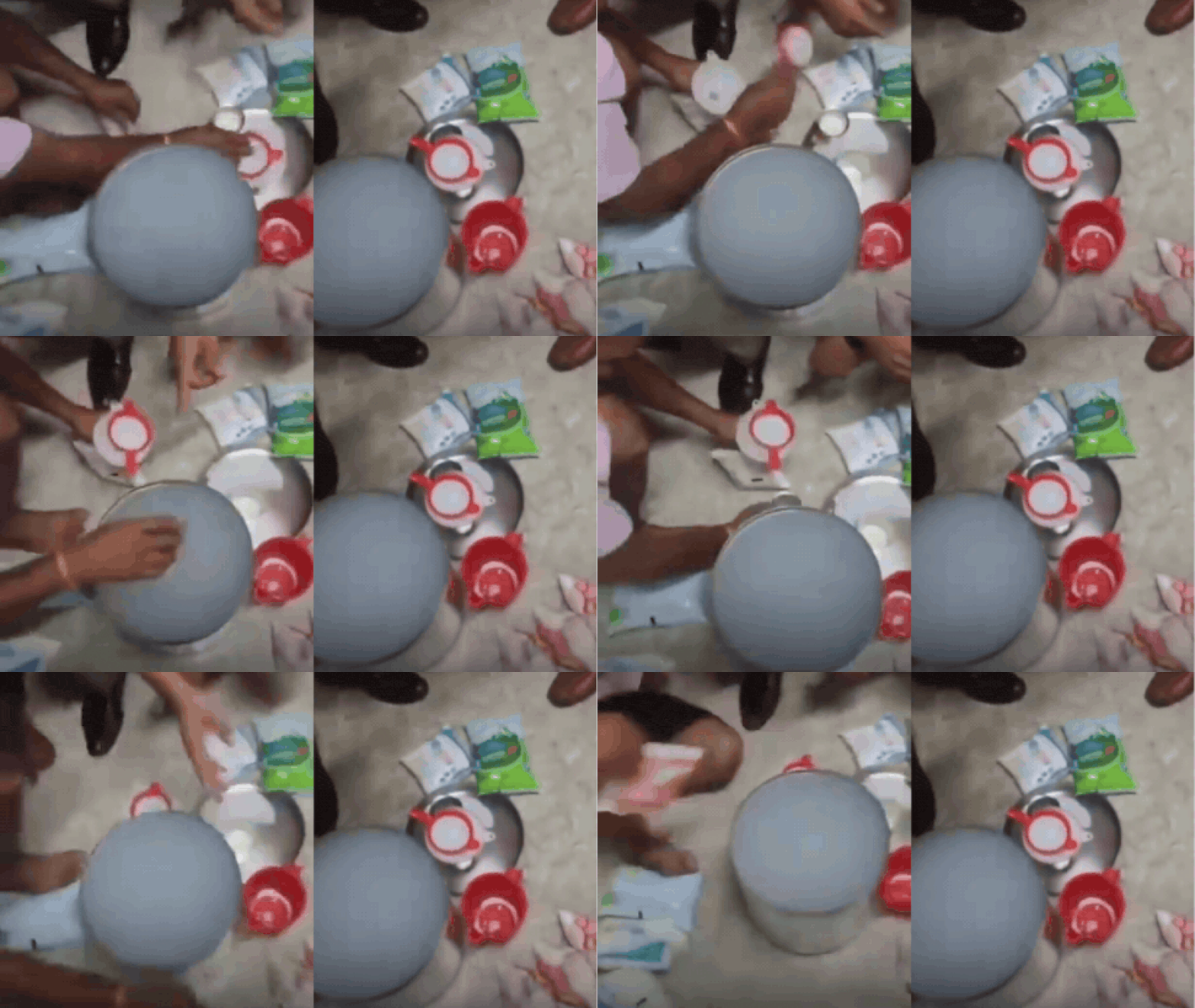
For years, analogue paneer has been quietly making its way into restaurant kitchens, catering units and roadside eateries as a cheaper substitute to traditional milk-based paneer. Most consumers never knew the difference, because it looked similar, cooked similar and was often sold under the same name. But a series of raids and lab tests in Gujarat and Maharashtra have now raised what was once considered a labelling issue to one of India’s biggest food safety debates.The recent bans in Gujarat and Maharashtra signal a dramatic shift in the way governments are responding to food adulteration, a clear indication that authorities are no longer willing to treat analogue paneer as just a regulatory violation but as a consumer protection issue.Also read: Maharashtra, Gujarat ban non-dairy paneer

Real paneer vs analogue paneer.

Real paneer vs analogue paneer.

The crackdown did not come overnightThat was after months of aggressive enforcement in Gujarat that exposed the scale of the problem. In a six-day statewide drive in April, the Food and Drugs Control Administration inspected 2,527 hotels, restaurants, dhabas and manufacturing units. Officials destroyed 703 kg of spurious paneer, issued notices to 270 establishments, sealed 18 units, collected 95 samples, and imposed fines on the violators.The inspections by the Ahmedabad Municipal Corporation revealed an equally disturbing picture. In a three-month period, of the 250 samples of paneer tested, 50 samples did not meet quality standards, while 27 samples contained undeclared analogue paneer. More than 1.4 tonnes of suspect paneer was seized and several famous restaurants penalized. In an earlier raid in Surat, more than 1.4 tonnes of paneer was seized, which laboratory tests allegedly found to contain vegetable oil and traces of industrial acid instead of milk fat. Repeated discoveries convinced authorities that sporadic enforcement was not enough.

Why analogue paneer is booming.

Why analogue paneer is booming.

Why analogue paneer became popularThe rise of analogue paneer is, in many ways, an economics story. India is the world’s largest milk producer, but demand for paneer has shot up much faster than supply, thanks to burgeoning restaurant chains, cloud kitchens, fast-food outlets and catering businesses.Over the last few years, the prices of real paneer have shot up to be among the costliest ingredients for budget meal eateries. It is made using vegetable fats such as palm oil, milk solids, starches, emulsifiers and stabilisers and can be much cheaper while closely resembling real paneer in appearance and texture.The Food Safety and Standards Authority of India (FSSAI) itself had noted that the popularity of analogue dairy products was due to lower costs, ease of manufacturing and the ability to mimic traditional dairy products.Also read: Maharashtra FDA bans analogue paneer

Why states are cracking down.

Why states are cracking down.

The biggest issue is misleading consumersExperts say that imitation paneer is not automatically illegal if it is labelled correctly and meets food standards. The problem however, arises when consumers are led to believe that they are eating dairy paneer when a substitute is served. Earlier this year, the western region of FSSAI had asked manufacturers and food service establishments to clearly label cheese analogues and banned businesses from selling analogue products under the name “paneer”.The regulator has proposed mandatory menu disclosures whenever analogue ingredients are used so that customers can exercise an informed choice. But repeated inspections in Gujarat found many eateries still serving analogue paneer without informing customers, prompting stricter action.Today, states are moving beyond disclosure to outright bansThis year, Maharashtra became the first major state to impose a one-year prohibition on the manufacture, storage, transport, distribution and sale of unstandardised analogue paneer, with violations inviting jail terms and monetary penalties under food safety laws. Now Gujarat has broadened its crackdown, banning analogue versions of paneer, cheese and butter, in the wake of repeated instances of adulteration and risks to public health.These decisions suggest that states are not just relying on labelling rules, but are using stronger enforcement powers where there has been widespread misuse. The moves could prompt other states with sizable dairy markets to follow suit if inspections turn up similar violations.What’s next for consumers and the dairy industry?The latest crackdown also raises broader questions about India’s food supply chain. True dairy products continue to be expensive as costs of milk procurement, transportation and cold-chain rise continuously. In contrast, the organised restaurants sector is facing aggressive price competition. Industry representatives say some companies switched to analogue products to keep menu prices at affordable levels, but consumer groups say cost cannot be used to justify misleading customers.In the future, governments will have to strike a balance between strict enforcement and more robust testing, clearer labelling standards and better public awareness. The Gujarat and Maharashtra actions send a simple message to consumers: the biggest worry when ordering paneer dishes is no longer just whether the food tastes good but whether what is served is actually made of milk. If more states adopt the model, analogue paneer could be the next big battlefront in India’s long-drawn fight against food adulteration.

Disha Salian case: Bombay high court asks Mumbai Police why no FIR was filed on murder complaint | Mumbai News

Disha Salian case: Bombay high court asks Mumbai Police why no FIR was filed on murder complaint
Aadvocate Nilesh Ojha claimed the court had raised serious concerns over the police investigation.

MUMBAI: Advocate Nilesh Ojha, representing Disha Salian’s father Satish Salian has said the Bombay high court on Thursday questioned the Mumbai Police over its decision not to register an FIR in the death of celebrity manager Disha Salian, despite her family’s allegations of murder, during the hearing of a petition seeking a fresh investigation into the 2020 case.Ojha said, a division bench of Justice Bharti Dangre and Justice Manjusha Deshpande sought an explanation from the police on why only an Accidental Death Report (ADR) was registered when Disha’s father, Satish Salian, had lodged a complaint alleging gang rape and murder.The court also noted that copies of the post-mortem report and the ADR had not been provided to the family even five years after her death.Aadvocate Nilesh Ojha claimed the court had raised serious concerns over the police investigation.“The court severely reprimanded the police. It clearly stated that the nature of the investigation into the accidental death, regardless of its findings, was not the core issue. When the girl’s father expressed doubts about the police’s version and lodged a complaint alleging gang rape and murder, what prevented the police from registering an FIR and conducting an investigation? Why was this not done? The court posed this direct question,” he said.Ojha further alleged that the bench found the police’s theory that Disha died by suicide after falling from the 14th floor inconsistent with the material placed before it.“The court examined the evidence on record. It rejected the police’s claim that she had fallen from the 14th floor and committed suicide, as this theory was inconsistent with the evidence and lacked credibility. The court noted the condition of the body seen in photographs taken during the funeral and observed that it appeared intact despite the alleged fall. We also pointed out that eyewitnesses had stated she had not sustained visible injuries,” he claimed.During the hearing, the bench directed the petitioner to file a chronological list of events and circumstances that, according to the family, disclose a cognisable offence.The respondents, including the Maharashtra government through the Mumbai Police, have been asked to respond to those submissions.Satish Salian has approached the high court seeking a fresh probe into his daughter’s death, alleging foul play and seeking the interrogation of Shiv Sena (UBT) leader Aaditya Thackeray.The petition challenges the earlier conclusion that Disha Salian’s death was accidental and seeks a fresh investigation into the circumstances surrounding the incident.Earlier, the Mumbai Police told the high court that the findings of the Special Investigation Team (SIT) were consistent with the conclusions of the original investigation, which ruled out foul play in the death of the 28-year-old celebrity manager in 2020.The police, however, said the SIT was continuing to examine all possible angles.(With ANI inputs)