
In Mumbai, CM Fadnavis inaugurates completed Santacruz-Chembur Link Road network, Chembur Metro station and launches TBM Arjuna for Thane-Borivli twin tunnel project
In Mumbai, CM Fadnavis inaugurates completed Santacruz-Chembur Link Road network, Chembur Metro station and launches TBM Arjuna for Thane-Borivli twin tunnel project
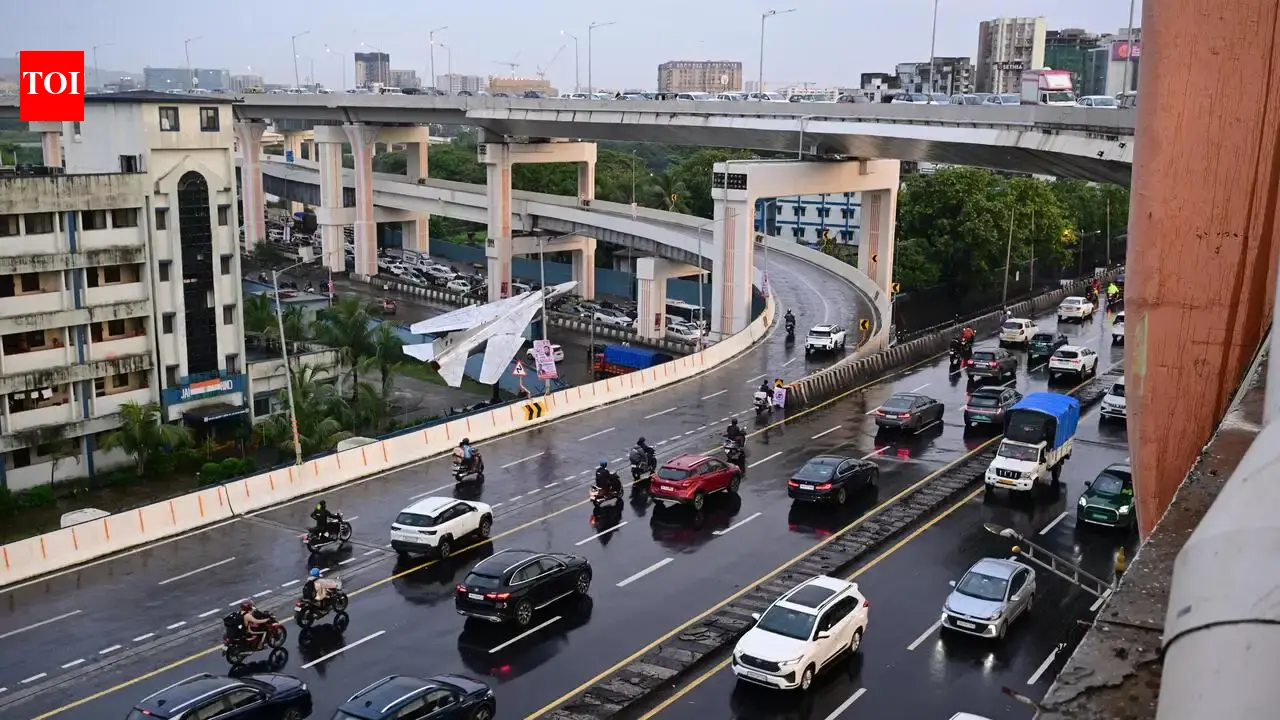
The newly opened SCLR elevated link directly connects Bandra-Kurla Complex and Western Express Highway near Mumbai University, providing motorists an alternative route and easing traffic congestion at Vakola and Kalanagar

Mumbai: Chief minister Devendra Fadnavis on Thursday inaugurated the completed Santacruz-Chembur Link Road (SCLR) network and Metro connectivity up to Chembur, while launching the second tunnel boring machine for the Thane-Borivali twin tunnel project and renaming the Bandra-Kurla Complex (BKC) connector after former Maharashtra chief minister Babasaheb Bhosale.The 1.4km Bharat Nagar Road (Mumbai University area)-Vakola Junction elevated corridor, built under SCLR Extension Phase II, completes the 10.3km SCLR network linking Eastern Express Highway with Western Express Highway (WEH). The final elevated section provides a direct connection between BKC and WEH, allowing motorists to bypass congested stretches around Kalina, Vakola and Kalanagar.MMRDA expects the completed network to reduce travel time on key journeys by about 35 minutes.Fadnavis said eight links had now been completed around BKC’s G-Block, against six originally envisaged to address congestion. He acknowledged that the landing of the new elevated corridor near Bharat Nagar Road and Vakola Junction had caused some congestion on WEH, but said traffic was being managed.The chief minister also inaugurated Metro connectivity up to Chembur, with Chembur Metro station under Phase 1A of Metro Line 2B opening to commuters. The station is integrated with V N Purav Monorail station, creating a multimodal interchange for the eastern suburbs.Fadnavis said that once the city’s various transport systems were integrated, daily ridership could reach about 90 lakh.The third milestone was the launch of TBM Arjuna, the second tunnel boring machine for the Thane-Borivli twin tunnel project. It joins TBM Nayak, which began excavation earlier.Equipped with 13.34m cutter heads, the TBMs and were custom-built for Megha Engineering & Infrastructures Ltd by German manufacturer Herrenknecht. They are tunnelling through hard basalt around 23m below the surface of Sanjay Gandhi National Park.The machines will create an 11.84km twin-tunnel corridor and cut travel time to 15 minutes from existing 90 minutes.
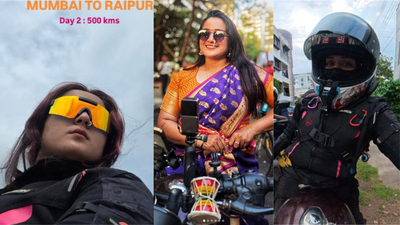
Mumbai biker Riddhi Thakkar’s final journey to Bastar

‘Ride, break stereotypes, inspire’: Mumbai biker Riddhi Thakkar’s final journey to Bastar
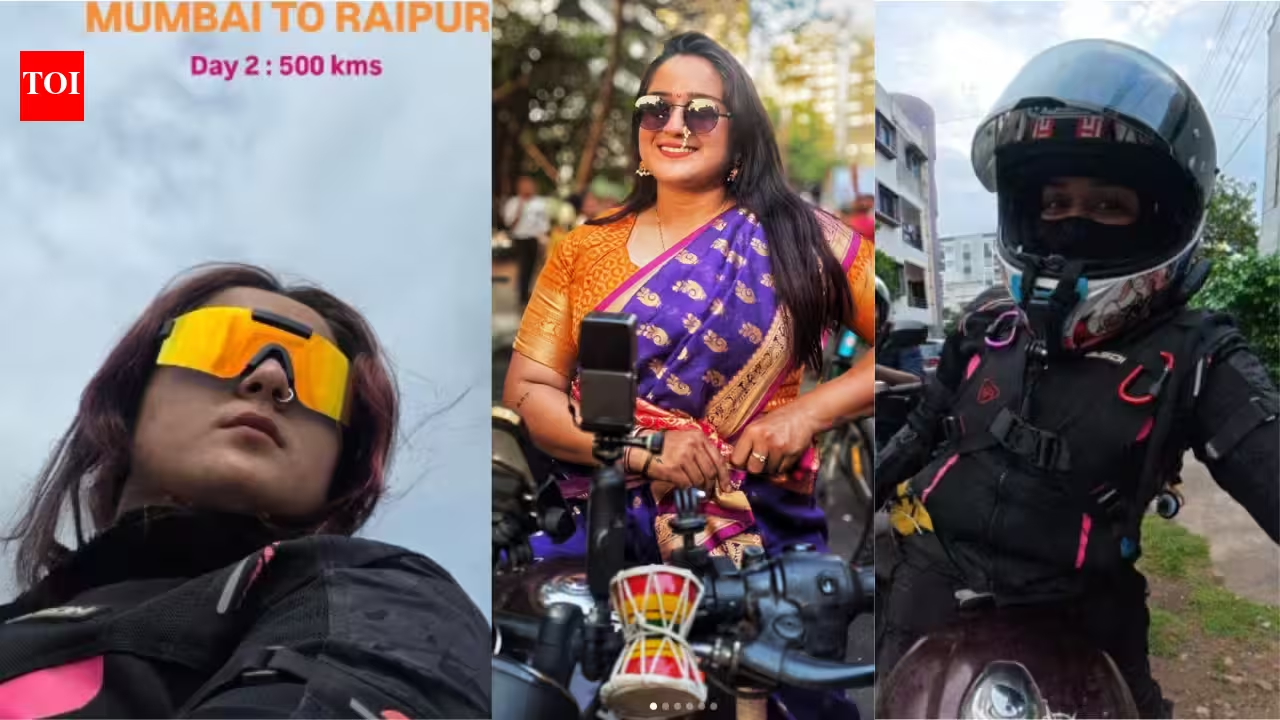
Riddhi Thakkar died on Wednesday morning on NH-30 in Chhattisgarh’s Balod district after her motorcycle was hit by an unidentified heavy vehicle. (Photos taken from her Instagram account @gearglimpse54)

MUMBAI: On her social media profiles, Riddhi Thakkar described herself in two words that captured the two sides of her life: makeup artist and rider.At 24, the Mumbai biker had built an identity around motorcycles, long-distance rides and the freedom she associated with life on two wheels.Her YouTube channel, @Ridewithridz, described her as a biker determined to “carve my own path in a world where the throttle doesn’t care about gender” — a glimpse into how she saw riding not merely as a hobby, but as part of her identity.Thakkar died on Wednesday morning on National Highway 30 in Chhattisgarh’s Balod district after her motorcycle was hit by an unidentified heavy vehicle while she was travelling towards Bastar with a group of bikers. Police said the vehicle fled the scene and efforts were underway to trace it and its driver.A journey she had been sharing onlineThe Bastar trip was not a journey that began with the group in Chhattisgarh. Riddhi had ridden from Mumbai to Chhattisgarh on her motorcycle before joining the other bikers in Raipur.Just days before the fatal crash, she had posted information about her solo ride from Mumbai to Chhattisgarh on Instagram. A day before the accident, she shared another photograph of herself on the platform.Those posts now offer a glimpse of the journey she had undertaken just before it ended on NH-30.Her online presence showed that riding was central to her life. On Ridewithridz, she wrote about solo rides, road trips, motorcycle reviews, riding tips, gear guides and the “real, unfiltered moments” of life on the road.She also spoke about wanting to challenge stereotypes around women riders and inspire other women to take up motorcycling.“I’m here to break stereotypes, inspire others (especially women) to chase freedom on two wheels, and build a community where all riders are welcome.”Her channel also described her as someone documenting the ups, downs and milestones of her riding journey, along with moto-vlogs, travel stories and the biker lifestyle.From a solo ride to a group journeyAfter reaching Raipur, Riddhi joined a group of around 20 motorbikers from Maharashtra and other states who were travelling towards the Bastar region.At around 6am on Wednesday, near Markatola Ghat under Purur police station limits, Riddhi’s motorcycle was hit by the unidentified heavy vehicle, police said.A fellow rider told police that she, Riddhi and another biker were travelling behind the main group when the accident occurred.The impact left Riddhi seriously injured, particularly in her legs. The heavy vehicle fled immediately after the collision.Her fellow riders called the police helpline Dial 112, following which an emergency response vehicle took her to Charama Community Health Centre in neighbouring Kanker district. Given the severity of her condition, she was later referred to a private hospital in Dhamtari.Doctors there declared her dead on arrival, police said.The unanswered final stretchThe circumstances surrounding the collision remain under investigation. Police are trying to identify the heavy vehicle and its driver and are expected to examine CCTV footage from stretches around the accident site for clues.For now, the final stretch of Riddhi’s journey remains marked by unanswered questions — but her digital trail leaves behind a clearer picture of the young woman behind the motorcycle.She had presented herself online not simply as someone who rode bikes, but as a woman determined to make riding part of her independence, identity and message to others.Her final journey to Bastar, which began with a solo ride from Mumbai, ended just days later on a highway in Chhattisgarh.(With agency inputs)

Woman from Maharashtra dies of snakebite; Palghar cases up 57%

Woman from Maharashtra dies of snakebite; Palghar cases up 57%

Vasai: A 56-year-old woman died of snakebite while undergoing treatment at a hospital in Kandivli on Wednesday, raising concerns over the rising number of snakebite cases in Palghar district.Suman Kom, a resident of Bhatane in Vasai (E), was working on a farm on Aug 8 when a venomous snake bit her on the hand. She was initially taken for treatment and later shifted to Shatabdi Hospital in Kandivli. She died during treatment on Wednesday.The incident comes amid a sharp rise in snakebite cases reported across Palghar district. As many as 4,128 snakebite cases were recorded at govt health facilities in the district between April 2023 and March 2025.The number of cases increased from 1,609 in April 2023-March 2024 to 2,519 in the following year, marking a rise of 910 cases, or nearly 57%.During the first year, govt health facilities recorded an average of four to five snakebite cases a day. The figure rose to nearly seven cases a day in the following year, translating into around 48 cases a week and 210 cases a month.The latest death has once again highlighted the growing concern over snakebite incidents, particularly among people working in agricultural fields and rural areas of the district.

Every great wildlife shot tells a story

Every great wildlife shot tells a story

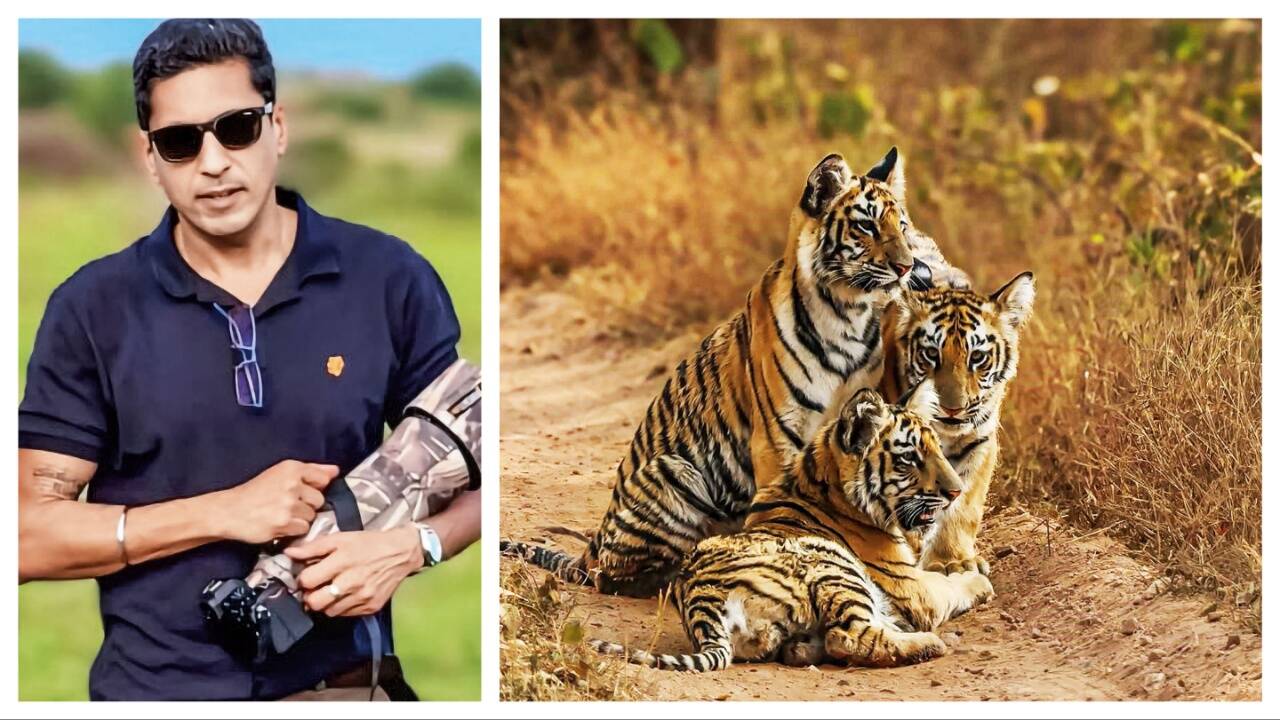
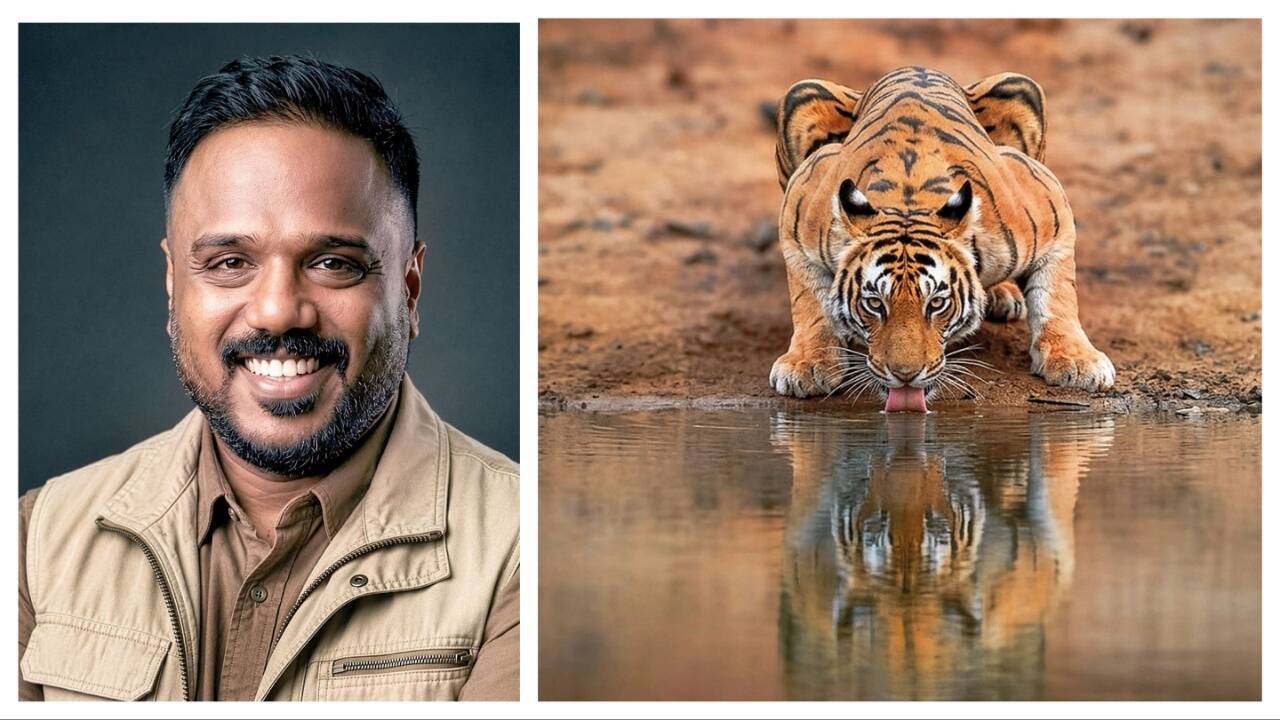
With World Photography Day approaching (August 19), we turn the lens on Mumbai’s wildlife photography enthusiasts who have ventured into India’s forests in search of its iconic big cat. They share why capturing a tiger in the wild takes far more than the right gear — it takes patience, respect and a responsible mindset towards wildlife.‘Tigers are solitary and elusive’For Vikram Dave, a businessman, who pursues wildlife photography as a passion, the appeal of photographing tigers lies in their unpredictability. He shares, “Unlike lions, which are easier to spot in prides, tigers are solitary and elusive. You can go through four or five safaris without seeing a single tiger. That rarity is what makes every sighting special. They are majestic creatures, and every photograph feels earned. I have been photographing wildlife since 2018 and make five to six safari trips every year with a group of fellow photographers.”

MixCollage-13-Aug-2026-02-29-PM-2188

‘Wildlife photography is as much about restraint as it is about instinct’For photographer and celebrity stylist Aesana Bhuta, tiger sightings have occurred during several visits to forests in Ranthambore and Madhya Pradesh. “I have spotted tigers mainly while visiting safari parks across India. Sightings are wonderfully unpredictable. It’s about being at the right place at the right time,” she says, adding, “We should respect their space because it is their home that we are visiting. Crowding or blocking their pathways just to click pictures is a big no. Wildlife photography is as much about restraint as it is about instinct.”

MixCollage-13-Aug-2026-02-28-PM-1685

‘Safaris have become a trend’For Hemant Shankar Khushale, an IT professional and wildlife photographer, capturing the tiger photograph he had imagined was a long process.He says, “It took me around five years to consistently capture the kind of tiger photographs I had envisioned. I started with a point-and-shoot camera before moving to a DSLR. Luck certainly helps, but patience, preparation and spending time in the jungle matter much more.”While every season offers different photographic opportunities, Hemant says the summer months — from March to June — generally provide the best chances for tiger photography as visibility improves and animals frequently visit water bodies.

MixCollage-13-Aug-2026-02-25-PM-4839

‘The best wildlife photographs are earned through preparation and respect for the jungle’Adding another perspective, Lokesh Tardalkar, a professor of photography and cinematography and a wildlife photographer, says, “Great tiger photographs are never just about the season. They begin with studying the park’s geography, terrain, vegetation, water bodies and light. I visualise the frame in advance — not just a close portrait of a tiger, but an image that places the animal within its habitat. Such photographs tell a stronger conservation story than a simple sighting.

MixCollage-13-Aug-2026-02-26-PM-844
Landslide deaths, auto-cab rule change, contractor accountability trending in Mumbai today

Landslide deaths, auto-cab rule change, contractor accountability trending in Mumbai today
Mumbai’s key stories today include landslide deaths, proposed auto-cab rule changes and calls for greater contractor accountability

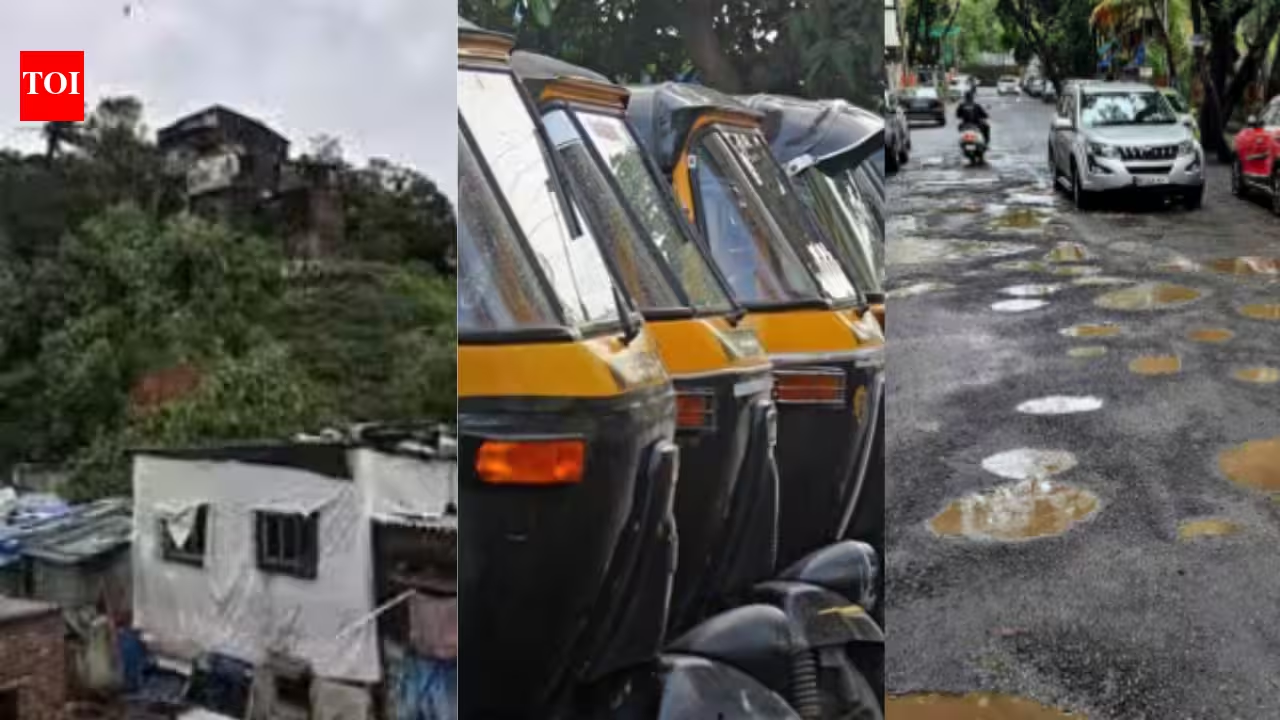
MUMBAI: The city is stuck between monsoon-related safety concerns and changes that could affect daily commuters. Two people have died and two have been injured in a landslide incident in Mumbai, which has brought renewed focus on the city’s vulnerability during the monsoon and the safety of people living or traveling near vulnerable slopes.Meanwhile, the impending language rule for auto-rickshaw and cab drivers in Maharashtra is creating talks among commuters and the transport sector, with the provision slated to come into force from August 18.The state government also is assembling a system to rate contractors on the quality of their work and their ability to meet deadlines, an issue that hits close to home in a city where road, drainage and infrastructure projects often overlap.For Mumbaikars, today’s city conversation is not about an isolated event, but about safety, accountability and how civic infrastructure performs in the monsoon.

Landslide reignites monsoon safety focus

The deaths in the landslide have brought out the dangers of unstable ground in heavy rains. With the monsoon active across Mumbai region, the incident is likely to fuel questions over vulnerable locations, preventive inspections and emergency response.Such risks are particularly challenging to manage in the dense development of the city, where homes, roads and public infrastructure are often built close to slopes and retaining structures.

New language rules for auto and cab drivers

Auto-rickshaw, cab drivers must know Marathi: The shift could impact thousands of drivers and be a major talking point for transport workers, passengers and app-based mobility platforms.For commuters, the question is immediate: How will the requirement be enforced, and what documentation or testing mechanism will be used?

Contractors under scrutiny

The Maharashtra government is also planning to have a system to grade the contractors on quality and time bound delivery.The contractor’s performance is critical in Mumbai, where the monsoon exposes the weaknesses of roads and public infrastructure.The proposed system could shift focus from contract award to the monitoring of proper completion and continued functionality of projects post-handover.

GLC Mumbai gets BCI nod, deadline extended; 3 big reliefs for law aspirants

GLC Mumbai gets BCI nod, deadline extended; 3 big reliefs for law aspirants
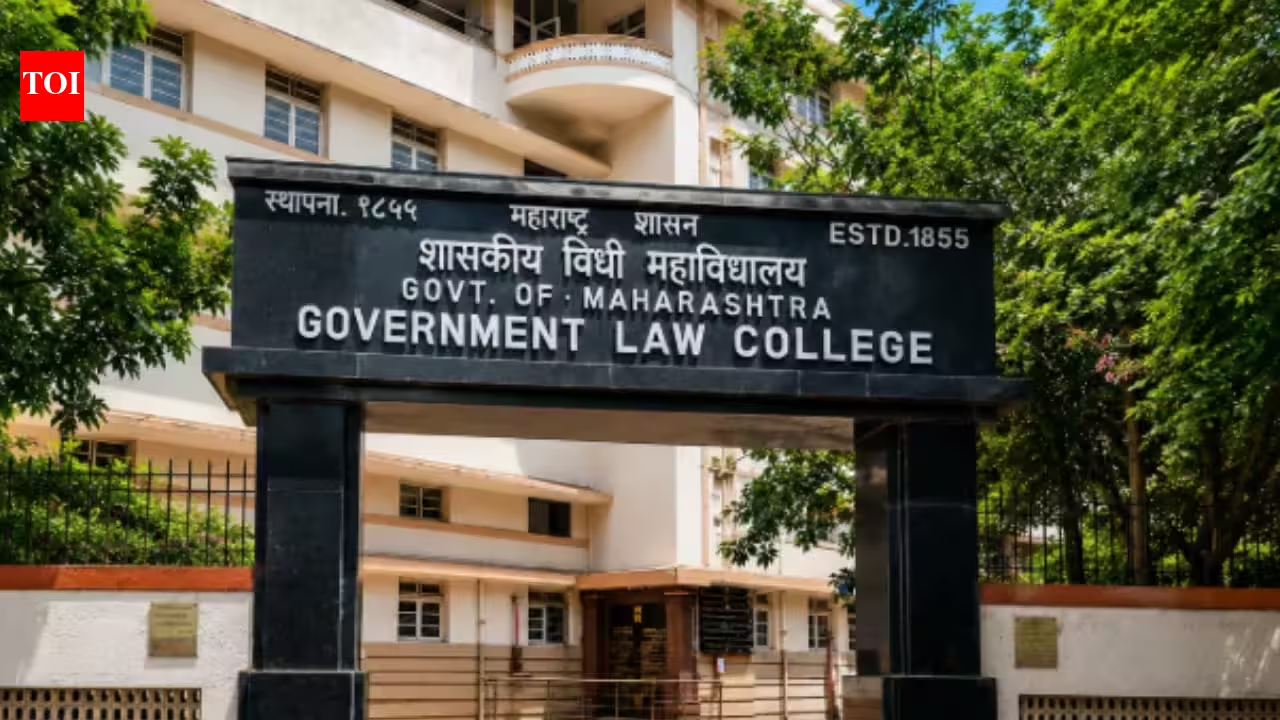
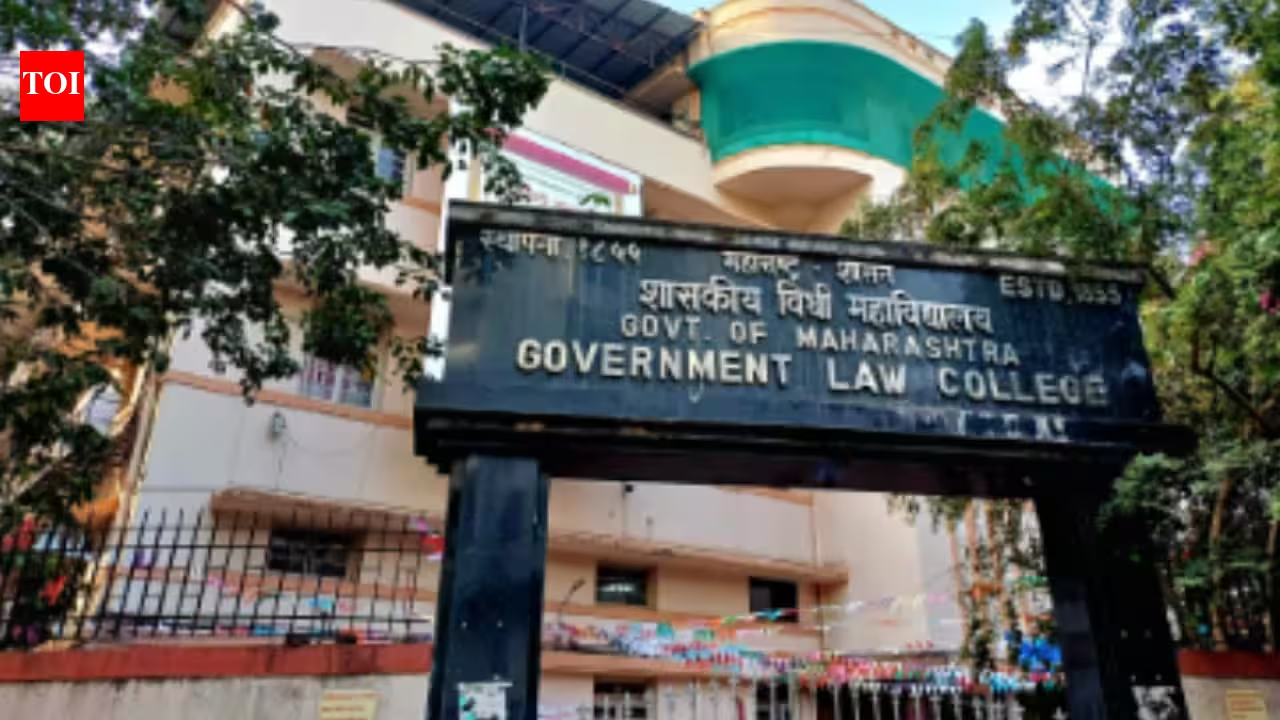
The Bar Council of India has granted approval to Government Law College along with eighteen other institutions

MUMBAI: After days of uncertainty that left thousands of law aspirants on edge, Thursday brought three significant developments that could ease the admission crisis in Maharashtra.The Government Law College (GLC), Mumbai, finally received approval from the Bar Council of India (BCI) and is expected to be added to the State CET Cell’s admission portal on Friday.An additional 18-odd colleges also received the BCI nod and will get added to the list, thus taking the total count of available colleges to 120, said sources.Second, the Bombay High Court on Thursday morning extended the deadline for filling the college option form to August 9 for the three-year LLB programme and for the five-year integrated law course giving students additional time to exercise their preferences.Most importantly, on Thursday evening, in a move that could fundamentally change this year’s admission process, the CET Cell has proposed to the state government that students be allowed to continue participating in subsequent CAP rounds even if they are allotted their first-preference college.It has also recommended that candidates be permitted to submit a fresh option form before every admission round, allowing them to revise their college preferences as more institutions receive approvals.“We have sent our proposal to the state government and are awaiting its approval. Once it comes through, students will no longer be forced to accept admission simply because they have been allotted the college they marked as their first preference: they can either choose it or reject it, which was not allowed earlier. So, if they reject the first choice of college allotted to them, they will be allowed to continue participating in subsequent CAP rounds,” State CET Cell Commissioner Dileep Sardesai told TOI.“This admission season is unlike any other. We understand the anxiety students are going through because of the delayed approvals, which is why we have proposed these changes. We have also suggested that students be allowed to submit a fresh college option form before every CAP round so that they can revise their preferences as more colleges receive approvals,” he added.Admission experts say such a relaxation would be in the interest of fairness. The current preference list, they point out, was prepared without several prominent colleges in contention. Allowing students to revise their options once the list of participating institutions is finalised would ensure that admissions reflect genuine student preferences rather than administrative delays.Data available with the Directorate of Higher Education (DHE) as on August 5 showed that only 102 colleges offering the three-year LLB programme, with an intake of 10,105 seats, and 66 colleges offering the five-year integrated LLB programme, with 5,955 seats, have been cleared for the first round. This is against nearly 54,000 applicants for the three-year course and 20,000 applicants for the five-year programme, drastically shrinking the options available to students.GRAPHICImportant 3 developments as on Thursday:1. GLC and 18 other colleges receive approval from the BCI and will be added to the option list by Friday2. Bombay High Court extend the option filling process (selection of colleges) for law programmes3. State CET Cell sends a proposal to the state govt to alter admission norms: No mandatory auto-freeze if the first choice of college is allotted and allow candidates to fill fresh college option form with their preferences before every round.

GLC Mumbai, dozens of colleges excluded from law admission round

GLC Mumbai, dozens of colleges excluded from law admission round
Many colleges, including Government Law College, are excluded from the initial admission round

MUMBAI: Maharashtra’s top-ranked law aspirants will, for the first time in years, be unable to choose the Government Law College (GLC), Mumbai, as their first preference in the opening round of admissions, even as nearly half the law seats in the state have disappeared from the first round of the Centralised Admission Process (CAP).With GLC, the state’s oldest and most sought-after law college, kept out of the admission process and dozens of other Mumbai University-affiliated colleges also excluded for want of mandatory approvals, thousands of seats have been rendered unavailable, dramatically shrinking the choices before students.The impact is particularly severe for meritorious students. Under the CAP rules, candidates who are allotted the college they list as their first preference must compulsorily accept that seat.Rejecting it results in automatic exclusion from the admission process. With GLC absent from the first round, students who would ordinarily have listed it as their first choice are now forced to rank another college at the top of their preference list.Once allotted that college, they must join it, effectively losing the opportunity to compete for GLC should it become available in a subsequent round.GLC’s exclusion is part of a much larger disruption that has seen nearly half the law colleges in Maharashtra kept out of the first round of admissions after colleges affiliated with the University of Mumbai failed to obtain mandatory approvals.Data available with the Directorate of Higher Education (DHE) as on August 5 shows that only 102 colleges offering the three-year LLB programme, with an intake of 10,105 seats, and 66 colleges offering the five-year integrated LLB programme, with 5,955 seats, have been cleared for the first round.This is against nearly 54,000 applicants for the three-year course and 20,000 applicants for the five-year programme, drastically shrinking the options available to students.Sources said GLC has been excluded because it has failed to pay the mandatory fee to the Bar Council of India (BCI), without which it cannot obtain the approval required to participate in the admission process.It has now been paid and the college, once it receives approval, will be a part of round 2. Several other Mumbai University-affiliated law colleges are also missing for want of BCI approval.bbyThe colleges face another hurdle as well. The University of Mumbai has reportedly flagged several institutions for failing to comply with mandatory staffing norms, including the appointment of qualified principals and adequate full-time faculty. Until these deficiencies are rectified and approvals are secured, the affected colleges are unlikely to be included in the admission process.There may, however, be some relief. “A few more colleges are likely to be added after tomorrow’s court hearing,” said the principal of a law college.Under the existing admission schedule, students submit their college preferences only before the first two CAP rounds.However, sources said the CET Cell has requested the state government to allow candidates to revise and refill their option forms before the second round, once additional colleges are admitted into the process, and again before the third round if more institutions receive approval.Such a move, they said, would prevent students from being permanently locked into choices made when several prominent colleges, including GLC, were unavailable.BOX: “Maharashtra’s LLB admissions are in disarray – Someone owes young students and aspiring lawyers an explanation.Thousands of aspirants who cleared CET with hard-earned percentiles — now facing uncertainty over seats, schedules, and institute credibility.This isn’t a minor administrative hiccup. It’s a systemic compliance failure that regulators and colleges allowed to build up for years, and students are the ones paying the price with lost time, anxiety, and disrupted academic years.” Megha Yadav, a lawyer posted on social media.

Probe Abhijeet Dipke, Saurav Das others over presence of minors at Delhi protest: ‘Mumbai influencer’ to cops

Probe Abhijeet Dipke, Saurav Das others over presence of minors at Delhi protest: 'Mumbai influencer' to cops
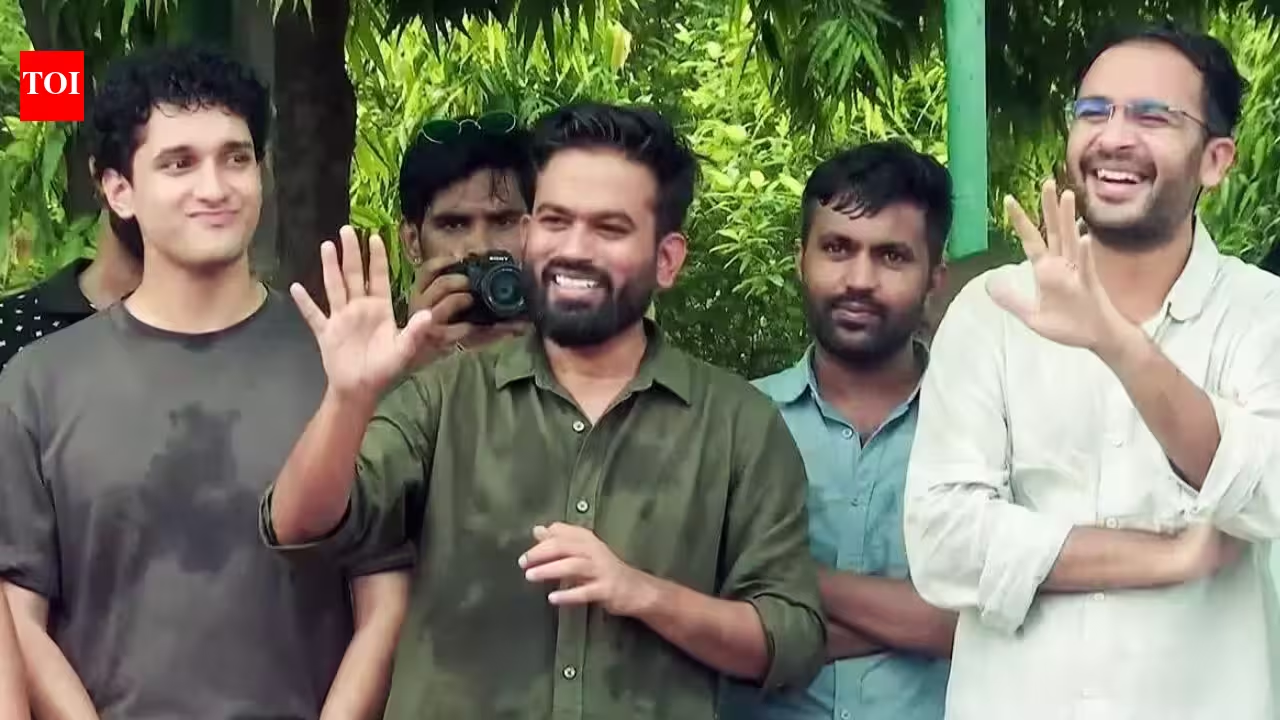
CJP founder Abhijeet Dipke, chief spokesperson Saurav Das and national spokesperson Ashutosh Ranka.

MUMBAI: A Mumbai resident claiming to be a social media influencer has filed a complaint with the Indore police, seeking an investigation into the alleged presence of minor boys and girls at a recent students’ protest led by the Cockroach Janta Party (CJP) in New Delhi.The complaint was filed with the city crime branch on Wednesday and seeks an investigation into the alleged role of CJP founder Abhijeet Dipke, chief spokesperson Saurav Das and others in the participation of minors at the protest at Jantar Mantar.The complainant, Faizan Ansari, alleged that the probe should determine whether Dipke, Das or others were involved in bringing, inviting, encouraging or facilitating the participation of minors in the protest held over the NEET question paper leak case.He also sought the preservation and examination of photographs and videos from the protest, media interviews, public statements, CCTV footage from the protest site and surrounding areas, social media posts and other electronic records.The complaint stated that if the investigation establishes any cognizable offence under the Protection of Children from Sexual Offences (POCSO) Act, the Bharatiya Nyaya Sanhita (BNS), the Information Technology Act or the Juvenile Justice (Care and Protection of Children) Act, an FIR should be registered against those involved.Additional deputy commissioner of Police Rajesh Dandotiya said, “We have received a complaint from Ansari, who claims to be a social media influencer. The complaint is being investigated. Appropriate action will be taken based on the facts that emerge from the investigation.”The CJP-led youth protest at Jantar Mantar over the NEET question paper leak lasted 36 days and ended with the resignation of then-Union Education Minister Dharmendra Pradhan.On July 20, when protesters attempted to march towards Parliament, Delhi Police stopped them and used force to disperse the demonstrators, leading to clashes between the two sides.The CJP withdrew its protest on July 25 after Pradhan’s resignation and talks with the government, which accepted the demands raised by the agitators.

JJ Hospital’s forensic team conducts donor post-mortems at Mumbai private hospital

JJ Hospital’s forensic team conducts donor post-mortems at Mumbai private hospital

Mumbai: Families who agree to donate a loved one’s organs after brain death bring hope to several ill patients, but the hours that follow can be particularly difficult. Once organs are retrieved, families traditionally have to wait for the mandatory post-mortem examination and police formalities before the body can be taken home or to the cremation ground.On June 26, a small but significant change helped ease that wait for two donor families at H N Reliance Hospital in Girgaum. The hospital had two deceased donors on the same day and requested state-run JJ Hospital in Byculla to send its forensic team to its premises to conduct the post-mortem examinations, instead of transporting the bodies to the government hospital.The practice is still unusual in Mumbai. According to ZTCC president Dr Surendra Mathur, this was only the second time a government forensic team had conducted a post-mortem at the hospital where organs had been retrieved. The first was at a hospital in Thane, following a similar request. “It helps reduce the waiting time for donor families,” he said. ZTCC coordinates organ sharing among registered transplant hospitals in Mumbai.Post-mortem examination is mandatory following deceased organ donation, but the additional movement of the donor’s body and the time taken for the examination and police inquest can prolong an already emotionally difficult process for families. In Tamil Nadu, a system is in place that allows post-mortems to be conducted at the hospital where organ retrieval takes place, helping reduce the waiting time for families.H N Reliance Hospital CEO Dr Tarang Gianchandani thanked JJ Hospital dean, Dr Ajay Bhandarwar, and Mumbai Police commissioner Deven Bharti for their coordination during the retrieval and allocation process. She said closer coordination between government and private hospitals could further strengthen the deceased-donation programme.

BEST driver says technical snag in bus mishap that killed one, Mumbai police dismiss claim in chargesheet

BEST driver says technical snag in bus mishap that killed one, Mumbai police dismiss claim in chargesheet

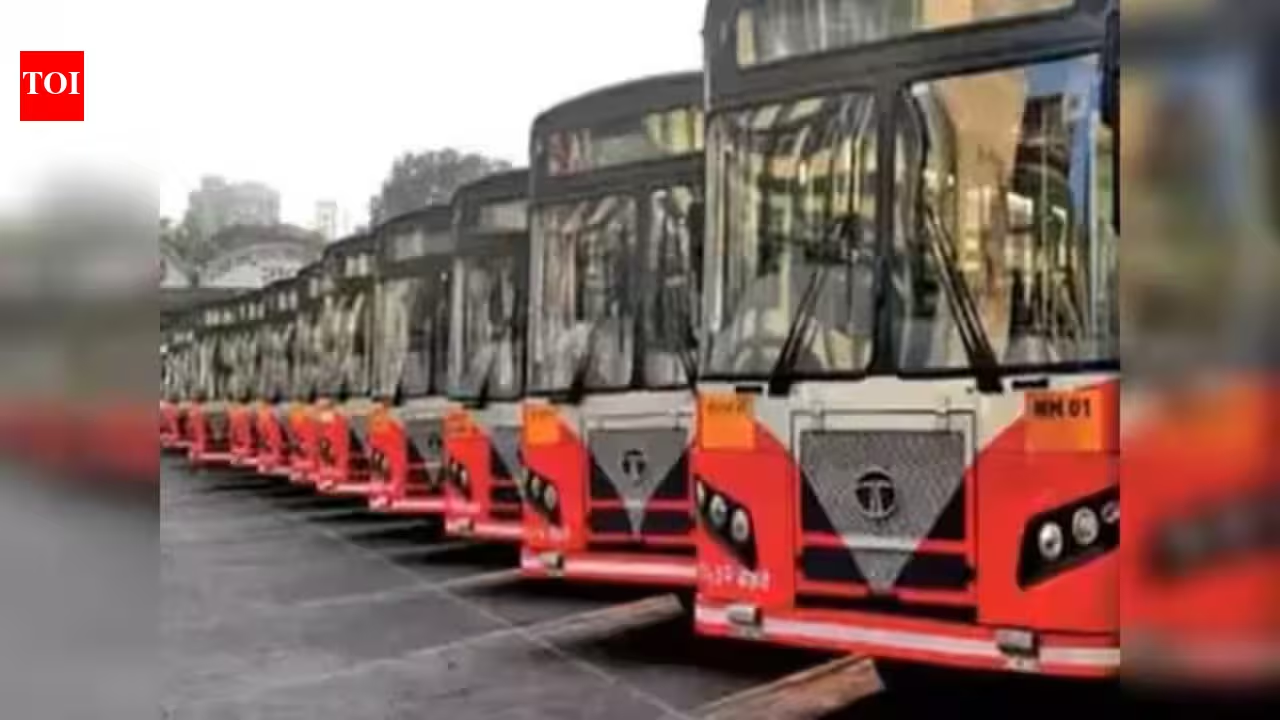
Mumbai: The Shivaji Park police last week filed the chargesheet against BEST bus driver Vikas Padave for driving the bus very rashly and at a high speed before it rammed into multiple vehicles, killing a delivery boy and injuring several near Plaza theatre in Dadar (W).In the chargesheet, police dismissed Padave’s claim that there was some technical snag in the bus and stated that he allegedly lost control and crashed into three vehicles before ramming into an e-bike of the delivery boy, 28-year-old Niyaz Ahmed Moharram Ali, and injuring several others.Padave’s statement, which is part of the chargesheet, stated that at the time of the incident, the bus suddenly started moving at high speed after he stopped it at Veer Kotwal Udyan and applied the handbrake. Padave claimed he had not pressed the accelerator and repeatedly tried to apply the brakes, but they did not function properly. Regional Transport Office (RTO), meanwhile, was unable to give a conclusive opinion on whether the bus was roadworthy as the damaged vehicle was found unfit for an on-road test.The investigation also examined whether a mechanical failure could have contributed to the crash. Police obtained an inspection report from RTO, but the authorities could not give a concrete opinion regarding the roadworthiness or running condition of the bus.Investigators had also attempted to obtain CCTV footage from the bus. BEST officials informed the police that the footage was stored in the MNVR box installed in the vehicle. The box was subsequently removed from the damaged bus, sealed and seized in the presence of panch witnesses.However, investigators found no data on the hard disks. Police suspected that the storage devices may have been corrupted due to the impact of the accident. The hard disks were subsequently sent to Judicial Assistant Scientific Laboratory at Kalina for attempts to recover the data. Padave was not under the influence of alcohol or drugs, his medical report said.