
Central Railway Achieves Record ₹202 Crore Scrap Sale Revenue | Mumbai News
Central Railway Achieves Record ₹202 Crore Scrap Sale Revenue

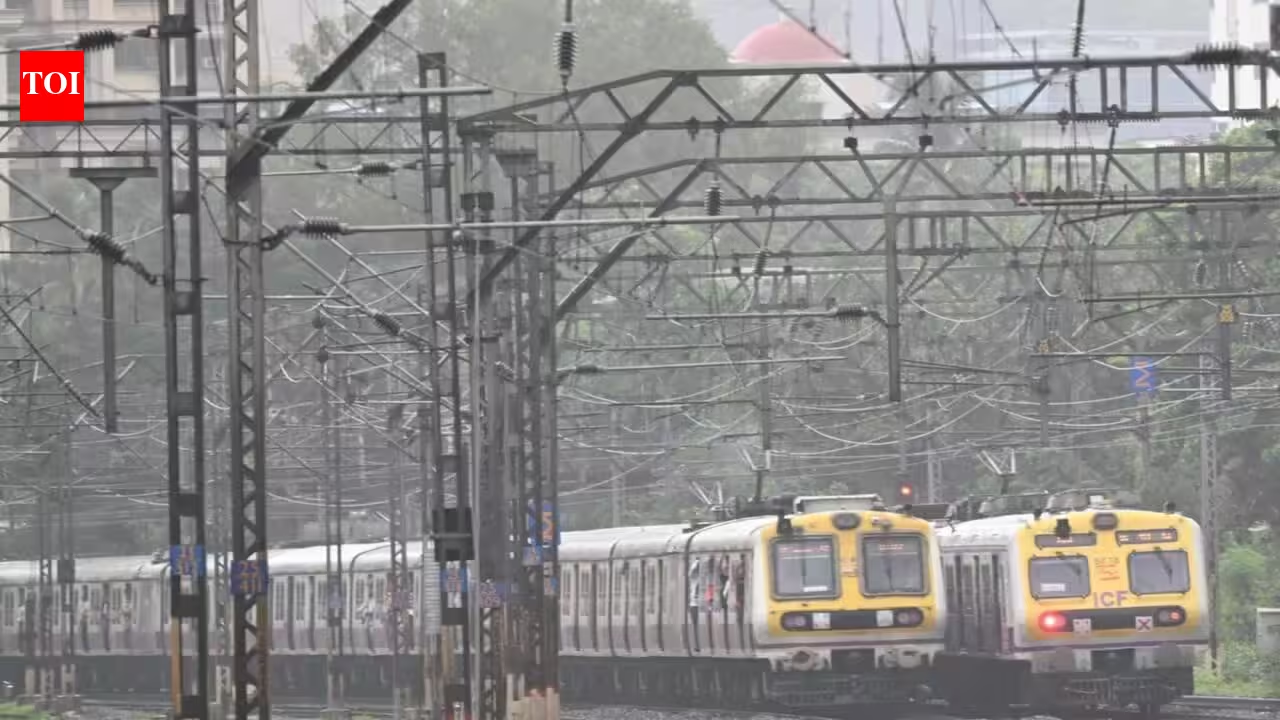
Mumbai: Central Railway (CR) on Sunday announced that it has achieved a major milestone in resource management and revenue generation, recording its highest-ever scrap sale revenue of Rs 202 crore up to August 5, 2026, marking a sharp 76.94 % increase over the corresponding period of the previous financial year.The achievement is particularly significant as it represents the fastest-ever crossing of the Rs 200 crore mark in scrap sales in Central Railway’s history, underscoring the organisation’s sustained efforts towards efficient asset management, financial prudence and operational excellence.According to railway officials, the record revenue was generated through the systematic identification, segregation and disposal of obsolete materials and unserviceable assets across various divisions and depots. The disposed items included substantial quantities of railway infrastructure and rolling stock scrap, helping convert idle inventory into valuable financial resources.Among the major commodities sold were 17,755 metric tonnes of rail permanent-way scrap, 1,21,381 sleepers, 11,658 metric tonnes of ferrous scrap, and 1,370 metric tonnes of non-ferrous scrap. Central Railway also disposed of 11 locomotives, 33 coaches and 33 wagons, contributing significantly to the record-breaking revenue figures.All divisions and production units played a crucial role in achieving the milestone. The Mumbai Division emerged as the highest contributor among operational divisions with scrap sales worth Rs 36.78 crore, followed by Bhusaval Division at Rs 33.19 crore, Pune Division at Rs 27.22 crore, Nagpur Division at Rs 26.12 crore, and Solapur Division at Rs 10.85 crore. Production units and workshops together generated Rs 68.39 crore, taking the total revenue to Rs 202.55 crore.Railway officials attributed the success to the ongoing “Zero Scrap Status” initiative, under which intensive drives are being conducted to clear accumulated scrap and optimise inventory management across the network. The programme aims to eliminate redundant material, free up valuable space and ensure timely disposal of outdated assets through transparent and scientific processes.Beyond the financial gains, the initiative is expected to deliver environmental benefits by promoting recycling and responsible waste management practices. Central Railway said the achievement reflects its continued commitment to the Zero Scrap Mission, while strengthening operational efficiency, sustainability and effective utilisation of public resources.The record performance sets a new benchmark for the zone and highlights its focus on transforming unused assets into productive revenue streams while supporting modernisation efforts across the railway network.

Footpaths barricaded and turned into private properties, complain residents of Powai in Mumbai | Mumbai News

Footpaths barricaded and turned into private properties, complain residents of Powai in Mumbai
At the centre of a controversy is Citipark on the main Central Avenue where residents said that the new project has taken over the broad pavements adjoining its property and has now barricaded a long stretch

Mumbai: Residents of Powai’s Hiranandani Gardens have complained that public footpaths, which have existed since the township was built, have been barricaded by new redevelopment building projects and turned into private properties.At the centre of a controversy is Citipark on the main Central Avenue where citizens said that the new project has taken over the broad pavements adjoining its property and has now barricaded a long stretch. The new property is being redeveloped by Brookfield.Brookfield, now BGRE, however, maintains that the pavement in question forms part of its property. “All works are being undertaken in accordance with the requisite statutory approvals,” said a spokesperson of BGRE.But residents contend that if the land on which people have walked for decades is indeed privately owned, how was Central Avenue, one of Powai’s busiest commercial streets, approved without provision of public footpaths?In an email sent to municipal authorities on August 7, Powai Action Forum member Ratan Sharda said residents had been told that municipal records showed the pavement outside Citipark is a part of Brookfield’s property. Additionally, he alleged that flowerpots had also been placed on the pavement on the opposite side of the road and that residents were informed that walkway too belonged to Brookfield.“Does it mean that the BMC passed this crucial commercial street without any footpaths on either side?” Sharda asked in the letter. He pointed out that residents had been using the pavements for at least 25 years and questioned whether the BMC could have sanctioned the layout of the township’s commercial street without providing pedestrian space.Debi Goenka, an environmentalist, demanded that whilst as per Supreme Court’s order, the BMC needs to construct pavements on both sides of every road for pedestrians, this was a situation where existing pavements were being taken away and pedestrians forced to walk on the road.In a separate representation addressed to municipal commissioner Ashwini Bhide, members of the Powai Advanced Locality Management (ALM) Pamela Cheema cited that the pavement outside Citipark had been barricaded, leaving no space for pedestrians; that the footpath outside Ambrosia was completely obstructed; and that the pavement adjoining the Lakepoint project had also been barricaded too. They have asked the civic body to restore these stretches for pedestrian use.“We also need the BMC and the MMRDA to have a public meeting with the residents and clarify the details of the plans approved by them,” added Goenka. “In the interim, in conformity with the orders of the Supreme Court regarding road safety, the BMC must direct the builders to immediately restore the pavements to the public.”

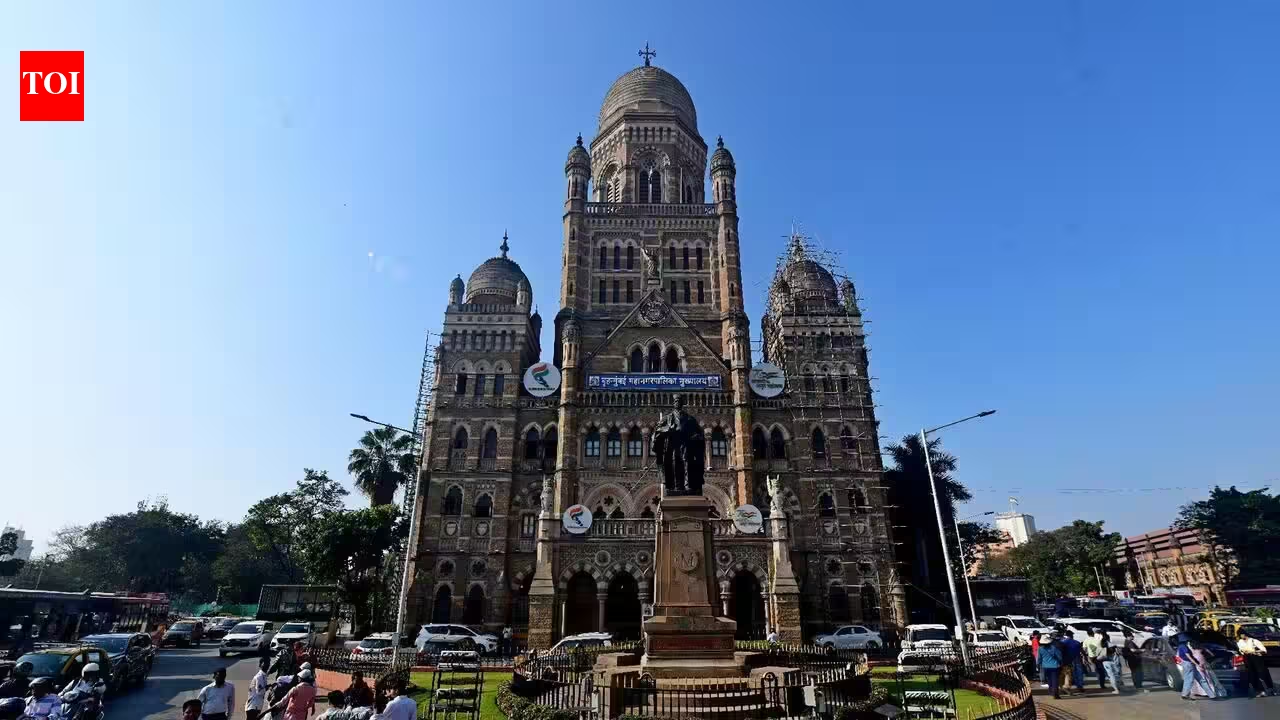
BMC plans to give 13-inch tablets to all 237 corporators in Mumbai to access agendas and documents; opposition criticises move | Mumbai News

BMC plans to give 13-inch tablets to all 237 corporators in Mumbai to access agendas and documents; opposition criticises move
Physical copies of BMC meeting agendas and proposals will, however, continue to be circulated during the transition towards a paperless system, BJP group leader in the BMC Ganesh Khankar said

Mumbai: The BMC has proposed to provide 13-inch tablets to all 237 corporators, including the 10 nominated members, as part of its initiative to digitise the functioning of the civic House and its statutory committees. Physical copies of meeting agendas and proposals will, however, continue to be circulated during the transition, with the civic administration not planning to discontinue them immediately.The proposal, mooted by the ruling BJP in the BMC, has drawn criticism from the opposition. Shiv Sena (UBT) leader and former Mumbai mayor Kishori Pednekar questioned the need to purchase separate devices when most corporators already have smartphones. “Almost every corporator today has a smartphone. The municipal agenda can very easily be accessed on their phones. There is no need to spend taxpayers’ money on purchasing separate tablets,” she pointed out.BJP group leader in the BMC Ganesh Khankar said the initiative was aimed at gradually moving municipal proceedings towards a paperless system. The tablets will allow corporators to access agendas, proposals and related documents for the civic House and various committee meetings digitally.“At present, many corporators are digitally savvy and would prefer receiving the agenda online rather than physical copies being delivered to their homes. But this does not mean that physical copies will be discontinued immediately. There may still be corporators who are not comfortable with digital platforms and may need physical copies,” he said.The BMC is also exploring the use of technology during civic House proceedings. Khankar said efforts were being made to introduce a voice-to-text system in the civic House so that speeches made by corporators during proceedings could simultaneously be converted into text. “If a corporator speaks during a House meeting, a text version of the speech should also be generated. Work is being done to explore such a proposal,” he said.BMC currently prints and distributes voluminous documents for the monthly civic House meetings as well as meetings of various statutory and special committees. These include standing committee, education committee, improvements committee, ward committees, works committee (City), works committee (Suburbs), women and child welfare committee, law and revenue committee, and health committee, among others.Several proposals run into hundreds of pages, resulting in substantial expenditure on paper, printing, transportation and distribution.A dedicated application is proposed for the tablets, through which corporators will be able to access agendas and supporting documents. Each proposal will be accessible using a designated code number.Khankar said the shift to a completely digital system would have to be gradual. “The Shiv Sena (UBT), when in power in BMC, had given laptops to all corporators, so why is it criticising our move now?” He said providing tablets to corporators is an important step towards familiarising the elected wing with digital tools and eventually enabling paperless functioning.In her party’s defence, Pednekar said the situation was different when Sena (UBT) was in power in the BMC. “At that time, smartphones were not as common as they are today. Therefore, laptops were provided. But now almost everyone has a smartphone, and the municipal agenda can be accessed easily on it,” she said. Pednekar questioned whether spending public money on another electronic device was justified when the stated objective was simply to make civic documents available digitally.

BMC to provide Rs 500 crore to BEST before Diwali; retired employees to receive gratuity payments | Mumbai News

BMC to provide Rs 500 crore to BEST before Diwali; retired employees to receive gratuity payments

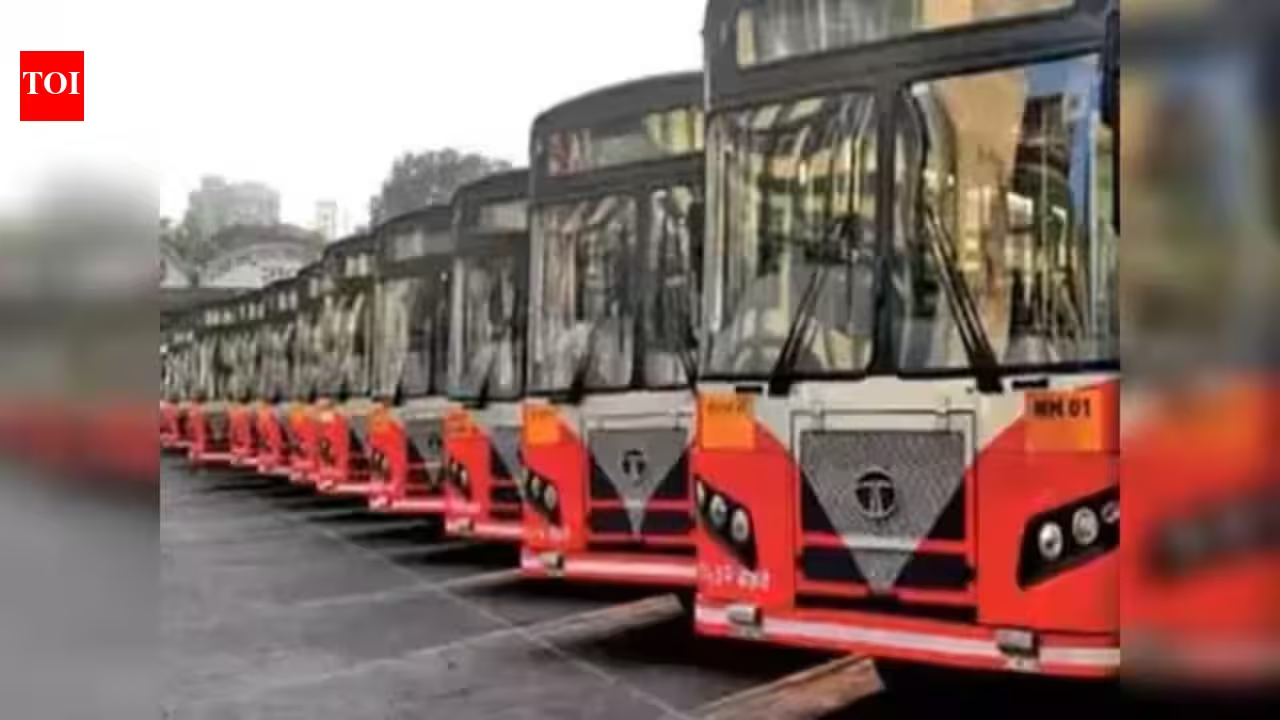
Mumbai: Financially stressed BEST undertaking is set to receive a major relief ahead of Diwali, with BMC expected to release Rs 500 crore in financial assistance. The funds will primarily be used to clear pending gratuity payments to retired employees and strengthen the undertaking’s financial position.According to available information, gratuity payments have already been made to employees who retired up to Sept 2024. The announcement was made by Mumbai mayor Ritu Tawde during BEST’s Foundation Day celebrations on Aug 7.Tawde said that, as in the past, BEST will continue to provide quality services to Mumbai residents in the years ahead.BEST committee chairperson Trushna Vishwasrao said that the undertaking plans to procure 5,000 new buses on its own in the near future. This move is expected to reduce dependence on wet-lease arrangements and help lower the number of accidents.It may be noted that BEST requires approximately Rs 28,000 crore to revitalise and transform the undertaking, as per a fresh proposal from general manager Sonia Sethi. Last Tuesday, the BEST panel approved the first long-term plan under the ‘BEST Transformation Project’.

Raj Thackeray blames ‘political interference’ for Mumbai-Goa highway project; Sarnaik says his suggestions ‘deserve consideration’ | Mumbai News

Raj Thackeray blames ‘political interference’ for Mumbai-Goa highway project; Sarnaik says his suggestions ‘deserve consideration’
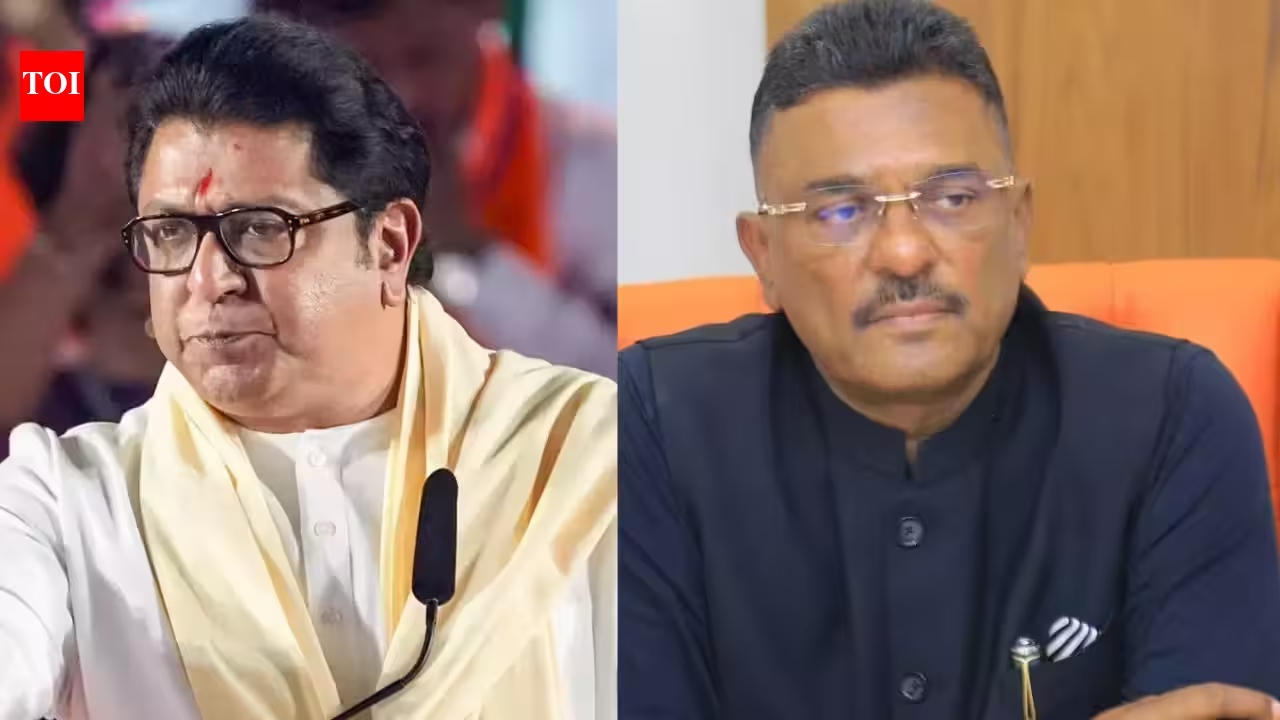
Raj Thackeray, Maharashtra Minister Pratap Sarnaik

MUMBAI: Maharashtra Navnirman Sena (MNS) chief Raj Thackeray on Sunday attributed the prolonged delay in completing the Mumbai-Goa National Highway to what he termed “political interference”, questioning why contractors had left the project and why land acquisition and other issues had not been resolved despite years of assurances.Speaking to reporters at Mangaon during his Raigad visit, Thackeray said he had earlier spoken to Union road transport and highways minister Nitin Gadkari about the highway. According to Thackeray, Gadkari had cited contractors becoming “fed up” and leaving the project as one reason for the delay. Thackeray questioned why the contractors had become fed up and who they got fed up with”, suggesting that the reasons behind their exit needed closer examination.Thackeray also questioned the execution of the project, saying land acquisition should have been completed by the government before contracts were awarded. He alleged that the failure to resolve such issues had contributed to the highway remaining incomplete for years.He further criticised the condition of newly constructed portions of the highway, questioning the need for bypasses if newly built roads themselves were already in poor condition.His remarks have direct implications for motorists from Mumbai and Navi Mumbai travelling towards Raigad, Ratnagiri and Goa. Years of construction, diversions and bottlenecks have meant longer journeys, higher fuel consumption and greater vehicle wear, while monsoon conditions can make construction stretches and diversions more hazardous.The Union government, however, has previously cited delays in land acquisition and other pre-construction activities, besides cash-flow issues involving some contractors, as reasons for the slow progress of NH-66. It has said pending issues were being resolved.Thackeray said he was not opposed to development, but questioned the nature of development taking place in the Konkan. He said local residents should benefit from infrastructure and investment and asked what purpose development served if local people’s land, water and electricity resources were used while benefits went elsewhere.He also raised concerns over the proposed ‘Third Mumbai’ development, saying local residents and young people needed to know what was being planned and whether they were being prepared to participate in the emerging economy. He referred to proposed educational, medical and other institutions and questioned whether young people from Raigad, Pen and Panvel were being adequately prepared for the opportunities such development could create.Thackeray also urged Konkan residents to recognise the importance of their land and exercise caution before selling it. He argued that people risk losing their economic base if ancestral and agricultural land is sold without understanding how future development could affect its value.He alleged that political and commercial interests could acquire land ahead of development announcements. These are political allegations and have not been independently established; they should not be treated as findings of wrongdoing against any individual or company.Thackeray’s intervention drew a response from Maharashtra transport minister Pratap Sarnaik, who said suggestions made by the MNS chief on public issues should be considered.“Raj Saheb is also a politician. If he has made certain suggestions, they deserve to be considered,” Sarnaik told reporters in Thane.Sarnaik acknowledged that the Mumbai-Goa highway had remained delayed for several years but said work had gained momentum under the present Mahayuti government. He said the project had been pending since the erstwhile Congress-NCP government and claimed that the pace of execution had subsequently improved.For motorists, however, the political exchange boils down to a simple demand: finish the pending work and deliver a safe, smooth and predictable Mumbai-Goa journey.The highway is an important economic corridor for the Konkan, carrying local, commercial and tourist traffic. After years of promises, the government’s claim of accelerated execution will ultimately be measured on the ground—by fewer diversions, safer construction zones, better traffic management and substantially shorter and more predictable travel times.

English-medium dreams of slum children face setback as 164 unauthorised schools operate across Mumbai | Mumbai News

<strong>English-medium dreams of slum children face setback as 164 unauthorised schools operate across Mumbai</strong>
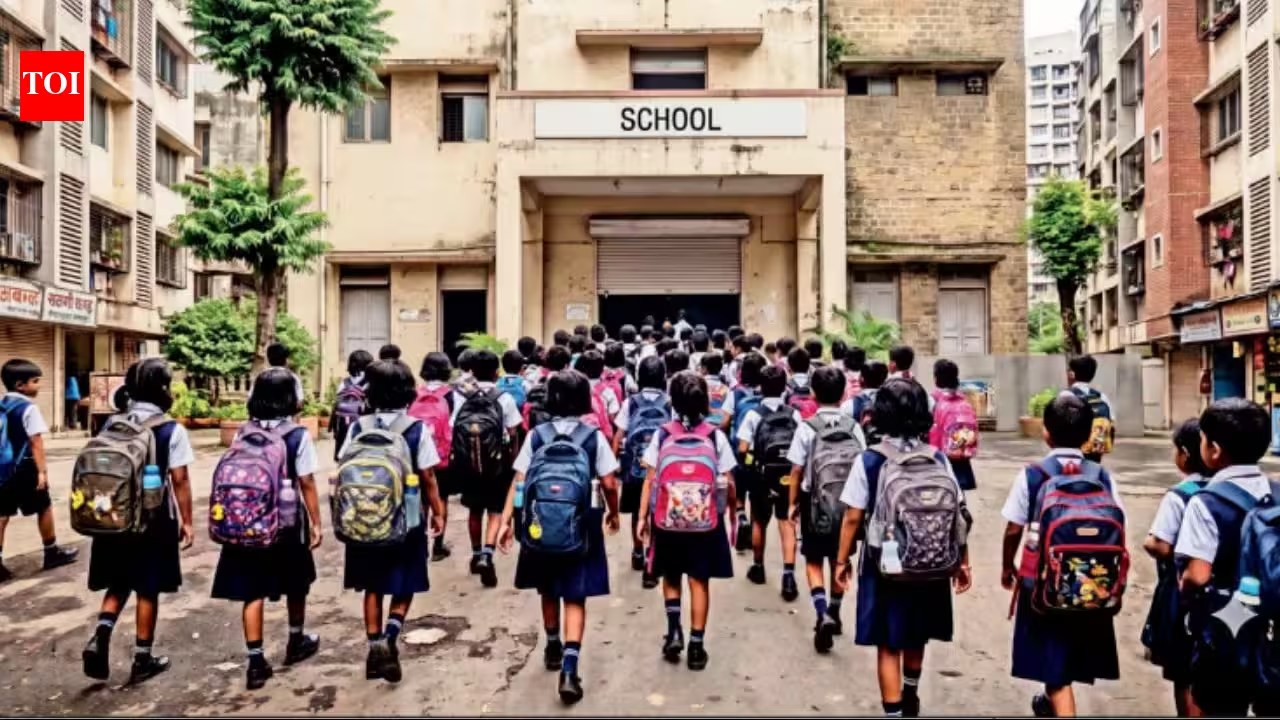
Around 90% of the 164 unauthorised schools have the word “English” in their names, reflecting the aspiration for English-medium education in slum pockets (AI Image)

MUMBAI: In Baiganwadi, Govandi, the morning rush begins before the school bell. Traffic chokes the narrow roads as autorickshaws, two-wheelers and pedestrians jostle for space. Students in uniforms stream into the lanes, while inside one of the neighbourhood schools, a teacher wipes the blackboard clean before the day’s first lesson.For the children, it’s an ordinary school morning. For their schools, however, the future is far less certain.

Top hotspots for unauthorised schools<br>

Top hotspots for unauthorised schools

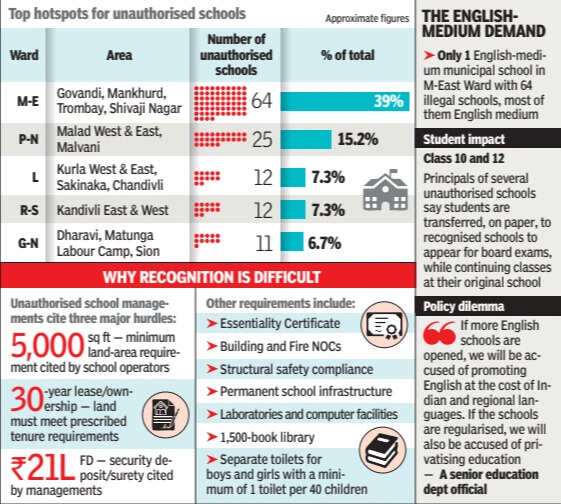
M-East Ward, covering Govandi, Mankhurd and Trombay, accounts for 64 (39%) of the 164 unauthorised schools identified across Mumbai, making it the city’s largest cluster. About 36 schools here have been served closure notices, with FIRs against some.Many operate from cramped one-to-three-storey premises, with small classrooms, old wooden benches and, in some cases, children seated on floors. School managements say obtaining recognition is difficult in slum pockets where land is scarce.School management officials said the requirements for schools include a minimum 5,000 sq ft plot, a 30-year lease or ownership of land, an Essentiality Certificate and building and fire clearances, besides prescribed infrastructure and sanitation facilities and a fixed deposit of Rs 21 lakh.“No one can give you an assurance of even one or two years in a slum, and they want a 30-year lease,” said a teacher at a Baiganwadi school with 800 students. The school has an FIR registered against its management. “We have met the authorities multiple times, and have been given eight months to figure out things,” the teacher said.For parents, the lack of recognition is not always apparent. Aslam Siddiqui, an actor and parent at the school, said he was unaware of its status. “I broke my leg last year. The school was close to my home, so I could walk her here.”Multiple principals of unauthorised schools said students in classes 10 and 12 are, on paper, transferred to recognised schools through an arrangement between the two institutions and appear for board exams under the recognised school’s name. Their school-leaving certificates carry the recognised school’s name, although they attend classes at the unauthorised school.Around 90% of the 164 unauthorised schools have the word “English” in their names, reflecting the aspiration for English-medium education in slum pockets. In M-East Ward, there is just one English-medium civic school, catering to around 1,100 students.In L Ward, another hotspot covering Kurla-Sakinaka, across Asalpha station, Pereirawadi is home to Prerna High School, which has functioned since 1993. It was originally a Marathi-medium aided school, but enrolment shrank by early 2000s, with even govt teachers declared surplus.In 2011, the school switched to English and applied for recognition. Its management says infrastructure requirements have been completed, but recognition remains pending because the school cannot get its name on the 7/12 land record. Owner and lawyer Devendra Hande said, “For the past 15 years, we have been regularly going to the education department. We were even on a list of schools to be regularised but we have inevitably dropped out.” On the shift to English, he said, “People from humble backgrounds, like domestic workers, aspire to send their kids to an English-medium school because they think it’s a gateway to a better life.”Principal secretary (school education) Ranjit Singh Deol said approvals and regularisation for 47-48 schools may soon happen, but safety remained a concern. “The main reason why approvals are not given easily for such schools is because of the physical structure. They operate without any structural and fire audits and, in the case of an accident, if lives are lost, who will take responsibility?” BMC education officer Sujata Khare said, “We have shifted 2,000 students and plan to eventually shift most to municipal schools.” On the shortage of English-medium civic schools, she said, “There are private aided schools they can go to.”A senior official said govt also faced a larger political and policy dilemma: “If more English schools are opened, we will be accused of promoting English over regional languages. If the schools are regularised, we will be accused of privatising education.”A former teacher, who opened a school in Govandi in 2020, said, “This entire slum is BMC land. We cannot be its legal owners, yet we have rent receipts.” He said instead of mandating 5,000 sq ft, it would be practical to focus on the number of seats per class. If schools are indiscriminately closed, he fears dropout rates will rise. “We want to be recognised, but norms should be different for slums. The same infrastructure standards for a school in Colaba should not be imposed on Baiganwadi.

Siddhivinayak Temple donation theft: Maharashtra CM Devendra Fadnavis orders probe | Mumbai News

Siddhivinayak Temple donation theft: Maharashtra CM Devendra Fadnavis orders probe
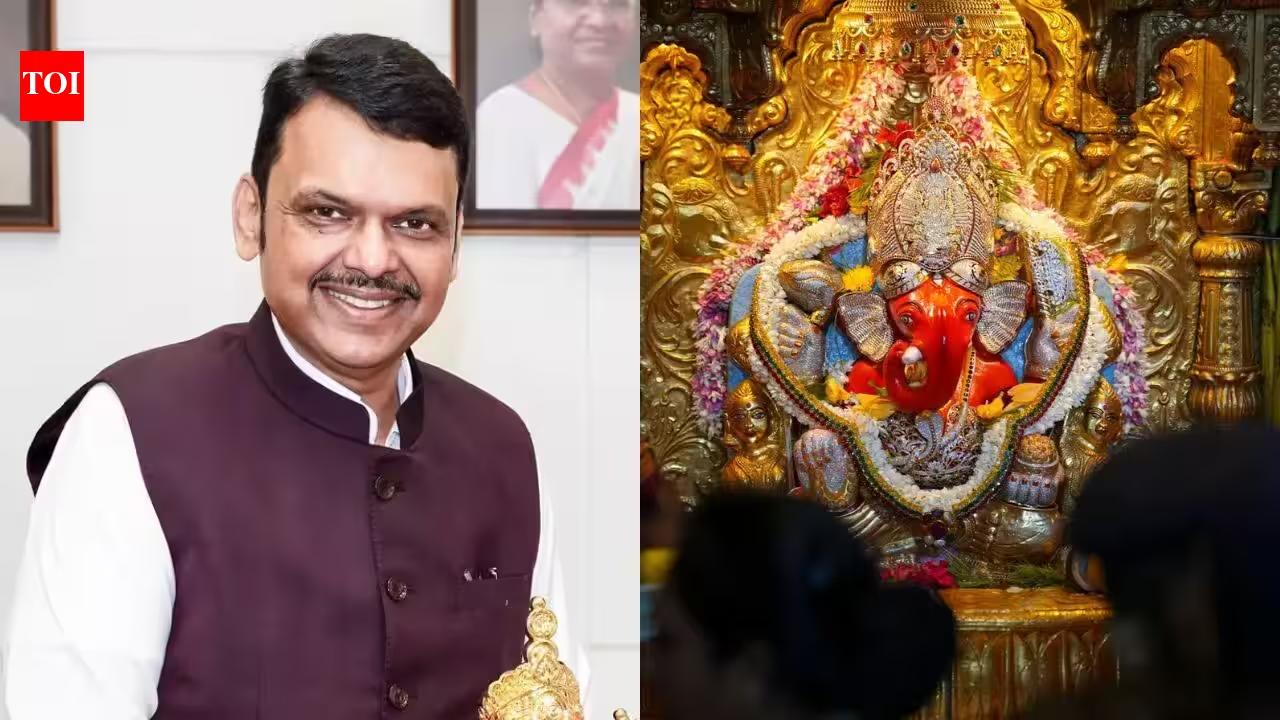
Chief minister Devendra Fadnavis ordered a probe into the alleged theft of Rs 18 crore annually from the donation collections of Mumbai’s Siddhivinayak Temple.

MUMBAI: Chief minister Devendra Fadnavis on Saturday ordered a probe into the alleged theft of Rs 18 crore annually from the donation collections of Mumbai’s Siddhivinayak Temple.He directed officials to examine the temple’s donation records for the past five years and investigate any significant changes in collections during the period.“The CM has asked officials to submit the probe report at the earliest. If anyone is found guilty, action will be taken against them,” a senior official said.On Wednesday, following allegations of theft from Siddhivinayak Temple donations, DCM Eknath Shinde had ordered a probe into the temple accounts. Shinde had asked additional chief secretary (ACS) Aseem Gupta to conduct an inquiry and submit a report.Shinde’s order comes days after the Siddhivinayak Temple Trust called for an audit into the increase in the donation amount to the temple in the last two years. The temple trust is regulated by the state law and judiciary department headed by CM Devendra Fadnavis.“DCM Eknath Shinde has asked ACS Aseem Gupta to conduct the probe and submit a report on the allegations of deficit in donations. The probe is likely to be carried out by a joint committee of the law and judiciary and urban development department officials,” said a senior official.Last week, MNS chief Raj Thackeray alleged donations worth Rs 18 crore were being siphoned every year at the temple.

Uddhav slams Modi for meeting defected Sena (UBT) MPs | Mumbai News

Uddhav slams Modi for meeting defected Sena (UBT) MPs
Uddhav Thackeray also took a dig at RSS chief Mohan Bhagwat’s interaction with Gen Z

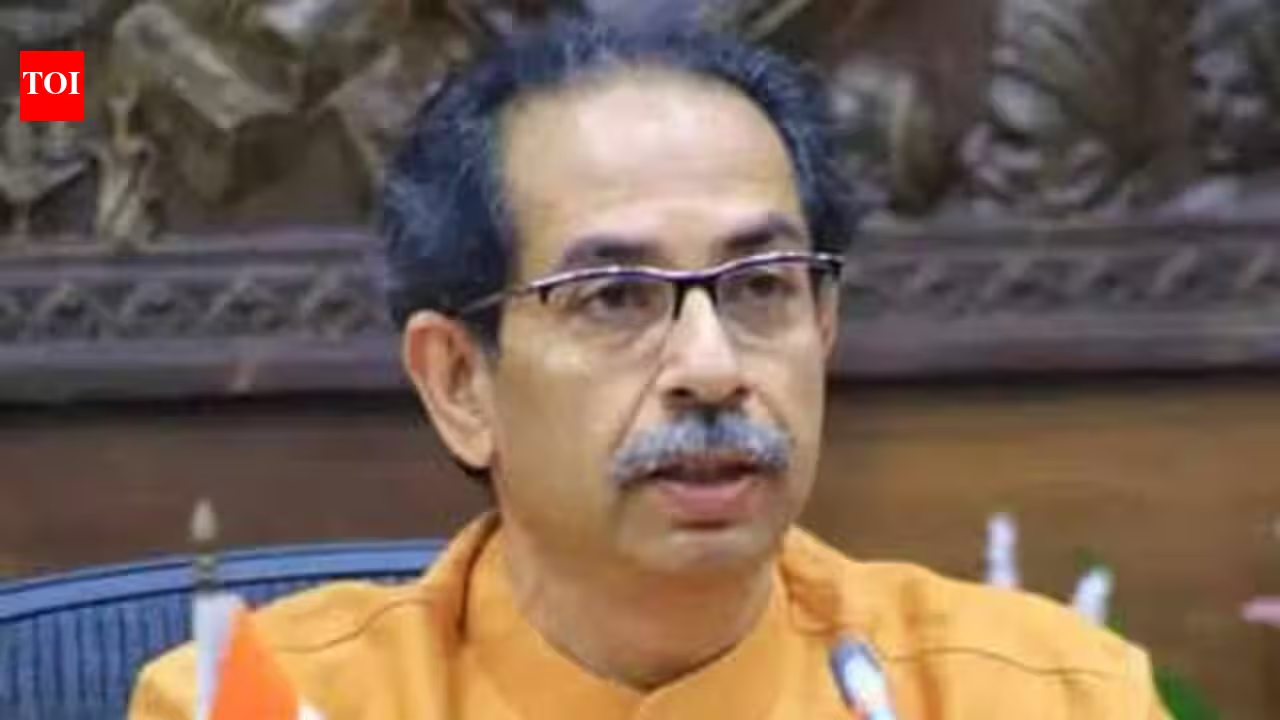
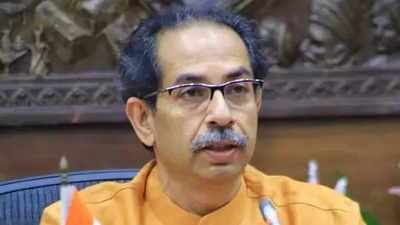
Mumbai: Shiv Sena (UBT) chief Uddhav Thackeray has criticised Prime Minister Narendra Modi for meeting defected Sena (UBT) MPs over breakfast in New Delhi recently.“Modi doesn’t have time to meet Gen Z. Modi doesn’t have time to come to Parliament, but he has time to meet traitors [Sena UBT MPs],” Uddhav said.He also took a dig at RSS chief Mohan Bhagwat’s interaction with Gen Z. Uddhav said if the RSS is running the govt and the RSS’s govt is listening, then before Bhagwat engages in conversation with children, he should have sought Union home minister Amit Shah’s resignation.“Don’t you have time to meet the youth who are protesting for justice and rights, and shamelessly, you meet the traitors and tell them ‘I am with you’? What was the reason for these traitors to go and meet him (Modi) while the hearing was ongoing in court? What message are they sending? Is he threatening the court? This matter is serious. What exactly are traitors afraid of? Even after being washed in a washing machine, why do you wag your tails and go to Modi?” Uddhav said.“Today, the entire opposition and the country are demanding answers from the Prime Minister and the home minister: “Why are you perpetrating these atrocities on the youth?” However, the Prime Minister has no intention of speaking, and the home minister lacks the courage, Uddhav alleged.“This fight is not limited merely to Shiv Sena; this virus of treason has spread across the entire country. The hearing of the case, pending for the last 4 years in the matter of the Shiv Sena party, has begun. Our simple expectation is that the verdict be delivered in accordance with the Constitution, and it will be; I am certain of this, as we have respect and faith in the court,” Uddhav said.Shiv Sena chief Eknath Shinde visited Delhi on Friday and met PM Narendra Modi in Parliament. Modi also met the six Sena (UBT) MPs who joined Shinde’s party recently.

Bike taxi plan for delivery platforms faces legal roadblocks, says Maharashtra minister | Mumbai News

Bike taxi plan for delivery platforms faces legal roadblocks, says Maharashtra minister
Representational pic of a bike taxi

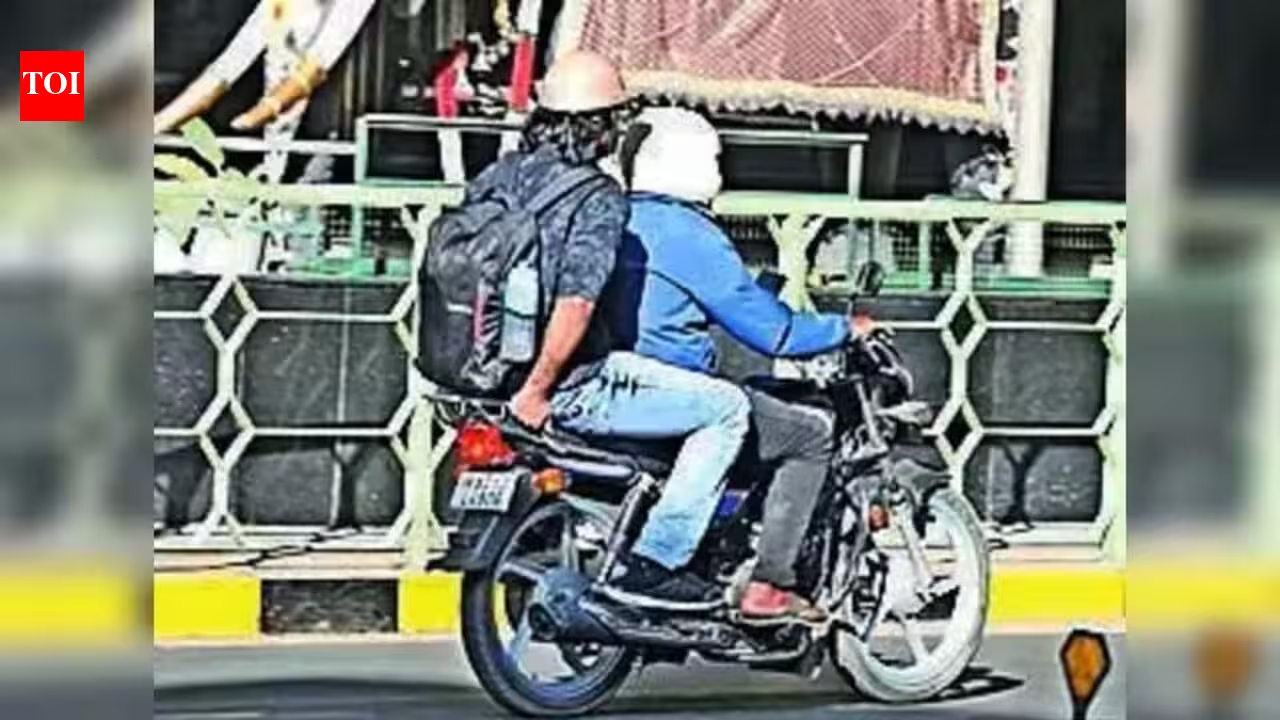
Mumbai: Maharashtra transport minister Pratap Sarnaik’s plan to bring food delivery and e-commerce platforms such as Swiggy, Zomato and Zepto under the state’s proposed bike taxi policy is unlikely to be implemented anytime soon due to significant legal and regulatory constraints. “The matter is under discussion as of now. This cannot be done unless the Centre changes the rules for the entire country,” Sarnaik said on Saturday.The proposed policy envisages stricter regulation of aggregators, including a requirement to maintain an electric vehicle fleet and contribute 2% of every ride fare towards a welfare fund for drivers. However, Sarnaik clarified that the plan remains at the “discussion stage” and cannot be enforced by the state govt without changes to central legislation.He added that Union ministry of road transport and highways would have to amend relevant provisions of the Motor Vehicles Act before states could extend bike taxi regulations to food delivery and e-commerce platforms.The minister pointed out that the key challenge arises from existing central regulations governing low-powered two-wheelers commonly used for delivery services. Under Section 2(28) of the Motor Vehicles Act, 1988, only two-wheelers with engine capacities above 25cc, or electric vehicles exceeding 250 watts in power and capable of speeds above 25 kmph, are classified as motor vehicles requiring registration and licensing.Vehicles that fall below these thresholds enjoy several regulatory exemptions. These include exemption from Regional Transport Office (RTO) registration, registration certificates, driving licences, third-party motor insurance and pollution certificates.Officials said that because many delivery vehicles operate within these exempt categories, Maharashtra cannot independently subject them to provisions proposed under the bike taxi policy. Any move to regulate such vehicles, impose aggregator obligations or extend welfare fund contributions would require amendments at the national level, making the proposal a complex legal and policy challenge that is unlikely to see immediate implementation.

BMC plans to allow shared waste processing sites for big waste generators lacking space | Mumbai News

BMC plans to allow shared waste processing sites for big waste generators lacking space
So far, the civic body has identified 3,177 BWGs across Mumbai, of which 2,025 are registered with the BMC

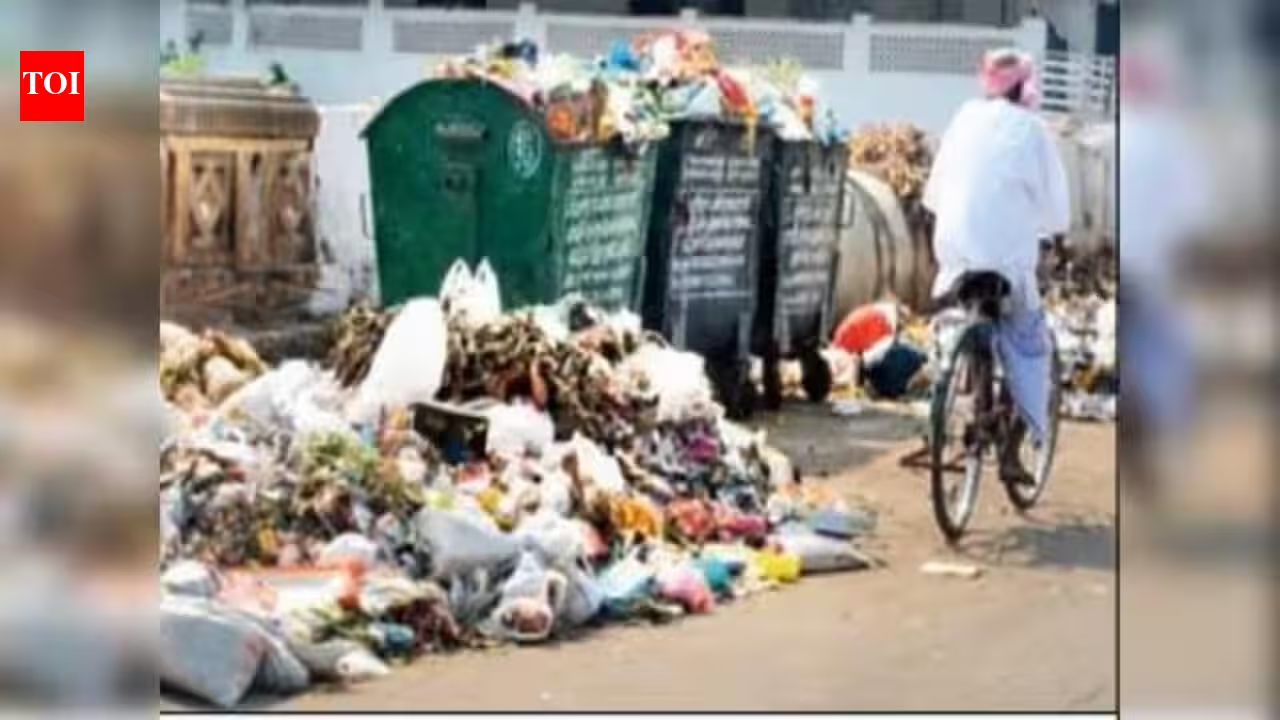
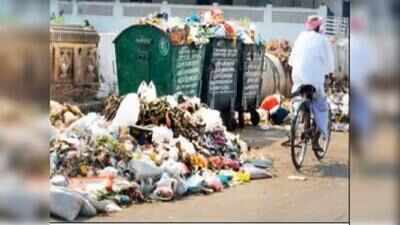
Sanjeev DevasiaMumbai:While the BMC has invited expressions of interest (EOI) from third-party agencies to help bulk waste generators (BWGs), including housing societies, hospitals and commercial establishments, to set up and operate decentralised, on-site wet waste processing systems, the civic body is also planning to allow establishments and societies that do not have adequate space for in-situ processing to tie up with nearby housing societies or establishments that have the required space. The BMC is also offering a property tax rebate of up to 15% to establishments undertaking in-situ waste processing. Meanwhile, 31 firms participated in the pre-bid meeting organised by the BMC as part of the EOI process. Of the 2,025 BWGs, including housing societies and commercial establishments, registered with the BMC, A-ward has the highest number at 263, followed by G-South and P-South wards.As per civic rules, housing societies and commercial establishments generating over 100 kg of wet waste daily, or a built-up area exceeding 20,000 square metres or having daily water consumption of 40,000 litres or more, have to set up an on-site waste processing system or hand over the waste to the BMC as of now.“However, there are many establishments and housing societies which are BWGs but do not have the space to set up waste processing units. So, we plan to allow establishments or housing societies to tie up with establishments that have the space to set up the waste processing system within their premises. The establishment providing the space will also be able to avail of the property tax rebate. The establishments or societies can form a Special Purpose Vehicle (SPV) after identifying the appropriate technology for processing their wet waste,” said a civic official.Accordingly, the BMC floated an EOI to empanel third-party agencies that will assist societies and institutions with site assessments, technology selection, installation, operation and maintenance of waste processing systems, staff training, statutory compliance and linkage of dry waste with authorised recyclers.According to civic sources, 31 firms took part in the pre-bid meeting held after the BMC invited EOIs from qualified agencies to help BWGs set up and operate on-site waste processing systems, as part of an effort to reduce dependence on landfills and long-distance transportation of garbage. So far, the civic body has identified 3,177 BWGs across Mumbai, of which 2,025 are registered with the BMC. Many of these carry out various forms of waste processing using different methods. Under the Solid Waste Management (SWM) Rules, 2026, all BWGs need to be registered. Therefore, the civic body is in the process of ensuring that all BWGs are registered through the BMC ward offices.