Commuters pitch more Eastern Freeway, Atal Setu BEST bus routes | Mumbai News

Commuters pitch more Eastern Freeway, Atal Setu BEST bus routes
BEST Committee and commuter group discussed expanding bus services on the Eastern Freeway.

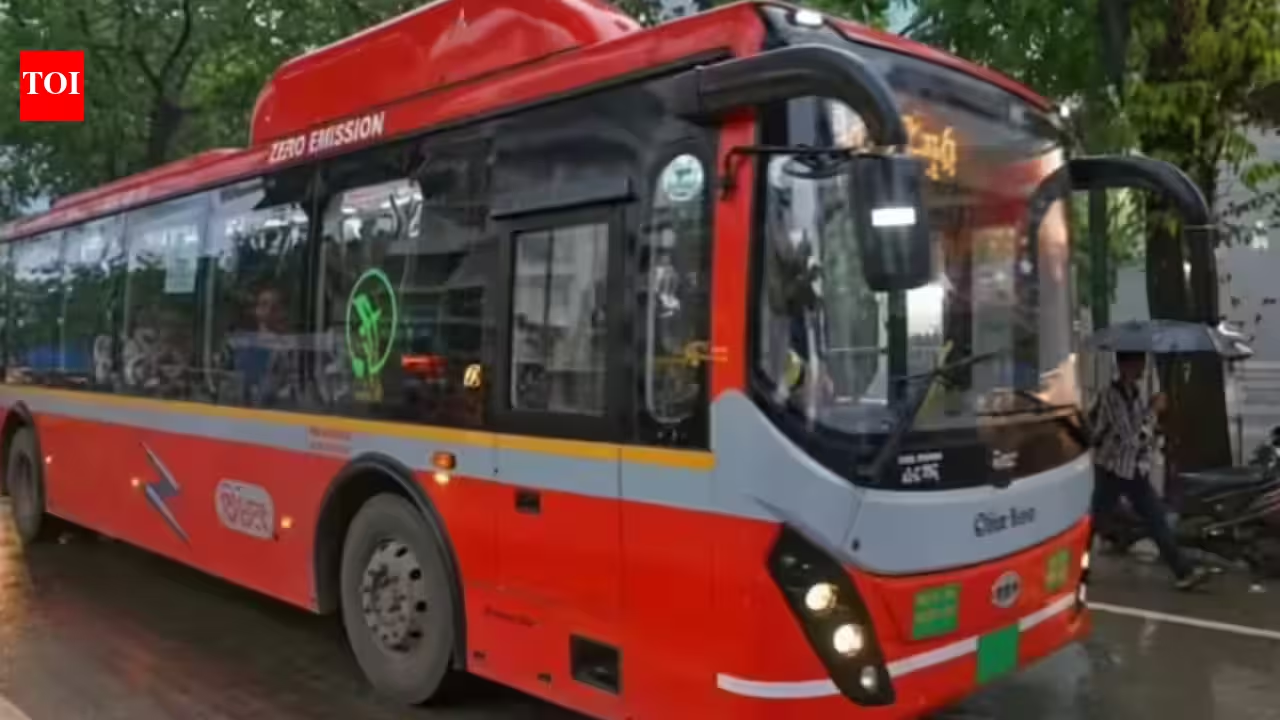
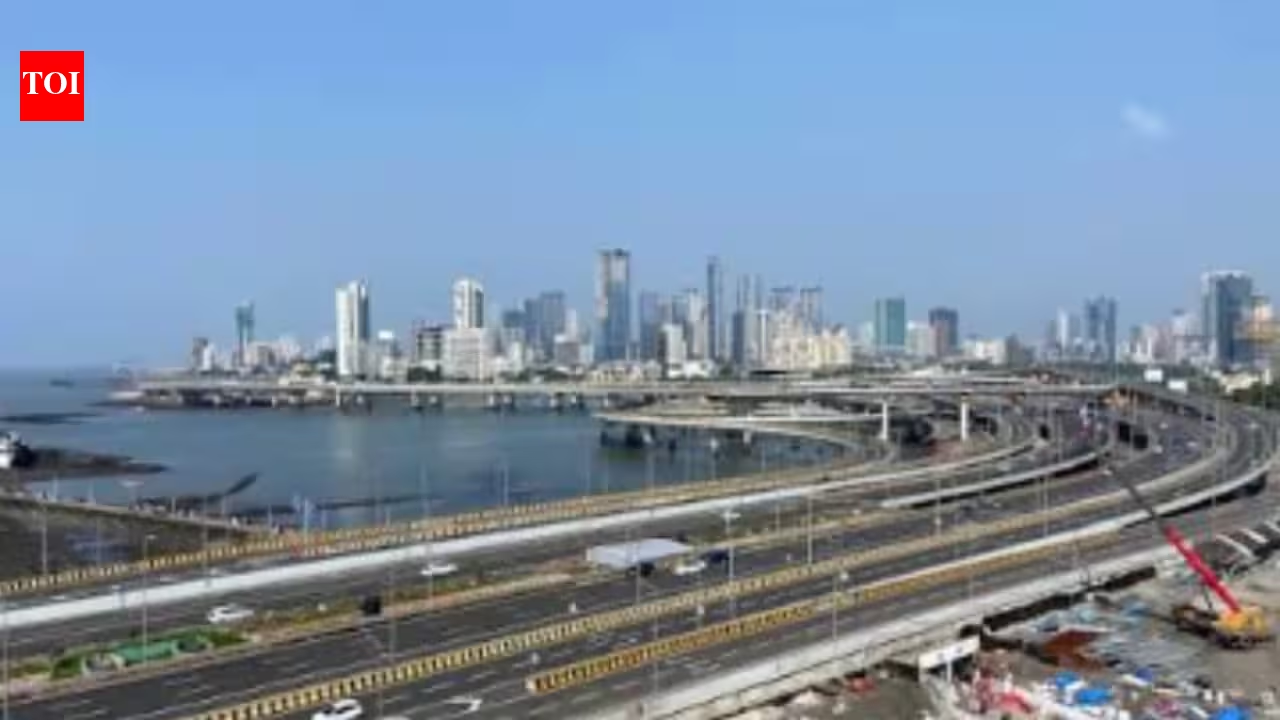
MUMBAI: Expansion of bus services on the Eastern Freeway and the induction of 150 additional electric double-decker buses emerged as key focus areas during a joint meeting between the BEST Committee and commuter advocacy group Aapli BEST Aaplyachsathi (ABA), amid renewed efforts to improve connectivity, increase ridership and strengthen the city’s public transport network.At the meeting chaired by BEST committee chairperson Trushna Vishwasrao, passenger representatives urged the undertaking to make greater use of the Eastern Freeway for rapid bus services connecting eastern suburbs, South Mumbai and Navi Mumbai.The group proposed extending routes A-502 and A-504 up to Wadala Depot and introducing more high-speed services linking Ghatkopar and other eastern suburbs through the freeway corridor.Rupesh Shelatkar from ABA called for enhanced bus connectivity between Mumbai and Navi Mumbai through the Atal Setu, arguing that faster and more direct services could attract private vehicle users to public transport and significantly reduce travel time.The meeting also touched upon issues of route planning, staff shortages and dependence on wet-leased buses.Vishwasrao directed officials to examine the commuter group’s recommendations and expedite implementation wherever feasible, stating that passenger feedback would be crucial in building a modern, efficient and commuter-centric BEST system.A major part of the discussion revolved around Mumbai’s electric double-decker buses.Providing an update on fleet expansion, BEST General Manager Sonia Sethi said the undertaking has already received 50 electric double-decker buses, all of which are currently in service.However, delivery of the remaining 150 buses has been delayed due to a technical issue related to contract conditions.

Locals urge Maharashtra CM Devendra Fadnavis to protect open spaces in Juhu | Mumbai News

Locals urge Maharashtra CM Devendra Fadnavis to protect open spaces in Juhu
Resident groups and activists have urged CM Devendra Fadnavis to cancel land allotments.

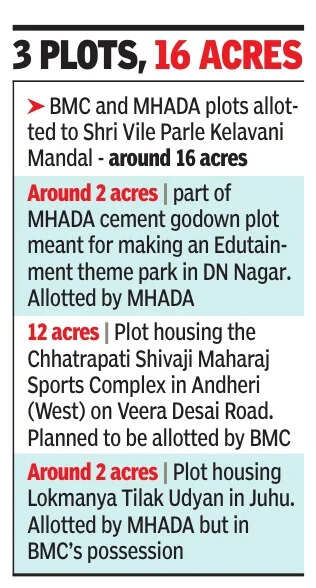
MUMBAI: Resident groups and activists have written to chief minister Devendra Fadnavis seeking his intervention to cancel the allotment of three reserved open spaces in Juhu and Andheri (West) to the Shri Vile Parle Kelavani Mandal (SVKM).TOI had last week reported that BMC and MHADA had allotted three plots to the trust.The Gulmohar Area Societies Welfare Group (GASWG) and RTI activist Anil Galgali have urged the CM to ensure the plots remain reserved open spaces, accessible to the public in accordance with the Development Plan (DP).The BMC has proposed allotting the 12-acre Chhatrapati Shivaji Maharaj Sports Complex in Andheri (West) to SVKM at an annual rent of about Rs 21 lakh along with a 50% share in revenue.

3 plots, 16 acres

3 plots, 16 acres

Separately, MHADA has allotted two open spaces measuring nearly four acres in Juhu and DN Nagar to the trust.One of these, Lokmanya Tilak Udyan in Juhu, is currently maintained by the BMC and used by local residents. The allotments have also been opposed by Mumbai BJP chief and MLA Ameet Satam.In a letter to the CM, GASWG said the plots are reserved gardens, playgrounds and recreation grounds that are held in public trust and cannot be handed over for the exclusive use of a private trust.“If the BMC finds these plots inadequately maintained, the remedy is to allocate municipalfunds and personnel, not barter away public land,” the letter stated.It was signed by Ashok Pandit, Bharat Shetty and architect PK Das.Galgali demanded immediate suspension of both proposals, disclosure of all documents and feasibility studies related to the allotments, and continuation of BMC management to ensure unrestricted public access.SVKM president and BJP MLC Amrish Patel denied any irregularities, saying due process had been followed.“We will utilise these plots for creating sports facilities for 52,000 students. There will be no construction,” he said. MHADA Vice-President Sanjeev Jaiswal, Chief Officer Milind Borkar and BMC Additional Commissioner Avinash Dhakane did not respond to TOI’s queries.

Lack of evidence: SC quashes Pocso case against woman | Mumbai News

Lack of evidence: SC quashes Pocso case against woman

MUMBAI: The Supreme Court has quashed a POCSO case against a woman, holding that there was “absolutely no reason” to subject her to a criminal trial when the evidence did not support the allegations. A bench of Justices J.B. Pardiwala and K. Vinod Chandran allowed the woman’s appeal and set aside the FIR registered at Khadki Police Station, Pune, under Section 354 of the Indian Penal Code and Section 8 of the Protection of Children from Sexual Offences (POCSO) Act.The case stemmed from a custody dispute between a divorced couple over their twin children. The children’s mother alleged that her son had been repeatedly sexually assaulted by his paternal aunt and claimed she had witnessed one such incident while they were living together. The couple had obtained a mutual consent divorce on Sept. 5, 2023, with custody of the children remaining with the father and visitation rights granted to the mother.The apex court noted that no such allegations were made during the marriage, at the time of the divorce or immediately thereafter. Instead, the FIR was lodged on March 17, 2024, only hours after the children’s father filed a separate FIR alleging sexual abuse by the maternal uncle.“The FIR, on a plain reading, does not inspire confidence,” the bench observed, adding that marital disputes often result in in-laws being implicated to settle personal scores. Advocate Sana Raees Khan, appearing for the appellant, argued that the prosecution was a classic abuse of the criminal justice process arising from a bitter custody battle. The court also relied on the minor boy’s statement recorded before a Judicial Magistrate under Section 164 CrPC, in which he did not support his mother’s allegations. It noted that an earlier Bombay High Court bench had found the complaint prima facie unsupported, but a later bench declined to quash the FIR solely because cross-complaints had been filed.

Mumbai model Rhiya Yadav approaches cyber cell over online harassment after NEET protest video goes viral | Mumbai News

Mumbai model Rhiya Yadav approaches cyber cell over online harassment after NEET protest video goes viral
Model Rhiya Yadav, who went viral during the NEET protest in Mumbai, has approached the Maharashtra Police cyber cell

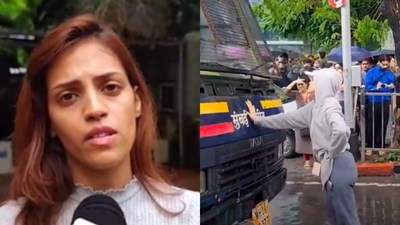
MUMBAI: Model Rhiya Yadav, who went viral after stopping a police van carrying protesters during the NEET paper leak protest in Mumbai, has approached the Maharashtra Police cyber cell alleging online harassment following the incident, she said on Monday.Rhiya said she had filed an online FIR a few days ago and later visited the cyber cell after receiving a call from the police.While several people praised Rhiya and supported her online following the incident, she said she was also subjected to harassment.Speaking to ANI, Rhiya said she had filed an online FIR a few days ago.She later received a call from the cyber cell, following which she visited the Maharashtra Police cyber cell on Monday.“Many will appreciate you and support you, but there are also some who choose to speak against you. Everyone has the right to express their opinion, but no one has the right to degrade someone, malign their reputation, attack their dignity publicly, or make statements suggesting that a person does not have the right to live. I would also like to clarify that the movement we started was not for any political party, religion, or individual. It was for all of us,” she said.Rhiya said she wanted to take a stand against the online harassment and encourage others facing similar situations.“As a woman, I want to tell others who may be facing similar situations that they are not alone. I am taking this stand to show that I will continue to speak up and stand for what is right,” Rhiya added.The 37-day-long agitation culminated in Education Minister Dharmendra Pradhan resigning on Saturday afternoon.The Cockroach Janata Party (CJP), which withdrew its protest from Jantar Mantar after receiving assurance from the government over its demands, had initially started as a satirical social media account following CJI Surya Kant’s remarks.The protest site, which is usually barren, witnessed a large gathering of youth and students who joined the CJP-led agitation with creative banners and Gen Z slang.After more than a week of protest, the movement gained fresh momentum when Ladakh activist Sonam Wangchuk joined the agitation and became the face of the protest with his 26-day-long hunger strike.Six student union leaders also went on hunger strike alongside Wangchuk.Three were reportedly hospitalised, while the other three ended their fast on July 20.Jantar Mantar drew large crowds after Delhi Police took Wangchuk to Safdarjung Hospital from the protest site.He was later shifted to a private hospital in Gurugram on the Delhi High Court’s order.The agitation peaked on July 20 with the ‘Chalo Sansad’ march, which was met with police action against protesters.The action drew criticism from the Opposition, while Delhi Police maintained that the protest had turned violent.Pressure increased following nationwide protests after July 20, with several Opposition leaders also joining the movement.Samajwadi Party MP Dimple Yadav, senior CPI(M) leader Brinda Karat, CPI MP P Sandosh, former Delhi education minister Manish Sisodia and Bhim Army chief Chandrashekhar Azad were among the leaders who joined the CJP at Jantar Mantar.(With ANI inputs)

Mumbai GRP recover and return 1665 stolen phones worth Rs 2.4 crore | Mumbai News

Mumbai GRP recover and return 1665 stolen phones worth Rs 2.4 crore
The total value of the stolen phones was Rs 2.49 crore. (Representative Image)

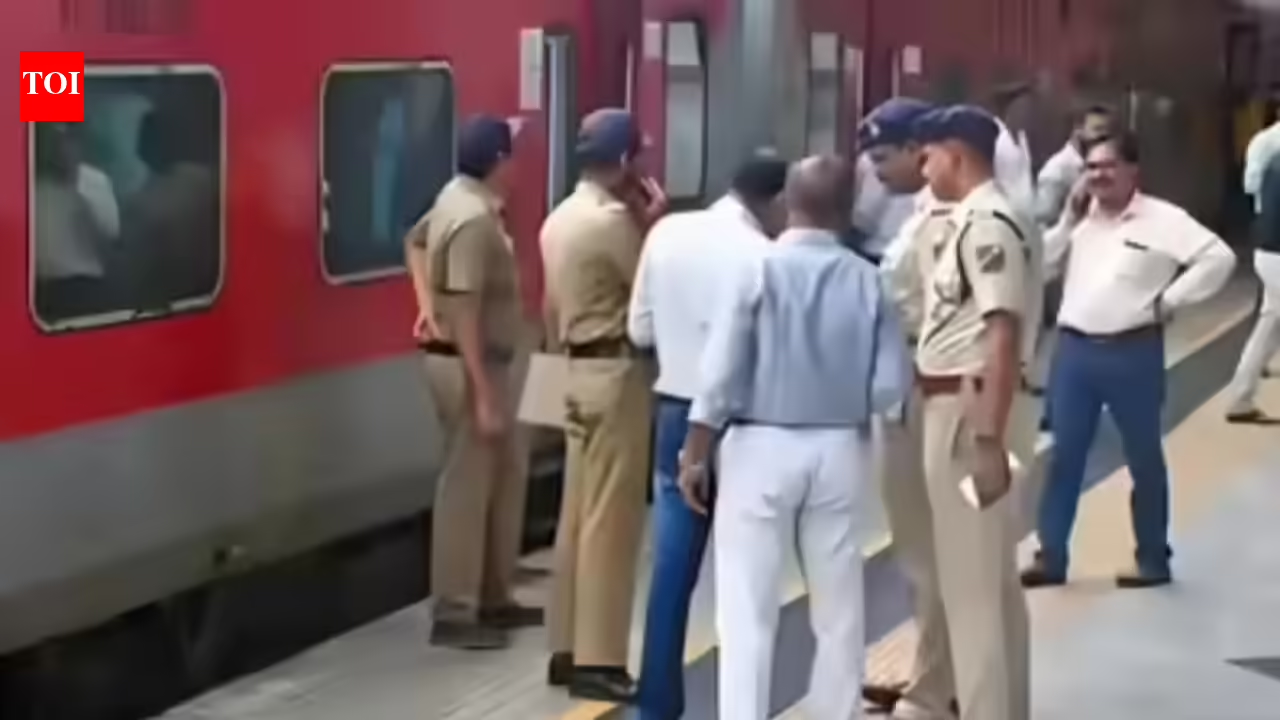
MUMBAI: The Mumbai Govt Railway Police (GRP) recovered and returned 1665 stolen mobilephones to their owners at a special event organised recently. The total value of the stolen phones was Rs 2.49 crore.GRP commissioner Rakesh Kalasagar handed out the phones back to complainants at the event organised at Ghatkopar.Special investigation teams comprising officers from Central and Western divisions, in coordination with railway cyber cell, railway crime branch and all railway police stations, undertook extensive efforts across Maharashtra and several other states.The mobile phones were traced using IMEI-based technical analysis, digital tracking and continuous cyber investigation. “In several cases where stolen mobilephones were found to be operational in other states, close coordination was established with respective state police agencies for recovery. Effective co-operation among state police forces, local investigation teams, and technical units facilitated recovery and restoration of mobile phones,” said a statement released by GRP.“Each complaint was pursued diligently through technical investigation, data analysis, field verification and legal procedures to ensure recovery of the stolen property,” the statement said.

Mumbai man arrested for attempted murder after stabbing youth | Mumbai News

Mumbai man arrested for attempted murder after stabbing youth
A man was arrested by Powai police for attempted murder recently (Representative image)

MUMBAI: A 37-year-old man was arrested by Powai police on charges of attempting to commit murder after a knifed a 28-year-old man at Powai recently.Police said the accused held a grudge against the complainant, Danish Khan’s relative for lodging a police complaint against him earlier.The incident occurred on July 23.Khan was eating an ice-cream on the street near Best Circle at Filterpada, Powai, around 10.30am.The accused approached him and started hurling abuses. He claimed that Khan’s uncle had lodged a police complaint against him and his friend earlier, which was resulting in trouble for him and his family.He started pushing and shoving Khan and soon pulled out a knife. He brought it near Khan’s throat, with an intention to slash him, but Khan ducked. The knife slashed him in the back and he suffered serious injuries.As bystanders gathered to help him, the accused waved his knife at them and threatened them against stepping forward.Khan started to run towards home but the accused followed him with the knife. At Khan’s residence, he issued dire threats to him in the presence of Khan’s sister and aunt.Subsequently, Powai police was informed.A case was registered against the accused and he was taken into custody.

Corporate map shifts beyond BKC as promoter-led firms choose Worli for headquarters | Mumbai News

Corporate map shifts beyond BKC as promoter-led firms choose Worli for  headquarters

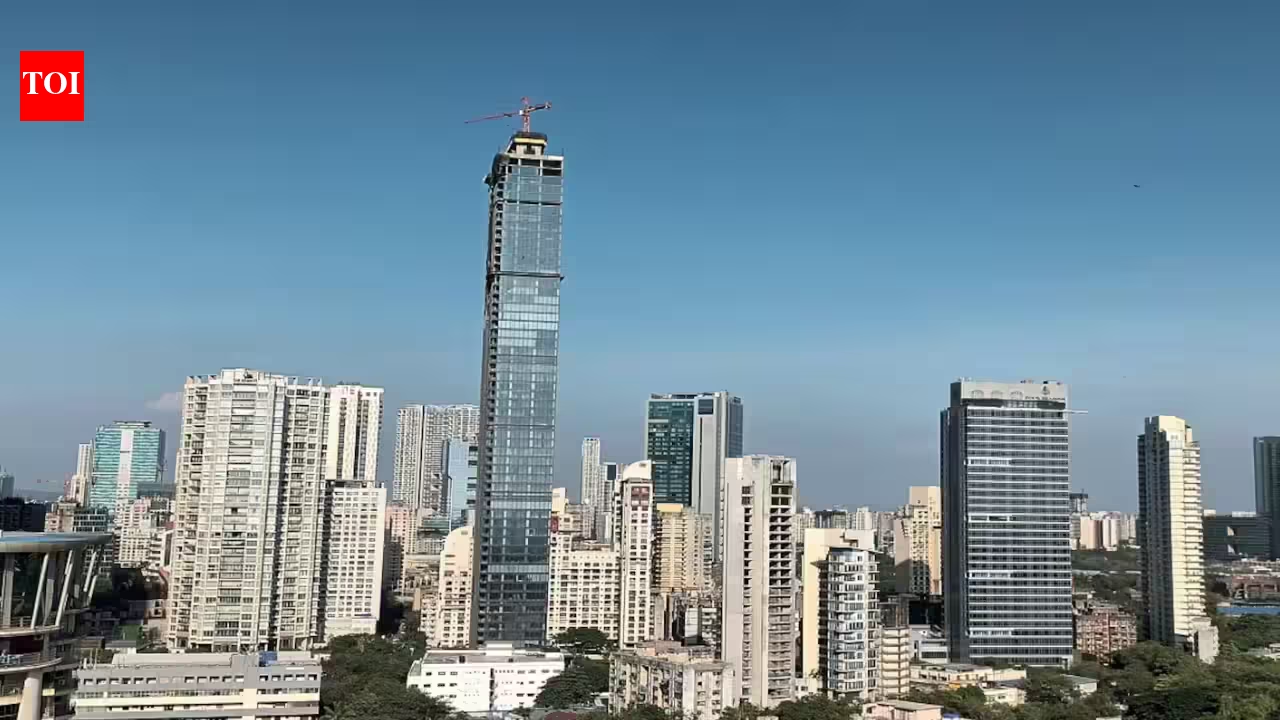
MUMBAI: Mumbai’s corporate geography is undergoing another transformation. After decades that saw Nariman Point dominate the skyline before Bandra-Kurla Complex (BKC) emerged as the country’s premier business district, a growing number of promoter-led companies, family offices and founder-driven enterprises are now gravitating towards Worli, signalling that connectivity and convenience are becoming as valuable as a prestigious business address.The shift comes at a time when Mumbai’s office market is enjoying unprecedented momentum. The city recorded its highest-ever annual office leasing of 11.6 million sq ft in 2025, up 13% from the previous year, driven by domestic corporates, Global Capability Centres (GCCs), banking and financial services firms, and flexible workspace operators. But while multinational companies continue to lease large office campuses across BKC, Powai and other established commercial hubs, promoter-led businesses are increasingly following a different approach.Real estate consultants say founders are looking beyond rents and Grade A office buildings. Headquarters are now being chosen based on how quickly promoters can move between home, office, investors, bankers, clients and government offices—an important consideration for businesses where decision-making remains closely held.That changing mindset is steadily turning Worli into one of Mumbai’s most sought-after headquarters destinations.Located at the heart of the city’s commercial spine, Worli offers quick access to South Mumbai, Lower Parel, Prabhadevi, Mahalaxmi, BKC and the western suburbs. It is also within easy reach of several premium residential neighbourhoods where many entrepreneurs, business families and high-net-worth individuals live, allowing founders to significantly reduce commuting time while remaining close to clients and financial institutions.Industry experts say this “commute dividend” is emerging as an important competitive advantage for promoter-driven businesses, where promoters remain deeply involved in daily operations, financial decisions and client relationships.Infrastructure has further accelerated the area’s rise. The Mumbai Coastal Road has significantly reduced travel time to South Mumbai, while the Bandra-Worli Sea Link continues to provide faster connectivity to the western suburbs. Metro Line 3 has improved public transport access, and the area offers relatively convenient connectivity to both Mumbai airports, making it attractive for companies with frequent domestic and international travel requirements.The trend is also finding support from institutional investors. Global investment bank Goldman Sachs has expanded its office presence in Worli, while Mindspace REIT recently acquired three commercial assets from K Raheja Corp, including Ascent Worli, underscoring growing confidence in Central Mumbai’s commercial real estate market.Industry observers say the rise of family offices, professionally managed investment platforms and diversified promoter groups is also reshaping demand. As entrepreneurial families expand into private equity, venture capital, technology ventures and multiple business verticals, they are increasingly seeking headquarters that combine accessibility with corporate stature.Kamlesh Thakur, president of NAREDCO Maharashtra, said Mumbai’s commercial landscape is being redefined by the evolving priorities of Indian businesses.“Promoters today evaluate office locations not only from an operational standpoint but also through the lens of accessibility, talent availability, business continuity and long-term value creation. Central micro-markets such as Worli offer the right balance between connectivity, premium commercial infrastructure and proximity to established residential neighbourhoods. As infrastructure projects continue improving intra-city mobility, occupiers are likely to increasingly favour locations that enable faster decision-making and a better quality of work-life,” he said.Khetsi Barot, managing director of The Guardians Real Estate Advisory, said headquarters have become a strategic business asset rather than merely an office address.“For promoter-led businesses, the headquarters reflects the company’s identity and leadership vision. Founders increasingly want locations that keep them close to clients, financial institutions and residential catchments while offering a premium corporate environment. Worli’s strategic location, robust connectivity and high-quality Grade A developments make it particularly attractive for businesses seeking operational efficiency and long-term brand value,” he said.Property consultants believe the trend could gather further momentum as fresh commercial developments, large-scale redevelopment and infrastructure upgrades continue to reshape Central Mumbai. The growing preference for Worli also reflects a broader shift in corporate priorities—from choosing office addresses primarily for prestige to selecting locations that maximise productivity, reduce travel fatigue and enable quicker business decisions.For Mumbai, the evolution marks the next chapter in the city’s commercial journey. If Nariman Point symbolised India’s first corporate era and BKC became the face of global finance, Worli is increasingly carving out a distinct identity as the preferred headquarters hub for India’s new generation of promoter-led enterprises, where accessibility, agility and business efficiency are becoming the new markers of corporate success.


165 cameras and a race against Coastal Road fire in Mumbai | Mumbai News

165 cameras and a race against Coastal Road fire in Mumbai
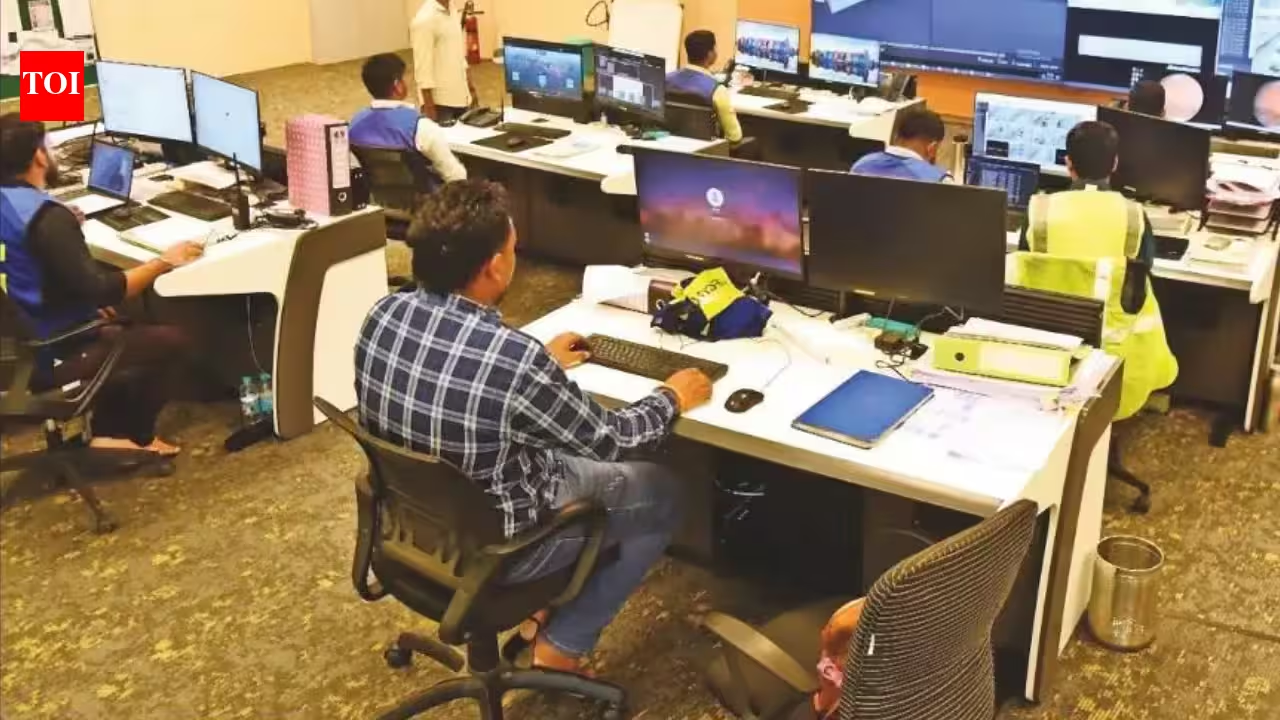
Coastal road command centre

MUMBAI: At 12.08pm on July 15, an alert flashed across the 30×6-ft video wall inside the Coastal Road’s Integrated Command and Control Centre (ICCC) at Breach Candy.A car had caught fire inside the southbound tunnel. Within seconds, CCTV cameras zoomed in on the vehicle, the tunnel’s Linear Heat Detection System confirmed a rise in temperature, and an emergency call from a tunnel call box reached the control room.For the team manning the nerve centre of the Coastal Road, it was the biggest emergency since ICCC became operational in Oct 2025. The fire was brought under control without any casualties. But the incident exposed an equally important challenge, managing panic among motorists trapped in a confined underground space.TOI visited ICCC, located at the edge of the Coastal Road interchange at Breach Candy. The facility integrates traffic management, tunnel ventilation, firefighting, surveillance, and mechanical and electrical systems on a single platform.While Coastal Road has separate technical buildings housing equipment, ICCC serves as the central command point for monitoring and controlling the entire corridor, including the twin tunnels.“The centre is staffed round the clock by more than 100 personnel working in shifts. Representatives from police, traffic police, fire services and other emergency agencies are also stationed here to ensure coordinated decision-making,” said a BMC official.Unlike a conventional CCTV control room, ICCC continuously monitors thousands of data points generated by the tunnel’s critical infrastructure. Officials said the system has two key components: the Traffic Management Control System (TMCS), which oversees CCTV cameras, variable message signs and incident detection, and the Plant Management Control System (PMCS), which monitors electrical, mechanical, ventilation and firefighting systems.A key safety feature is the Linear Heat Detection System — a temperature-sensitive optical cable running through the tunnel that keeps monitoring heat levels and automatically triggers an alarm if temperatures cross about 60 degrees Celsius.“The moment the system detects abnormal temperatures, an alert appears on the control room screens. Operators verify it through CCTV feeds and activate the emergency response protocol,” said an official from L&T, the EPC contractor for the tunnel package that designed and built much of the tunnel infra and MEP systems.The tunnel is equipped with an Automatic Incident Detection System that analyses live camera feeds to detect stopped vehicles, wrong-way driving, pedestrians and unattended objects. “Once the fire alert was confirmed, the control room activated multiple systems. Public announcements were made in Marathi, Hindi and English, asking motorists to be calm, leave vehicles if necessary and go to the nearest cross-passage. The tunnel’s Saccardo ventilation system — comprising three reversible axial fans — switched into emergency mode to extract smoke from the affected section,” said an official from Tap Turbo Engineers, operations and maintenance contractor for Coastal Road’s mechanical and engineering systems.Officials said that under normal conditions, two of the three fans operate at around 70% capacity to maintain air quality. During a fire, the system automatically determines the direction in which smoke should be extracted and, if required, reverses the fans to push smoke away from evacuation routes. “Our priority is not only to extinguish the fire but to remove smoke quickly because smoke poses the biggest risk to human life inside tunnels,” an engineer at ICCC said.Officials said the biggest challenge during the incident was not equipment failure but human behaviour. Several motorists ignored repeated announcements to keep the emergency lane clear. Some abandoned their vehicles while others tried to reverse, blocking the route meant for fire engines and rescue vehicles. “Our systems worked exactly as designed. The delay occurred because rescue vehicles could not move freely due to panic among motorists,” said M Swami, chief engineer, Coastal Road.The incident prompted authorities to step up public awareness on tunnel safety. Additional signage on evacuation procedures has been installed, and officials said motorists must understand that saving lives takes precedence over saving vehicles. Drivers should switch off the engine, leave the key inside if instructed, evacuate through the nearest emergency exit and avoid reversing or making U-turns in the tunnel. “The systems can manage the fire. What they cannot manage is panic,” an official said.

RIL tweaks Coastal Road plan to meet SC 15% cap | Mumbai News

RIL tweaks Coastal Road plan to meet SC 15% cap
Reliance Industries Ltd has presented an updated Coastal Road open spaces plan to the BMC (Representative image)

MUMBAI: With SC allowing only up to 15% of the Coastal Road open spaces to be used for ticketed recreational facilities and access-controlled areas, Reliance Industries Ltd (RIL) has resubmitted to BMC a revised master plan and concept design for the open spaces, proposing a network of gardens and recreational facilities across the reclaimed stretch from Nepeansea Road to Worli.The earlier plan had 19% of the area under ticketed recreational facilities.Reliance Industries Ltd (RIL) has resubmitted to the BMC a revised master plan and concept design for the Coastal Road open spaces, proposing a network of gardens and recreational facilities across the reclaimed stretch from Nepeansea Road to Worli.The revised plan includes an observation deck, a native tree museum, a scenic overlook towards Haji Ali Dargah, an event lawn at Worli, three cultural gathering spaces, two pet parks, including a dog off-leash area, an F&B destination, and six planning zones: Zone 1 (Nepeansea Road), Zone 2 (Breach Candy), Zone 3 (Mahalaxmi Temple), Zone 4 (Haji Ali and Racecourse), Zone 5 (Worli South) and Zone 6 (Worli North).The revision follows a Supreme Court clarification issued in June allowing up to 15% of the Coastal Road open spaces to be used for ticketed recreational facilities and access-controlled areas, while mandating that the remaining 85% remain freely accessible to the public.Civic officials found that 19% of the area proposed in the earlier plan fell under ticketed recreational facilities and asked RIL to bring it down to the court-mandated 15%, necessitating the revised submission, made on July 17.A BMC official said, “Our officials are scrutinising the revised plans submitted by RIL over a week ago. The plan submitted previously required a few changes and hence we suggested that a revised plan be submitted.”The revised master plan has drawn opposition from residents of Breach Candy and adjoining areas. Managing committee members of over 30 housing societies have written to the BMC chief objecting to the proposed access points from Breach Candy and seeking a wider green buffer along the residential neighbourhood.“The revised master plan shows multiple entry points from Breach Candy along with ticket counters. There is very little green buffer and more attractions in what is essentially a residential zone. We believe these matters deserve careful consideration before irreversible planning decisions are made. We therefore request a written response and an opportunity for resident representatives to engage with the planning team before the master plan is approved,” said a resident, alleging that many trees at the nursery set up in Worli as part of the plantation drive on the reclaimed open spaces had dried up.

‘Drunk’ driver reverses SUV in high speed to evade nakabandi in Mumbai, injures police constable | Mumbai News

‘Drunk’ driver reverses SUV in high speed to evade nakabandi in Mumbai, injures police constable
The SUV involved in the incident

Mumbai: A 27-year-old executive with a private firm allegedly reversed his SUV at high speed to evade a drink-and-drive check on Linking Road in Khar (W) and crashed into a police patrol bike, injuring a constable, in the early hours of Friday.A breathalyzer test on the driver, Chandivli resident Siddharth Mahalingam (27), found the alcohol level at 166.8 mg/100ml, sources said; the legal blood alcohol concentration limit for driving in India is 30mg/100ml of blood.Khar police arrested Mahalingam and slapped him with non -bailable offences under the Bharatiya Nyaya Sanhita and Motor Vehicles Act. Mahalingam was driving back home after a party when the incident took place.

CJP Jantar Mantar Protest Updates

The accident left constable Ashok Borude (44) of Khar police station with 12 stitches on his lower jaw and three on his forehead. Borude’s jaw got stuck in the rear glass of the SUV due to the impact of the crash, police said.Bandra traffic police had set up a nakabandi in front of Rajkumar Jewellers to take action against those driving under the influence of alcohol.On Sunday, Borude told TOI: “I was proceeding towards Santacruz for patrol duty around 2 am, when I noticed the black SUV reversing at high speed. I could not move the 220 cc department bike, which I stopped about 25 m away, and the SUV crashed into me. Despite wearing a helmet, my lower jaw got stuck inside the SUV’s rear glass and I got injured due to glass shrads. Luckily, I did not get hit by other vehicles that came from behind.Borude, a Kalyan resident, was discharged from hospital after receiving medical assistance and has been advised 10 days’ rest.The police team on checkpoint duty said it was the first time they saw a motorist attempt to flee by driving in reverse at speed despite vehicles approaching from the same direction.Police have booked Mahalingam under BNS sections 110 (attempt to culpable homicide), 125(a) (rash or negligent act that endangers human life or the personal safety of others), 281 (rash or negligent driving or riding on a public way in a manner that endangers human life or is likely to cause hurt or injury), 324(4) (mischief), and under the MV Act sections 184 (dangerous driving) and 185 (driving by a drunk person).Police said the incident occurred barely 11 days after an eight-year-old girl, Reva Pawar, 8, was knocked down in Andheri (W) by a speeding scooterist riding in the wrong direction on July 15. Amboli police arrested the accused, scrap-seller Shabir Yusuf Shaikh, 30, from Ajmer Junction railway station on July 19 and invoked an additional charge of attempt to commit culpable homicide. Reva is undergoing treatment at Cooper Hospital for a skull fracture, and has been advised two months’ complete bed rest.