
Driver error behind 3 recent fatal BEST bus crashes in Mumbai: Internal probe | Mumbai News
Driver error behind 3 recent fatal BEST bus crashes in Mumbai: Internal probe

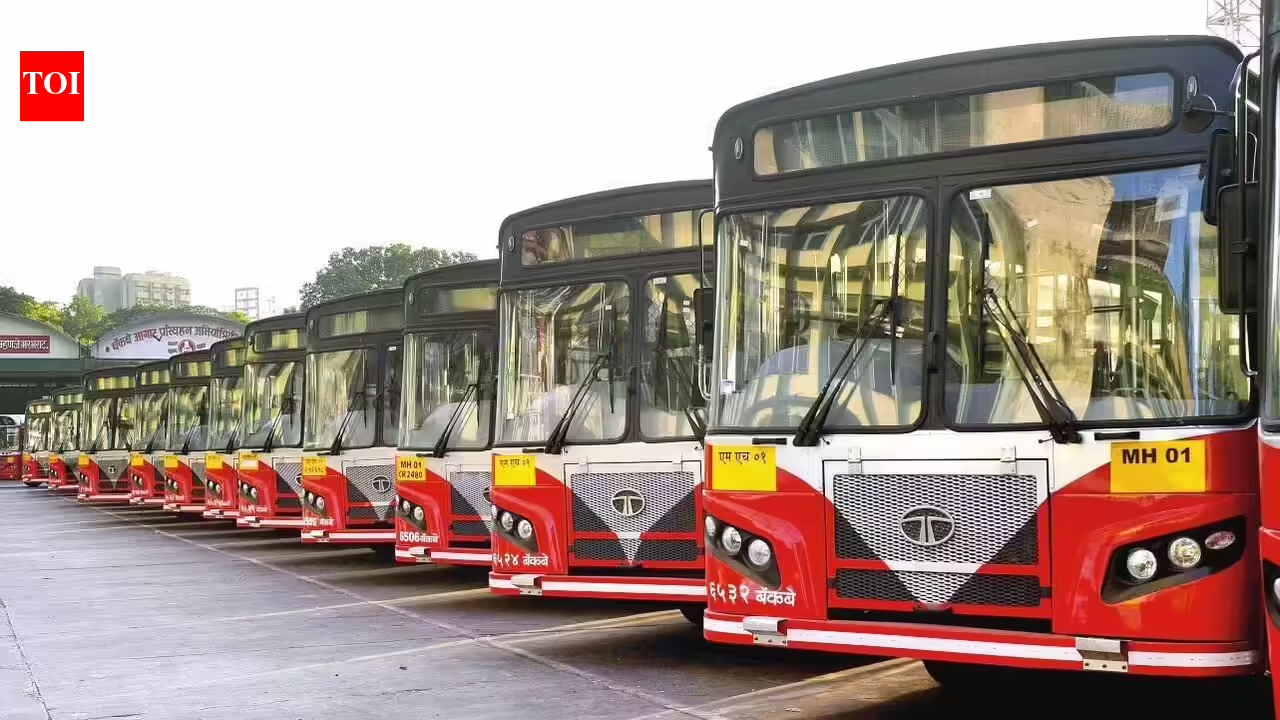
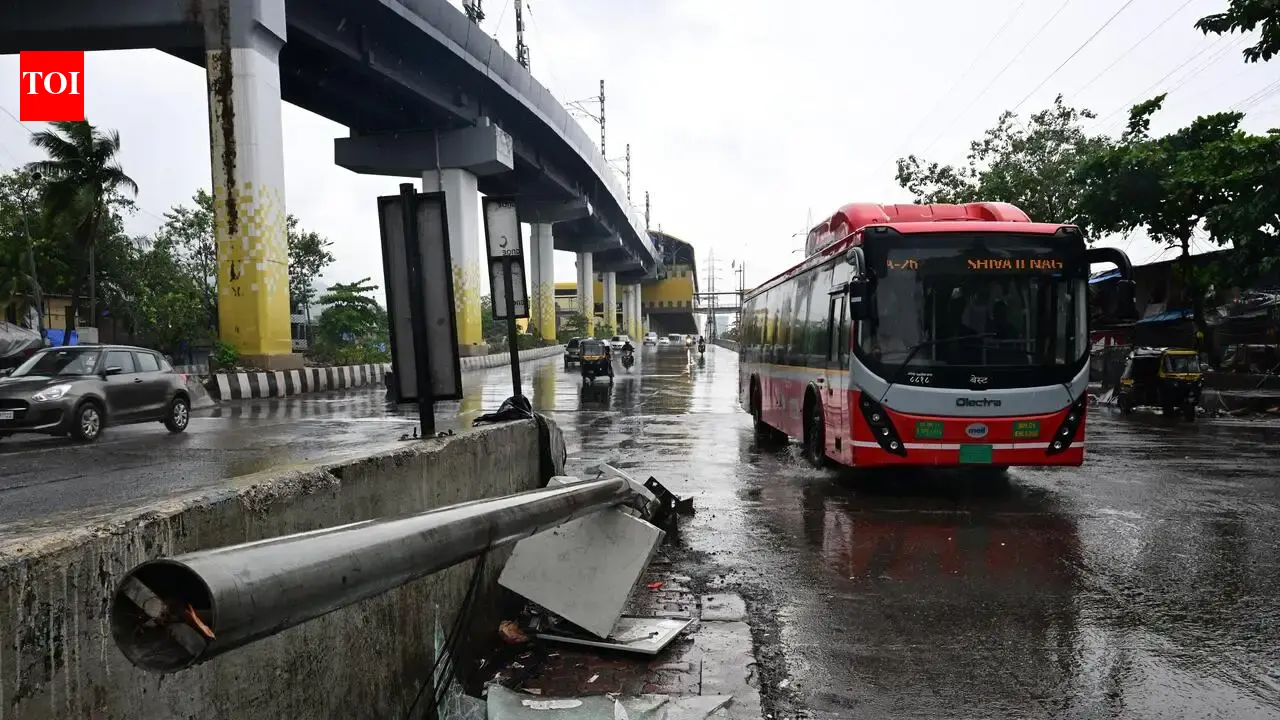
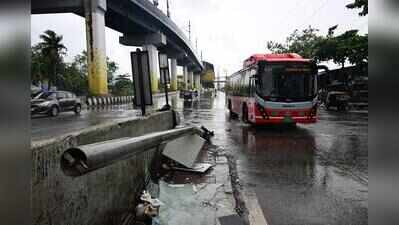
Mumbai: Driver negligence and rash driving were responsible for the three latest fatal BEST bus crashes in Mankhurd, Dadar and Andheri, the findings of an internal inquiry by the undertaking has revealed.Speaking to the media after the committee meeting on Tuesday afternoon, BEST general manager Sonia Sethi said preliminary investigations pointed to driver error as the primary cause in all three incidents, which resulted in deaths, injuries and damage to several vehicles.In Monday’s incident, the driver was reportedly speeding and he wanted to go under a flyover and take a sharp turn, but he lost control and ended in a crash. “Our inspection has revealed there was no technical fault with the bus,” Sethi said, while the driver has claimed it was a brake failure.Mankhurd police said preliminary findings, including breathalyser and blood tests, indicate the bus driver was not under the influence of alcohol. A detailed forensic report is expected by Wednesday. Injured bus conductor Vaibhav Waghmare, 41, and driver Banvari Shriram Prasad Sharma, 51, are stable. Police said the RTO inspection report will be crucial in determining whether the crash resulted from human error or a technical fault.At the panel meeting, BEST member, Shiv Sena UBT Nitin Nandgaonkar, said he has received a BEST reply to a query on poor maintenance of buses, which revealed that “868 buses in the undertaking were found having issues with the brake and steering systems at depots over a period of time, of which repairs were carried out in 774 buses before they were found fit to run on roads, and work on 94 others was still in progress.”“With fines of Rs 5,000 per day for a defective bus, and these buses being repaired past 3 months, the administration should disclose the penalty it has levied on contractors,” he demanded, adding that such a huge number of buses being repaired for brake- and steering-related issues was an ‘eye-opener’.BEST panel chairperson Trushna Vishwasrao called for an urgent meeting with wet lease bus operators and indicated that stringent action could follow. This includes the possibility of terminating a contract involving around 150 buses operated by one contractor. She also sought a separate meeting with wet-lease drivers to understand operational and workplace issues that may be contributing to the accidents. Vishwasrao said all wet-lease contracts would be reviewed, alleging that BEST pays contractors for nearly 200 km of daily operation even though actual bus usage is often below 150 km. She also questioned lease rates of up to Rs 80 per kilometre, noting that similar buses are available under central govt schemes at around Rs 60 per kilometre.Nandgaonkar alleged at the meeting that the undertaking had 50%-60% buses in bad condition and with ‘defects’ and needed to be repaired fully before being operated on the road. “You cannot play with the lives of passengers and pedestrians,” he said, referring to the recent bus crashes involving fatalities, passenger injuries and multiple vehicles being damaged due to the crash.While reiterating that buses on the road had no technical issues and were roadworthy, Sethi said there were regular inspections of all buses in the fleet, and that she issued fresh road-safety directives and was reviewing driver training standards. “Our objective is to ensure safety of all passengers and that only buses with zero defects and trained drivers are operated on the roads,” she added. Measures under consideration include mandatory training, restrictions on overtime and efforts to improve salaries and service conditions of contractual drivers with support from the law and judiciary departments.(With inputs by S Ahmed Ali)
Mumbai crane crash: Deceased’s father on hunger strike, seeks action against builder | Mumbai News

Mumbai crane crash: Deceased’s father on hunger strike, seeks action against builder
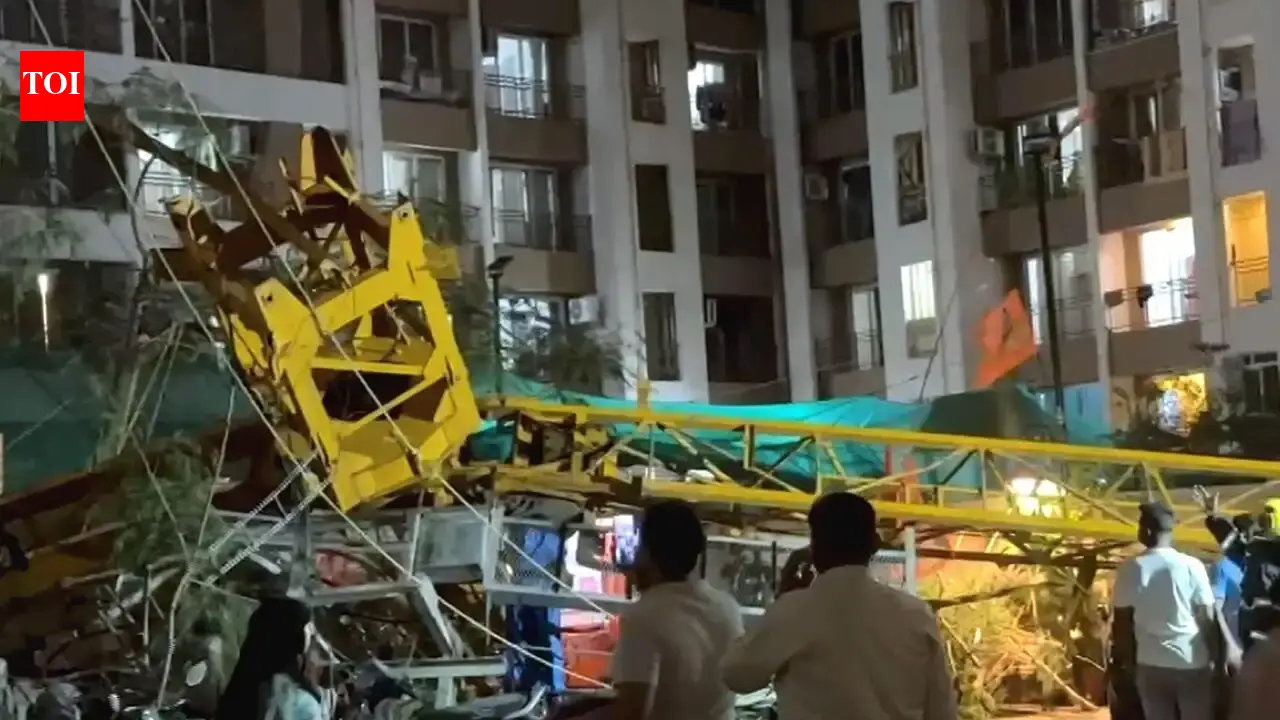
A crane collapsed from the 13th floor of an under-construction building in Mira-Bhayander area on July 16. A 21-year-old man was killed and three others were injured in the incident

Mumbai: The father of the 21-year-old man who was killed in the Mira Road tower crane collapse last week has begun a hunger strike demanding that the builder be named an accused in the case.Aziz Khokar, who has been camping outside Kashigaon police station since the night of the incident, has also demanded that the offence be changed from Bharatiya Nyaya Sanhita Section 106 (causing death by negligence) to 105 (culpable homicide not amounting to murder). His hunger strike entered its second day on Tuesday.The accident occurred on July 16 night at the J P Infra township in Mira Road, where construction work was underway. A tower crane installed at the project site collapsed, killing Muzzamil, who was inside the residential complex at the time.On Sunday, Kashigaon police booked contractor Jagdish Waghela, sub-contractors Jayant Ghade, supervisor Prashant Mashruf, safety engineers Rajesh and Anil Chowdhary, the crane operator, and others under BNS Section 106.Khokar has alleged that the builder was equally responsible for the tragedy and should also be named as an accused. Police said the investigation is underway and that appropriate action will be taken against all those found responsible.

No more wet lease ops? BEST eyes Rs 6,500cr funds to revive own fleet with 5,000 buses in Mumbai; 10,000 over 3 years | Mumbai News

No more wet lease ops? BEST eyes Rs 6,500cr funds to revive own fleet with 5,000 buses in Mumbai; 10,000 over 3 years

Mumbai: BEST is preparing for a major shift in its bus operations, with plans to gradually move away from dependence on wet-lease buses and build a fleet of 5,000 self-owned vehicles, including a large electric bus component.Speaking to media after a panel meeting on Tuesday, BEST general manager Sonia Sethi said the undertaking currently has more wet-lease buses than BEST-owned vehicles as its own fleet has steadily shrunk over the years. “However, in the long term, BEST plans to own 5,000 e-buses and expand its overall fleet to 10,000 buses over the next two to three years to meet the mobility needs of Mumbai’s growing population,” she said.To achieve the target of 5,000 owned buses, BEST will require funding of around Rs 6,500 crore. Sethi said a decision on the funding mechanism will be taken at an upcoming BEST committee meeting. The undertaking will examine whether the project should be financed through govt support or by raising its own resources.The move follows directions from deputy chief minister Eknath Shinde and is aimed at restoring the operating model that BEST followed for decades. The self-owned buses will account for half of the fleet.BEST currently operates around 2,800 buses and is expected to receive 1,500 wet-lease electric buses under the Centre’s PM e-Bus initiative, which provides financial support until 2027. Beyond that period, the undertaking intends to focus on acquiring its own buses rather than relying on private operators.Sethi further said that BEST also plans to revive the traditional operating model under which the undertaking owned and maintained its buses and employed its own drivers. According to Sethi, cost-cutting measures introduced in 2019, including a recruitment freeze and increased dependence on wet-lease buses, were adopted to reduce financial pressure and secure support from the BMC. “We now want to reverse many of those decisions,” she said.Signalling a shift away from its dependence on wet-lease operations, Sethi now announced plans to recruit its own bus drivers as part of a broader strategy to gradually rebuild a predominantly self-owned fleet. She said special funds will be earmarked for fresh recruitments, allowing the undertaking to return to its earlier model of operating buses with its own trained workforce. Sethi said the move aims to revive a system that had served Mumbai efficiently for decades, when BEST-owned buses were operated by permanent drivers and were known for better maintenance, safety standards and service reliability. Officials say they believe the decision will help strengthen accountability, improve driver discipline and enhance commuter confidence as BEST expands its fleet in the coming years.The announcement comes amid scrutiny following a series of recent bus accidents. Officials said the objective is to restore public confidence in BEST by improving fleet quality, driver discipline, safety and reliability while creating a modern, largely electric public transport system for Mumbai.

HC tells BMC to clear Charkop pond choked with garbage | Mumbai News

HC tells BMC to clear Charkop pond choked with garbage
The judges also directed the collector “to initiate immediate steps for removal of the encroachments”

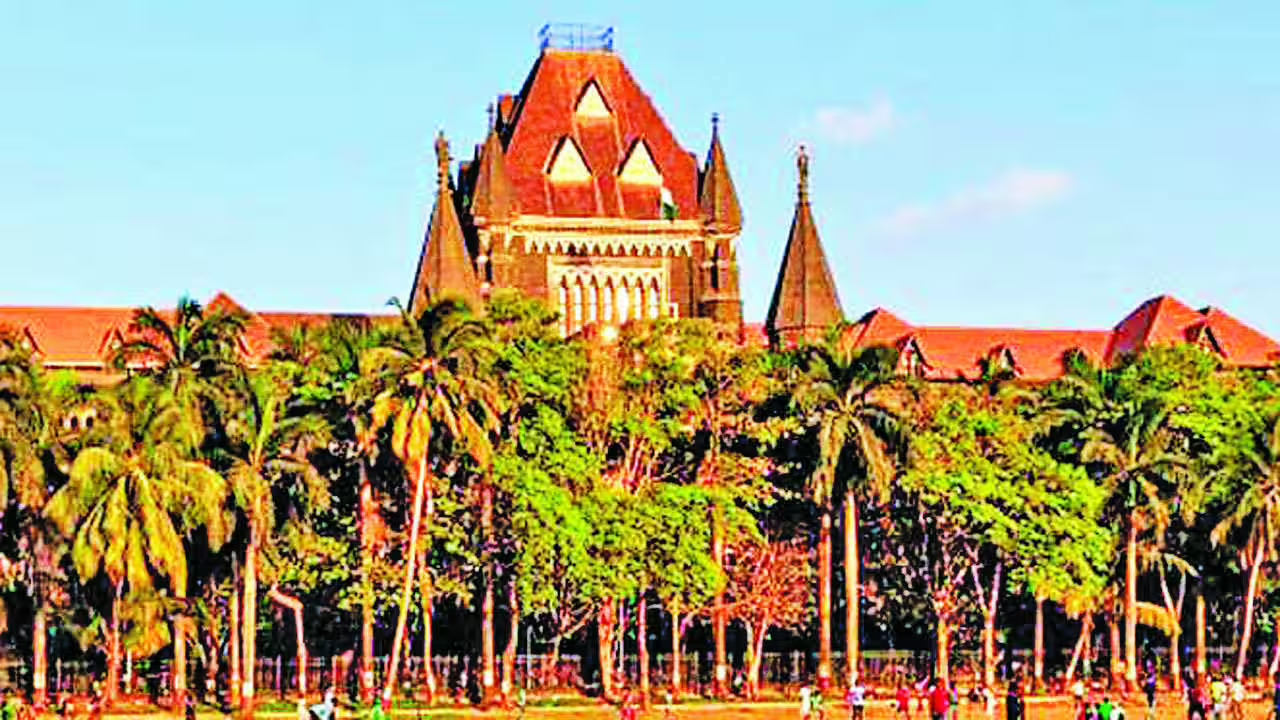
Mumbai: Bombay high court on Tuesday directed BMC to undertake an extensive drive for clearing garbage from a pond in Sector 7, Charkop, Kandivli West and cleaning up the area.The direction by Acting Chief Justice Ravindra Ghuge and Justice Gautam Ankhad followed after BMC submitted photographs “as of today” showing the status of the pond due to garbage dumped from slums next to it. “It will shock the conscience of any prudent person as it depicts that the natural pond is virtually blocked,” the judges said. Referring to one particular photograph, they directed that a picture of the site from the same angle be produced before them after two weeks.HC was hearing a 2021 petition for permission to carry out beautification and conservation of the pond due to the presence of mangroves. On July 14, BMC said it wants to put up a gabion wall to stop encroachments. HC then said that it must remove the encroachments first and that the municipal commissioner must take a “definite and firm stand”.BMC’s advocate, Saket Mone, said the encroachments are on collector land. On May 8, the civic body had written to the deputy collector (encroachments) to take action against a slum of nearly 100-150 huts, he said. Mone added that on June 18, a reminder was sent offering to provide whatever resources required for demolition. He said BMC “wants to create a pathway and a plantation and a gabion wall on the edge”. “It will help with the ingress of saline water for the mangroves.” After Mone submitted photographs of the pond, the judges remarked that they are “shocking”.Advocate Karl Tamboly, for Bombay Environmental Action Group, whose PIL prompted HC in Sept 2018 to mandate taking its permission for projects within the 50m buffer zone of mangroves, said the photographs “are worse than photographs which had earlier come in”.The judges allowed the govt pleader’s request for two weeks to take instructions. They said in the meantime, BMC must undertake a clearance drive. “We would not tolerate any garbage in that natural pond,” they added. The judges also directed the collector “to initiate immediate steps for removal of the encroachments”.Adjourning the hearing to Aug 6, they noted that garbage and encroachments “are two issues which can be said to be the root cause of the disease which is caused to this natural pond and in effect is hurting the mangroves”.

Bombay high court: Can’t deduct interest on housing loan from accident victim’s income when calculating payout for kin under Motor Vehicles Act | Mumbai News

Bombay high court: Can’t deduct interest on housing loan from accident victim’s income when calculating payout for kin under Motor Vehicles Act
Bombay high court has held that while awarding compensation in accident cases under the Motor Vehicles Act, interest paid on a housing loan should not subtracted from the victim’s income to determine payout amount to kin

Mumbai: Bombay high court recently held that while awarding compensation in accident cases under the Motor Vehicles (MV) Act, interest paid on a housing loan — allowed as deduction under the Income-Tax (I-T) Act — should not subtracted from the victim’s income to determine payout amount to kin. Nor can a ‘loss’ under the I-T Act determine “just compensation” under the MV Act, Justice Jitendra Jain held.A victim’s income forms the basis of a compensation under the MV Act and such earning is only from either a salary, if employed, or from a business or profession, if self-employed, Justice Jain observed. The July 10 ruling on the interplay of I-T Act and salutary MV Act paved way for Rs 17 lakh more as compensation to a Pune doctor who, 20 years ago, at age 26, became a widow with two minors.The legal issues that cropped up and decided for the first time, as observed by the HC, was over whether ‘loss’ under the I-T Act from property and interest paid on housing loan could be factored in to calculate what the income was. Justice Jain held, “Loss as per the I-T Act under the head “House Property” cannot be set-off against income under the head “Business or Profession” for the purposes of the MV Act.’’ The HC rejected the insurer’s submissions that the loss ought to be set off. Justice Jain said if the insurer’s argument is accepted, it may lead to no payout, as the loss is permitted under the I-T Act to be offset for upto seven years and may even lead to a ‘nil’ income.In 2014, the widow and her two children had challenged a 2012 order of a Motor Accident Claims Tribunal (MACT). She had, in December 2005, lost her doctor husband Bhupendra Kothadia. A speeding truck driven in a wrong direction hit his car and he died on the spot. Seven years on, the tribunal awarded her close to Rs 17 lakh after deducting the interest he paid on a home loan and calculating his income by setting-off of loss under the head ‘Income from House Property’ against positive income under the head ‘Income from Business’.“The set-off provision is for the purpose of determining lower tax, but same cannot be read to lower the compensation under the MV Act,’’ said Justice Jain.Her lawyers. Amit Singh and Abhay Nevgi. argued that the income payable for housing loan was part of victim’s income and only permissible exclusions are income tax and profession tax. But advocate Amol Gatne, for the insurer, argued that home loan interest must be excluded as only then the “disposable income’’ is seen.Claim cases abound and similar issues are pending in other matters, hence the HC also heard four amicus curiae — T J Mendon, Yogesh Pande, D S Joshi and Karishma Jhaveri — who submitted that “on this issue there is not a single decision of any court”.The MV Act is a socio-welfare law, the HC said, and reasoned that if insurer’s contention is accepted, “it would amount to reducing the compensation’’ payable. The HC held that interest payable on a home loan is to be included in the victim’s income.The HC reasoned, “Even if it is accepted that on death full repayment of loan becomes due and payable, still to repay that loan, interest has to be factored in awarding compensation because had the person not died interest liability would continue,’’ but clarified: “This, however, should not be construed to mean that insurance company undertakes to bear repayment liability, but certainly while awarding compensation the interest liability should be added to the compensation award for determining income.The HC said any income from house or property or income from capital gains or income from other sources, which continue to be earned even after the death, cannot form the basis to decide the compensation.The widow and two children had sought enhancement of compensation.The Tribunal had directed the insurer, United India Insurance Company Ltd, to pay interest from 2008 when it was added as party. The HC ruled that the insurer must pay from 2006, when the claim for compensation was filed. The MV Act requires an insurer to pay from claim plea date, said Justice Jain and knowledge of claim cannot be the criterion.JudgeSpeak* When it comes to awarding compensation under the MV Act, it is only income from salary or income from business or profession which should be considered for compensating the dependents* Section 71 of the I-T Act provides that if there is a loss under one head, it can be set-off against income from another head. The aim is to make the person liable to pay tax on net income. This provision cannot be borrowed mechanically for the purpose of arriving at “just compensation” under the MV Act. Therefore, the Tribunal’s approach to adopt the taxable income after set-off of loss under property loan, to calculate compensation is erroneous* If interest on loan excluded from income, the dependent would have insufficient funds to service the interest, which otherwise would have been, had the vehicular accident victim not died. Hence for compensation under MV Act, interest on housing loan should not be reduced

2 lemurs smuggled from Tanzania in flyers’ bags, sent back | Mumbai News

2 lemurs smuggled from Tanzania in flyers’ bags, sent back

Navi Mumbai: Two lemurs smuggled from Tanzania in two flyers’ baggage were rescued at Mumbai airport on Monday. Customs officials and Wildlife Crime Control Bureau arrested the passengers. The lemurs were medically examined and sent back in 24 hours.Provisions of Wildlife Protection Act, 1972, have been invoked. Pawan Sharma of Resqink Association for Wildlife Welfare (RAWW), an NGO which assisted with the animals’ safekeeping, said they were smuggled on an Ethiopian Airways flight. The two were among a growing list of trafficked ‘exotic animals’ rescued at Mumbai airport in recent times. Sunish Subramanian Kunju, honorary wildlife warden and founder of Plant and Animals Welfare Society (PAWS), Mumbai, said Chennai airport used to be traffickers’ preferred choice for entry into India but they changed tack and turned to the Mumbai around five years ago after air intelligence units in south India tightened vigilance. Numbers attest to the crisis: In 2025, 900 such animals were seized at Mumbai airport and 29 from Bangkok, including melanistic squirrels, ball pythons and iguana, were rescued last month alone. Of the 900, over 80 were found dead. “They are packed in bags with poor ventilation. Many die due to asphyxiation or shock,” said Sharma. Experts said a rising demand for ‘trophy pets’ has boosted the trafficking trade in India. Macaws can go for Rs 2 lakh, while anacondas and ball pythons command much higher rates. Kunju said flyers caught with such animals are often mere mules and a crackdown on masterminds as well as buyers can help curtail trafficking.