
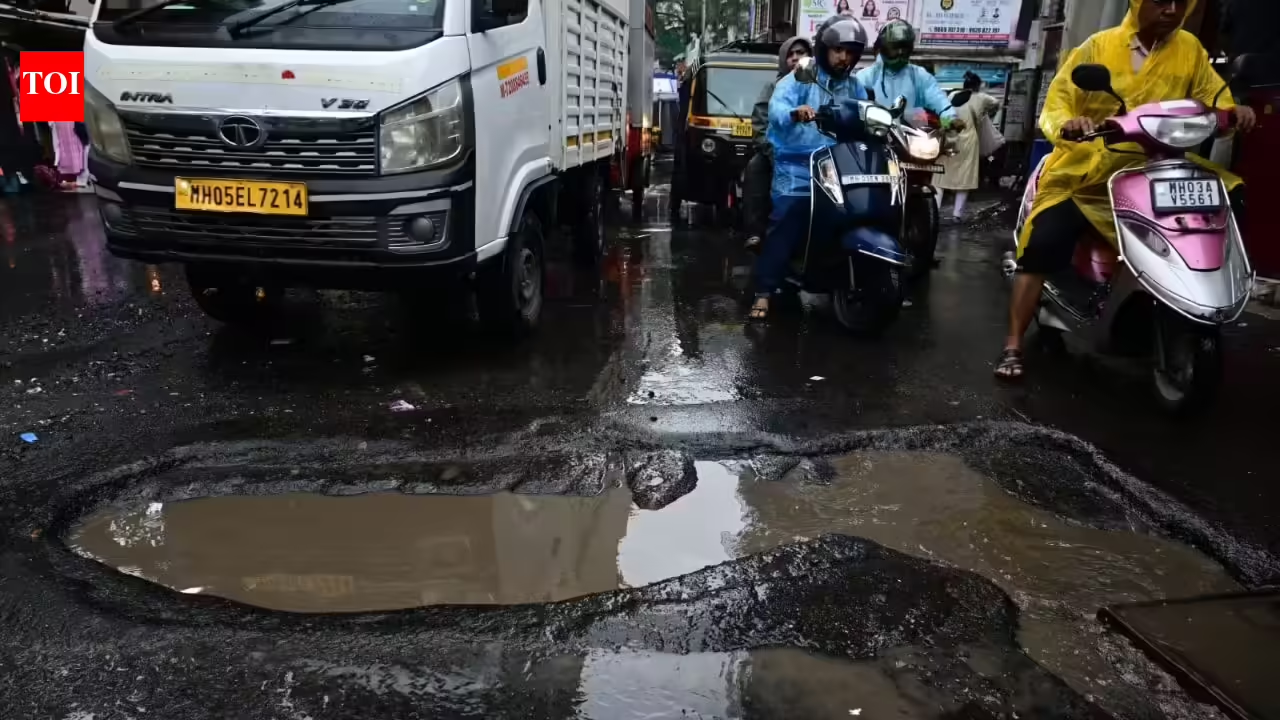
A pothole-mukt Bharat: Here’s the answer | Mumbai News
A pothole-mukt Bharat: Here’s the answer
Indian cities face recurring costs from pothole repairs on asphalt roads.

Year after year Indian cities spend hundreds of crores on filling up potholes that reappear with the next bout of heavy rain. Roads are tarred before the monsoon, only to crack, cave in and develop potholes in weeks. Emergency tenders are floated, traffic crawls, commuters and vehicle owners lose productive hours and pay dearly for damaged tyres, suspensions and wheel alignments.
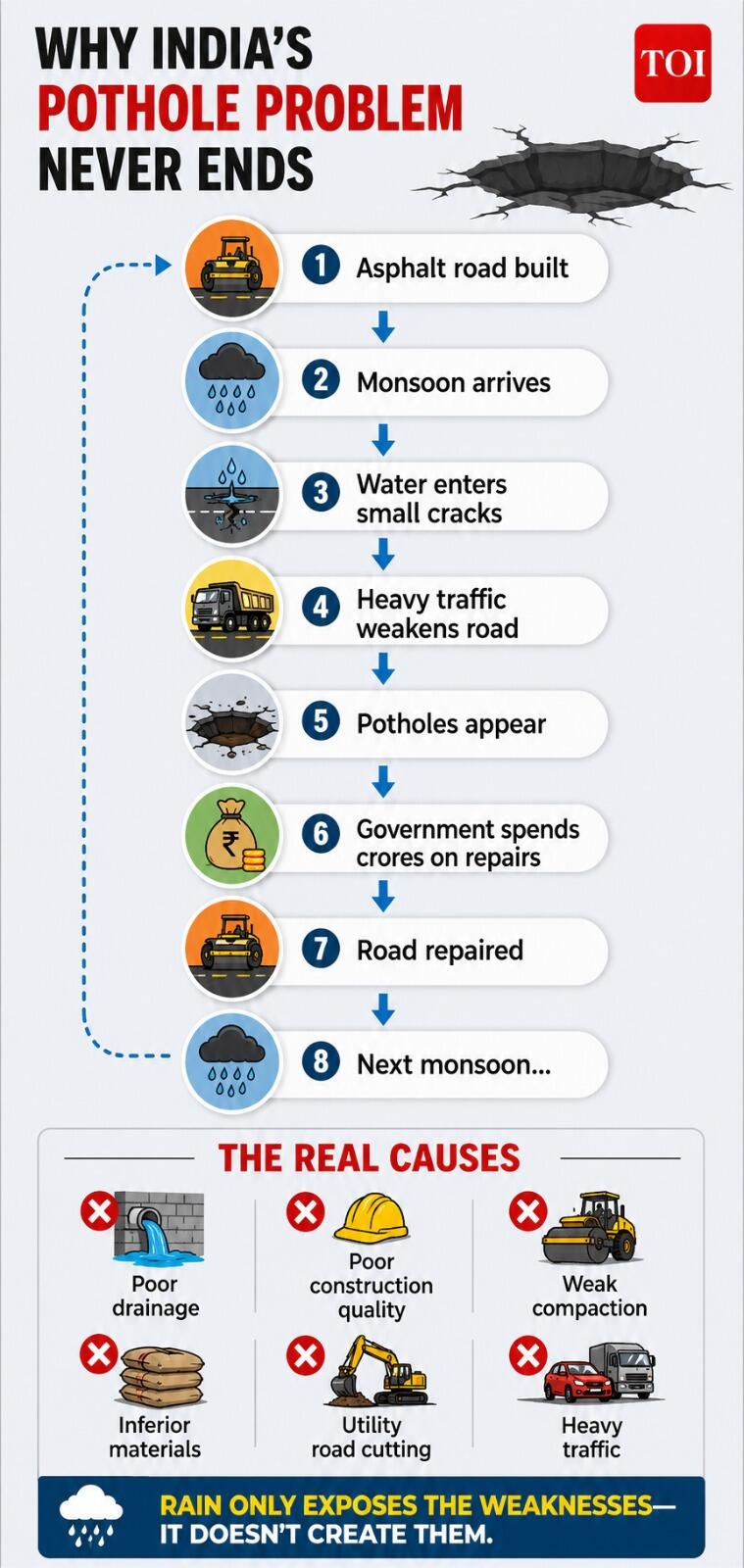
Why India's pothole problem never ends

Why India’s pothole problem never ends

This cycle repeats itself year after year with pothole repairs becoming a persistent burden on taxpayers.The rain itself is not the real enemy, say the engineers. The potholes are primarily caused by bad road design, poor drainage, shoddy construction, repeated digging up for utilities and India’s overwhelming dependence on asphalt roads that don’t last long under heavy traffic and monsoon conditions. Experts increasingly believe the country needs to stop fixing roads each year and start building roads that last for decades.Mumbai gets a sneak peek of what permanent roads might look likeMumbai has become the biggest testing ground for cement concrete (CC) roads in India. Before 2022, almost 1,200 km of its approximately 2,050 km road network had been concretised. Another 677 km is being upgraded under the Rs 17,000 crore mega-concretisation project of the Brihanmumbai Municipal Corporation (BMC). The Maharashtra government aims to have almost 95% of Mumbai’s roads concreted by 2027.The best reason for concrete roads is money. BMC’s expenditure on pothole repairs has decreased gradually as more roads have been concretised. Annual expenditure decreased from Rs 202 crore in 2023-24 to Rs 156 crore in 2024-25 and about Rs 89 crore in 2025-26. The actual expenditure has been reduced even further, said chief minister Devendra Fadnavis. The numbers might be different, but the trend is clear: more concrete roads mean less money spent on maintenance and fewer potholes.
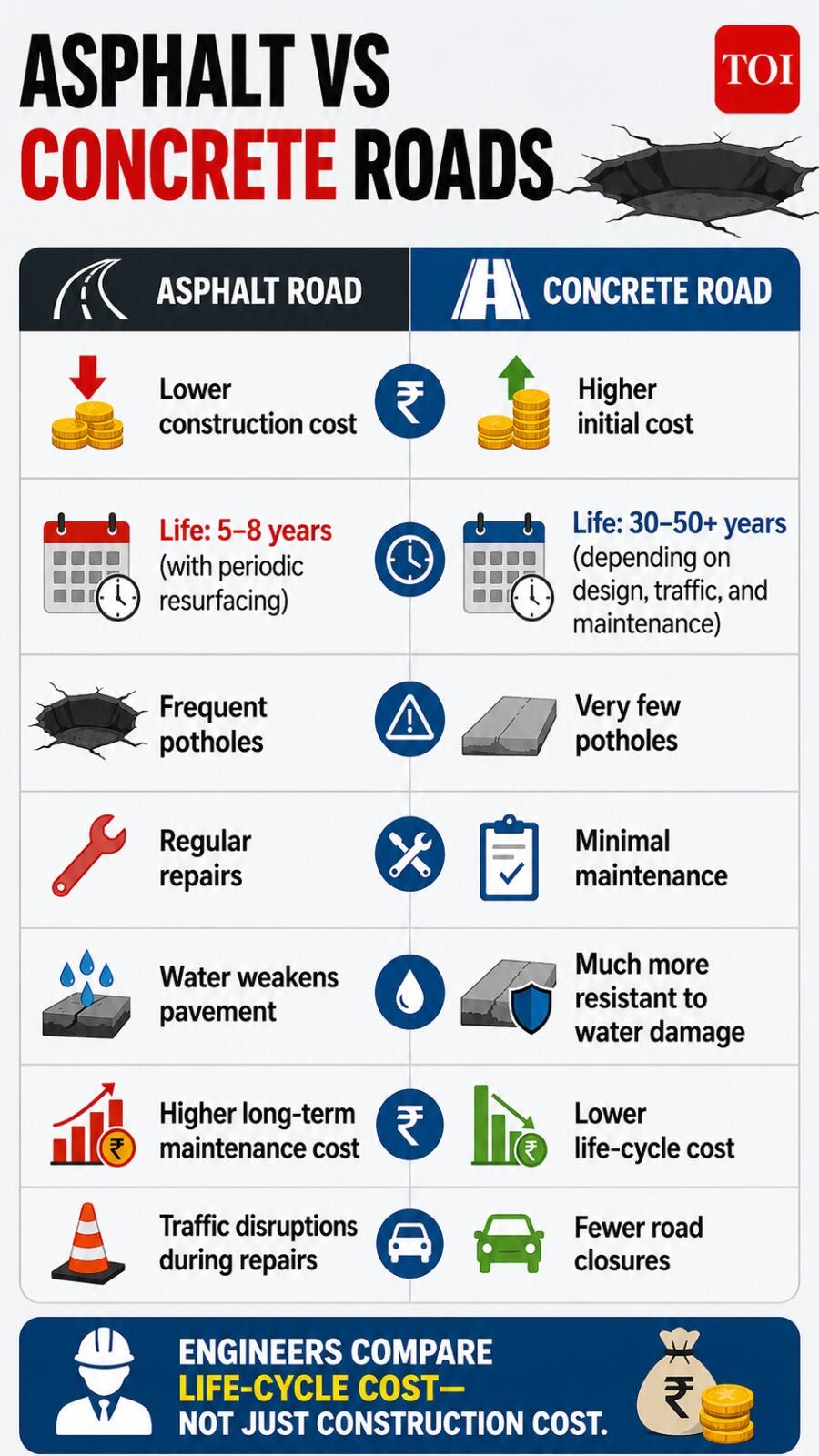
Asphalt vs concrete roads

Asphalt vs concrete roads

Why concrete roads last longer It’s engineering that counts. Asphalt roads are made with bitumen which softens under high temperatures and is weakened when water gets into surface cracks. Eventually, those weak spots turn into potholes as constant traffic from heavy vehicles pounds them.Concrete roads are another thing. They are rigid pavements that allow the surface to continuously deform instead spreading the vehicle loads on large slabs. Concrete expands and contracts with temperature change and small cracks can appear. These are not potholes and are controlled with expansion joints. Well designed and constructed concrete roads can give 50 years service or more with relatively little maintenance. Experts say potholes are man-made, not rain-made. Normally, poor workmanship, poor compaction, poor drainage, inferior materials and repeated digging are the causes of road failures.More expensive upfront, but much lower total costConcrete roads are generally two to two and a half times more expensive to build than asphalt. Typically, critics end the comparison there. Engineers say the comparison should be for the whole life of the road.
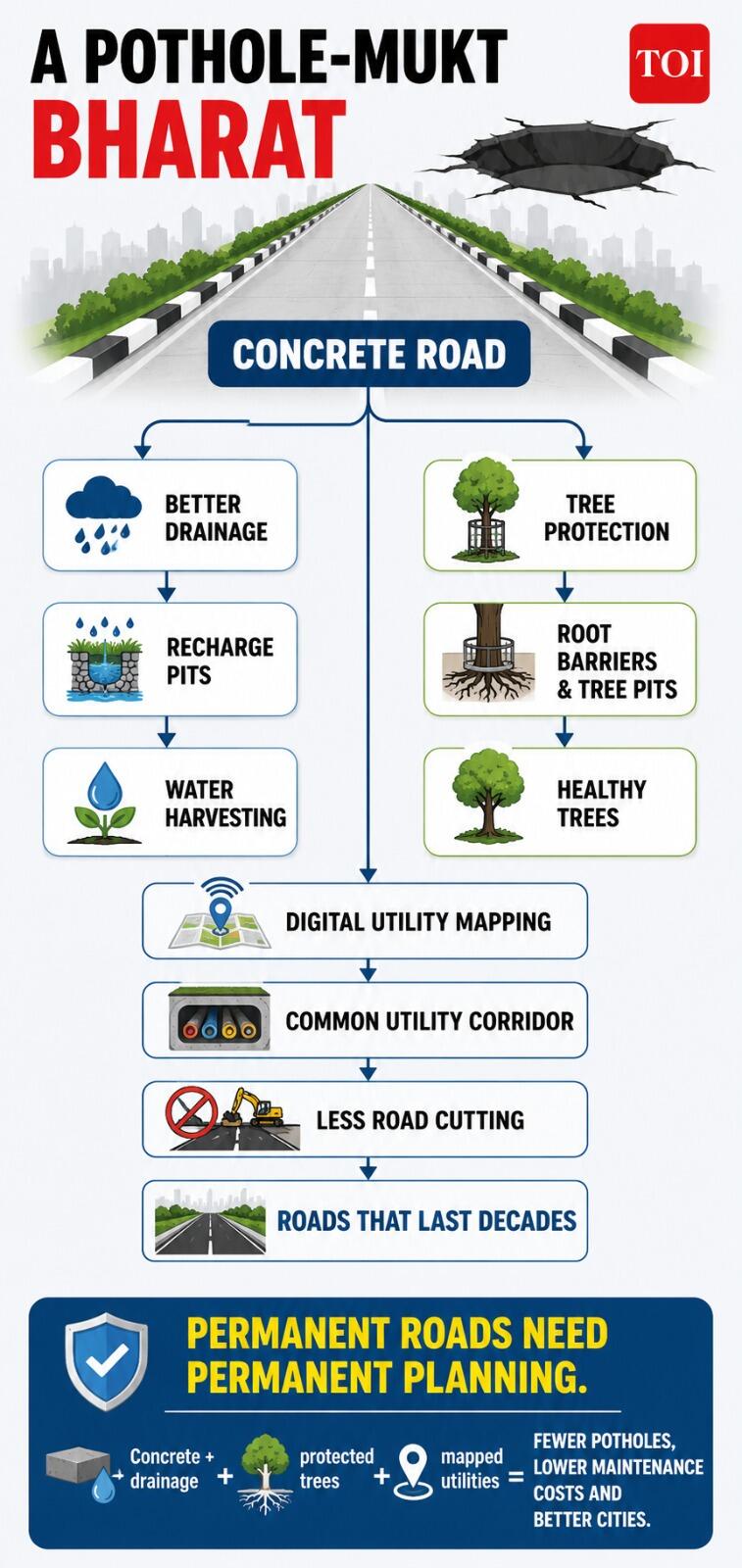
A pothole-mukt Bharat

Asphalt will need to be resurfaced and repaired many times over its life span. Concrete is more expensive initially but much less to maintain for decades. Concrete roads are more economical in the long run, many experts say, when you factor in recurring repair bills, traffic disruptions, vehicle damage, fuel wastage and productivity losses.The hidden economic costs of potholes are huge. Slow traffic means more fuel consumption, loss of productive hours for businesses, delays in emergency services and an increase in road accidents, especially for two-wheelers during the monsoons. These costs are rarely included in government budgets, but they are ultimately paid by citizens.The facts are also worth noting – as are the environmental concernsConcrete roads are also environmentally friendly. Fewer rebuild cycles mean less movement of construction machinery and materials. They last longer. They also reduce reliance on bitumen, a petroleum product. Their lighter surface reflects more sunlight and can improve night-time visibility. A few engineering studies suggest that using concrete as a road surface could reduce rolling resistance and improve fuel efficiency, particularly for heavy commercial vehicles.Don’t blame the concrete roads when a tree fallsAnother criticism that is often heard after every monsoon is that concrete roads are responsible whenever roadside trees collapse. The problem is much more complicated, experts say. The fact that the road next to them is concrete does not mean that the trees fall for that reason. Trees fall because of aging, fungal decay, damaged roots, bad soil, waterlogging, repeated trenching for underground utilities or strong winds.Modern road engineering permits concrete roads and trees to coexist by incorporating well-designed tree pits, structural soils, root barriers and permeable spaces around tree bases. Urban planners say it’s poor planning, not concrete, that is usually to blame for unstable trees. It is far more important to do better audits of tree health and protect root zones during construction than to give up durable roads.Roads should also gather rainwaterExperts say that cities spending thousands of crores on permanent roads should also improve urban water management at the same time. Recharge pits, infiltration trenches, bioswales and scientifically designed drainage systems should be standard features of major road projects. These actions can help reduce flooding and recharge groundwater.Road building should be viewed as part of a broader urban infrastructure strategy, not as an individual engineering project.The biggest challenge is below the roadThe biggest obstacle to concrete roads is, ironically, the underground infrastructure. Indian cities often have to dig up roads to repair water pipelines, sewer lines, electricity cables, gas pipelines and telecom networks. Asphalt roads can be restored without much difficulty. Concrete highways cannot.Urban planners say the long-term solution is to create. Common Utility Corridors that carry multiple underground services together so maintenance can be done without cutting open roads over and over. Governments should also do all underground utility work before road concretisation, digitally map all utilities using GIS technology and increasingly adopt no-dig methods such as Horizontal Directional Drilling. Heavy penalties for unnecessary road cutting would do much to protect costly public infrastructure.The road before usMumbai is not the only one. Nagpur has long been showing off durable concrete roads. Pune, Surat, Indore and Hyderabad are now increasingly using concrete on busy corridors where long term performance is more important than higher construction costs. Countries such as Germany Japan and the United States also rely heavily on concrete pavements for high traffic roads requiring decades of service.Concrete roads aren’t the cure-all. They are more expensive up front, require better planning and raise legitimate environmental concerns. But India’s annual war with potholes shows that endless patching up of failing asphalt roads is neither economical nor sustainable. With concrete roads along with scientific drainage, stormwater harvesting, protected trees, digitally mapped utilities and common utility corridors, India could finally inch closer to the long-envisioned goal of a pothole-mukt Bharat.The question for India is no longer whether it can afford to build more concrete roads. Increasingly, it may be whether the country can afford not to.


Jailed 16 times, Tibetan activist turns life into play | Mumbai News

Jailed 16 times, Tibetan activist turns life into play
Poet-activist Tenzin Tsundue waves the Tibetan flag at Versova beach

MUMBAI: When Tenzin Tsundue was imprisoned in Lhasa for three months before Chinese authorities deported him to India, he had an unlikely visitor. Every day, a mouse would scurry into his cell, and Tsundue would share a few grains of rice with the tiny creature, which soon became his only regular companion behind bars.If fate ever reunited them, Tsundue jokes, he would tell the little rodent: “Look, I am still at it — fighting to free Tibet from Chinese occupation.”The story is one of many drawn from the writer, poet and Tibetan activist’s 16 imprisonments that feature in Standing on the Indus, a play directed by Quasar Thakore Padamsee (Q). The production, to be staged in BKC on July 16, blends humour with stories of resilience, hope and resistance.A couple of years ago, Tsundue approached Q with the idea of turning his jail experiences into a play infused with humour.“As a writer, I found that side of the story deeply human and inspiring,” says Tsundue.“When Q heard I had been incarcerated 16 times, many of them after protesting visits by Chinese premiers to India, he suggested making a play. That intimidated me because I am an activist, not an actor. So, besides me as the protagonist, three more characters were created to tell these stories of hope, humour and humanity,” says the 52-year-old, speaking at a cafe in Versova.Among the many daring protests staged by the wiry, bespectacled activist in his trademark red bandana, the most audacious — and certainly the best known — came in Jan 2002.Evading multiple layers of security, Tsundue climbed scaffolding to the 14th floor of the sea-facing Oberoi Hotel (Trident). As then Chinese premier Zhu Rongji met leading industrialists inside, Tsundue unfurled a giant “Free Tibet” banner.“I had never imagined that photograph would be splashed across newspapers around the world the next day,” recalls Tsundue, who earned master’s degrees in English literature and philosophy from Mumbai University.He describes the five years he spent in Mumbai between 1997 and 2002 as “the best years of my life”. “The city taught me a lifelong lesson in living a simple, minimalist life,” he says.Mumbai also shaped his literary journey. Poet Adil Jussawalla became his mentor, while meeting his childhood idol Nissim Ezekiel as a university student remains among his cherished memories.He also found himself in literary circles that included Arun Kolatkar, Gieve Patel, Jerry Pinto, Ranjit Hoskote and Arundhathi Subramaniam.Travelling with just two pairs of clothes and shoes, a few books, and his identity and registration certificates in a backpack, Tsundue remains an unshakeable optimist and an insatiable reader of books and long essays on society and civilisation.“Tibetans have waited a long time. Our struggle will continue until we get our land back,” says Tsundue, whom the Dalai Lama, impressed by his spirit, once called “a little hero.”

Raymond Realty partner landowner to build Rs 8,500-crore housing project in Mumbai | Mumbai News

Raymond Realty partner landowner to build Rs 8,500-crore housing project in Mumbai
Raymond Realty has finalized a joint development agreement for an upscale housing scheme in Parel, Mumbai

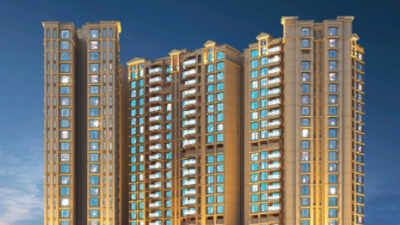
MUMBAI: Raymond Realty Ltd has partnered with a landowner to develop a luxury housing project in Mumbai with an estimated revenue potential of Rs 8,500 crore.In a regulatory filing on Wednesday, the company said it has signed a joint development agreement to develop a residential project in a prime location of Parel, Mumbai.The project has an estimated revenue potential of about Rs 8,500 crore, it added.Raymond Realty did not name the landowner with whom it has entered into the agreement.This is the company’s 8th joint development project in Mumbai city.“Parel has always been at the heart of Mumbai’s evolution and we are proud to add another landmark to Raymond Realty’s growing portfolio through this strategic joint development,” Gautam Hari Singhania, Chairman, Raymond Group, said.He said the company’s expansion continues to be guided by an asset-light, partnership-led approach that enables it to unlock value in some of Mumbai’s most sought-after locations.Raymond Realty, part of Raymond Group, is one of the leading real estate developers in the country.(With PTI inputs)

Fire breaks out in moving car inside Mumbai Coastal Road tunnel; traffic hit | Mumbai News

Fire breaks out in moving car inside Mumbai Coastal Road tunnel; traffic hit
Car fire occurred inside the Mumbai Coastal Road tunnel, causing traffic delays.

MUMBAI: A car caught fire inside the southbound tunnel of the Mumbai Coastal Road on Wednesday afternoon.The blaze triggered heavy traffic congestion before authorities brought it under control and reopened both sides of the tunnel.Joint Commissioner of Police (Traffic) Satya Narayan Chaudhary said all officers and traffic personnel were at the spot, adding that traffic movement was expected to return to normal soon.In a separate incident, an automatic fire safety system detected and extinguished a fire in a moving car inside the Dwarka Expressway tunnel in less than four minutes.At around 11 am on Monday, the tunnel’s video incident detection system (VIDS) detected the fire. Officials said the control room alerted the fire response team within 47 seconds, triggering the tunnel’s fire mode. The high-pressure water mist system was automatically activated and suppressed the blaze. The tunnel’s integrated fire safety system, comprising overhead sprinklers, heat sensors and a deluge fire suppression mechanism, came into operation within seconds, preventing the fire from spreading to nearby vehicles.

A ticket to the past: When buses of Bombay were truly the BEST | Mumbai News

A ticket to the past: When buses of Bombay were truly the BEST

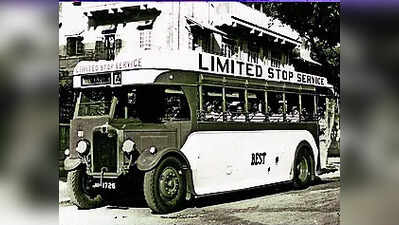
In Chhoti Si Baat (1976), Basu Chatterjee’s classic ode to Bombay office romance, Amol Palekar’s character, Arun, practices a ritual that feels like a myth in modern Mumbai: he waits in an orderly queue at a bus stop.Today, those polite queues have dissolved into chaotic scrums, commuter etiquette is an endangered species, and the iconic red-and-silver fleet is a shadow of its former self. But there was a time when riding the bus wasn’t a battle — it was a pleasure.The legendary No. 123, which ran from RC Church to Tardeo, down the sweeping arc of Marine Drive, holds a special place in city historian Deepak Rao’s memory.“I’d travel the full route to meet a friend in Tardeo,” Rao recalls. “It was the kind of scenic journey you’d proudly take a guest on to show off the best of the city.”Before it wore a number, the 123 was simply Route C — a relic from the pre-1960s era when a fledgling bus service relied on the alphabet. As Bombay sprawled and the transit network expanded, the alphabet gave way to the roomier numerical system we know today.The 123 was the backdrop to Aspi Deboo’s youth. “During my Sydenham College days in the late 1970s, my friends and I would rush to grab the front-row seats on the upper deck. The breeze hitting your face was pure joy,” the 67-year-old recalls. Back then, a 50-paise ticket bought an unforgettable ride that usually ended with an orange crush by the sea.Now, with the classic double-deckers replaced by modern single-deckers, Deboo feels an era has ended: “An air-conditioned e-double-decker simply doesn’t have the same charm.”For others, the bus was a lesson in discipline. Khushru Kapadia remembers a time when he spent his 4-anna bus fare on bhelpuri instead, opting to travel ticketless on the train. His freewheeling days ended when an acquaintance spotted him riding the train’s footboard and ratted him out to his mother.“She came right to the school and thrashed me!” Kapadia chuckles. He was a devoted bus traveler from then on. “I was ten when I started taking the A4 Ltd from Malcolm Baug in Jogeshwari to Sarala Sarjan High School in Vile Parle.”His love for buses grew when double-decker routes finally extended to Andheri. On Sundays, his mother would take him and his brother on the 83 or 84 Express for a joyride to Flora Fountain. “We’d take a single-decker from Jogeshwari to the Andheri depot, and then race to the top deck for a seat right in front of the open windows.”With the wind rushing in, these coveted front-row spots were the city’s “original AC compartments,” jokes Ambadas Garje, curator at the BEST Museum. But the open windows brought surprises, too; low-hanging tree branches would occasionally sweep through the top deck, startling dozing passengers awake.Driving these giants was no easy feat. “Double-deckers were far more challenging to drive than single-deckers,” explains Garje, who joined BEST as a driver in 2007 on the No. 6 (Colaba to Chembur). “As a driver, you had to be constantly vigilant of both the road traffic and the overhead branches.”To prevent upper-deck collisions, BEST operated special tree-pruning buses. According to BEST historian Rajendra B. Aklekar, these were actually retired double-deckers with their top decks sliced clean off.Aklekar, author of The BEST 75 Years – Tram, Bus & Energy, notes that when motor buses were first launched in July 1926, passengers treaded lightly: “Motor buses were a bit like the metro today — a novel technology that took time to catch on. People were initially terrified of their speed. They were also slightly more expensive than trams and had limited stops.”By the 1970s, however, the BEST bus had become the beating heart of Bombay. “The all-night buses, like the No. 1 from Colaba to Santa Cruz, and the No. 302 from Sion to Mulund, were lifelines for workers on the night shift, especially those who worked the mills and docks,” says Garje.Gillian Fernand, a former resident of Byculla Railway Colony, remembers the bus window as a portal both into public and private life. Double deckers from Byculla to VT (before the JJ Flyover), offered a glimpse into people’s homes and life on the streets.The commute was always entertaining — and only once excruciating. Fernand recalls an ill-advised family joyride to Juhu Chowpatty on a Ganesh immersion day. “It was a gruelling six-hour crawl,” she laughs. “It didn’t just take us through the city — it showed us the entire city on the streets.” But it did not dim her bus-love. “Give me the bus over the train any day.”(With inputs from Somit Sen)

Women e-rickshaw scheme: Non-congestion routes to be identified in Mumbai Metropolitan Region: Minister | Mumbai News

Women e-rickshaw scheme: Non-congestion routes to be identified in Mumbai Metropolitan Region: Minister
The minister said low-speed e-rickshaws should operate mainly on internal roads, feeder routes and connectivity corridors rather than arterial roads, highways and major traffic junctions

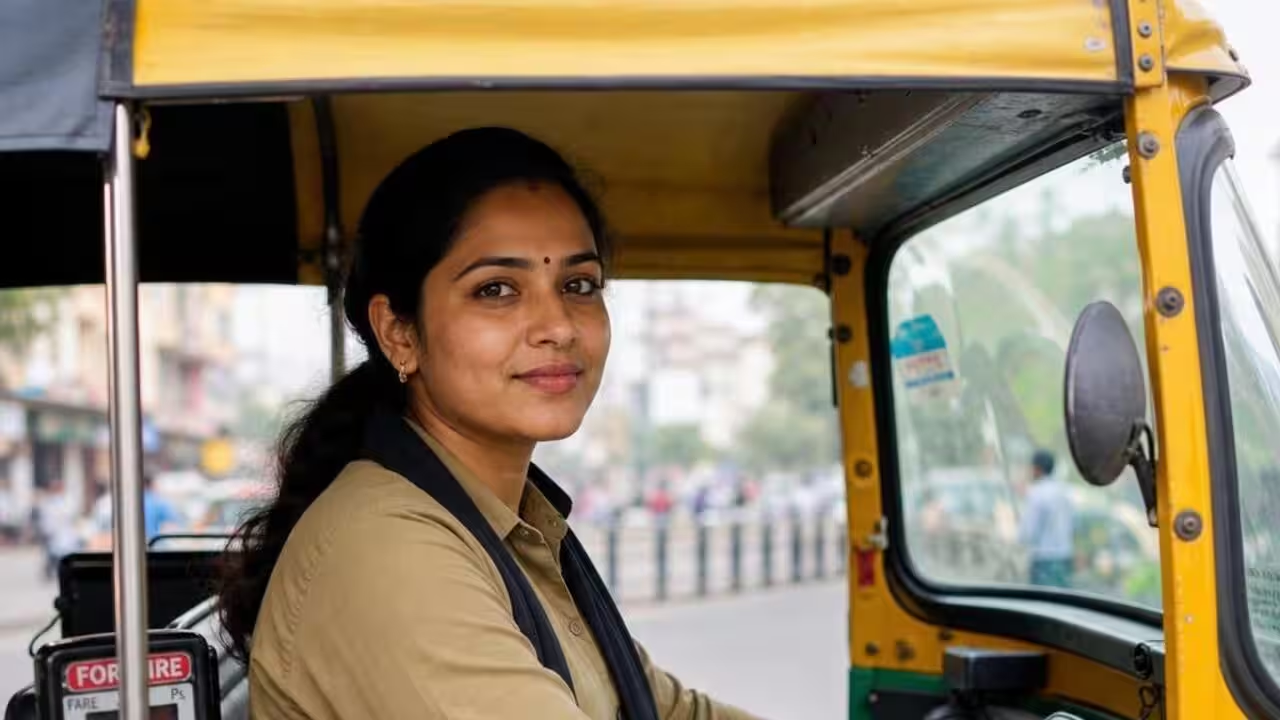
Mumbai: In a push to strengthen women’s entrepreneurship and promote green mobility, state transport minister Pratap Sarnaik has directed officials to identify dedicated routes across the Mumbai Metropolitan Region (MMR) for the implementation of the Mahila e-Rickshaw Scheme, ensuring that the vehicles provide last-mile connectivity without adding to traffic congestion.Sarnaik said low-speed e-rickshaws should operate mainly on internal roads, feeder routes and connectivity corridors rather than arterial roads, highways and major traffic junctions. He directed the transport department and traffic police to jointly identify suitable routes across key MMR areas, including city suburbs, Thane, Navi Mumbai, Panvel, Vasai-Virar and Kalyan-Dombivli, where the service can improve commuter access without affecting traffic flow.To ensure effective regulation, the minister also stressed the use of GPS-enabled tracking systems in all e-rickshaws. The transport department has additionally been asked to hold discussions with manufacturers on improving battery technology, speed and operational efficiency of the vehicles.The directive was issued at a review meeting at Mantralaya attended by Women and Child Development Minister Aditi Tatkare, transport commissioner Rajesh Narvekar, and senior officials from the transport department, Women and Child Development Department and Regional Transport Offices (RTOs).Under the scheme, the government’s financial support has been increased from 20% to 40% of the vehicle cost. The remaining amount will be financed through bank loans and beneficiary contribution, making ownership more affordable for women. The specially designed pink e-rickshaws offer a range of about 120 km per charge and are equipped with GPS and safety features suited for urban operations. Beneficiaries also receive free driving training, assistance in obtaining commercial licences and support for vehicle maintenance.Priority under the scheme is being given to economically weaker women, widows, divorced women and those from marginalised communities. With a focus on improving last-mile connectivity to railway stations, metro stations and bus depots, the initiative is expected to combine women’s economic empowerment with sustainable urban transport across the MMR.The Mahila E-Rickshaw Scheme, implemented by the Women and Child Development Department, aims to create self-employment opportunities for women while expanding the use of clean-energy transport.

Mumbai police arrest Punjab man for posing as Maharashtra MLA’s PA, duping people of money | Mumbai News

Mumbai police arrest Punjab man for posing as Maharashtra MLA's PA, duping people of money
Mumbai police arrested a Punjab resident for impersonating a Maharashtra MLA’s personal assistant (Photo credit: X)

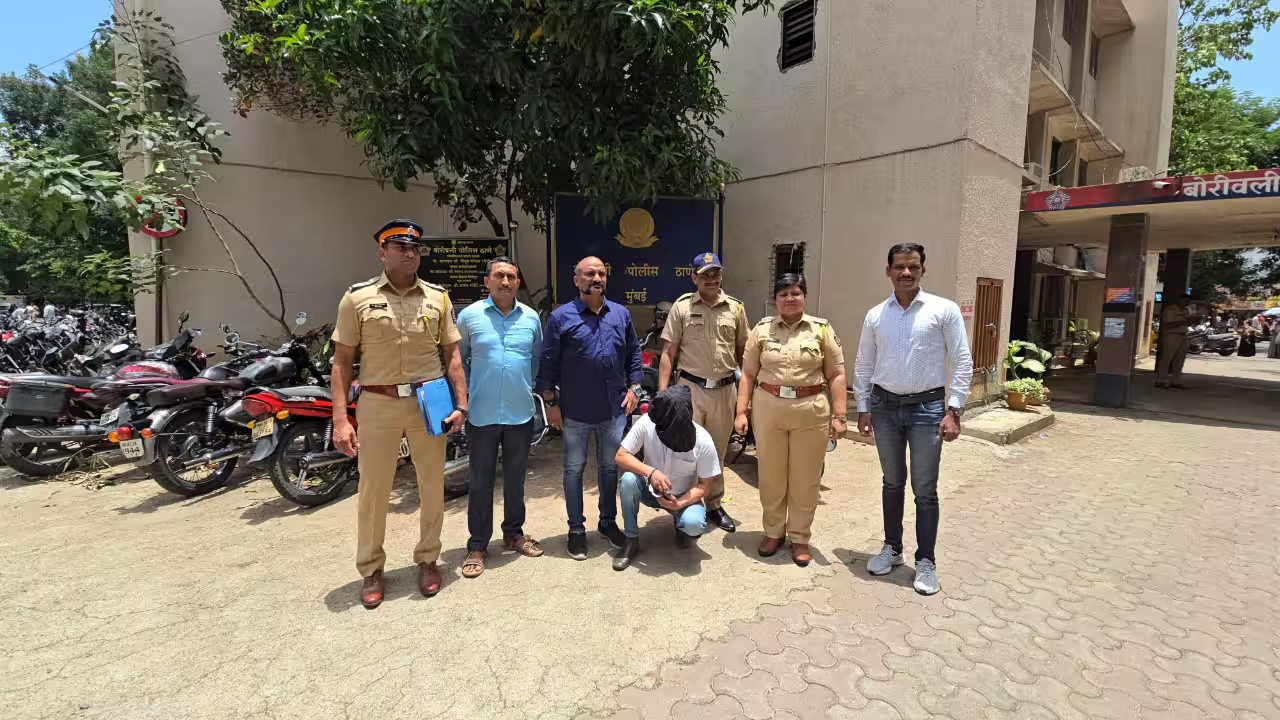
MUMBAI: Mumbai Police have arrested a Punjab resident for allegedly impersonating the personal assistant (PA) of a Maharashtra MLA and duping people by seeking money under the guise of financial assistance.The accused, identified as 44-year-old Bhalindra Pal Baldev Singh Sehgal, is a resident of Mohali in Punjab.He was arrested from Lucknow in Uttar Pradesh and brought to Mumbai for further questioning, news agency PTI reported.According to police, complainant Tushar Girish Madivediya, 46, and his friend Bharat Ratilal Shah received phone calls from Sehgal, who allegedly claimed to be the personal assistant of BJP MLA Sanjay Upadhyay, who represents Mumbai’s Borivali Assembly constituency.Investigators suspect that on some occasions, the accused also posed as the MLA himself, PTI reported.The accused allegedly requested financial assistance, claiming the money was urgently needed to pay the fees of a female student studying at Lucknow University.Trusting his claims, Madivediya transferred money to the accused’s bank account.Sehgal later persuaded Shah to send Rs 8,000 through a digital wallet, claiming it was required to book a hotel in Lucknow.Following the complaint, the Borivali police registered a case and launched a technical investigation, which eventually led to Sehgal’s arrest in Lucknow, the official said.Police suspect the accused may have cheated several other people using a similar modus operandi by impersonating an elected representative or his aide to win victims’ confidence.(With agency inputs)

Mumbai Police bust three fake call centres, arrest 12 in Rs 17 lakh insurance fraud case | Mumbai News

Mumbai Police bust three fake call centres, arrest 12 in Rs 17 lakh insurance fraud case
Victims of cyber fraud have been urged to immediately contact the national cybercrime helpline ‘1930’ and report the matter to the nearest police station.

Mumbai: The city police have busted three fake call centres operating from Kurla and Ghatkopar and arrested 12 people for allegedly cheating insurance policyholders by posing as representatives of a private health insurance company. During the operation, police seized cash, gold, and electronic equipment worth more than Rs 17 lakh.The action stemmed from a complaint lodged at Govandi police station on June 22 by a victim who alleged that the fraudsters posing as representatives of a private health insurance company cheated him of over Rs 3.4 lakh. Police said the callers allegedly lured him with the promise of processing a no-claim bonus of Rs 1.5 lakh and, under various pretexts, obtained his credit card details before siphoning off the money.Based on the complaint, Govandi police registered an FIR under the relevant sections of the Bharatiya Nyaya Sanhita and the Information Technology Act.During the investigation, a cyber team carried out technical analysis and traced the operation to a fake call centre operating from a premises at Kohinoor City Mall in Kurla West. A raid led to the arrest of six accused. Police seized computers, laptops, routers, mobile phones, SIM cards, and call scripts allegedly used to convince customers to disclose their credit card information. Investigators also found that the gang used the stolen credit card details to purchase gold coins and other items online.During questioning, the arrested accused spilled the beans on three more persons who allegedly supplied insurance customer databases and SIM cards used in the fraud. Based on their disclosures, police raided two more fake call centres — one operating from the same shopping complex in Kurla and another in Asalfa village in Ghatkopar — and arrested six more suspects.In all, police arrested 12 accused and seized 29 computers, five laptops, 15 mobile phones, three routers, 15 SIM cards, call scripts, and nearly 28.1gm of gold allegedly purchased using the proceeds of the fraud. The total value of the seized property is estimated at Rs 17.2 lakh.The investigation has revealed that the syndicate targeted insurance policy customers across multiple states using similar tactics. Police said additional arrests are likely as the fraud network seems to be significantly larger.Mumbai Police have appealed to citizens not to share bank account details, card information or OTPs with callers claiming to represent insurance companies offering refunds, policy cancellation or no-claim bonuses. Victims of cyber fraud have been urged to immediately contact the national cybercrime helpline ‘1930’ and report the matter to the nearest police station.

UBT’s Nagpur temple protest on, Fadnavis says Uddhav can’t even read ‘Ram Raksha’ | Mumbai News

UBT’s Nagpur temple protest on, Fadnavis says Uddhav can’t even read ‘Ram Raksha’

Mumbai/Nagpur: Even as Shiv Sena (UBT) MP Sanjay Raut visited Shri Ram Mandir in Nagpur’s Ramnagar on Tuesday and confirmed it will be the venue for the party’s July 18 Ram Raksha ‘andolan’ and the temple trust gave its nod to UBT chief Uddhav Thackeray to recite Ram Raksha on their premises, saying all devotees are welcome as long as the visit stays apolitical, CM Devendra Fadnavis questioned the ‘andolan’, pointing out that Uddhav Thackeray could not even read two pages of the ‘Ram Raksha.’Criticising Thackeray, Fadnavis said it was not appropriate to do political agitation in the name of Ram. “Last time too he could not read the Ram Raksha. If he is ready I too can read the Ram Raksha along with him. I know the entire Ram Raksha and supposing I do not know it, at least I should be able to read it. You do the Ram Raksha andolan and you cannot read the Ram Raksha. What kind of an andolan is this?” Fadnavis asked. The agitation was launched by Sena (UBT) on July 5 to highlight the donation theft at the Ayodhya Ram temple and to demand action against those involved.Dy CM Eknath Shinde said, “They (UBT Sena) now speak about Hindutva and recite Ram Raksha after earlier saying it was a mistake to raise Hindutva issues in the assembly. However much they try, they cannot reclaim the Hindutva space after abandoning Balasaheb Thackeray’s ideology.”On Congress leader Rahul Gandhi’s criticism on the recent Teacher Eligibility Test paper leak, Fadnavis said the govt has taken action proactively. “Those arrested have turned out to be inter-state accused. We have helped avoid paper leaks in other states as well. Steps are being taken to ensure it does not recur. The most significant point is whether Rahul Gandhi is seeking this information while present here in our country or is demanding answers via social media while sitting somewhere abroad,” he said.Terming the recent claims by former union home ministry official R V S Mani on the 26/11 Mumbai terror attacks as shocking, he said it has raised several questions. “At the time I had raised questions on the intelligence in the assembly. There must be an inquiry in the matter,” he said.Fadnavis denied allegations of privatisation of MSRTC land, clarifying that land ownership would remain with the transport corporation. He said only surplus land is to be developed through the public-private partnership model to ensure long-term financial viability of the public transport network.

One day people will carry oxygen cylinders, says Bombay high court hearing petition to fell mangroves to lay transmission line for Mumbai-Ahmedabad bullet train | Mumbai News

One day people will carry oxygen cylinders, says Bombay high court hearing petition to fell mangroves to lay transmission line for Mumbai-Ahmedabad bullet train
The Bombay High Court lamented the shrinking of green cover in Mumbai and surrounding areas

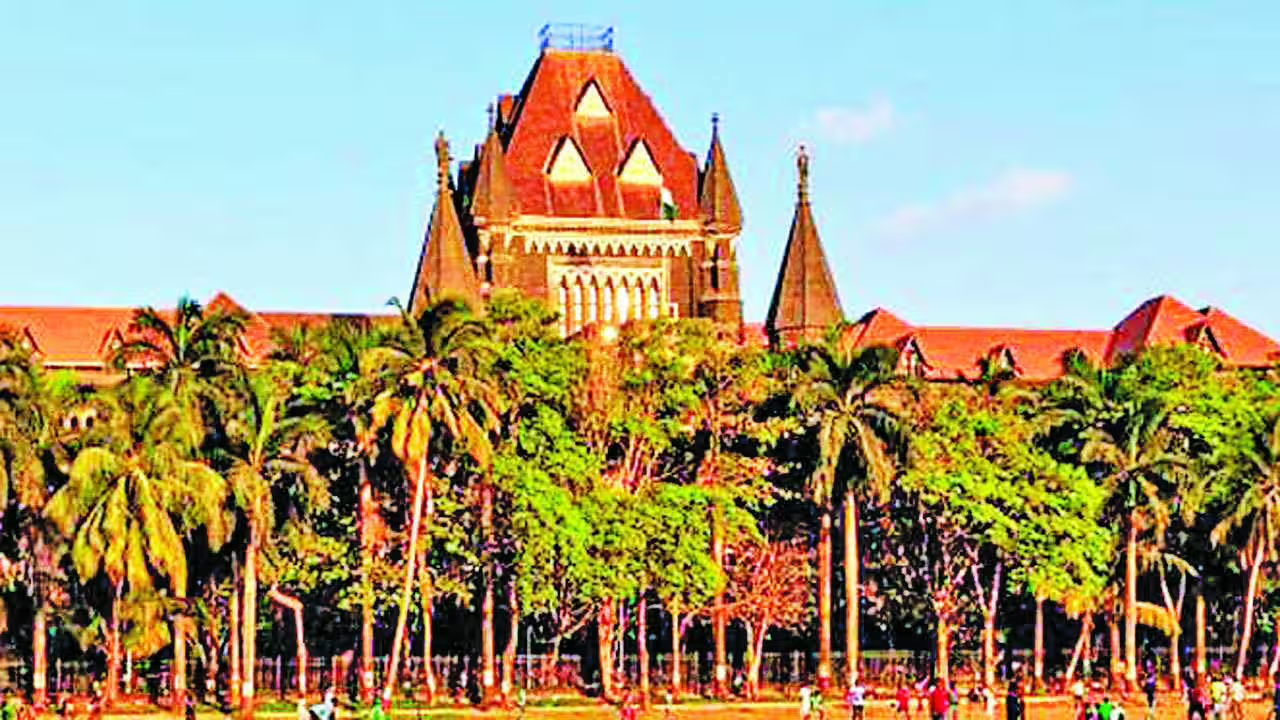
Mumbai: The Bombay High Court on Tuesday lamented the shrinking of green cover in Mumbai and surrounding areas, while hearing a petition by the state to fell 847 mangrove trees to lay a transmission line from Dahanu to Ambesari in Palghar district for the Mumbai-Ahmedabad bullet train project.“A day may not be far when people will carry oxygen cylinders to take intermittent shots of oxygen, one shot of oxygen every three hours,’’ said Acting Chief Justice Ravindra Ghuge, while suggesting compensatory afforestation in the project’s vicinity.The Acting CJ, along with Justice Gautam Ankhad, heard petition by Maharashtra State Electricity Transmission Co Ltd seeking HC’s permission as mandated by a September 2018 order regarding mangroves.