17-year-old boy stabbed by two teenagers over mobile phone game defeat | Mumbai News

17-year-old boy stabbed by two teenagers over mobile phone game defeat

Thane: A 17-year-old boy was stabbed and injured here, allegedly by two teenagers because he teased one of his friends over his defeat in a multiplayer mobile phone game, said the police on Monday.The police registered an FIR against three accused, including two brothers, under Section 109 (attempt to murder), Section 3(5)(common intention) and Section 352 (intentional insults meant to provoke a breach of the public peace) of the Bharatiya Nyay Sanhita (BNS).Nobody was arrested, said an official.According to the police, the victim regularly played the multiplayer mobile game PUBG with a group of friends from his neighbourhood. The group frequently engaged in friendly but persistent teasing directed at whoever lost a match.The dispute began on July 10 when the group was playing the game at a local park. One of the boys lost a match and became heavily agitated after being mocked by his peers, said the police.In a fit of rage, the boy brought a knife to threaten the victim. However, timely intervention by family members defused the situation, and the boy was taken home, said the police.However, the resentment escalated on the night of July 12 when the suspect and two other minor accomplices confronted the victim. Two of the minors suddenly pulled out knives and stabbed the 17-year-old, leaving him seriously injured.The severely bleeding teenager attempted to make his way back home, after which local residents and relatives rushed him to a nearby hospital. He is currently undergoing treatment.

‘Beloved sisters became ineligible after polls’: Row erupts as Maharashtra drops 81 lakh Ladki Bahin beneficiaries | Mumbai News

'Beloved sisters became ineligible after polls': Row erupts as Maharashtra drops 81 lakh Ladki Bahin beneficiaries
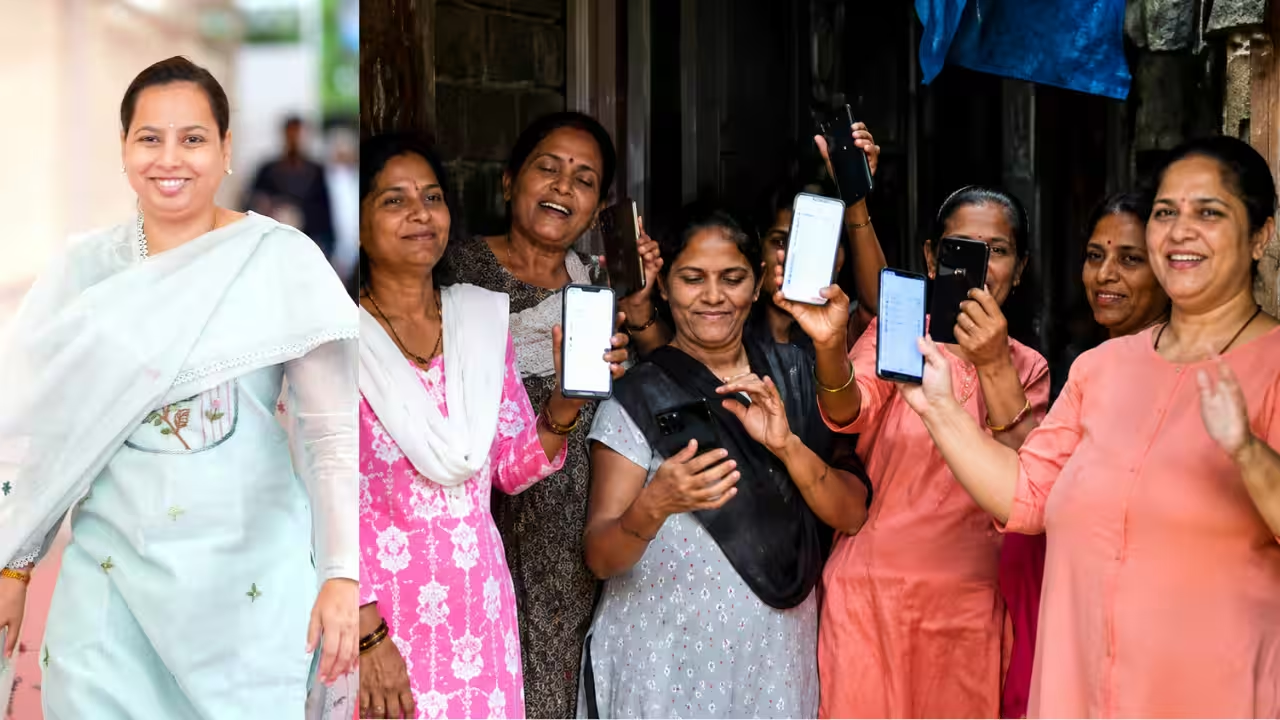
Maharashtra minister Aditi Tatkare (L, Photo credit: Facebook/@Aditi Tatkare) said around 81 lakh beneficiaries were removed from the Ladki Bahin Yojana following an e-KYC exercise to identify ineligible recipients (File photo enhanced with AI)

MUMBAI: Around 81 lakh beneficiaries have been removed from the Maharashtra government’s Ladki Bahin Yojana after a months-long e-KYC verification drive, women and child development Minister Aditi Tatkare said on Monday.Tatkare said the e-KYC exercise was mandatory to identify and remove ineligible beneficiaries, including income-tax payers and families of government employees, who are not eligible under the scheme, news agency PTI reported.“When the scheme was launched, 2.63 crore persons had registered to avail its benefits, and of them, 2.47 crore women became beneficiaries and received monthly financial assistance,” she said.“Once the department started e-KYC to filter out non-eligible beneficiaries, the number started shrinking further,” Tatkare added.Launched on June 28, 2024, the Mukhyamantri Majhi Ladki Bahin Yojana aims to promote women’s economic independence by providing eligible women aged 21 to 65 years with a monthly assistance of Rs 1,500 through Direct Benefit Transfer.

Government cites e-KYC verification

Responding to media reports claiming that 93 lakh beneficiaries had been removed, Tatkare said, “After the e-KYC drive, the number of beneficiaries had reached 1.67 to 1.7 crore. If you subtract this figure from the number of people who had registered for the scheme at the time of its launch, you get 92 to 93 lakh. But in reality, the state disbursed the stipend to 2.47 crore women, and the rest were found to be ineligible right from the start.She said nearly 62 lakh beneficiaries who had registered under the scheme and received benefits failed to complete the e-KYC process despite repeated deadline extensions, PTI reported.“Around 16 lakh beneficiaries were found to have annual family income exceeding Rs 2.5 lakh, while 4.42 lakh were declared ineligible because a family member was a government employee,” she said, adding that some men and government employees had also registered under the scheme and received benefits.Tatkare said the e-KYC exercise began in August 2025, and beneficiaries were given six months to complete the process, with assistance extended till April to rectify deficiencies.She added that complaints from women who completed e-KYC but did not receive benefits are also being verified.The minister said the government had started recovering money from government employees eight to 10 months ago, and the recovered amount was being deposited into the state treasury.

Opposition alleges political misuse

Meanwhile, opposition parties intensified their criticism of the government, alleging that the scheme, launched months before the 2024 Maharashtra Assembly elections, was used as a political inducement.State Congress president Harshwardhan Sapkal alleged financial irregularities in the implementation of the scheme.“The government allocated Rs 29,693 crore for the scheme but spent Rs 3,541 crore more than the approved budget without maintaining any record or account of the additional expenditure. Is this a government or a gang of robbers?” he said.Sapkal also claimed that expenditure on women’s welfare schemes increased from Rs 261.78 crore to Rs 33,554 crore in 2024-25, while spending on housing schemes dropped by 54% and expenditure on water supply and sanitation declined by 31.81%.Congress MP and Mumbai Congress chief Varsha Gaikwad alleged that the government declared women “beloved sisters” before the elections but deemed them ineligible after assuming power.“If these women were ineligible, why were they given benefits till now? And if they were eligible, why have they now been removed from the scheme? Were the rules ignored before the elections to secure votes and invoked later because of financial stress?” she questioned.In a post on X, NCP (SP) spokesperson Ravikant Varpe alleged that the scheme was introduced to gain women’s trust and votes, but the government had now shown “more than 92 lakh women the exit door”.“The number of beneficiaries has fallen from 2.4 crore, with nearly 38% of women now excluded. Were these women eligible before the elections and suddenly ineligible afterwards? Was this a welfare scheme or merely an election gimmick?” he asked.MNS spokesperson Anil Shidore described the development as “disturbing”.“The removal of lakhs of beneficiaries means thousands of crores of rupees were spent on ineligible beneficiaries. These include 4.42 lakh family members of government employees, 29,000 men and 8,000 government employees,” Shidore said.“The CAG has also pointed to an excess expenditure of Rs 3,541 crore over the planned outlay. The scheme was announced in June 2024, two instalments were paid in August, and assembly elections followed immediately. It is easy for aware citizens to draw their own conclusions,” he stated in an X post.(With agency inputs)


Mumbai dy mayor wants Byculla b’low allotted to him as ‘commuting from Dahisar takes too much time’ | Mumbai News

Mumbai dy mayor wants Byculla b’low allotted to him as ‘commuting from Dahisar takes too much time’

Mumbai: Commuting has long been a challenge for Mumbaikars, and the latest to cite this as a reason while making a push for accommodation closer to the workplace is the city’s deputy mayor Sanjay Ghadi, a corporator of the Dy CM Eknath Shinde-led Shiv Sena. Ghadi has written to municipal commissioner Ashwini Bhide seeking allotment to him of a vacant civic bungalow inside the Veermata Jijabai Bhosale Udyan premises in Byculla, saying it takes him too long to commute from his residence in Dahisar.In his letter, the deputy mayor has said that his daily travel between Dahisar (East) and the BMC headquarters at Fort consumes a considerable amount of time and he is frequently delayed by traffic congestion. He said the commute causes “mental and physical distress” and affects his ability to reach the civic headquarters on time for administrative meetings, seminars, public interactions and other official programmes.Ghadi also pointed out that the ongoing monsoon season is likely to make his commute even more difficult. He has requested that the bungalow inside the Jijamata Udyan campus, vacated by former additional municipal commissioner (city) Ashwini Joshi following her transfer, be allotted to him as his official residence. He said the accommodation is close to the BMC headquarters and would enable him to discharge his official responsibilities more efficiently. In the letter, Ghadi said that staying near the headquarters would help him attend civic meetings and programmes on time while ensuring quicker service delivery to citizens.Ghadi told TOI, “It is taking me five hours daily to travel back and forth from the BMC head office. So much of my useful time is being spent in the commute, which I could use attending to the public.”Ghadi, who sent the letter late last month, is yet to receive any reply from the civic administration.Congress corporator Ashraf Azmi criticised Ghadi for making the demand, stating that the BMC’s financial position isn’t very strong to keep spending taxpayers’ money on such official residences. “The BMC already has liabilities of over Rs 2 lakh crore and hence cannot be forced to spend on such additional accommodation that the deputy mayor is demanding. Besides, he is an elected corporator from Dahisar and in case he shifts to south Mumbai, who will attend to citizens’ complaints in his corporator ward?” Azmi said.Unlike mayor Ritu Tawde, who will stay in her position for 2.5 years, Ghadi will hold office only for a duration of 1.25 years. This was decided by the Mahayuti when his name was announced as the Sena’s official nominee for the post of deputy mayor with the idea of splitting the five-year term in order to give an opportunity to other corporators.

Sena corporator, 3 others get 11 days’ judicial custody in doc assault case | Mumbai News

Sena corporator, 3 others get 11 days’ judicial custody in doc assault case

Pradeep GuptaKalyan: The Kalyan judicial magistrate first class (JMFC) on Monday remanded four accused, including Shiv Sena corporator Ramesh Mhatre, to 11 days of judicial custody in connection with the assault on doctors and hospital staff at the KDMC-run Shastri Nagar Hospital in Dombivli.Ahead of the hearing, a large number of Mhatre’s supporters gathered at the Kalyan court premises. Citing security concerns, senior police inspector Ram Chopade of Vishnu Nagar police station, who is the investigation officer, moved an application before JMFC K S Katkade seeking permission to conduct the hearing through video conferencing. Accepting the request, the court allowed all four accused, including Mhatre, to be produced virtually.After hearing the matter, the magistrate remanded the accused to judicial custody till July 24.Following the remand, advocate A Y Patki, appearing for the accused, filed a bail application before the court. The magistrate directed the police to file its reply to the bail plea. The bail application is expected to be heard in the coming days.The case relates to the alleged assault on doctors and hospital staff following a dispute over purported delay in treatment of a pregnant woman at the civic-run hospital. The incident sparked outrage in the medical fraternity, with doctors and healthcare workers across KDMC-run hospitals and healthcare centres suspending routine outpatient services in protest while continuing emergency medical services.Based on a complaint lodged by Dr Vaibhav Salunkhe, the Vishnu Nagar police registered an FIR against Mhatre and the other accused under various provisions of the Bharatiya Nyaya Sanhita (BNS) and the Maharashtra Medicare Service Persons and Medicare Service Institutions (Prevention of Violence and Damage or Loss to Property) Act, 2010.Mhatre was arrested in the case last week. When he was in police custody, he was admitted to the Thane Civil Hospital after complaining of chest pain and other health issues and later discharged. He was subsequently produced before the court through video conferencing.

Rs 300-crore Battery storage rollout for Tata Power in Mumbai | Mumbai News

Rs 300-crore Battery storage rollout for Tata Power in Mumbai
The storage systems will play a critical role in supporting three major demand drivers emerging across the Mumbai Metropolitan Region.

Mumbai: Tata Power is set to invest Rs 300 crore in Battery Energy Storage Systems (BESS) as part of a wider push to strengthen Mumbai’s power infrastructure and support the city’s rapidly growing electricity demand.The company plans to deploy 100 MW/200 MWh of battery storage capacity across generation, grid-level and consumer-end applications. The initiative is aimed at enhancing grid reliability, improving demand-side flexibility, and optimising power procurement costs while enabling a more resilient power network, said Nilesh Kane, Chief – Transmission and Mumbai Distribution, Tata Power.The storage systems will play a critical role in supporting three major demand drivers emerging across the Mumbai Metropolitan Region. These include the rapid expansion of data centres requiring high-reliability extra-high-voltage connections, the growing Metro rail network across the city and suburbs, and large-scale urban redevelopment projects that are driving a surge in high-rise residential developments.To address increasing load density in land-constrained urban areas, Tata Power is also focusing on space-efficient infrastructure solutions. These include vertical substations with reduced footprints, high-rise consumer substations, underground submersible substations and tower-mounted substations.A senior company official said Tata Power’s Mumbai distribution network currently serves more than 8 lakh consumers through a network spanning 5,911 km and is expected to cross the 9-lakh consumer mark in the coming years.As part of its expansion roadmap, the utility plans to increase the number of distribution substations in Mumbai from 37 to 50. Consumer substations are projected to rise from 1,227 to 1,507, while the high-tension cable network will expand from 3,040 circuit km to 3,590 circuit km. The low-tension cable network is also slated to grow from 2,872 circuit km to 3,472 circuit km.The battery storage deployment forms part of Tata Power’s broader infrastructure expansion programme, described as the most extensive in its Mumbai operations history. Over the next five years, the company will scale up transmission and distribution assets to meet rising urban demand and support a projected peak load of 2,000 MW on its Mumbai network. The expansion is aligned with estimates that Mumbai’s overall power demand could touch 6,500 MW by 2031, underscoring the need for future-ready and resilient grid infrastructure.

FDA Suspends Licenses of 34 Maharashtra Blood Banks, Storage Centres | Mumbai News

FDA Suspends Licenses of 34 Maharashtra Blood Banks, Storage Centres

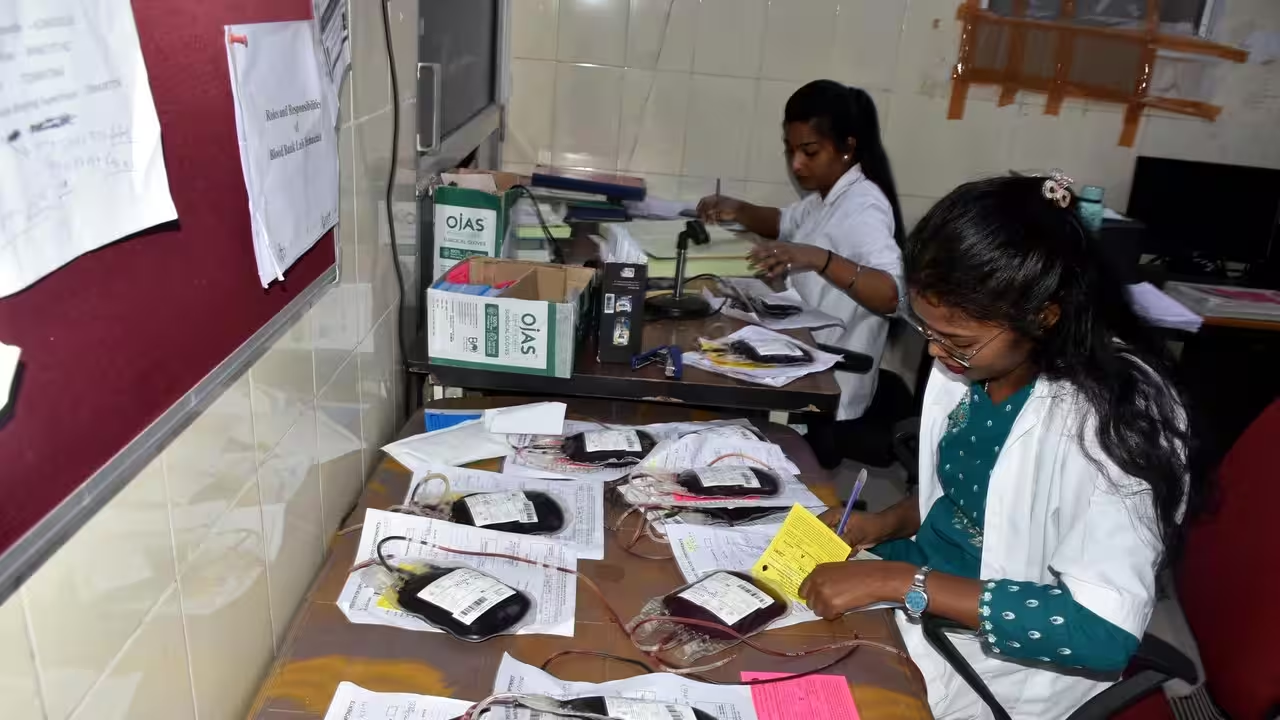
Mumbai: From April to June, the FDA suspended the licenses of 21 blood banks and 13 blood storage centres. TOI earlier reported that two city-based blood banks, JJ Mahanagar and Maya Blood Centre, faced license cancellation. ​FDA drug department officials stated that the licenses of these two blood banks remain cancelled. Most of the other affected blood centres are located in Pune, Miraj, Sangli, and Amravati.​A handful of the affected centres are on the city’s periphery, including the Indian Red Cross Society Blood Storage Centre (Ulhasnagar), Good Health Concept LLP – GHC Hospitals (Mumbra, Thane), Sankalp Blood Centre (Kalyan West), and Shree Balaji Multispeciality Hospital (Badlapur East).Ganesh Rokade, Joint Commissioner (Drugs), said that for most of these establishments — excluding Patil Hospital Blood Storage Centre (Pune) and Aadhaar Blood Storage Centre (Thane), whose licenses were cancelled due to severe quality violations — the issues were not as critical as those observed at JJ Mahanagar. “By and large, record-keeping was the main issue elsewhere. While discrepancies were found, they are minor and can be fixed by the establishments,” he said.

International universities expand India campuses as admission uncertainty grows: Report | Mumbai News

International universities expand India campuses as admission uncertainty grows: Report

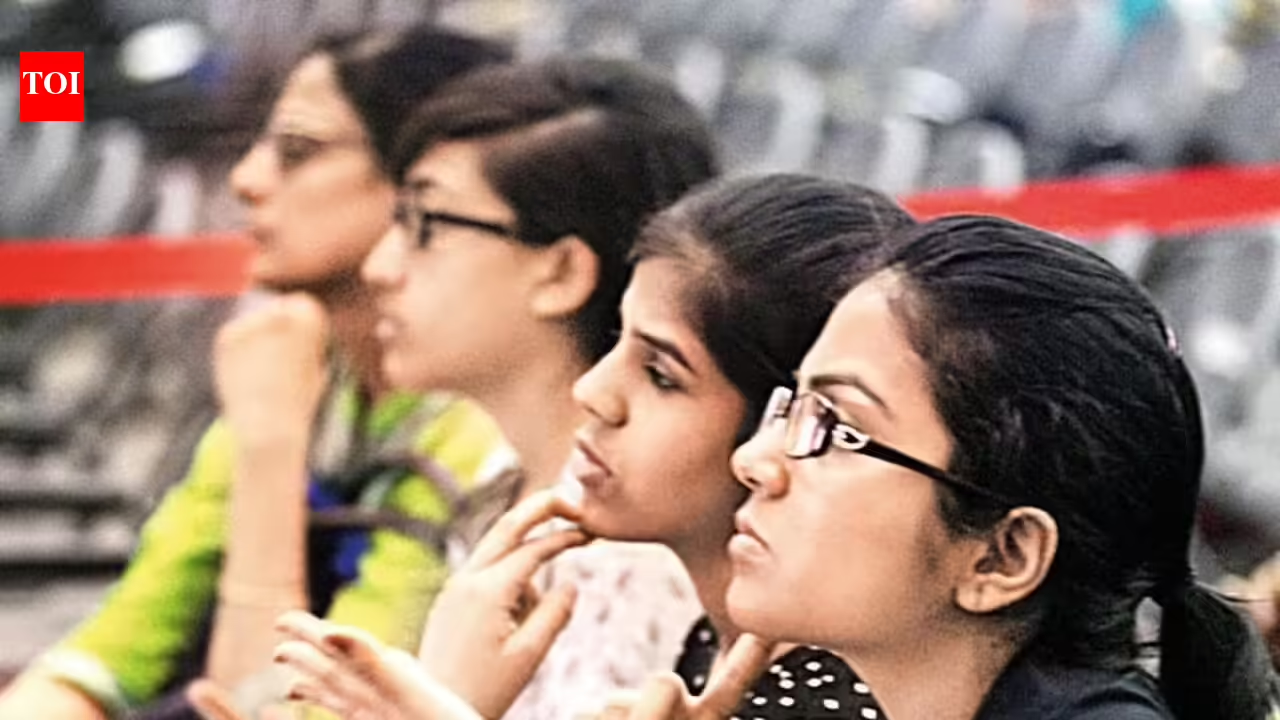
Mumbai: India’s international university experiment is gathering speed. After 13 foreign campuses began operations in the 2026-27 academic year, another set of institutions is preparing to enter the country, including Coventry University, Flinders University, Istituto Europeo di Design, La Trobe University, Lancaster University, the University of Surrey and Western Sydney University.But for students and parents trying to make sense of this rapidly expanding landscape, the choices may be multiplying faster than the answers.There is still little clarity on admissions and enrolment at the 13 campuses that have already opened. A new report, Landscape of International University Campuses in India 2026, says that choosing among them remains far from straightforward.“The sector is still evolving rapidly, there are no standardised parameters to evaluate these campuses, and much of the information available is incomplete, inconsistent or influenced by competing interests,” the report said.Some of the questions that matter most to students cannot yet be answered with confidence. Faculty quality, campus life, the learning environment and the depth of academic support remain difficult to assess because most campuses are still in their infancy. Placement outcomes are similarly untested, and the absence of uniform reporting standards is likely to make comparisons even more difficult.The report was prepared by international education expert Rahul Choudaha. “So far, at least 20 universities ranked among the world’s top 500 have signalled an interest in establishing campuses in India, of which 13 are admitting students for the 2026-27 academic cycle,” he said.Together, the campuses offer 91 programmes, with an estimated annual intake of 2,730 students. Initial projections suggest that only around half of these seats may be filled as some of the campuses only received UGC approvals in June and July, offering little time for students to make decisions. The median annual tuition fee is Rs 13.86 lakh for undergraduate programmes and Rs 16.75 lakh for postgraduate courses.The academic choices also reveal a cautious beginning. Universities have largely concentrated on subjects with established student demand and visible employment prospects. Academic analysis by Choudaha reveals that at the undergraduate level, business and management dominate, with programmes offered by 10 universities. Computing and computer science follow at eight, while data science and artificial intelligence also feature prominently.Beyond these commercially popular disciplines, though, the menu becomes much thinner. Liverpool is the only university offering biomedical sciences, while cyber security and creative or design-related programmes are available at only a handful of campuses. The same pattern is visible at the postgraduate level: a cluster of familiar, marketable courses, surrounded by few specialised choices.

MSRTC to redevelop 1,485 hectares of land across Maharashtra under PPP model | Mumbai News

MSRTC to redevelop 1,485 hectares of land across Maharashtra under PPP model
Pic used for representation purpse

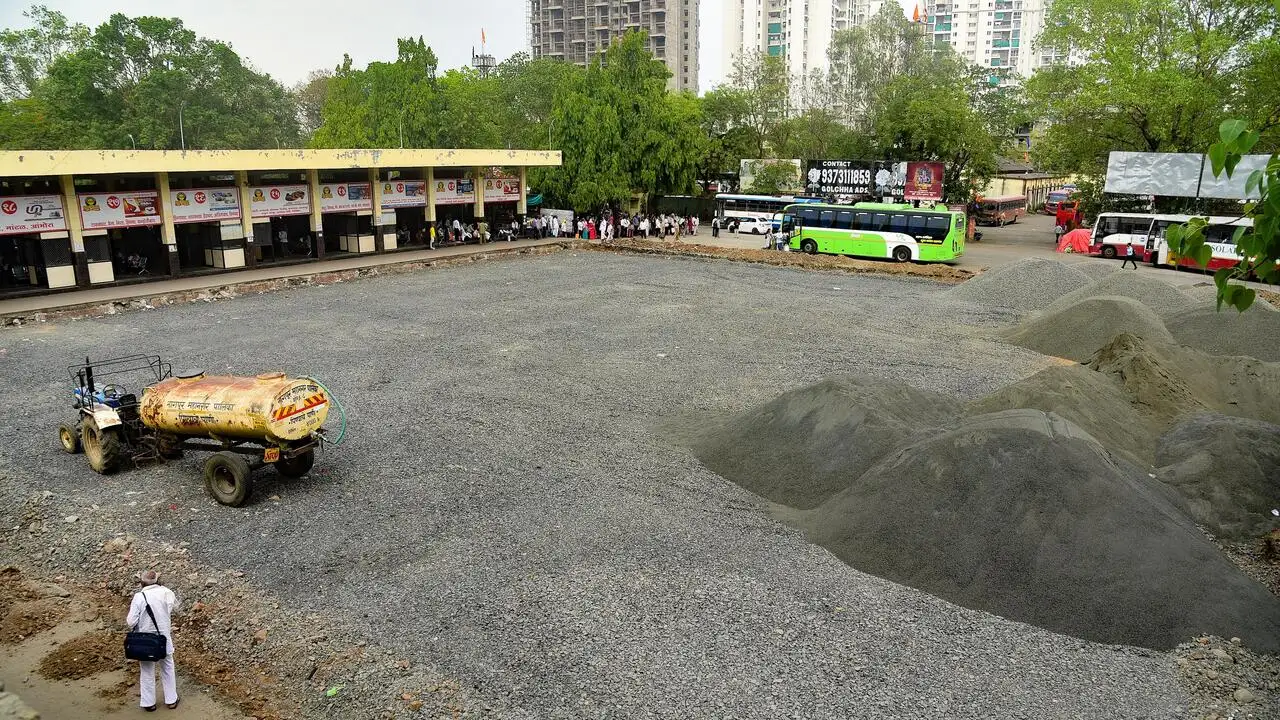
Mumbai: The MSRTC has set in motion an ambitious plan to redevelop nearly 1,485 hectares of its land through the public-private partnership (PPP) model, with a focus on generating sustainable revenue and improving the financial health of the state-run transport undertaking. MSRTC has been incurring annual losses of around Rs 591 crore in 2025-26 and the corporation’s staggering accumulated deficit is nearly Rs 12,000 crore.A detailed presentation on the redevelopment plan was made before chief minister Devendra Fadnavis on Monday by senior MSRTC officials. The proposal covers strategically located lands attached to MSRTC bus depots, bus stations, workshops and warehouses across urban, semi-urban and rural areas of the state.Reviewing the proposal, Fadnavis directed officials to adopt a depot-specific approach while undertaking redevelopment. “Separate planning should be carried out considering the commercial potential of each depot,” he said. The chief minister also instructed that revenues generated from commercially viable projects be deposited in an escrow account and subsequently utilised for the redevelopment of less profitable projects and other infrastructure initiatives undertaken by the corporation.MSRTC suffered significant losses in April and May this year. The decline during these two months—traditionally the highest revenue-generating period—was a serious concern in which 21 out of the state’s 31 divisions of the bus corporation were running in losses, sources said.The govt has clarified that ownership of the land being redeveloped will continue to remain with MSRTC. Officials said redevelopment is being examined through a 49-plus-49-year lease model, enabling commercial value addition without transferring ownership of the assets. Fadnavis also directed officials to examine legal aspects relating to possible stamp duty exemptions for such projects and to place proposals regarding incentives and concessions for private developers before the state cabinet for approval.The redevelopment initiative is part of the govt’s broader strategy to create new sources of income for the cash-strapped corporation, an official said. Transport minister Pratap Sarnaik had earlier indicated that commercial development of ST-owned lands was under consideration, given the extensive land bank available with the corporation at key locations across Maharashtra.According to officials, the proposed framework envisages redevelopment through three packages, covering bus stands and depots across the state. Properties are proposed to be classified into A, B and C categories based on location, commercial viability and development potential. Different categories of properties will be bundled together in integrated packages to make projects attractive for private investment while ensuring balanced development.“Monetising these underutilised assets through PPP projects can help strengthen MSRTC’s finances, modernise transport infrastructure and reduce its dependence on govt support in the long run,” the official added.

Row over Marathi in Mumbai local: Railways backs TC, says he acted as per law; passenger ‘briefly detained’ | Mumbai News

Row over Marathi in Mumbai local: Railways backs TC, says he acted as per law; passenger 'briefly detained'
A video of the heated argument over language use had gone viral on social media.

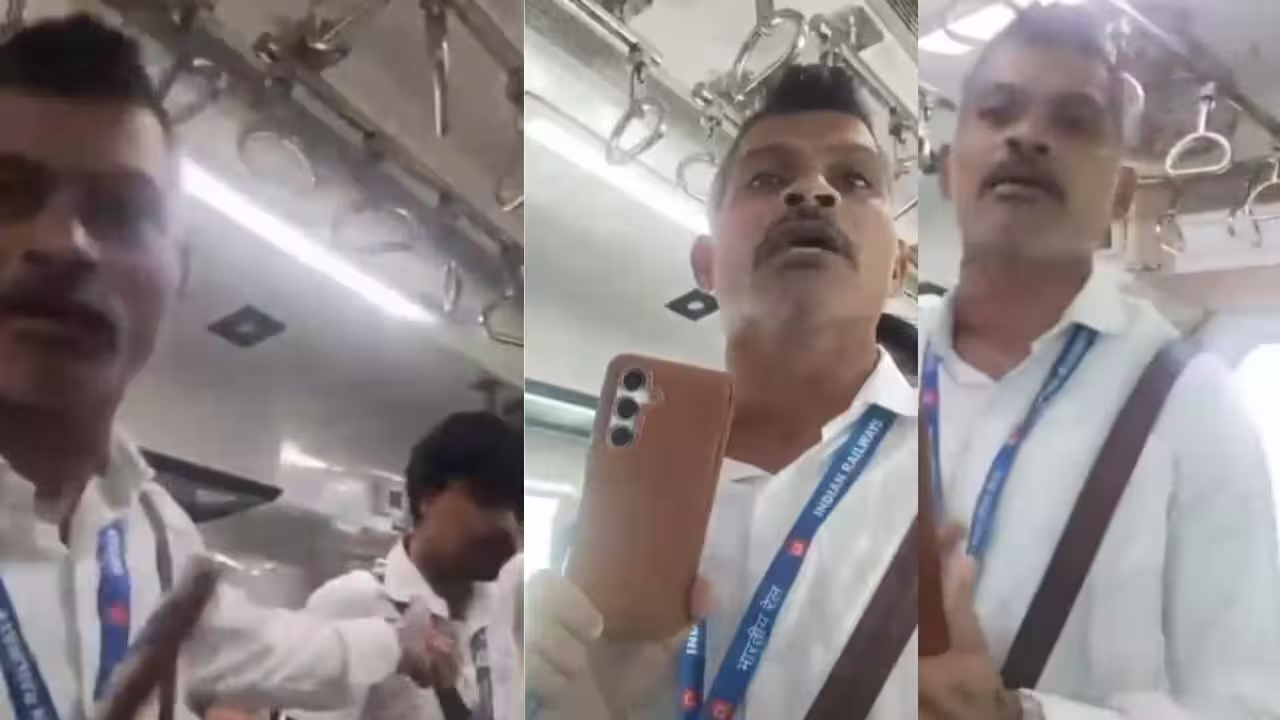
MUMBAI: A preliminary inquiry into the altercation between a passenger and a ticket checker aboard an air-conditioned Mumbai suburban train has found that the railway employee acted in accordance with the law and prescribed procedures, Western Railway said on Monday.The clarification comes two days after a video of a heated argument between the passenger and the ticket checker over the use of Marathi during ticket checking went viral on social media.In a statement, Western Railway said the inquiry found no misconduct or procedural lapse on the part of the ticket checking staff, news agency PTI reported.“The preliminary inquiry has found that the railway employee had acted in accordance with the law and prescribed procedures. At no stage was any misconduct or deviation from the prescribed procedure found on the part of the staff,” the statement said.It added that the ticket checker discharged his duties in accordance with the provisions of the Railways Act, 1989, as amended through the Jan Vishwas Act, 2026, and the rules governing ticket inspections.According to the Railways, the ticket checking staff boarded the Virar-Churchgate AC local train at Virar around 2. 06pm on Saturday and was carrying out a routine ticket inspection when the passenger was asked to produce a valid travel ticket.Officials said the passenger insisted that the ticket be demanded in Marathi.The ticket checker subsequently addressed him in Marathi, but the passenger allegedly continued arguing with the staff, disrupting the ticket checking process and interfering with official duties.The passenger was later deboarded at Andheri station and taken to the Railway Protection Force (RPF) office for legal action to prevent further disruption, the Railways said. He was briefly detained before being released later.The incident first came to light after videos of the confrontation inside the train surfaced online.In the footage, the passenger is seen recording the interaction and alleging that railway staff refused to speak to him in Marathi.The ticket checker also begins recording the exchange on his mobile phone as the argument escalates.Following the incident, both the passenger and the ticket checker approached the Andheri Government Railway Police (GRP), seeking action.Railway authorities had then initiated a preliminary inquiry after the videos went viral.The passenger’s brief detention by the RPF triggered protests outside the Andheri RPF office by members of the Marathi Ekikaran Samiti, who alleged that he was harassed for insisting on speaking in Marathi.Western Railway, however, reiterated that while it respects India’s linguistic and cultural diversity and encourages its staff to communicate courteously with passengers in regional languages wherever possible, railway employees cannot be obstructed from carrying out their lawful duties.The inquiry is expected to continue, and the Railways said further action, if required, will be taken based on the outcome of the investigation.(With agency inputs)
Devendra Fadnavis overtakes Sharad Pawar to become Maharashtra’s third longest-serving CM | Mumbai News

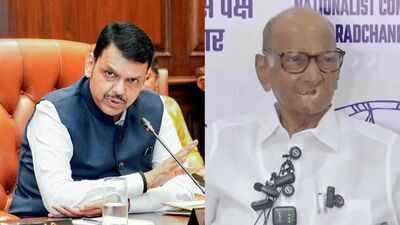
Devendra Fadnavis overtakes Sharad Pawar to become Maharashtra's third longest-serving CM
Devendra Fadnavis (L) has become Maharashtra’s third longest-serving chief minister surpassing Sharad Pawar’s (R) cumulative tenure of 2,412 days in office

MUMBAI: Maharashtra chief minister Devendra Fadnavis has become the state’s third longest-serving chief minister in terms of cumulative tenure, overtaking NCP (SP) chief Sharad Pawar.According to records of the Maharashtra legislature, Fadnavis completed 2,430 days in office across three terms as of July 12, 2026, surpassing Pawar’s cumulative tenure of 2,412 days served over four terms, news agency PTI reported.Former chief minister Vasantrao Naik remains Maharashtra’s longest-serving chief minister with 4,096 days (11 years and 78 days) in office, followed by Vilasrao Deshmukh, who served for 2,686 days (around seven years and 129 days).Fadnavis first took oath as chief minister on October 31, 2014, and completed a full five-year term in November 2019.He briefly returned to the post for three days in November 2019 before resigning after failing to prove a majority.He was sworn in for a third term on December 5, 2024, and has completed 585 days in the current stint as of July 12.Pawar served as Maharashtra chief minister four times but did not complete a full five-year term in any of those tenures.With Fadnavis continuing in office, his cumulative tenure is expected to increase further, extending his lead over Pawar in the list of Maharashtra’s longest-serving chief ministers.(With agency inputs)