Preity Zinta moves Bombay high court to have her personality rights protected against deepfakes and AI generated content online | Mumbai News

Preity Zinta moves Bombay high court to have her personality rights protected against deepfakes and AI generated content online
Actress Preity Zinta has approached the Bombay High Court seeking protection against AI-generated deepfakes that infringe upon her personality rights.

MUMBAI: Yet another Bollywood personality, Priety Zinta, approached Bombay high court to have her personality rights protected against deep fake Artificial Intelligence (AI) generated images and content.The deepfakes carrying her trademark smile, is depleting her joy, her lawyers contended as they sought an interim order against 16 defendants including known websites and unknown others.Justice Madhav Jamdar on Friday posted the matter to July 6 to pass orders, but first gave time to parties to work out a mechanism or practical protocol to take down the genuinely offending content from websites without disturbing legitimate content.In her suit against Google LLC and others including Meta Platforms Inc, through Bachubhai Munim and Co, the Dil Se star said her heart wants the ongoing infringement of her personality, publicity and moral rights to be stopped.She claimed her right to privacy was being violated as websites based abroad cashed in on her “widely celebrated personality.’’Her suit said domain names also exist in her name which she did not create. It said, “personality traits are an integral/intrinsic part of her personality rights and/or publicity rights, in which the Plaintiff exercises (and ought to exercise) exclusive control. “She is also the co-owner of Punjab Kings, a franchise in the Indian Premier League (IPL). Zinta’s interim plea argued by senior counsel Venkatesh Dhond said the AI generated content was rapidly becoming more realistic with chat-bot style interactions posted and hosted online by alleged infringers.Dhond sought urgent orders so that intermediaries be ordered to take down content she highlighted in the suit and orders to prevent unknown persons, John Doe (collective name for all unknown or unidentified infringers, present and potential) from posting unlawfully.Counsel for Google and Meta did not object to deleting morphed or obscene content but said no blanket orders be issued.Justice Jamdar, observing that protective orders would be warranted on merits also said legitimate content cannot suffer and asked counsel for the parties to confer and work out a protocol to take down genuinely offending content and leave lawful content alive.Her suit said, “numerous AI-generated deepfake videos, memes, manipulated images, Al chatbot personas and other digital content have been created, uploaded, disseminated and made available to the general public on the platforms, like YouTube, X, Instagram and Facebook’’ which utilise her name, image, likeness, voice and other personality traits without the Plaintiff’s authorisation, licence or consent.

IIT Madras and IIT Kanpur launch India’s first Bachelor of Cybersecurity; program aims to close 1.5 million professional gap | Mumbai News

IIT Madras and IIT Kanpur launch India's first Bachelor of Cybersecurity; program aims to close 1.5 million professional gap
India’s top engineering institutes, IIT Madras and IIT Kanpur, have launched a pioneering four-year Bachelor of Cybersecurity program

MUMBAI: Cybersecurity is moving from the margins of computer science classrooms to the centre of India’s higher education agenda.The Indian Institute of Technology (IIT) Madras and IIT Kanpur have jointly launched what they describe as India’s first practice-oriented, four-year Bachelor of Cybersecurity programme.The B. Cyber course will begin in the academic year starting July 2026, with admissions being conducted jointly by the two IITs this year.The programme has been designed to meet India’s rising demand for cybersecurity professionals at a time when digital systems increasingly underpin governance, finance, healthcare, telecom, transport, manufacturing and defence.Officials said the course will train students not merely in the theory of cybersecurity, but in the operational skills required to protect complex digital infrastructure and critical systems.Graduates are expected to be prepared for roles in cyber defence, security operations centres, penetration testing, vulnerability assessment, digital forensics, malware analysis, cloud security, hardware security and critical infrastructure protection.The programme will also provide a foundation for higher studies and research in cybersecurity and computer science.“Cybersecurity has become fundamental to India’s technological sovereignty and national security,” said Prof V Kamakoti, director, IIT Madras. “Building a resilient cyber ecosystem requires professionals who possess not only strong theoretical foundations but also extensive hands-on experience in defending complex systems.”He said the collaboration with IIT Kanpur marked a new model of undergraduate education, combining academic rigour with real-world practice.“We believe this initiative will create a pipeline of highly skilled cybersecurity professionals who will play a vital role in securing the nation’s digital future,” Kamakoti said.The launch comes at a time when cybersecurity has emerged as a strategic national priority. As India’s digital footprint expands, the need to protect public platforms, financial networks, healthcare systems, telecom grids, industrial infrastructure and defence-linked technologies has grown sharply.Industry estimates point to a shortage of nearly 1.5 million cybersecurity professionals in the country, underlining the need for specialised undergraduate training in the field.A defining feature of the new degree is its two-year Field Deployment Professional Project. Students will spend the final four semesters working on live cybersecurity projects under the mentorship of professionals from strategic and critical organisations.The idea, officials said, is to ensure that graduates enter the workforce with substantial field exposure in addition to formal academic training.The curriculum follows a competency-based framework, allowing students to progressively build expertise across domains such as security operations, vulnerability assessment and penetration testing, secure systems, malware analysis, firmware reverse engineering, hardware security, cloud security and critical infrastructure security.

Do you believe the new B. Cyber program will effectively address the shortage of cybersecurity professionals in India?

3k+ users shared opinion today

5k+ users already voted today

3k+ users shared opinion today

Share Opinion

Students will also be able to choose advanced electives in digital forensics, embedded systems security, secure processor microarchitecture and applied cryptography.The first two years of the programme will focus heavily on laboratory-oriented instruction. Students will study computer systems, programming, Linux system administration, cryptography, computer organisation, operating systems, computer networks, ethical hacking, web security, vulnerability assessment and penetration testing before moving into advanced specialisation and professional deployment.For the IITs, the programme signals a shift in how cybersecurity education is being imagined: not as a late-stage specialisation, but as a full undergraduate discipline built around labs, live systems and field practice.

Tata Power commissions 101-MW wind farm in Maharashtra to supply green power to Mumbai | Mumbai News

Tata Power commissions 101-MW wind farm in Maharashtra to supply green power to Mumbai
Tata Power Renewable Energy has boosted Mumbai’s green energy supply with a new 100.8 MW wind project in Maharashtra (File photo enhanced with AI)

MUMBAI: Tata Power Renewable Energy Ltd (TPREL), the renewable energy arm of Tata Power, has commissioned a 100.8-MW wind power project in Maharashtra’s Dharashiv district, strengthening the green energy supply for Mumbai’s electricity network.The power generated from the Jewali wind project will be supplied to Tata Power Mumbai Distribution, helping the utility meet its Renewable Purchase Obligation (RPO) targets under the country’s clean energy regulations while increasing the share of renewable electricity in its supply mix.According to the company, the project is expected to generate around 299 million units of electricity annually, enough to replace an equivalent amount of conventional power. It is also estimated to offset nearly 245 million kg of carbon dioxide emissions every year, based on standard emission factors.The wind farm comprises 28 wind turbine generators of 3.6 MW each using horizontal-axis wind turbine technology.The commissioning further expands Tata Power Renewable Energy’s wind portfolio to over 3.9 GW, of which more than 1.3 GW is operational while the remaining capacity is under various stages of development across multiple states, including Maharashtra, Gujarat, Rajasthan, Karnataka, Andhra Pradesh and Tamil Nadu.For Mumbai consumers, the project is expected to improve the availability of renewable power in Tata Power’s distribution network and assist the utility in complying with statutory renewable procurement requirements. Distribution companies are mandated to procure a specified percentage of their electricity from renewable energy sources under RPO norms.With the addition of the Jewali project, TPREL’s total renewable utility portfolio has reached 11.6 GW. Of this, 6.7 GW is operational, comprising 5.4 GW of solar and 1.3 GW of wind capacity, while another 4.9 GW is under implementation.The under-construction portfolio includes around 2.1 GW of solar projects, 2.6 GW of wind projects and 0.2 GW of battery energy storage systems, which are scheduled to be commissioned in phases over the next six to 24 months.The company said the latest commissioning aligns with Tata Power’s long-term target of achieving 100% clean energy generation by 2045 and forms part of its broader renewable energy expansion strategy.

Builder arrested for alleged land-grabbing fraud in Dahisar; police investigate forged documents and money trail | Mumbai News

Builder arrested for alleged land-grabbing fraud in Dahisar; police investigate forged documents and money trail

MUMBAI: The crime branch has arrested a Vile Parle–based builder in connection with an alleged land-grabbing fraud involving forged powers of attorney, fake bank accounts and the fraudulent transfer of possession rights over a prime land parcel in Dahisar.The property cell of the crime branch arrested Kalpesh Kanubhai Shah, director of Puja Land and Premises Pvt Ltd, for his alleged role in a conspiracy to acquire possession rights over around 16,288.3 sq metres of land using fabricated documents.Shah was produced before the Esplanade Court, which remanded him to seven days of police custody.The alleged fraud came to light after the Bombay high court, while hearing a civil dispute between Sheikh Construction and Romell Housing, observed that two documents bore the same registration number.A subsequent verification by the joint sub-registrar’s office, Borivali, allegedly confirmed that an irrevocable power of attorney dated May 25, 2010, was forged and did not exist in official records.Police alleged that Shah, along with co-accused Prakash Chandra Dubey, knowingly relied on the forged power of attorney to execute and register transfer deeds, enabling Puja Land and Premises Pvt Ltd to obtain possession rights over the disputed land.The probe has also revealed that fake bank accounts in the names of “Kausar Nooruddin Sheikh” and “Sheikh Construction” were opened at a Mira Road bank branch to route funds linked to the transaction.Investigators claim Shah and Dubey transferred substantial sums into these accounts before the execution of the disputed documents, despite there being no legitimate sale agreement with the original landowner, KN Sheikh.During the investigation, police examined financial transactions involving co-accused Sameera Aslam Khan, who allegedly admitted to receiving Rs 29.47 lakh, including Rs 9.5 lakh in cash through bearer cheques, and paying Rs 4.5 lakh to a person identified as Kiran Ghavnalkar for preparing the forged power of attorney.Investigators further alleged that Sajid Sheikh operated the fake Sheikh Construction account through which funds were withdrawn.Police said the land belonged to KN Sheikh, who was unwilling to sell or transfer the property. They alleged that his divorced wife, Sultana Sheikh, was used to create forged general and irrevocable powers of attorney to falsely show that Sheikh had authorised her to deal with the land.Using these documents, Sultana allegedly executed transfer deeds in favour of Puja Land and Premises Pvt. Ltd., whose directors included Shah and Dubey.The crime branch has already arrested Sultana Sheikh, Sameera Khan, Sajid Sheikh, Prakash Dubey and Kiran Ghavnalkar, and filed a chargesheet against them under various provisions of the Indian Penal Code, 2023, and the Registration Act, 1908.Police said a supplementary chargesheet will name Shah, other wanted accused and additional persons identified during the probe.Investigators said Shah’s custodial interrogation is necessary to trace the original forged documents, examine the money trail, identify other beneficiaries of the alleged conspiracy and recover records linked to the disputed land transactions.Police have alleged that Shah was aware the power of attorney was forged but proceeded with the execution and registration of the transfer documents.

Mumbai remains India’s least affordable housing market despite lower home loan rates | Mumbai News

Mumbai remains India's least affordable housing market despite lower home loan rates
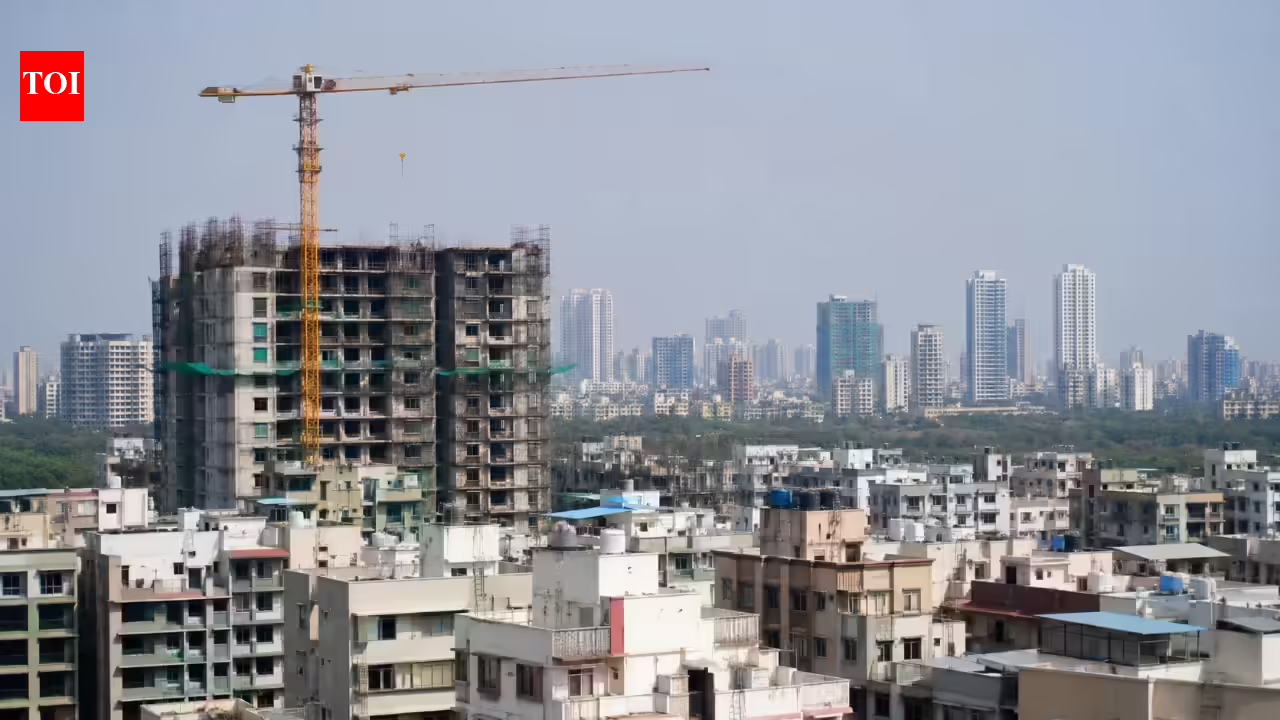
Mumbai remains India’s least affordable housing market, with homebuyers dedicating 69% of income to loan repayments, despite monetary easing (AI-generated image used for representational purposes)

MUMBAI: Even after a cumulative 125 basis points of monetary easing and lower home loan rates, the Mumbai Metropolitan Region (MMR) has retained its position as India’s least affordable residential market, with a typical homebuyer required to spend 69% of household income on monthly loan repayments, according to Knight Frank India’s latest Affordability Index.The report shows that MMR remains well above the 50% affordability benchmark, the level beyond which banks are generally reluctant to underwrite housing loans. Among the country’s eight major residential markets, only MMR and the National Capital Region (NCR) continue to breach this threshold, while the remaining six cities remain within affordable limits.The findings highlight that, for Mumbai’s homebuyers, falling borrowing costs have not been enough to offset the impact of high property prices. Knight Frank said affordability gains achieved through lower interest rates have largely been neutralised by sustained price appreciation in the country’s costliest housing market.The index measures the proportion of a household’s monthly income required to pay equated monthly instalments (EMIs) on an average home. For H1 2026, MMR’s affordability ratio stood unchanged at 69%, while NCR worsened slightly to 67% from 66% in 2025.In contrast, Ahmedabad emerged as the country’s most affordable housing market, with an EMI-to-income ratio of 23%, followed by Kolkata (25%), Pune (28%) and Chennai (29%). Bengaluru stood at 35%, while Hyderabad recorded 41%, all comfortably within the affordability threshold.The report notes that affordability across India’s residential markets remains broadly supportive because of the cumulative benefit of lower borrowing costs following the Reserve Bank of India’s 125-basis-point rate cuts before the current pause in the easing cycle.However, rising residential prices have moderated those gains in several markets.Knight Frank’s affordability data also shows how sharply MMR differs from other cities. While Pune’s affordability improved from 57% in 2016 to 28% in H1 2026, and Chennai’s fell from 55% to 29% over the same period, Mumbai’s ratio has remained stubbornly high despite improving from 77% in 2016.Shishir Baijal, Chairman and Managing Director, Knight Frank India, said housing affordability continues to be a key driver of residential demand.While lower interest rates have supported buyers, rising property prices have moderated affordability gains. He said healthy employment, stable incomes and supportive financing conditions continue to underpin demand, but sustained income growth would be crucial for improving affordability over the long term.The report said the RBI’s decision to keep the policy repo rate unchanged at 5.25% in its February and June 2026 monetary policy meetings indicates that rate stability is likely in the near term. Although geopolitical uncertainties and inflation risks remain, the cumulative impact of earlier rate cuts is expected to continue supporting housing demand across most major cities.

Mumbai’s power safety net gets a silent upgrade: New transmission corridor can meet nearly half the city’s demand, revive decade-old substation | Mumbai News

Mumbai's power safety net gets a silent upgrade: New transmission corridor can meet nearly half the city's demand, revive decade-old substation

MUMBAI: Even as Mumbai braces for another season of record electricity consumption, one of the city’s biggest power security upgrades has quietly gone operational—one that experts say could fundamentally reduce the risk of transmission bottlenecks rather than simply add more electricity.While public attention has largely focused on increasing power generation, the bigger challenge for Mumbai is now moving electricity into the city. Industry executives say the Mumbai Urja Marg Ltd (MUML) transmission project has increased Mumbai’s ability to import over 2,000 MW of electricity—equivalent to nearly half of the city’s peak requirement—by creating a new high-capacity transmission corridor linking the metropolis to the national grid.The development assumes significance because Mumbai’s own power generation capacity has remained limited, making the city increasingly dependent on importing electricity from outside Maharashtra as demand rises due to rapid urbanisation, metro rail expansion, electric vehicles, airports and data centres.A less-reported angle is that the project does not merely add transmission lines but revives critical infrastructure that had remained underutilised for more than a decade. The project operationalised the 400/220-kV Navi Mumbai GIS substation, which had remained dormant since 2012, by integrating it with the Inter-State Transmission System (ISTS). This creates an additional entry point for electricity into Mumbai while easing pressure on heavily loaded substations such as Kalwa and Kharghar.Energy experts say this improves operational flexibility for grid managers during periods of exceptionally high demand or when maintenance shuts down parts of the network. The project also highlights how Mumbai’s electricity planning is shifting from creating generation assets to strengthening transmission infrastructure.“India’s urban power challenge is increasingly becoming one of transmission readiness rather than generation capacity. Cities need resilient transmission corridors capable of importing large volumes of electricity whenever required,” said Pratik Agarwal, Chairman of Resonia Ltd.The approximately 100-km corridor traverses some of the Mumbai Metropolitan Region’s most difficult terrain, including dense urban settlements, highways, railway lines, metro corridors, forests and rocky hills across Thane, Bhiwandi, Kalyan, Ambernath, Panvel and Navi Mumbai.Another relatively unexplored aspect of the project is the engineering approach adopted to minimise disruption in congested Mumbai neighbourhoods. Instead of conventional lattice towers requiring larger footprints, developers deployed ultra-narrow-base towers and monopoles that could be erected within narrow road margins. In forested stretches around Haji Malang and Raigad, helicopter-assisted stringing was used to transport equipment and lay conductors, reducing the need for heavy machinery and limiting ecological disturbance.Industry officials said the project also broke a nearly 12-year execution deadlock after overcoming complex right-of-way issues involving multiple government agencies and local stakeholders.Beyond improving reliability, the strengthened transmission network is expected to facilitate larger inflows of renewable energy generated in Gujarat, Rajasthan and other western states through the national transmission grid. That could gradually reduce dependence on local fossil-fuel-based generation while supporting Mumbai’s growing electricity demand.The project has been developed under the tariff-based competitive bidding framework on a Build-Own-Operate-Maintain model with an estimated investment of about USD 300-400 million.Power planners say such transmission investments are becoming increasingly important as Mumbai prepares for new electricity-intensive infrastructure, including the Navi Mumbai International Airport, expanding Metro corridors, high-speed rail connectivity and large data centres.

Southwest moonsoon: IMD issues red alert across Mumbai Metropolitan Region for tomorrow; all you need to know | Mumbai News

Southwest moonsoon: IMD issues red alert across Mumbai Metropolitan Region for tomorrow; all you need to know

MUMBAI: The IMD on Friday issued a red alert for the entire Mumbai Metropolitan Region (MMR), including Mumbai, Thane, Raigad and Palghar, for Saturday, forecasting heavy to very heavy rainfall at a few places and extremely heavy rainfall at isolated locations.Earlier in the day, the IMD had issued an orange alert for Mumbai, Thane, Palghar and Raigad, forecasting moderate to intense spells of rain at isolated places and urging people to take precautions.

-

Mumbai continued to receive heavy monsoon showers, with the island city recording an average rainfall of 114 mm between 8 am on July 2 and 7 am on July 3.The eastern suburbs recorded an average of 102 mm of rainfall, while the western suburbs received 109 mm during the same period.The city is also expected to witness a high tide of 4.28 metres at 2.18 pm.

Don’t dump your old furniture, give it a creative revamp | Mumbai News

Don’t dump your old furniture, give it a creative revamp
Mumbai’s urbanites are embracing furniture revival, transforming old pieces into cherished heirlooms. Professionals from diverse fields are flocking to workshops, driven by emotional connections to ancestral furniture and a desire for sustainable self-expression. This trend goes beyond mere restoration, allowing individuals to personalize new items, making them uniquely their own. Even celebrities are joining in, highlighting the growing cultural significance of upcycling.

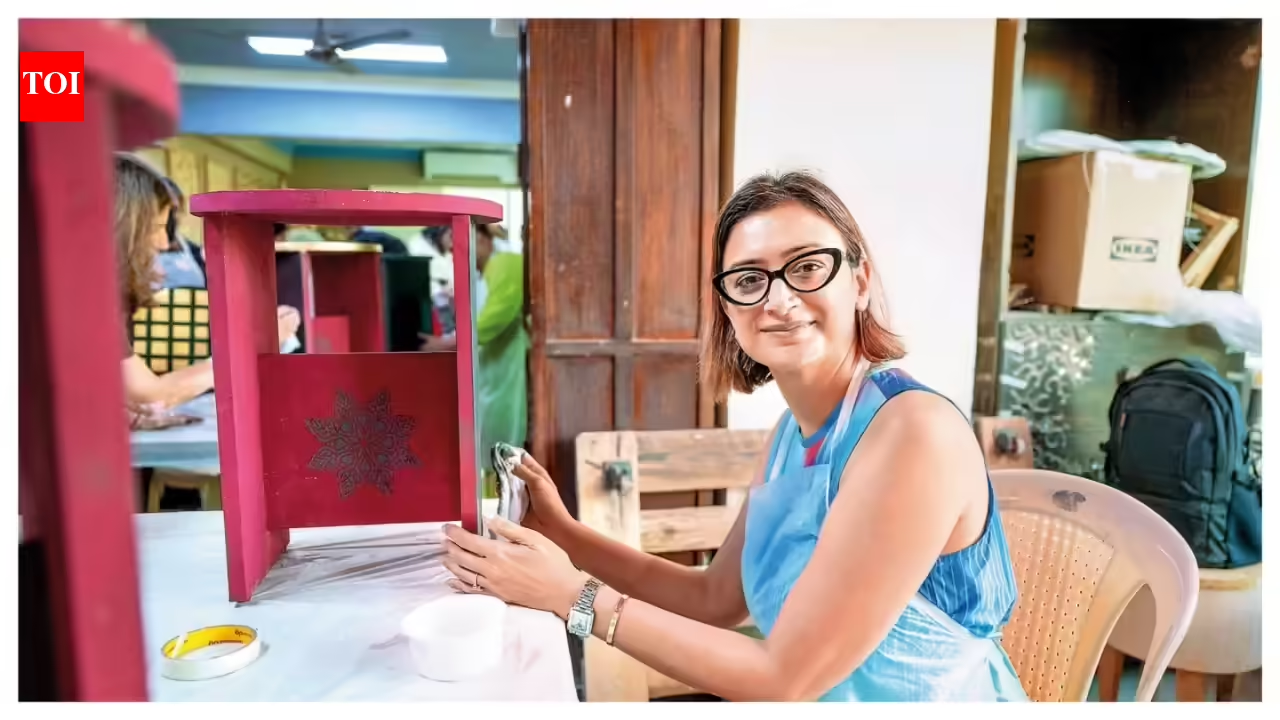
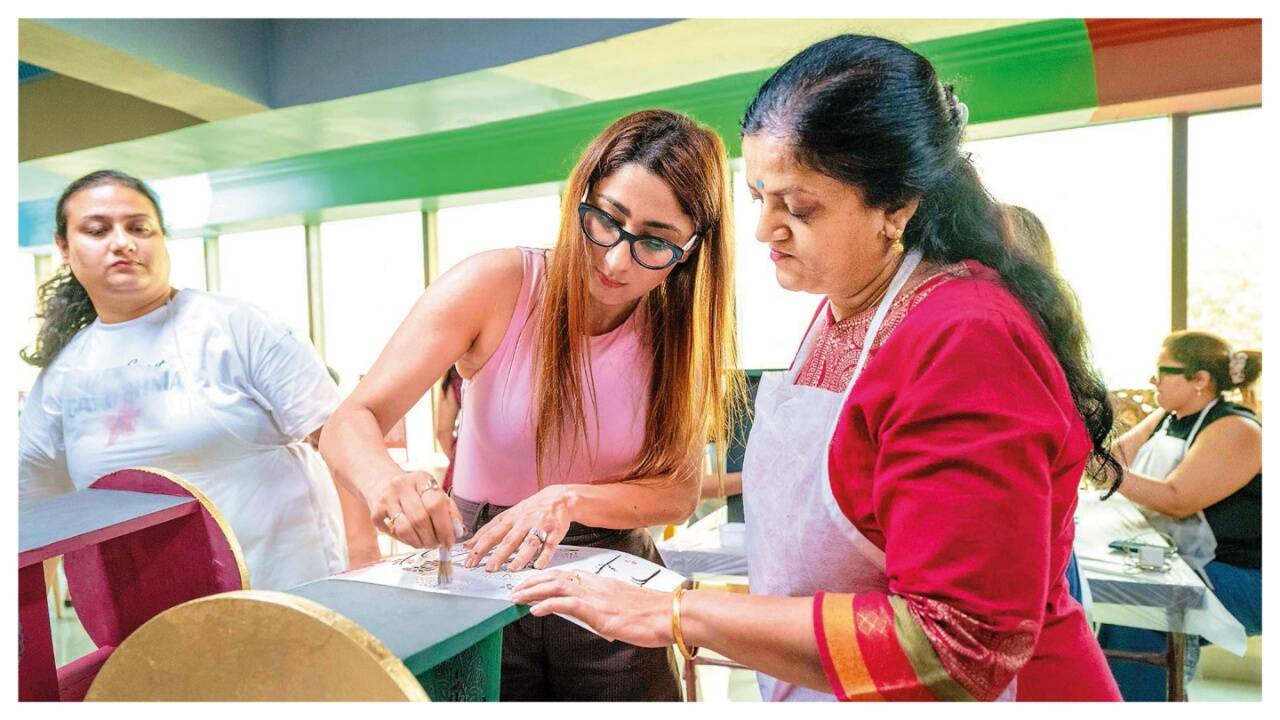
In a city that never stops moving, where the new perpetually elbows out the old, an unlikely counter-current is gathering momentum. From Tardeo to Thane, from Ghatkopar to Goregaon, Mumbaikars are pausing, to look more carefully at the furniture they already own, at the pieces gathering dust in corners or teetering on the edge of being discarded. And increasingly, they are choosing to revive them.Furniture upcycling, refurbishing, and recycling, once the domain of hobbyists and the thrifty, has gone decidedly mainstream in Mumbai. Day-long workshops are filling up weeks in advance. Instructors report waiting lists. And the participants are not who you might expect: they are lawyers, biotech researchers, finance professionals, actors, and designers, busy, urban, aspirational Mumbaikars who are making a deliberate choice to slow down and reimagine what they already have.

MixCollage-03-Jul-2026-11-43-AM-3233

MORE THAN A TREND: THE EMOTIONAL PULL OF OLD WOODAsk anyone who has attended a furniture upcycling workshop why they came, and you will almost always get an answer that goes beyond aesthetics or economics. Somewhere in the story is a piece of furniture with a history – a grandmother’s trunk, a grandfather’s writing desk, a mother-in-law’s steel almirah – and a reluctance to let it go.Mayushri Dalal, who works with a finance company in Lower Parel and commutes from Thane, puts it plainly. “I have a very old cupboard that has been passed on for generations. My grandmother’s grandmother owned it. And I want to hold on to this piece; the quality of wood is really great, despite it being more than 100 years old. I wanted to upcycle it, recreate a new look with it. I wanted to pass it on to my next generation.” For Mayushri, workshops are not just about learning a craft. They are about gaining the confidence and the knowledge to be a responsible custodian of something irreplaceable. “At workshops like these, you get to know the process, the step-by-step details of how to go about it,” she says.This emotional dimension is something that furniture makeover artist and educator, Aashna Monga, encounters regularly. Ashana, who holds a PhD in biotechnology and is one of the city’s advocates for furniture revival says, “I have people who come in with requests to restore older furniture that they have an emotional connection to, and breathe new life into old cupboards, chairs, trunks and vintage wooden pieces instead of discarding them.” Ashna herself has lived that experience. “My mother-in-law had a 53-year-old almirah, the common steel ones that were part of every home in those days. I refurbished that almirah and gave her a surprise. She loved it.” Ashna’s passion for sustainability deepened while working on her doctoral research. “People today are eco-conscious and, in their own way, want to do something about it. The fact is that there is an increasing number of residents who are turning to furniture revival. I have seen an increase in demand for such workshops.”

MixCollage-03-Jul-2026-11-48-AM-1221

THE WORKSHOP BOOM: LEARNING, BONDING, DESTRESSINGThe combination of skill-building, creativity, and community of these workshops is what keeps drawing people to these workshops in growing numbers. Ananya Gada from Ghatkopar is unequivocal about what they offer. “I love this form of painting. This is a passion that I have had for long. I feel DIY repainting sessions where you meet other people doing similar art works, feels very destressing and reassuring.”For Nanita Pant from Goregaon, it took a leap of faith just to walk through the door. “I don’t have an artistic bone in my body, so I assumed that a workshop about painting would not work for me,” she admits. “But after I came here, I realised this was going well. The instructors here are really helpful and encouraging.” That experience of discovering an unexpected capability, is part of what instructors like Mukesh Mandal work to create. “The easy-to-follow instructions bring out the creativity of participants,” he says. “The best thing about painting furniture is that mistakes are not prominent at all, and it always looks great when done.”NOT JUST RESTORATION: THE ART OF PERSONALISATIONWhile the romance of heritage furniture draws many to upcycling, not everyone arrives with a century-old heirloom in tow. For a growing segment of participants, the goal is something different: making the new feel uniquely theirs.Riya Kamwani from Mahim, who makes creative gift hampers and has a background in interior design, represents a refreshing perspective. “I am not someone who only wants to upcycle. In fact, I am someone who loves to buy new furniture and then personalise it and make it my own. Whatever furniture you buy from stores is usually common, but by painting it using various techniques that I have learnt at this workshop, I can make it unique. I want to revamp new furniture.” Kamwani’s approach speaks to a broader truth about why this movement has found such fertile ground in Mumbai: it is not about deprivation or making do with less. It is about self-expression, not just buying something, but transforming it into a reflection of who you are.Trisha Parikh, a freelance fashion designer from Tardeo, echoes this spirit. “This is my passion. While I don’t want to pursue it as a career, I am just doing it for my own home. I have upcycled many pieces and have converted stuff into usable furniture and home decor items.” And then there is Preeti Bhalerao, a lawyer from Wadala, who brings the same purposeful energy to the workshop that she brings to the courtroom. “I love art,” she says, “and I am looking forward to recreating my dining table using different techniques to upcycle furniture.WHEN CELEBRITIES PULL UP A CHAIRPerhaps one of the most telling signs that furniture upcycling has arrived culturally is who else is turning up at these workshops. Gauri Pradhan Tejwani, the well-known television actress, recently spent a full day at a furniture painting workshop, and says she has no regrets. “I have never really had the time to do this. Today I finally took time off from work, especially for this day-long workshop to learn about furniture painting. I just couldn’t resist.” For Gauri, the workshop was also a natural extension of a long creative life. “For the last two decades I have been painting on porcelain and I always look for workshops like these. I will try to use all the techniques that I learnt at this workshop.”


Man on phone falls into open manhole on Mumbai busy road during heavy rain, dies; 4 officials benched | Mumbai News

Man on phone falls into open manhole on Mumbai busy road during heavy rain, dies; 4 officials benched

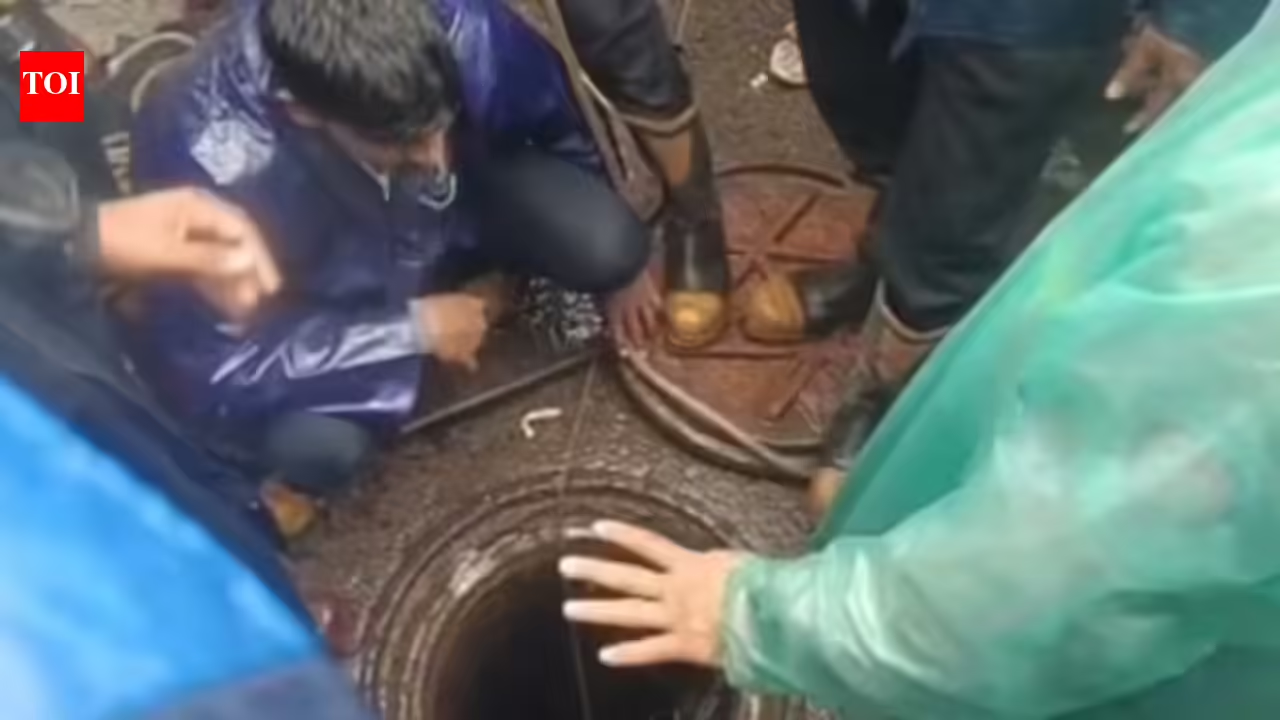
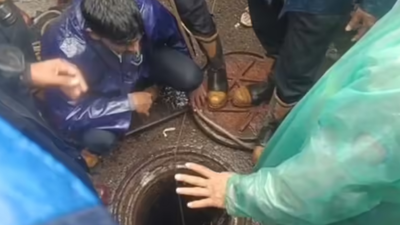
MUMBAI: Just two days after a tree collapse killed an 11-year-old schoolboy in Chembur, a 55-year-old man, Aslam Isak Shaikh, died after falling into an open manhole at Sakinaka amid the wet spell, prompting BMC commissioner Ashwini Bhide to order suspension of four civic officials — an assistant commissioner and three engineers.The incident occurred at around 11am Thursday when Shaikh, a daily wage labourer, was walking along Sakinaka’s Khairani Road while speaking on his mobile. Officials said BMC-appointed labourers had been working at the spot to place a protective grille around the open manhole. As Shaikh approached the manhole, workers reportedly shouted to alert him, but he lost his balance and fell.The labourers lowered a ladder into the manhole to rescue Shaikh, but could recover only his umbrella and slippers, civic officials said. The strong flow of water made it impossible to determine in which direction he had been swept away. After the fire brigade arrived, rescue personnel wearing breathing apparatus entered the sewer line through a nearby circular manhole. Shaikh was eventually pulled out and rushed to Rajawadi Hospital, where doctors declared him dead.Just a little over a week ago, a BMC staffer fell waistdeep into an open drain a few feet away from where mayor Ritu Tawde was standing during her inspection of a flooded area in King Circle.

Gangster Anmol Bishnoi seeks to ‘surrender’ in Salman Khan firing case | Mumbai News

Gangster Anmol Bishnoi seeks to 'surrender' in Salman Khan firing case
Anmol Bishnoi moves Mumbai court to surrender in Salman Khan firing case (File Photo).

MUMBAI: Almost eight months after he was deported from the US, alleged gangster Anmol Bishnoi, wanted accused in the attempted murder of actor Salman Khan on April 14, 2024 and currently lodged in Tihar jail in another case, has moved the special trial court, wanting to “surrender”.“He intends to voluntarily surrender before this court to face the ongoing trial and join the judicial proceedings in the interest of a fair trial and further in the interest of justice,” the plea submitted by his lawyers said. The plea sought his production virtually over video-conferencing in the case even as the prosecution has not sought his custody so far. The court has directed prosecution to submit its reply.After being deported in Nov last year, Bishnoi was taken into custody in a 2022 case involving an alleged nexus between criminal gangs in India and Babbar Khalsa International (BKI), a designated terrorist organisation, to raise funds, recruit youths and carry out terror strikes in the country.Bishnoi’s plea noted that charges were already framed against the accused on Nov 13, 2025, and prosecution witnesses have been examined in his absence. His plea further said as he is already under the physical control of the law in a separate matter and cannot present himself independently, he requests the court to issue a production warrant to Tihar jail superintendent.