


Koli cooking scales with cloud kitchens and big-ticket catering | Mumbai News
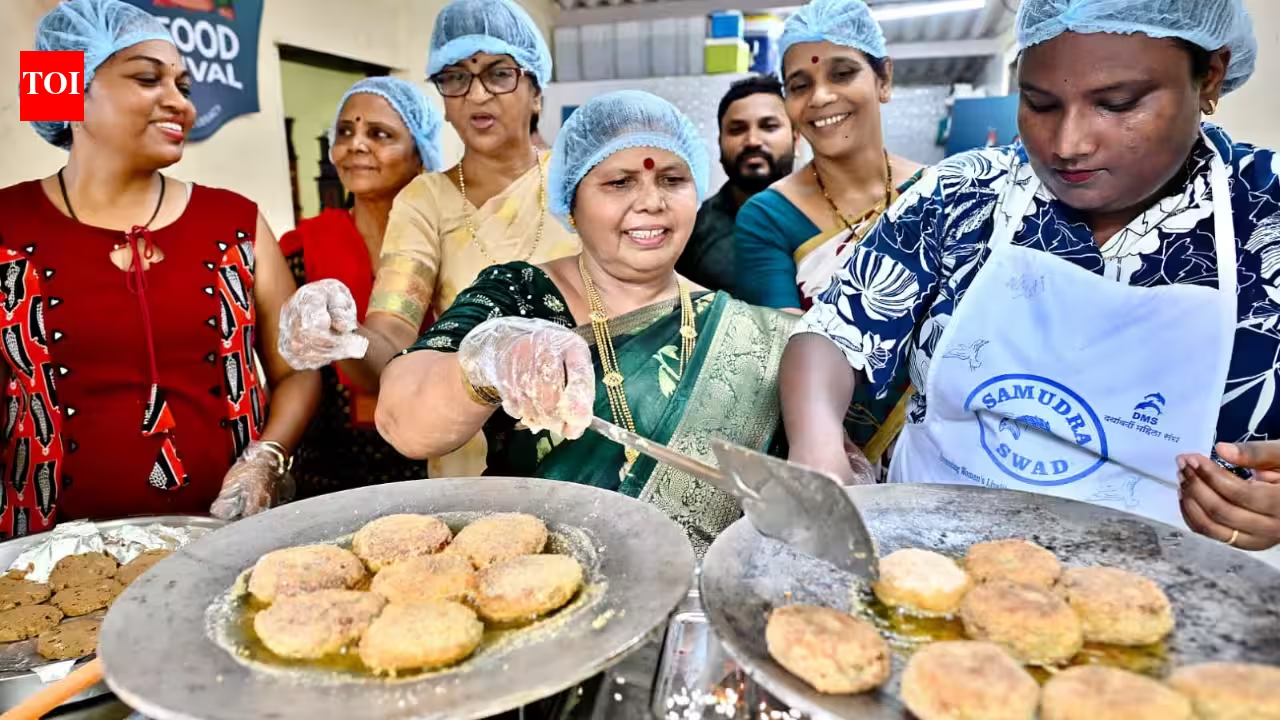
The tilapia, a freshwater fish, is far from home in a Koli kitchen. Yet on Friday, a batch of shapely tilapia patties made their way down the final stages of an assembly line — water, semolina, hot oil on the griddle — passing through Koli hands more accustomed to bangda and surmai. But customers wanted tilapia, and so tilapia it was.Metres away, the city goes about its business, oblivious to what’s cooking in Mahim Koliwada — its first cloud kitchen. It’s the newest venture from the hamlet’s home chefs, and the first permanent alternative to the neighbourhood’s seasonal seafood plaza, which runs only six to eight months a year.Set up last week by the Daryavardi Producer Company Limited (DPCL), the city’s largest women-led fish farmer producer organisation, the kitchen marks a milestone in the women’s entrepreneurial journey — from home kitchens to seafood festivals and seasonal plazas, and now full-fledged catering and delivery.In June, 12 Koli home chefs took a bus to Pune, carrying 40 kg of pomfret, surmai and prawns, commissioned to cater a 78th birthday party at Alkashray, a senior citizens’ resort in Wai, Satara. “It was my first ‘work trip’ outside Mumbai — a great experience,” says Pramila Peter of Dharavi Koliwada, who manages DPCL’s existing cloud kitchen there.The women arrived a day early, setting up base in the resort’s kitchen and live cooking stations on the grounds once celebrations began. “The theme was ‘Mee Marathi’, which made Koli cuisine an obvious choice, because we ourselves are from the Konkan,” says Mridula Musale, of the family that owns the resort. The theme ran through the clothes, games, décor, music — and the food.The menu ran the length of a shoreline: surmai fry, pomfret fry, prawn pakodas, fugias (“we hadn’t had these before,” Musale says), kelyache shikran (a banana-based dessert), modak, jawala chatpata, prawn biryani, bhakris, chapatis, veg pakodas, and chawli-vanga-batata bhaji.The home chefs cooked for 150 people. But they didn’t just cook — the Musales invited them to sell their masalas and pickles, and even join the celebrations, with the women teaching guests some of their signature dance moves. A cake was arranged for Geeta Gawde, one of DPCL’s directors, who was also celebrating her birthday that day.“The whole affair was beautiful; it felt more personal than professional,” says Musale. “The women have a big heart. It was like talking to your aunts.”For the chefs, the experience was heartwarming, but instructive too. Two tastings before the party taught them about customisation and client expectations — fish slices no thicker than a standard cell phone, for instance — and an important lesson in prep: prepare the sol kadhi closer to service.“Every large-scale event teaches us how to improve,” says Gawde, recalling losses from an earlier Pune college festival, where high-quality fish and prawns were sold in thalis priced at just Rs 150. “We took that lesson to Wai, where we first calculated the cost of ingredients, transport and labour, and only then set our price.”They’re also wising up to shifting market preferences. Bombay duck does well in Mumbai but not in Pune, where they have a growing customer base. “While our USP is authentic Koli cuisine, we go with popular dishes rather than lesser-known specialties like moongacha goda (a dessert made with whole moong) or moongri (made with rice flour, coconut water and jaggery),” Gawde says.That instinct for reading a market has been sharpened through formal training too. At the Central Institute of Fisheries Education, the women are learning product development, food safety and hygiene. Separately, last month, 30 Koli women completed a two-day crash course in project and event management at Google’s BKC office, part of its volunteer programme, with lessons in budgeting, pitching and expense tracking.Peter, who attended the Google workshop, put the lessons to work at the Dharavi kitchen. “DPCL paid the women Rs 100 an hour for chapatis, but output varied — some made them faster but earned the same. We then decided to pay a fixed wage per batch of 50, which improved output and performance,” she says.Unlike the newly launched Mahim kitchen, which will serve lunch and dinner meals of gravies, bhakri, rice and fried fish, the Dharavi centre focuses on lighter fare — poha, upma, puri bhaji, bhakris and rotis. The rotis and bhakris are sold to restaurants, while the meals go to the Maithili Samajik Trust, an NGO that feeds families of patients at Sion and Tata Memorial hospitals.DPCL’s collectives aren’t the only ones cashing in on the demand for Koli food. Independent home chefs are building parallel businesses too. “Entrepreneurship is in our blood,” says Vaishali Gajanand Balasathi, a Koli fisher from Khar Danda, who cooks to order for customers who want their catch done the Koli way, or don’t know how to cook it themselves — squid or crab, for instance. Orders she can’t manage go to her sister-in-law Akshata Chimbaikar, whose stuffed crab, lobster and coconut-stuffed prawns have drawn a loyal clientele for parties and weekend meals.Both independent chefs and collectives are driving the Koli culinary market, largely through referrals and WhatsApp marketing. Next month, DPCL customers will also be able to order meals through its app, Samudra Swad.“The women are ready to take on large orders; they’re just seeking better market integration,” says Amrita Sharma, a market consultant working with DPCL to study the business models of successful Mumbai home chefs outside the Koli community, so those lessons can be passed on to the Kolis. “One takeaway was that social media platforms like Instagram should be leveraged, rather than food delivery apps like Swiggy and Zomato, to build loyalty.”Building loyalty with customers shouldn’t be hard for the community. The Mahim cloud kitchen has already secured an order for 800 fish cutlets — even before their burners were rigged up and the fish netted.