


Is Thane’s 55,000cr infra push a cure for congestion or new chaos? | Mumbai News
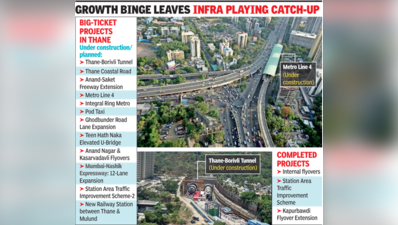
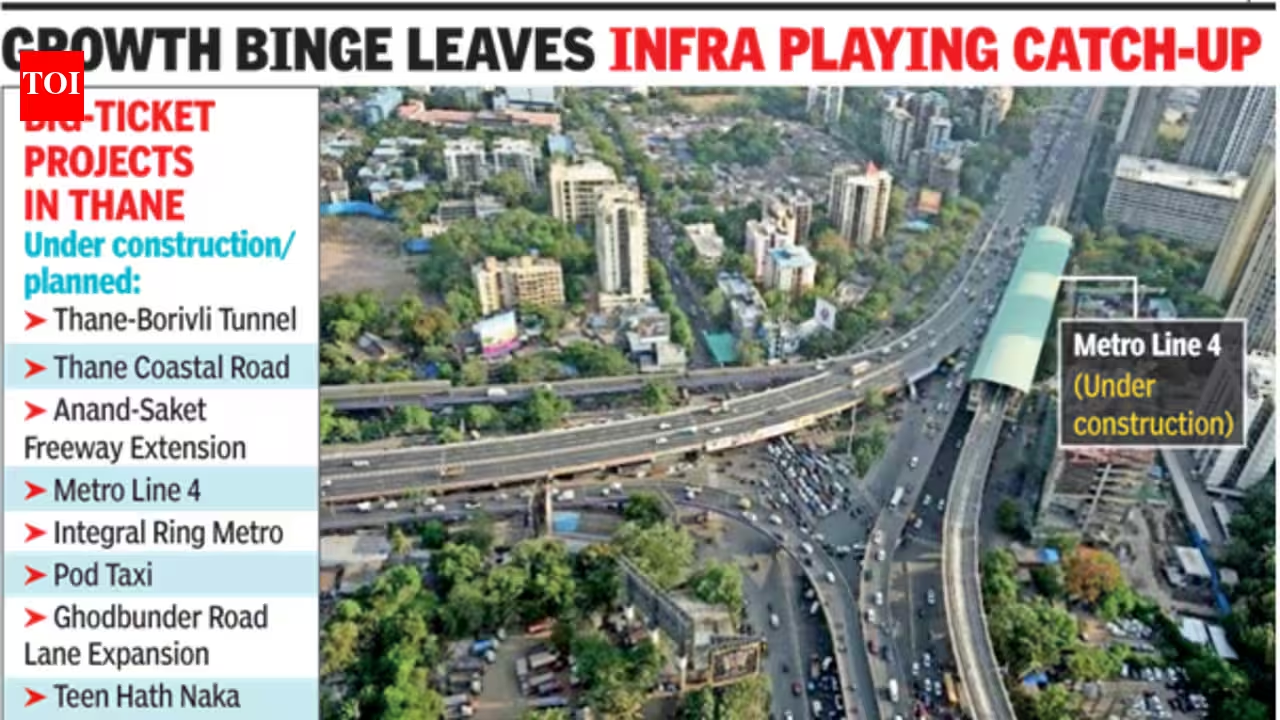
Thane’s rapid shift from a low-rise, green ‘City of Lakes’ to a dense real estate and infrastructure hotspot has outpaced the ability of civic systems to keep up. A massive infrastructure programme valued at about Rs 55,000 crore is now underway to address problems created by years of fast growth, but residents and experts say the cure is generating fresh disruption. With multiple big-ticket projects running simultaneously, many fear the city’s original character is being replaced by an increasingly concrete-heavy landscape that further strains daily life.For decades, Thane’s urban footprint and social geography were clearly defined. The city limits largely ended near the Eastern Express Highway, with middle-income settlements within the traditional municipal belt. Beyond that lay large industrial zones and labour settlements, while the Ghodbunder stretch remained home to native community clusters and pockets of older, semi-rural life. That balance began to change sharply in the early 2000s after the Ghodbunder Road upgrade during the tenure of then municipal commissioner T Chandrashekhar. Around the same period, a state policy that opened up substantial industrial land parcels for residential development accelerated construction activity, said a former town development official.Long-time residents recall the speed of the transformation. Former deputy mayor Naresh Manera said clusters of gaothans that once defined the city’s quieter neighbourhoods were quickly overtaken by high-rise projects as developers moved in. “The visual change was dramatic and immediate, with open vistas disappearing as towers filled what used to be open space,” said activist Dr Mahesh Bedekar. “Where the skyline once allowed long views, sightlines have narrowed to a few metres in many areas because of the scale and intensity of building activity.”Real estate professionals attribute Thane’s boom to its location and connectivity. Positioned close to Mumbai, Navi Mumbai, Bhiwandi and routes leading towards northern Maharashtra, Thane increasingly became an alternative for buyers priced out of Mumbai or seeking more space and comparatively affordable options. Realtors said that as commuting networks improved and new residential stock entered the market, the city began attracting investors and end users from farther suburbs, gradually shedding its earlier reputation as merely a dormitory town.But experts and residents argue that the city expanded vertically and outward without the parallel development of essential civic infrastructure. Saket resident Dayanand Nene said traffic jams, bottlenecks and shrinking road space are routine. BJP MLA Sanjay Kelkar said Thane’s infrastructure has not been upgraded to match what he described as a nearly five-fold jump in population. “In Ghodbunder, among the city’s more affluent and highest tax-paying areas, some residents spend lakhs each year on tanker water despite also paying EMIs and property taxes. It highlights how basic utilities have lagged behind real estate expansion.”Facing criticism, the state govt and the Thane Municipal Corporation have cleared and pushed a sweeping list of infrastructure works over recent years. These include metro corridors, flyovers, elevated roads, coastal road links and allied projects, collectively estimated at Rs 55,000 crore. Yet residents and opposition political leaders say the scale and simultaneity of execution has created a second wave of stress. “The irony is that infrastructure meant to reduce congestion is itself intensifying congestion during construction,” said NCP-SP Thane president Manoj Pradhan. Commuters echo the frustration. Frequent motorist Satyajit Shah said the city feels perpetually under construction. “Several projects, like the long-pending Kapurbawdi flyover extension, have been delayed and have not produced noticeable relief.”Deputy CM Eknath Shinde, widely credited with pushing and approving many of the ongoing projects, has defended the works as necessary to address accumulated pressure and prepare Thane for future demand.But project pace and execution have attracted scrutiny from the judiciary and urban planning specialists. Former Supreme Court judge Justice Abhay Oka recently questioned why residents were being excluded from decision-making and consultation when large infrastructure works were planned and implemented. Urban town planner Sulakshana Mahajan said, “Road widening and flyovers alone cannot solve systemic mobility problems. Thane needs a long-term mobility strategy that integrates land use… and environmental safeguards, rather than relying primarily on road-expansion solutions.”Green activist Rohit Joshi said Thane’s ‘City of Lakes’ label was not just a slogan but a defining feature that differentiated it from neighbouring urban centres. He said the city has already lost significant natural assets during its expansion and called for urgent conservation of what remains.