


Explained: The 12 reasons why Mumbai floods year after year | Mumbai News
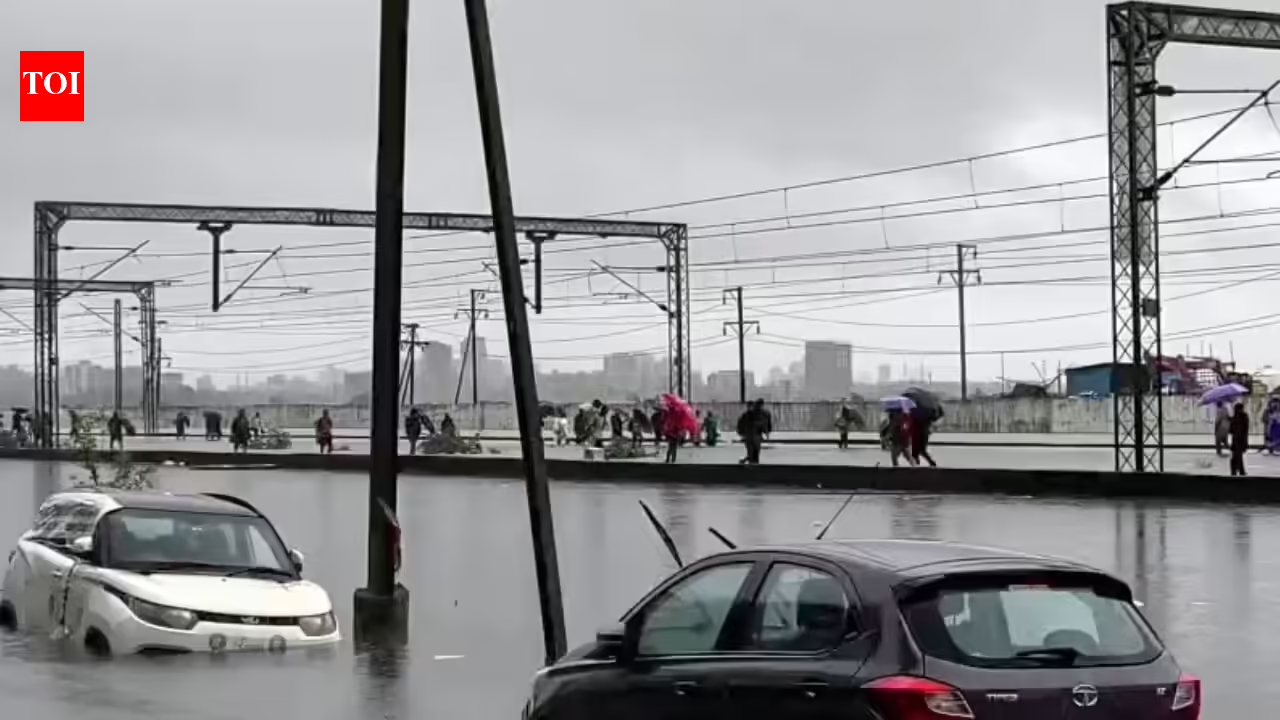
MUMBAI: Mumbai’s roads get flooded, train services get disrupted, traffic snarls and daily life come to a standstill every monsoon season. Heavy rain is the immediate trigger, but experts say it’s a combination of natural and man-made causes behind the city’s annual flooding.Because of the increased frequency of extreme rainfall events, which often take place at the same time as high tides, stormwater is less able to get out to sea. The city’s vulnerability is compounded by its low-lying geography, ageing drainage network, stressed rivers and nullahs, shrinking wetlands and mangroves and rapid urbanisation. Blocked drains, ongoing infrastructure projects and long periods of rain with strong winds are also causing widespread disruption.
Localized flooding alone can cripple Mumbai’s transport network and affect millions of commuters. This is made more difficult by the expected rise in the number of heavy rainfall events due to climate change. Here we examine 12 reasons why Mumbai continues to flood in the monsoon season and why creating a more flood-resilient city will take long-term planning, stronger infrastructure and better environmental management.1. Greater incidence of extreme rainfallMumbai has always experienced heavy monsoon rains but the intensity of rainfall is increasing over shorter durations, experts say. Even well-functioning infrastructure is hard pressed to cope when 150–300 mm falls within a few hours.2. Mumbai is a coastal city and is low-lying.Much of Mumbai is only a few meters above sea level. These low-lying areas are vulnerable to water flow and localities such as Hindmata, Sion, Kurla and Milan Subway are particularly vulnerable.3. High tides stop rainwater from draining into the seaThe storm water drains of Mumbai finally discharge into the Arabian Sea. During high tide this seawater slows or stops the outflow. When it rains hard at high tide that water stays in the city for hours.
4. Stormwater drains have a limited capacity to carryAlthough the drainage network has been upgraded over the years, many areas of the city still receive rainfall that exceeds the rate at which the system can evacuate. When the drains are full, water begins to collect on the roads.5. Rivers and natural channels under pressureImportant flood channels are Mithi River, Dahisar River, Poisar River, Oshiwara River and many nullahs. Siltation, encroachments and waste reduce their capacity to carry huge volumes of rainwater during peak monsoon.6. Wetlands and mangrove lossMangroves and wetlands once absorbed excess water and slowed runoff, acting as natural flood buffers. As urbanisation has increased, many of these natural protections have been reduced or fragmented, increasing flood risk.7. The fast growth of cities has put more pressureMumbai today has many more people, vehicles and buildings than it did a few decades ago. Infrastructure upgrades often have not kept pace with this growth, leaving many systems working under constant pressure during heavy rains.
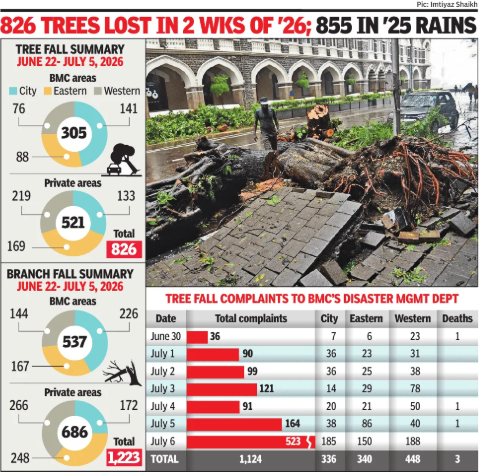
8. Blocked drains – a constant headacheStormwater drains are often clogged with plastic waste, construction debris, silt and household garbage. A modern drainage system will be useless if water can not get into it or flow through it.9. Major infrastructure projects lead to short-term headachesMetro construction, bridge works, road widening, redevelopment and utility projects are common for excavation and traffic diversions. Poor temporary water management practices during construction can change local drainage patterns.10. Trees can fall victim to high winds, and prolonged rainContinuous days of rain soften the soil, which decreases root stability. High winds could bring down trees, blocking roads, damaging vehicles and cutting power supplies.
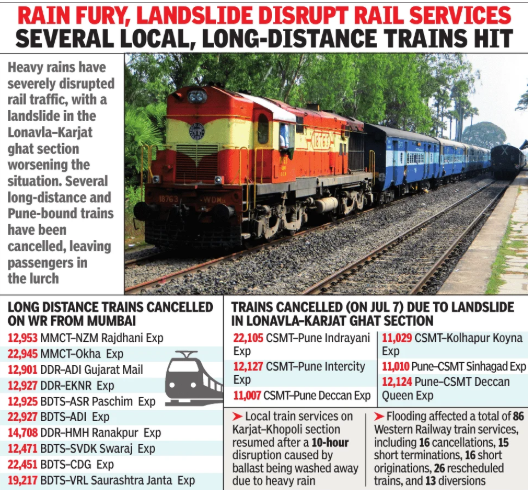
11. Mumbai’s transport system cannot afford to be disruptedThe city is largely dependent on suburban railways and a few major arterial roads. Flooding at just a few critical spots can quickly affect trains, buses, taxis and private cars, creating cascading delays across the metropolitan region.12. Climate change increases uncertaintyMore and more scientists are linking global warming to the increasing frequency of extreme rainfall events along India’s west coast. Mumbai’s flood management may become more difficult in the coming decades with rising sea levels and changing weather patterns.