


Five years on, Father Stan Swamy’s legacy remains | Mumbai News
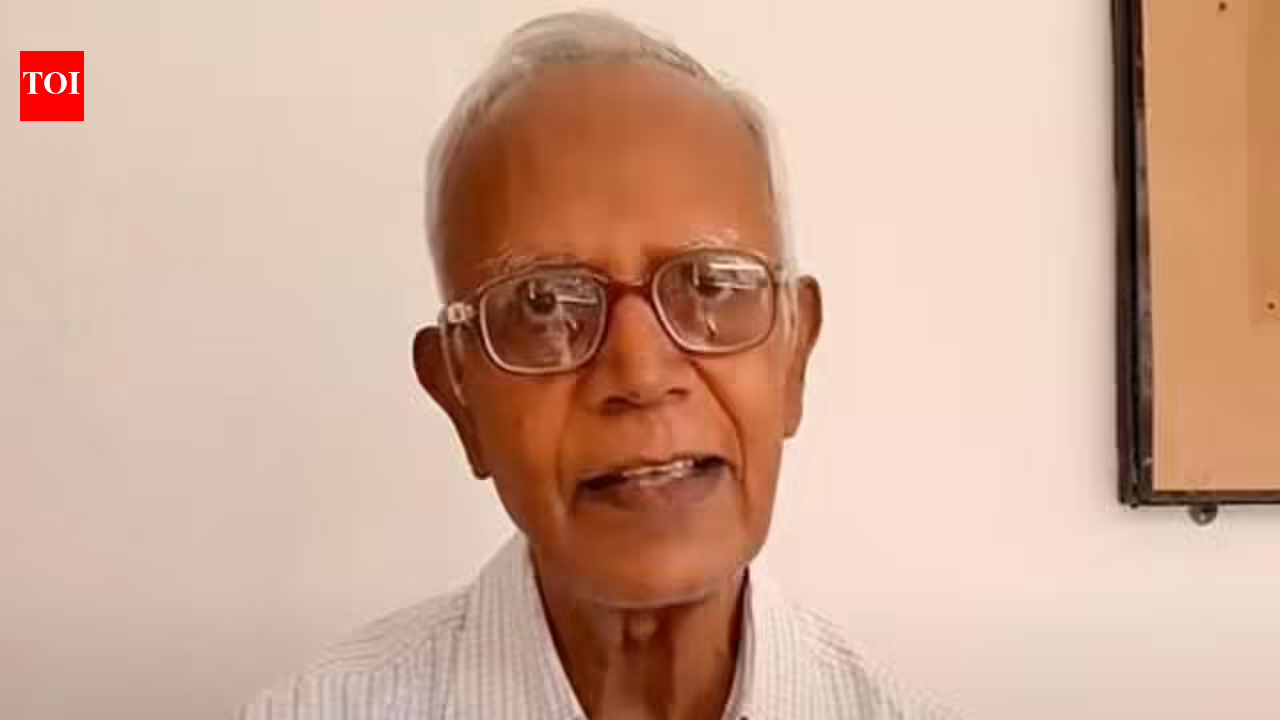
Mumbai: Five years after Father Stan Swamy died at a Mumbai hospital while in judicial custody, a memorial for him at a church in Bandra on Sunday saw civil rights activists trace his activism and recall his days in custody.The 84-year-old Jesuit priest and Adivasi rights activist died on July 5, 2021, nine months after the NIA arrested him in the Elgar Parishad case under the anti-terror law, the Unlawful Activities (Prevention) Act (UAPA).Speaking at the meeting, advocate Mihir Desai said that fake police encounters are not only when police fire on an unarmed person, but similar trauma may occur when an old person with fragile health, unlikely to survive prolonged incarceration, gets arrested on allegedly false charges.Activist Irfan Engineer said Father Swamy was a rock-like obstruction to the design of crony capitalism in exploiting the forest resources and mining industry, especially in tribal areas where he made a name for himself as a staunch upholder of human rights. “For super profits and exploitation of natural resources, when indigenous people’s constitutional rights had to be trampled upon, Father Swamy would come to their defence,” Engineer said. Teesta Setalvad and Shakir Shaikh recalled the life and struggle of Father Swamy.The memorial meeting was organised by groups of NGOs led by Bombay Catholic Sabha and included Centre for Study of Society and Secularism, People’s Union for Civil Liberties, Mumbai for Peace and Christian Development Association. Activists were in full attendance despite heavy rains.Advocate Susan Abraham, who represents several of his co-accused, recalled his sole court appearance in Oct 2020, when he rose, hands trembling from Parkinson’s, and told the judge, “I know nothing about the Elgar Parishad. I have never even been to Pune.” His bail plea was denied regardless.Shaikh of the APCR described a man with foreign degrees who could have lived in comfort, but instead moved 2,000 km from Tamil Nadu to rural Jharkhand, lived in his students’ homes and learned their language before taking up their cause.