Century-old Edwardian bungalow on Pali Hill to make way for tower | Mumbai News

Century-old Edwardian bungalow on Pali Hill to make way for tower
Franklin House, a 1,459 sq m property on St Auxilium Road, was built in 1920

Mumbai: Franklin House, an Edwardian-style bungalow built in 1920, is the latest among heritage properties in Bandra (W) that’s set to disappear. The 1,459 sq m property on St Auxilium Road in the upscale residential enclave of Pali Hill has been bought by Aspect Realty, which has emerged as a major player in Mumbai’s realty market.Mohit Kamboj, a former BJP leader, is group CEO of Aspect Global Ventures, which controls the property following a resolution plan approved by the National Company Law Tribunal. The property was under a Bombay high court-appointed court receiver for several decades due to a dispute within the original owners, the Pereira family.Market sources said the land is valued at around Rs 170 crore. Franklin House belonged to Augustine Franklin Pereira, who died in 1942 and bequeathed it to his wife Joanna, sons Dominic and Joseph and daughters Genevieve Beatrice and Flossy Rose. Son Joseph died in 1996 leaving behind six heirs including his wife Mildred, three sons, Dougal, Horace and Reynolds, and two daughters Pamela and Honora. In 1989, Dominic Pereira filed a suit in the high court against his nephews Dougal, Horace and Reynolds, and Flossy, over the property. Subsequently, the court appointed a receiver to take charge of it. A few years later, developers Samir Bhojwani and Suresh Raheja (Papeyon Developers) bought Dougal Pereira’s share for Rs 1.80 crore.Two months ago, Vishwanath Realty LLP, an associate entity of Kamboj’s Aspect Group, purchased Papeyon’s one-sixth stake in the plot for Rs 15 crore. Two tenants are believed to have been paid Rs 30 crore each to vacate.Kamboj, who is currently in the US, told TOI: “We have settled all the issues connected with this property and plan to build a high-end tower.”

4 waste bins must in Thane housing societies from Oct | Mumbai News

4 waste bins must in Thane housing societies from Oct

Thane: Four-way waste segregation will be made mandatory for all housing societies and bulk waste generators in Thane under the Centre’s Solid Waste Management (SWM) Rules, 2026. A phased rollout of the campaign, titled ‘Four Bin, Thane Clean’, will begin in Oct after the policy is finalised. Currently, there is a two-bin system in place.Households and commercial establishments will have to segregate waste at source into four colour-coded bins before handing it over to civic workers—green for wet waste, blue for dry, red for sanitary waste, and black for toxic and e-waste, including batteries and bulbs.“The move will streamline waste processing, improve recycling and significantly reduce the volume of garbage reaching dumping grounds,” said Madhukar Bodke, deputy municipal commissioner (solid waste management).The campaign was launched by Thane mayor Sharmila Pimpalkar. The new norms were outlined at a workshop to familiarise civic staff with the updated rules and legal provisions on scientific waste management.The announcement, however, sparked concerns among residents of older housing societies, who said finding space for four separate bins will be a major challenge.Health officer Dr Rani Shinde said SWM Rules, 2026, mandate segregation at source, door-to-door collection and scientific processing of waste, while banning open dumping and burning. The rules also provide for user charges, penalties for violations, grievance redressal mechanisms and safeguards for sanitation workers.The regulations apply to all urban local bodies, govt and private institutions, residential and commercial establishments, industrial areas, special economic zones, airports, railway stations and ports.Large establishments with a built-up area of at least 20,000sqm, daily water consumption exceeding 40,000 litres or waste generation above 100kg a day must register as bulk waste generators with Central Pollution Control Board and process wet waste on their premises.

BMC to transfer civic employees who deliberately decline promotions | Mumbai News

BMC to transfer civic employees who deliberately decline promotions
According to the revised BMC circular, the employee will be required to take charge of the new post within 15 days from the date of acceptance of the promotion order

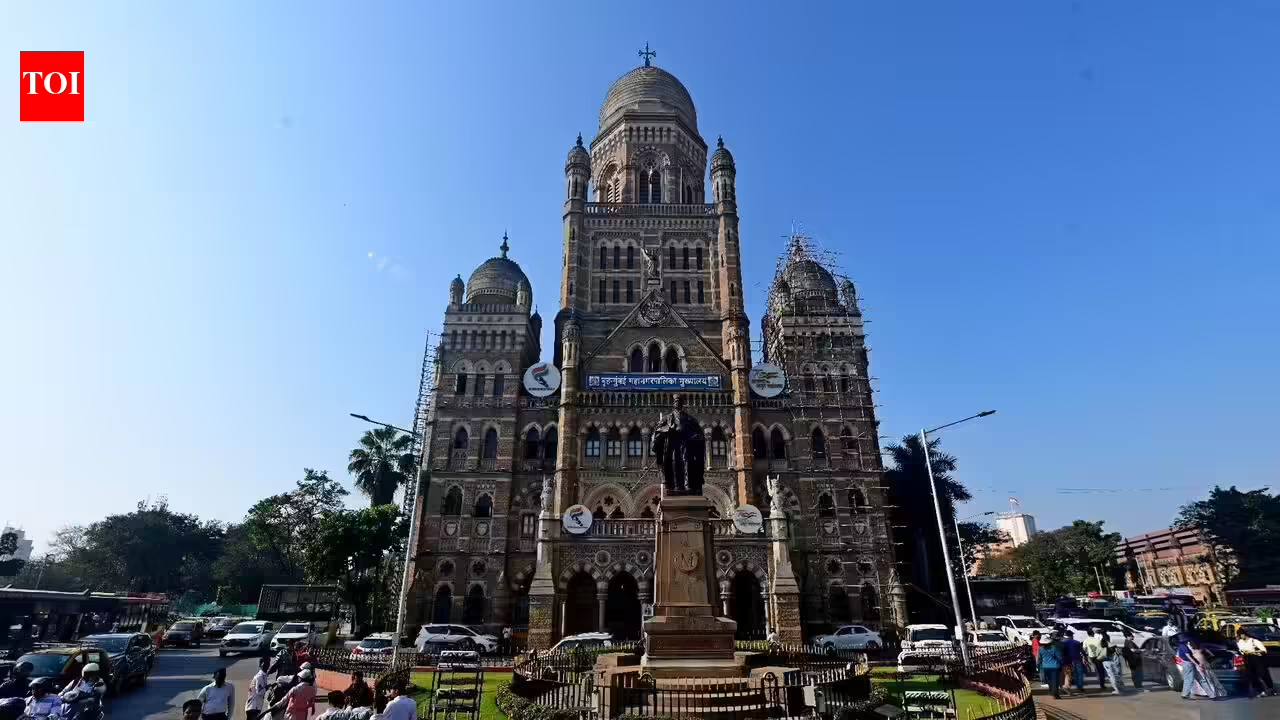
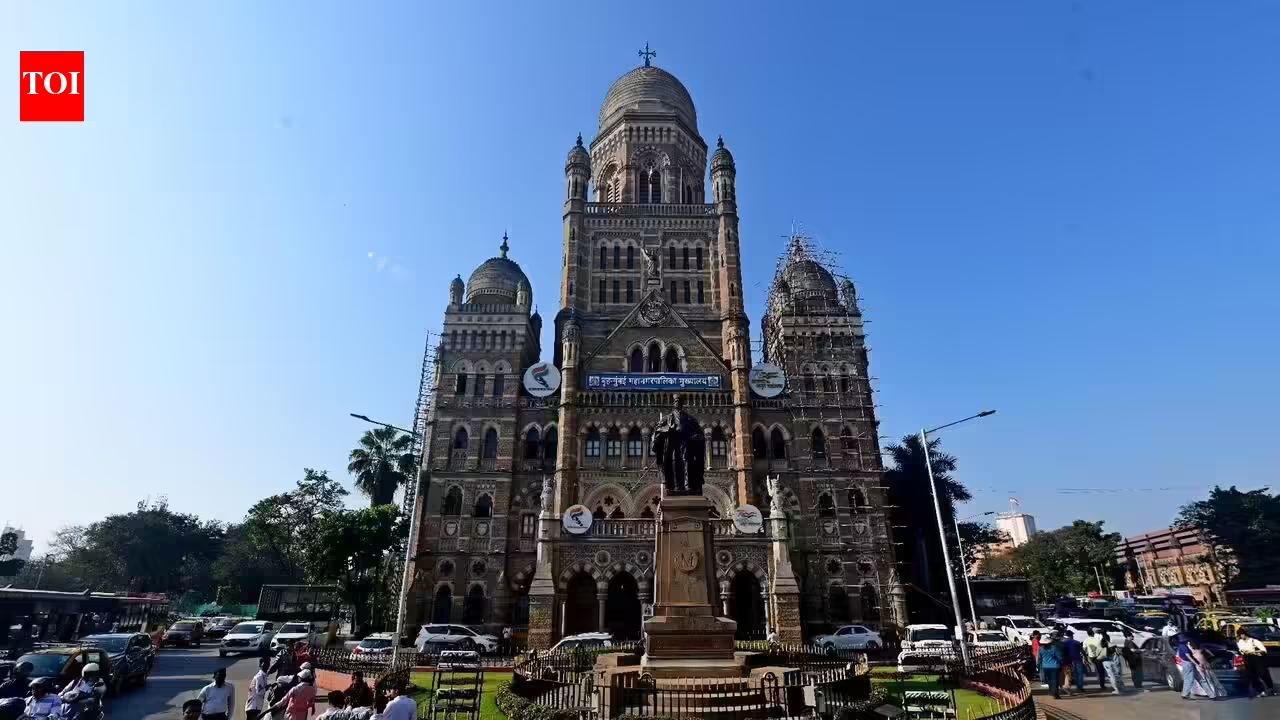
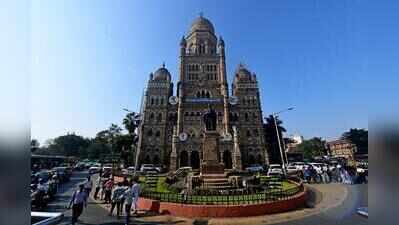
Mumbai: Following a demand for a probe into civic engineers declining promotions, the BMC has issued a revised circular stating that if it is found that an employee refused to accept a promotion with the intention of avoiding a transfer to a particular department, office, or post, he/she will be transferred to another department or office after completion of the departmental promotion committee’s proceedings.At least two executive engineers and eight assistant engineers had recently declined promotions to the posts of deputy chief engineer and executive engineer, respectively, following which BMC opposition leaders sought a probe into their decision. Following the demand for an inquiry, the civic administration on Monday issued an order revising its 1992 circular on refusal of promotions by employees.According to the revised circular, the promotion order will be sent to the employee concerned in writing as well as to his official email address. The employee will be required to take charge of the new post within 15 days from the date of acceptance of the promotion order. It will also be mandatory for the head of the department to relieve the employee within a maximum of seven days. Even if the head of the department does not issue a relieving order, the employee must join the new post without waiting for it as per the deadline. If the employee fails to take charge of the new post within 15 days from the date of acceptance of the promotion order, he shall be deemed to have refused the promotion.Congress group leader Ashraf Azmi, who had sought an inquiry into the circumstances surrounding the refusal of promotions, said the revised circular was a positive step on the part of the municipal commissioner and would provide equal opportunity to all engineers. Azmi demanded that the administration should not allow engineers who have retained their posts despite being promoted, allegedly due to vested interests, to continue in those posts.Monday’s circular also stated that an employee who refuses a promotion shall be disqualified from promotion for a period of two years and will not be entitled to seniority during that period. A junior employee who is promoted during the period of disqualification will be considered senior to the employee who refused the promotion.Further, the promotion claim of an employee who has been disqualified from promotion for a period of two years for refusing a promotion will not be automatically restored unless the employee submits a written request, subject to the prevailing rules and the recommendation of the departmental promotion committee.

UBT Sena may lose claim over council LoP post | Mumbai News

UBT Sena may lose claim over council LoP post

Chaitanya.MarpakwarMumbai: With Sachin Ahir’s exit, the Shiv Sena (UBT) is likely to lose its claim over the leader of opposition’s (LoP) post in the legislative council. The Sena (UBT) is left with only 5 MLCs now, and the Congress too has 5 MLCs in the 78-member council.Political observers said it is unlikely that the council will get an LoP in the near future. The post in the council has been vacant since August 2025, when Shiv Sena (UBT)’s MLC Ambadas Danve retired. Danve has now been re-elected to the council, but a decision on the LoP hasn’t been taken yet. The state is now without an LoP in both houses of the legislature. This has happened for the first time in several years, senior officials said.An LoP in the legislative assembly hasn’t been appointed by assembly Speaker Rahul Narwekar since Dec 2024, despite the Sena (UBT) giving its MLA Bhaskar Jadhav’s name, citing technical reasons as Sena (UBT) doesn’t have MLAs comprising 10% of the total strength of the assembly. Narwekar has maintained that the rules are being studied to see if the LoP’s post can be given if a party has less than 10% MLAs.A senior official said, “The LoP is a constitutional post, and he or she has cabinet rank. The LoP is a key functionary in the working of the legislature and is also part of several statutory committees. It is important to have one especially in these crucial times when the state is staring at a drought and has a debt burden.”

States’ liquor jackpot: UP leads collections, Haryana sees record jump, Maharashtra remains among top revenue earners | Mumbai News

States’ liquor jackpot: UP leads collections, Haryana sees record jump, Maharashtra remains among top revenue earners
Alcohol meant for human consumption remains outside the ambit of the Goods and Services Tax (GST), giving states complete authority to levy and revise taxes.

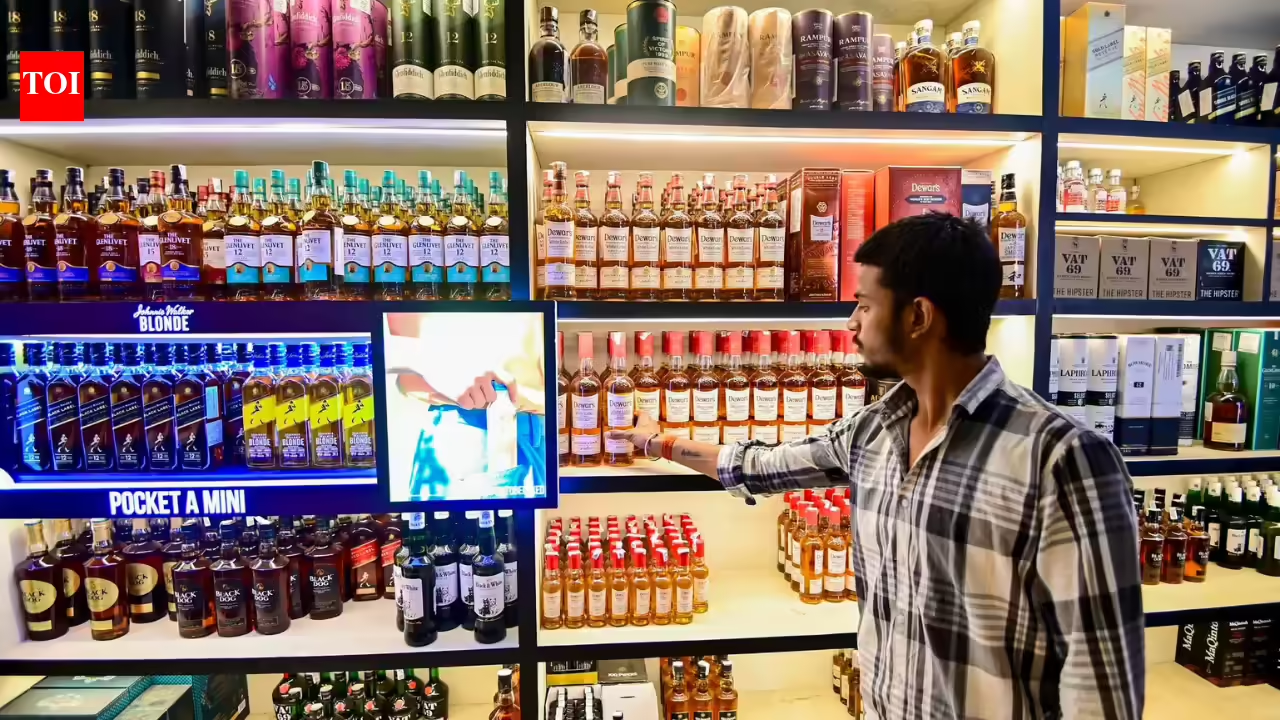
MUMBAI: A sharp rise in liquor sales, coupled with higher excise duties and price revisions by manufacturers, has delivered a windfall to state governments, with some states recording an 82% jump in excise collections in the first two months of FY27.While Uttar Pradesh led the country in absolute collections, Maharashtra retained its position among the biggest contributors to state excise revenues, highlighting the growing importance of liquor taxation in funding state finances.Monthly indicators compiled by the Comptroller and Auditor General (CAG) show that Uttar Pradesh collected more than Rs 10,600 crore in excise revenue during April-May FY27, nearly 9% higher than the corresponding period last year. Haryana posted the fastest growth, with collections surging over 82% to more than Rs 2,300 crore. Karnataka ranked second in absolute collections during the period, while Kerala recorded the second-highest growth rate.For Maharashtra, the latest data reinforces the state’s position as one of India’s largest liquor markets. According to the CAG’s State Finances 2024-25 report, Maharashtra collected Rs 25,466 crore in state excise duty in FY25, making it the third-highest excise-earning state after Uttar Pradesh (Rs 52,575 crore) and Karnataka (Rs 35,784 crore). It was followed by Andhra Pradesh (Rs 19,882 crore), West Bengal (Rs 19,521 crore) and Telangana (Rs 18,604 crore).Industry executives attribute the latest surge in revenues to a combination of factors, including an estimated 14% increase in liquor consumption, higher excise rates imposed by several state governments, and increases in manufacturers’ base prices, all of which have boosted tax collections.Alcohol meant for human consumption remains outside the ambit of the Goods and Services Tax (GST), giving states complete authority to levy and revise taxes. Apart from state excise duty, governments also impose value-added tax (VAT) and various cesses. These taxes may either be levied as a percentage of the product value or as a fixed amount per litre, allowing states considerable flexibility in designing their tax regimes.Several states have also begun tweaking their taxation structures. Karnataka recently became the first state to introduce an alcohol-in-beverage (AIB)-based excise system, while Kerala has proposed lower sales tax on low-alcohol beverages as part of efforts to reshape consumption patterns.The CAG report highlights the growing dependence of states on liquor revenues. State excise duty accounted for 13.5% of the combined States’ Own Tax Revenue (SOTR) in FY25, making it the second-largest source of tax revenue after state GST in many states.Over the past decade, excise collections across all states have risen by 173%, reflecting both higher consumption and repeated tax revisions. Telangana registered the steepest increase, with collections growing 388% between FY16 and FY25, followed by West Bengal (386%) and Andhra Pradesh (353%).The data also illustrates how policy decisions can dramatically alter state revenues. Bihar’s excise collections collapsed after the introduction of total prohibition in 2016, falling from Rs 3,142 crore in FY16 to just Rs 0.41 crore in FY25. Mizoram too witnessed a sharp decline in collections following the implementation of its prohibition law.For Maharashtra, where liquor excise remains a key contributor to the state’s own tax revenue, sustained growth in collections is expected to support government finances. However, economists note that while higher excise receipts strengthen fiscal resources, states must also balance revenue considerations with public health objectives as alcohol consumption continues to rise.

Mumbai’s civic complaints jump 59% in a decade; pollution tops citizens’ concerns: Praja report | Mumbai News

Mumbai’s civic complaints jump 59% in a decade; pollution tops citizens’ concerns: Praja report
The BMC’s complaint redressal mechanism has become significantly faster, according to Praja Foundation’s latest assessment of Mumbai’s civic services

Mumbai: Citizens’ complaints to the BMC have surged by nearly 60% over the past decade, with pollution-related grievances registering a major 531% increase, even as the civic body’s complaint redressal mechanism has become significantly faster, according to Praja Foundation’s latest assessment of Mumbai’s civic services.The report, titled ‘Status of Civic Services, Environmental and Climate Issues in Mumbai 2026’, released on Tuesday in collaboration with the BMC, found that civic complaints increased from 81,555 in 2016 to over 1.3 lakh in 2025. Besides pollution, complaints related to solid waste management rose by 281%, while those concerning water supply and storm-water drainage increased by 96% and 88%, respectively.The report attributes the rise partly to growing public awareness and increased use of digital grievance platforms, but states that it also reflects persistent shortcomings in the civic service delivery.Despite the surge in complaints, the BMC has become quicker at resolving them. The average complaint resolution time dropped from 48 days in 2021 to 30 days in 2025, while the complaint closure rate improved from 86% in 2023 to 92% in 2025. In the solid waste management department, the average resolution time fell sharply from 40 days to just eight days during the same period.The report, however, says the city’s environmental performance continues to lag behind. Mumbai still sends around 6,300 metric tonnes of waste to landfills every day, despite its waste reduction goals. Decentralised waste processing remains weak, with only 347 of the city’s 2,749 bulk-waste generator housing societies — just 13% — processing waste at source. The remaining 87% are non-compliant.The report also notes that despite applying for a three-star Garbage-Free City certification under Swachh Survekshan 2024-25, Mumbai failed to secure even a one-star rating. It achieved only 40% of the benchmark for door-to-door waste collection, 31% for source segregation, 62% for wet waste processing, and just 16% for legacy dumpsite remediation.Environmental indicators remain equally worrying. The report found Mithi River’s average Biological Oxygen Demand (BOD) at 17 mg/litre, nearly six times the prescribed limit of below 3 mg/litre. Faecal coliform levels stood at 9,200 MPN per 100 ml against the permissible limit of below 100 MPN, indicating severe sewage contamination.Praja Foundation also flagged gaps in Mumbai’s climate governance, citing inadequate monitoring of climate action indicators, poor compliance of several sewage treatment plants with pollution norms, and the absence of annual public reporting on climate targets. It recommended integrating climate indicators into the BMC’s statutory Environment Status Report to improve transparency and accountability. “The next stage of Mumbai’s development requires credible evidence in the hands of citizens, elected representatives, and administrators so that decisions are guided by facts rather than assumptions,” said Nitai Mehta, founder of Praja Foundation.The report assumes significance as Mumbai has an elected municipal corporation again after nearly four years of administrator rule. Praja Foundation said the return of elected corporators presents an opportunity to strengthen accountability and improve citizen-centric governance. “Civic participation should not end with voting. It should continue through reporting local issues, engaging with ward representatives and using public data to hold institutions accountable,” said Milind Mhaske, CEO, Praja Foundation.Key Findings of the Praja Foundation Report* Citizen complaints up 59%: 81,555 in 2016 ➜ 1,30,066 in 2025* Biggest rise in complaints: Pollution: 531%; Solid Waste Management: 281%, Water Supply: 96%, Storm Water Drainage: 88%* BMC’s average complaint resolution time: 48 days in 2021 ➜ 30 days 2025* Complaint closure rate: 86% in 2023 ➜ 92% in 2025* Average resolution time in SWM complaints: 40 days in 2023 ➜ 8 days in 2025* Waste management concerns: 6,300 MT of waste still sent to landfills daily; only 13% of bulk-waste generator housing societies process waste at source, 87% remain non-compliant* Garbage-free City: Despite applying for a 3-Star certification, Mumbai failed to secure even a 1-Star rating* Mithi River remains polluted: BOD: 17 mg/litre (Norm: * Climate governance gaps: Poor monitoring of climate targets; several STPs fail pollution norms; no annual public reporting on climate goals(Source: Praja Foundation – Status of Civic Services, Environmental and Climate Issues in Mumbai 2026)


Mumbai housing boom continues: City logs best-ever H1 property registrations in 13 years; stamp duty collections near Rs 7,000 crore | Mumbai News

Mumbai housing boom continues: City logs best-ever H1 property registrations in 13 years; stamp duty collections near Rs 7,000 crore
Mumbai recorded 80,221 property registrations across primary and secondary markets during January-June 2026, up 6% from 76,060 in the corresponding period last year. (File Photo)

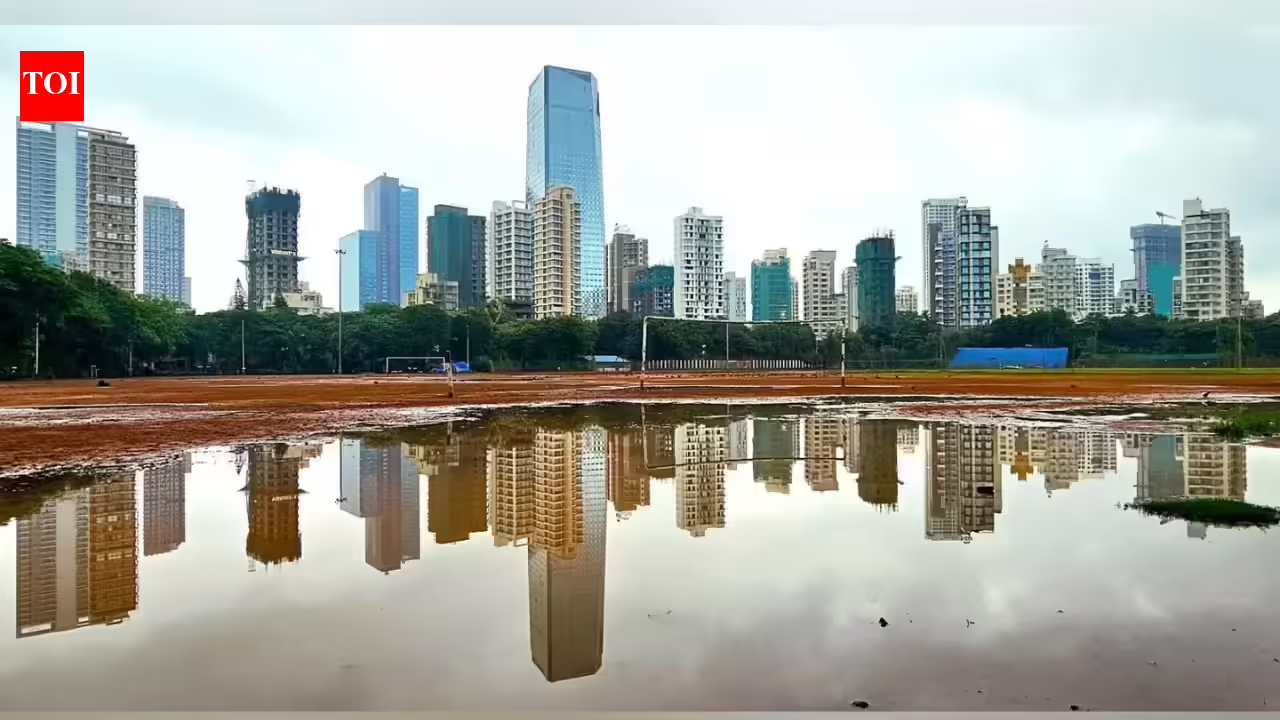
MUMBAI: Mumbai’s housing market continued its strong run in the first half of 2026, with property registrations in areas under the Brihanmumbai Municipal Corporation (BMC) crossing the 80,000-mark for the first time during a January-June period since records began in 2013, according to a report by property consultant Knight Frank India based on data from the state registration department.The city recorded 80,221 property registrations across primary and secondary markets during January-June 2026, up 6% from 76,060 in the corresponding period last year. Stamp duty collections from these transactions rose 4% year-on-year to Rs 6,968 crore, providing another strong revenue boost to the Maharashtra government.The report said both registrations and stamp duty collections marked their strongest first-half performance since 2013, underlining sustained demand in Mumbai’s residential market despite elevated property prices and a high base last year.The momentum remained intact in June. Mumbai is estimated to have recorded around 13,302 property registrations during the month, a 15% increase over June 2025 and the highest June tally in the past 14 years. Stamp duty collections for the month are expected to touch Rs 1,077 crore, up 4% year-on-year.On a month-on-month basis, registrations rose 7% over May, while stamp duty collections increased 2%.While the sharp rise in registrations indicates continued buying activity, the comparatively slower growth in stamp duty collections suggests that transactions were increasingly driven by the mid-income housing segment rather than premium homes. This points to broader participation by end-users, instead of demand being concentrated only in high-value properties.The report noted that June’s performance surpassed the previous peak recorded in 2025, despite a strong base, reflecting sustained buyer confidence in the city’s housing market.Knight Frank India Chairman and Managing Director Shishir Baijal said the June numbers demonstrated the resilience of Mumbai’s residential market and sustained end-user demand. He said growth in registrations despite relatively stable stamp duty collections indicated that housing demand was becoming more broad-based across buyer segments rather than being driven only by expensive homes.The half-year performance also extends Mumbai’s post-pandemic recovery. Property registrations had plunged to 17,921 in the first half of 2020 during the Covid-19 outbreak before rebounding sharply to over 61,000 in H1 2021. Registrations have since continued to rise steadily, reaching successive highs over the past three years.For Maharashtra, the sustained pace of property transactions is significant as stamp duty remains one of the state’s largest sources of own-tax revenue. The nearly Rs 7,000 crore collected from Mumbai alone during the first six months of 2026 underscores the city’s continuing importance as the state’s biggest contributor to registration revenue.

Maharashtra TET paper leak: Wife of main accused arrested from Bihar | Mumbai News

Maharashtra TET paper leak: Wife of main accused arrested from Bihar

Bhiwandi/Patna: The special investigation team (SIT) set up for the Maharashtra Teacher Eligibility Test (TET) paper leak case arrested Suman Gupta, wife of the main absconding accused, Bijendra Gupta, from her residence in Samastipur in Bihar late on Monday.Suman was produced before a Bhiwandi court, which remanded her in police custody till July 6.Suman was the fourth person arrested in the case. Besides her husband, another key accused, Kapil Dahiya, remains on the run.The police said Suman was suspected of playing a key financial role in the racket by managing the proceeds generated from the alleged paper leak. The police said they were examining her involvement in handling illegal money transfers and maintaining communication with members of the network after the question paper was allegedly leaked.The police said that financial transactions had taken place between the couple and that she assisted Bijendra in evading arrest.Bijendra was an accused in examination paper leak cases in Uttar Pradesh, Bihar and Odisha. He was arrested in an Odisha paper leak case and was currently out on bail.Bijendra’s family in Samastipur distanced itself from him. His father, Baleshwar Sah, said his son had left the village years ago to pursue higher studies and later lost contact with the family. He claimed they were unaware of his activities and expressed shock over his alleged involvement in a major examination fraud case.The police suspect the Maharashtra TET paper might have been leaked from Mahim Patran Pvt Ltd, a printing company based in Agra, where the state education department had been getting examination papers printed for several years.The SIT is questioning employees of the printing company to ascertain whether there was any internal involvement in the alleged leak. Police officials said crucial details regarding the conspiracy, including who helped leak the paper and the modus operandi, are likely to emerge only after Bijendra Gupta is arrested.To prevent the two absconding accused from fleeing the country, the police have issued look-out circulars (LOCs) against Bijendra and Dahiya.When Suman Gupta was produced in court, defence counsel Shailesh Gaikwad opposed the custody plea, maintaining that she was innocent. He argued that there were no financial transactions between Suman and Bijendra related to the alleged offence and that merely speaking to her husband over the phone could not constitute a crime. He contended that she had been arrested solely because she was the wife of the absconding accused.

a7b1b467-4fd0-4d84-aa84-9667677ef1a9_1000534302.jpg

cba965a9-283d-48e8-a46c-61948ada398b_1000535492.jpg
Speaker summons BEST GM, says it has failed to resolve power cuts in South Mumbai | Mumbai News

Speaker summons BEST GM, says it has failed to resolve power cuts in South Mumbai

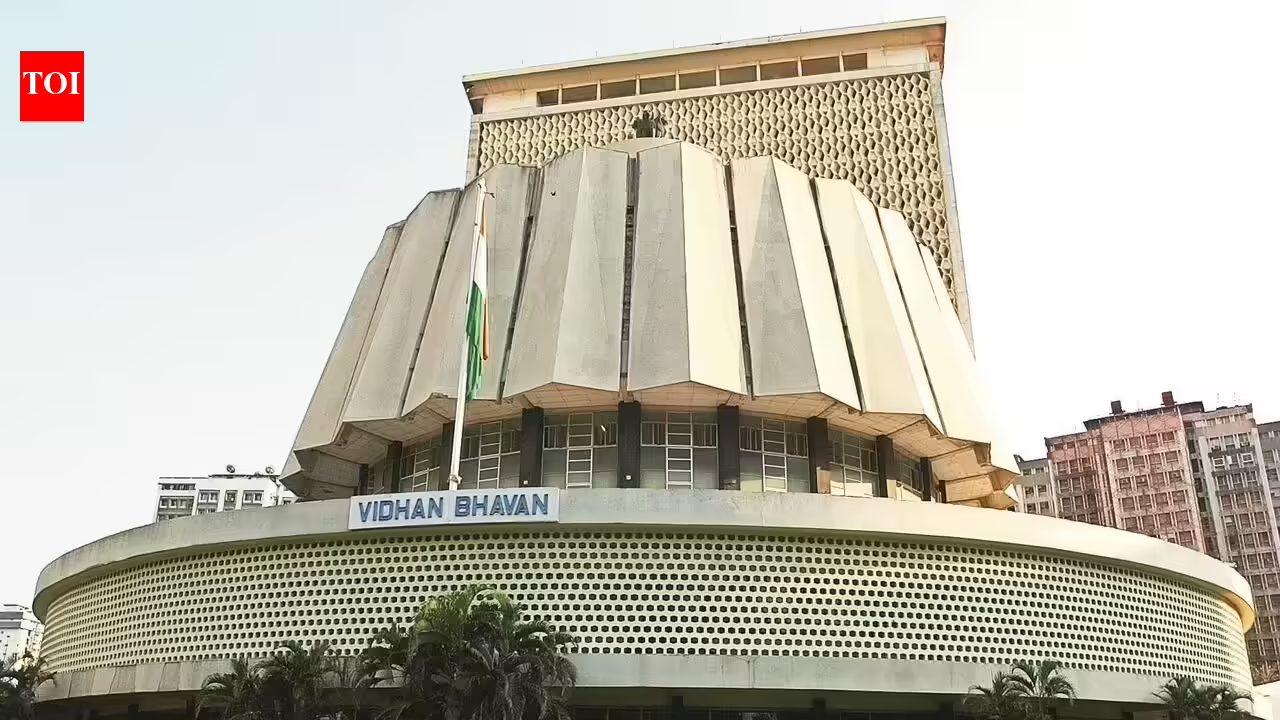
Mumbai: Responding to the outcry over frequent power cuts in South Mumbai, state assembly speaker Rahul Narwekar lashed out at the BEST and said that the power shortage in the country’s financial capital was “regrettable” and that the utility had “utterly failed” to resolve it.Narwekar has called a meeting in his chamber on Wednesday with the BEST general manager, BMC commissioner, energy officials and city MLAs. “If this issue is not resolved, then the BEST general manager will have to appear before the state legislature,” said Narwekar.Narwekar said, “Did the BEST not plan for climate change and the problems caused by high temperatures?”He said that often when the public contacts the call centre, the phone goes unanswered. “There is an engaged tone. We need to know how long it takes the BEST to resolve complaints,” said Narwekar.Meanwhile, minister of state for urban development Madhuri Misal admitted that the unusually high temperatures in May and June (the highest in 57 years) had pushed power demand from 907 MW to 1,010 MW.“As a result of the high demand, the underground electricity cables are getting damaged and we are placing overhead cables. One solution is building an additional sub-station for which three locations have been identified and BEST has made a provision of Rs 20 crores,” said Misal.She said that demand had shot up owing to the higher use of air-conditioners on account of the heat. Also, because of interruptions in LPG supply, there was a rise in the use of induction ovens in May and June.She admitted that around 1,200 complaints relating to underground cable faults in South Mumbai had been pending since 2024.The question was raised in the assembly by Congress MLA Amin Patel and BJP MLA Tamil Selvan.Patel threatened to go on a hunger strike on the steps of the state legislature if the issue is not resolved in a week.“There are frequent power cuts going on for hours in South Mumbai. In one building, the power cut lasted for three days,” said Patel. He said that 1,200 jumper lines had been placed in Mumbai, which would result in massive problems in monsoon.He said that the BEST had not filled vacancies in the electrical supply department since 2015. “There are 5,000 vacancies and the BEST is bankrupt. Phone calls to raise complaints go unanswered,” said Patel.

No refund of stamp duty if a development agreement is cancelled: Bill introduced in Maharashtra assembly | Mumbai News

No refund of stamp duty if a development agreement is cancelled: Bill introduced in Maharashtra assembly

Mumbai: The state govt on Tuesday introduced a Bill in the Legislative Assembly to amend the Maharashtra Stamp Act, proposing that no refund or concession of stamp duty will be granted if a “development agreement is cancelled, rescinded or terminated under any circumstances”. The amendment Bill was tabled by revenue minister Chandrashekhar Bawankule, who said the proposed changes are slated to plug loopholes in the existing law that have led to a growing number of stamp duty refund claims and consequent loss of revenue.Officials said the Bill seeks to insert a specific explanation in Section 48 of the Maharashtra Stamp Act. This change aims to prevent misuse of existing provisions while ensuring uniform and transparent implementation of stamp duty rules across the state. Officials said under the current provisions, stamp duty is levied on the execution of a document and not on whether the transaction is eventually implemented. “However, in recent years, several parties executing development agreements have sought refunds after cancelling or terminating the agreements due to commercial disputes, financial reasons or mutual consent. Claims like these have increased substantially. This has resulted in administrative hassles for the revenue department in verifying the genuineness of each case,” officials said.“Stamp duty is charged on the execution of the document itself and is not dependent on its subsequent implementation. Granting refunds in cases of cancellation was causing revenue loss to the state and opening avenues for potential misuse of concessionary provisions. The amendment is expected to bring greater transparency and efficiency in the real estate sector and the stamp duty administration. It will strengthen revenue protection while maintaining clarity in the application of the law,” Bawankule said.Officials said existing provisions, particularly those relating to refunds under sections 47 and 48 of the Act, were intended to provide relief in limited cases, primarily where agreements for sale are cancelled before possession of the property is handed over. “However, since development agreements attract the same stamp duty as agreements for sale, applicants have been invoking these provisions to claim refunds. This is an unintended legal loophole. So, the amendment proposes to insert a clarification after the proviso to Section 48, explicitly stating that the relaxation or refund provisions applicable to agreements for sale will not extend to development agreements or any other instruments that attract an equivalent amount of stamp duty,” officials said.