Maharashtra government orders probe into drain desilting works in Vasai-Virar, seeks report in 8 days | Mumbai News

Maharashtra government orders probe into drain desilting works in Vasai-Virar, seeks report in 8 days
File pic for representation.

Vasai: Maharashtra government has ordered an inquiry into the drain desilting works carried out in the Vasai-Virar Municipal Corporation (VVMC) area, directing officials to submit a report within eight days.The announcement was made in the state legislative assembly on Thursday, after concerns were raised over widespread flooding and alleged irregularities in pre-monsoon desilting works.The issue was raised through a calling attention motion by Vasai MLA Sneha Dubey-Pandit, who alleged that the flooding witnessed across several parts of the city following two days of heavy rain was not merely the result of intense rainfall, but also due to administrative failure and alleged corruption in drain desilting works.Dubey-Pandit questioned the effectiveness of VVMC’s flood mitigation measures, including road elevation projects, installation of flood gates and other infrastructure works, claiming that despite official assertions that these projects had been completed, several areas continued to remain inundated.She also alleged that the city is yet to prepare a comprehensive underground sewerage network and storm water drainage master plan. Referring to recommendations made by the National Environmental Engineering Research Institute (NEERI), she claimed that the report had not been implemented and that the process of obtaining permission from the Bombay High Court for mangrove relocation to restore natural water channels had also not been initiated.The MLA demanded that the probe should not be restricted to desilting works alone, but should also examine the tendering process, cost estimates, administrative approvals, payments made to contractors and the role of officials involved in executing the works.Responding to the discussion, minister of state for urban development Madhuri Misal said the government had directed that the desilting works be investigated and a report submitted within eight days. She also announced that a full-time city engineer would be appointed in VVMC within 15 days.

IIT-Bombay draft seeks tree-saving redesign of Sanpada underpass | Mumbai News

IIT-Bombay draft seeks tree-saving redesign of Sanpada underpass

Navi Mumbai: The Indian Institute of Technology (IIT) Bombay submitted its draft technical review of the proposed Sanpada underpass project along the scenic Palm Beach Road to the Navi Mumbai Municipal Corporation (NMMC), recommending a redesigned layout to preserve as many roadside trees as possible while meeting traffic improvement objectives. The draft report came after months of public opposition to the proposed felling and transplantation of hundreds of trees. Resident groups, led by Palm Beach Greens and NatConnect Foundation, organised silent human chains, urging the civic body to redesign the project rather than sacrifice Navi Mumbai’s green cover, prompting NMMC to seek IIT’s support. Responding to the public campaign, NMMC Commissioner Kailas Shinde earlier assured citizens that every effort would be made to minimise tree loss and commissioned an independent technical review by IIT Bombay.IIT Bombay concluded that the project’s traffic objectives could be achieved through a revised roundabout and access arrangement that reduced the footprint within the green belt and limited disruption to mature trees. A civic official said the final number of trees that may have to be felled or transplanted would be known only after NMMC prepared a revised design based on IIT Bombay’s recommendations.Rather than clearing the project for execution, IIT Bombay asked NMMC to return to the drawing board and prepare fresh engineering plans based on its revised concept. The institute asked the civic body to clearly map the impact on existing trees, landscaped areas, drainage and utilities before resubmitting the proposal for a final technical review.Shrikant Patki of Palm Beach Greens said, “We are not opposed to infrastructure development. But it must go hand in hand with environmental protection, and the trees lining the Palm Beach Road walking track must be preserved.”NatConnect director B N Kumar said, “At a time when Navi Mumbai needs to expand its green canopy, the NMMC should strive to prevent the destruction of existing trees while taking sustained steps to increase the city’s green cover.”The report also flagged shortcomings in the original design, including closely spaced merging points and inadequate weaving distances that could affect traffic flow and safety during peak hours. It recommended changes in the junction layout and traffic channelisation to ensure smoother vehicle movement while minimising the impact on the existing green belt.

Maharashtra government to set up panel to recommend reforms to regulate employee transfers and improve transparency, says Shelar | Mumbai News

Maharashtra government to set up panel to recommend reforms to regulate employee transfers and improve transparency, says Shelar
IT minister Ashish Shelar made the announcement in the state legislative assembly on Friday

Mumbai: A committee of members of both houses of the state legislature will be formed to make recommendations for regulating government employee transfers, ensuring speedy settlement of grievances, and improving transparency in government work, information technology minister Ashish Shelar announced in the legislative assembly on Friday.Shelar was replying during a discussion on a private member’s bill — Maharashtra Regulation of Transfers of Government Employees and Prevention of Delays in Performance of Government Duties Amendment Bill 2025 — moved by BJP MLA Sudhir Mungatiwar.The bill stated that transfers of government employees should be done within the time fixed as per this rule and AI too should be used. While demanding the formation of a committee to study and coordinate this issue, Mungatiwar demanded that the disposal of the files in the departments should be done quickly and that the minister’s office should have a limit of 45 days to dispose of files.“In order to bring more transparency in government work, the state government issued an order on transfers of employees in 2005. Later, it was amended several times. It was also adopted to evaluate the work of employees. Also, the method of preparing confidential reports has been adopted. In order to bring transparency in the administration and to work at a fast pace, AI has started to be used in the disposal of vacancies. So, a committee of members of both the houses will be formed to ensure coordination, transparency and disposal of vacancies at a fast pace,” Shelar said.

Preity Zinta moves Bombay high court to have her personality rights protected against deepfakes and AI generated content online | Mumbai News

Preity Zinta moves Bombay high court to have her personality rights protected against deepfakes and AI generated content online
Actress Preity Zinta has approached the Bombay High Court seeking protection against AI-generated deepfakes that infringe upon her personality rights.

MUMBAI: Yet another Bollywood personality, Priety Zinta, approached Bombay high court to have her personality rights protected against deep fake Artificial Intelligence (AI) generated images and content.The deepfakes carrying her trademark smile, is depleting her joy, her lawyers contended as they sought an interim order against 16 defendants including known websites and unknown others.Justice Madhav Jamdar on Friday posted the matter to July 6 to pass orders, but first gave time to parties to work out a mechanism or practical protocol to take down the genuinely offending content from websites without disturbing legitimate content.In her suit against Google LLC and others including Meta Platforms Inc, through Bachubhai Munim and Co, the Dil Se star said her heart wants the ongoing infringement of her personality, publicity and moral rights to be stopped.She claimed her right to privacy was being violated as websites based abroad cashed in on her “widely celebrated personality.’’Her suit said domain names also exist in her name which she did not create. It said, “personality traits are an integral/intrinsic part of her personality rights and/or publicity rights, in which the Plaintiff exercises (and ought to exercise) exclusive control. “She is also the co-owner of Punjab Kings, a franchise in the Indian Premier League (IPL). Zinta’s interim plea argued by senior counsel Venkatesh Dhond said the AI generated content was rapidly becoming more realistic with chat-bot style interactions posted and hosted online by alleged infringers.Dhond sought urgent orders so that intermediaries be ordered to take down content she highlighted in the suit and orders to prevent unknown persons, John Doe (collective name for all unknown or unidentified infringers, present and potential) from posting unlawfully.Counsel for Google and Meta did not object to deleting morphed or obscene content but said no blanket orders be issued.Justice Jamdar, observing that protective orders would be warranted on merits also said legitimate content cannot suffer and asked counsel for the parties to confer and work out a protocol to take down genuinely offending content and leave lawful content alive.Her suit said, “numerous AI-generated deepfake videos, memes, manipulated images, Al chatbot personas and other digital content have been created, uploaded, disseminated and made available to the general public on the platforms, like YouTube, X, Instagram and Facebook’’ which utilise her name, image, likeness, voice and other personality traits without the Plaintiff’s authorisation, licence or consent.

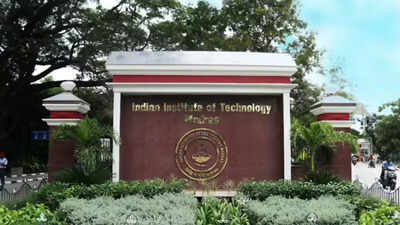
IIT Madras and IIT Kanpur launch India’s first Bachelor of Cybersecurity; program aims to close 1.5 million professional gap | Mumbai News

IIT Madras and IIT Kanpur launch India's first Bachelor of Cybersecurity; program aims to close 1.5 million professional gap
India’s top engineering institutes, IIT Madras and IIT Kanpur, have launched a pioneering four-year Bachelor of Cybersecurity program

MUMBAI: Cybersecurity is moving from the margins of computer science classrooms to the centre of India’s higher education agenda.The Indian Institute of Technology (IIT) Madras and IIT Kanpur have jointly launched what they describe as India’s first practice-oriented, four-year Bachelor of Cybersecurity programme.The B. Cyber course will begin in the academic year starting July 2026, with admissions being conducted jointly by the two IITs this year.The programme has been designed to meet India’s rising demand for cybersecurity professionals at a time when digital systems increasingly underpin governance, finance, healthcare, telecom, transport, manufacturing and defence.Officials said the course will train students not merely in the theory of cybersecurity, but in the operational skills required to protect complex digital infrastructure and critical systems.Graduates are expected to be prepared for roles in cyber defence, security operations centres, penetration testing, vulnerability assessment, digital forensics, malware analysis, cloud security, hardware security and critical infrastructure protection.The programme will also provide a foundation for higher studies and research in cybersecurity and computer science.“Cybersecurity has become fundamental to India’s technological sovereignty and national security,” said Prof V Kamakoti, director, IIT Madras. “Building a resilient cyber ecosystem requires professionals who possess not only strong theoretical foundations but also extensive hands-on experience in defending complex systems.”He said the collaboration with IIT Kanpur marked a new model of undergraduate education, combining academic rigour with real-world practice.“We believe this initiative will create a pipeline of highly skilled cybersecurity professionals who will play a vital role in securing the nation’s digital future,” Kamakoti said.The launch comes at a time when cybersecurity has emerged as a strategic national priority. As India’s digital footprint expands, the need to protect public platforms, financial networks, healthcare systems, telecom grids, industrial infrastructure and defence-linked technologies has grown sharply.Industry estimates point to a shortage of nearly 1.5 million cybersecurity professionals in the country, underlining the need for specialised undergraduate training in the field.A defining feature of the new degree is its two-year Field Deployment Professional Project. Students will spend the final four semesters working on live cybersecurity projects under the mentorship of professionals from strategic and critical organisations.The idea, officials said, is to ensure that graduates enter the workforce with substantial field exposure in addition to formal academic training.The curriculum follows a competency-based framework, allowing students to progressively build expertise across domains such as security operations, vulnerability assessment and penetration testing, secure systems, malware analysis, firmware reverse engineering, hardware security, cloud security and critical infrastructure security.

Do you believe the new B. Cyber program will effectively address the shortage of cybersecurity professionals in India?

3k+ users shared opinion today

5k+ users already voted today

3k+ users shared opinion today

Share Opinion

Students will also be able to choose advanced electives in digital forensics, embedded systems security, secure processor microarchitecture and applied cryptography.The first two years of the programme will focus heavily on laboratory-oriented instruction. Students will study computer systems, programming, Linux system administration, cryptography, computer organisation, operating systems, computer networks, ethical hacking, web security, vulnerability assessment and penetration testing before moving into advanced specialisation and professional deployment.For the IITs, the programme signals a shift in how cybersecurity education is being imagined: not as a late-stage specialisation, but as a full undergraduate discipline built around labs, live systems and field practice.


Tata Power commissions 101-MW wind farm in Maharashtra to supply green power to Mumbai | Mumbai News

Tata Power commissions 101-MW wind farm in Maharashtra to supply green power to Mumbai
Tata Power Renewable Energy has boosted Mumbai’s green energy supply with a new 100.8 MW wind project in Maharashtra (File photo enhanced with AI)

MUMBAI: Tata Power Renewable Energy Ltd (TPREL), the renewable energy arm of Tata Power, has commissioned a 100.8-MW wind power project in Maharashtra’s Dharashiv district, strengthening the green energy supply for Mumbai’s electricity network.The power generated from the Jewali wind project will be supplied to Tata Power Mumbai Distribution, helping the utility meet its Renewable Purchase Obligation (RPO) targets under the country’s clean energy regulations while increasing the share of renewable electricity in its supply mix.According to the company, the project is expected to generate around 299 million units of electricity annually, enough to replace an equivalent amount of conventional power. It is also estimated to offset nearly 245 million kg of carbon dioxide emissions every year, based on standard emission factors.The wind farm comprises 28 wind turbine generators of 3.6 MW each using horizontal-axis wind turbine technology.The commissioning further expands Tata Power Renewable Energy’s wind portfolio to over 3.9 GW, of which more than 1.3 GW is operational while the remaining capacity is under various stages of development across multiple states, including Maharashtra, Gujarat, Rajasthan, Karnataka, Andhra Pradesh and Tamil Nadu.For Mumbai consumers, the project is expected to improve the availability of renewable power in Tata Power’s distribution network and assist the utility in complying with statutory renewable procurement requirements. Distribution companies are mandated to procure a specified percentage of their electricity from renewable energy sources under RPO norms.With the addition of the Jewali project, TPREL’s total renewable utility portfolio has reached 11.6 GW. Of this, 6.7 GW is operational, comprising 5.4 GW of solar and 1.3 GW of wind capacity, while another 4.9 GW is under implementation.The under-construction portfolio includes around 2.1 GW of solar projects, 2.6 GW of wind projects and 0.2 GW of battery energy storage systems, which are scheduled to be commissioned in phases over the next six to 24 months.The company said the latest commissioning aligns with Tata Power’s long-term target of achieving 100% clean energy generation by 2045 and forms part of its broader renewable energy expansion strategy.

Builder arrested for alleged land-grabbing fraud in Dahisar; police investigate forged documents and money trail | Mumbai News

Builder arrested for alleged land-grabbing fraud in Dahisar; police investigate forged documents and money trail

MUMBAI: The crime branch has arrested a Vile Parle–based builder in connection with an alleged land-grabbing fraud involving forged powers of attorney, fake bank accounts and the fraudulent transfer of possession rights over a prime land parcel in Dahisar.The property cell of the crime branch arrested Kalpesh Kanubhai Shah, director of Puja Land and Premises Pvt Ltd, for his alleged role in a conspiracy to acquire possession rights over around 16,288.3 sq metres of land using fabricated documents.Shah was produced before the Esplanade Court, which remanded him to seven days of police custody.The alleged fraud came to light after the Bombay high court, while hearing a civil dispute between Sheikh Construction and Romell Housing, observed that two documents bore the same registration number.A subsequent verification by the joint sub-registrar’s office, Borivali, allegedly confirmed that an irrevocable power of attorney dated May 25, 2010, was forged and did not exist in official records.Police alleged that Shah, along with co-accused Prakash Chandra Dubey, knowingly relied on the forged power of attorney to execute and register transfer deeds, enabling Puja Land and Premises Pvt Ltd to obtain possession rights over the disputed land.The probe has also revealed that fake bank accounts in the names of “Kausar Nooruddin Sheikh” and “Sheikh Construction” were opened at a Mira Road bank branch to route funds linked to the transaction.Investigators claim Shah and Dubey transferred substantial sums into these accounts before the execution of the disputed documents, despite there being no legitimate sale agreement with the original landowner, KN Sheikh.During the investigation, police examined financial transactions involving co-accused Sameera Aslam Khan, who allegedly admitted to receiving Rs 29.47 lakh, including Rs 9.5 lakh in cash through bearer cheques, and paying Rs 4.5 lakh to a person identified as Kiran Ghavnalkar for preparing the forged power of attorney.Investigators further alleged that Sajid Sheikh operated the fake Sheikh Construction account through which funds were withdrawn.Police said the land belonged to KN Sheikh, who was unwilling to sell or transfer the property. They alleged that his divorced wife, Sultana Sheikh, was used to create forged general and irrevocable powers of attorney to falsely show that Sheikh had authorised her to deal with the land.Using these documents, Sultana allegedly executed transfer deeds in favour of Puja Land and Premises Pvt. Ltd., whose directors included Shah and Dubey.The crime branch has already arrested Sultana Sheikh, Sameera Khan, Sajid Sheikh, Prakash Dubey and Kiran Ghavnalkar, and filed a chargesheet against them under various provisions of the Indian Penal Code, 2023, and the Registration Act, 1908.Police said a supplementary chargesheet will name Shah, other wanted accused and additional persons identified during the probe.Investigators said Shah’s custodial interrogation is necessary to trace the original forged documents, examine the money trail, identify other beneficiaries of the alleged conspiracy and recover records linked to the disputed land transactions.Police have alleged that Shah was aware the power of attorney was forged but proceeded with the execution and registration of the transfer documents.

Mumbai remains India’s least affordable housing market despite lower home loan rates | Mumbai News

Mumbai remains India's least affordable housing market despite lower home loan rates
Mumbai remains India’s least affordable housing market, with homebuyers dedicating 69% of income to loan repayments, despite monetary easing (AI-generated image used for representational purposes)

MUMBAI: Even after a cumulative 125 basis points of monetary easing and lower home loan rates, the Mumbai Metropolitan Region (MMR) has retained its position as India’s least affordable residential market, with a typical homebuyer required to spend 69% of household income on monthly loan repayments, according to Knight Frank India’s latest Affordability Index.The report shows that MMR remains well above the 50% affordability benchmark, the level beyond which banks are generally reluctant to underwrite housing loans. Among the country’s eight major residential markets, only MMR and the National Capital Region (NCR) continue to breach this threshold, while the remaining six cities remain within affordable limits.The findings highlight that, for Mumbai’s homebuyers, falling borrowing costs have not been enough to offset the impact of high property prices. Knight Frank said affordability gains achieved through lower interest rates have largely been neutralised by sustained price appreciation in the country’s costliest housing market.The index measures the proportion of a household’s monthly income required to pay equated monthly instalments (EMIs) on an average home. For H1 2026, MMR’s affordability ratio stood unchanged at 69%, while NCR worsened slightly to 67% from 66% in 2025.In contrast, Ahmedabad emerged as the country’s most affordable housing market, with an EMI-to-income ratio of 23%, followed by Kolkata (25%), Pune (28%) and Chennai (29%). Bengaluru stood at 35%, while Hyderabad recorded 41%, all comfortably within the affordability threshold.The report notes that affordability across India’s residential markets remains broadly supportive because of the cumulative benefit of lower borrowing costs following the Reserve Bank of India’s 125-basis-point rate cuts before the current pause in the easing cycle.However, rising residential prices have moderated those gains in several markets.Knight Frank’s affordability data also shows how sharply MMR differs from other cities. While Pune’s affordability improved from 57% in 2016 to 28% in H1 2026, and Chennai’s fell from 55% to 29% over the same period, Mumbai’s ratio has remained stubbornly high despite improving from 77% in 2016.Shishir Baijal, Chairman and Managing Director, Knight Frank India, said housing affordability continues to be a key driver of residential demand.While lower interest rates have supported buyers, rising property prices have moderated affordability gains. He said healthy employment, stable incomes and supportive financing conditions continue to underpin demand, but sustained income growth would be crucial for improving affordability over the long term.The report said the RBI’s decision to keep the policy repo rate unchanged at 5.25% in its February and June 2026 monetary policy meetings indicates that rate stability is likely in the near term. Although geopolitical uncertainties and inflation risks remain, the cumulative impact of earlier rate cuts is expected to continue supporting housing demand across most major cities.

Mumbai’s power safety net gets a silent upgrade: New transmission corridor can meet nearly half the city’s demand, revive decade-old substation | Mumbai News

Mumbai's power safety net gets a silent upgrade: New transmission corridor can meet nearly half the city's demand, revive decade-old substation

MUMBAI: Even as Mumbai braces for another season of record electricity consumption, one of the city’s biggest power security upgrades has quietly gone operational—one that experts say could fundamentally reduce the risk of transmission bottlenecks rather than simply add more electricity.While public attention has largely focused on increasing power generation, the bigger challenge for Mumbai is now moving electricity into the city. Industry executives say the Mumbai Urja Marg Ltd (MUML) transmission project has increased Mumbai’s ability to import over 2,000 MW of electricity—equivalent to nearly half of the city’s peak requirement—by creating a new high-capacity transmission corridor linking the metropolis to the national grid.The development assumes significance because Mumbai’s own power generation capacity has remained limited, making the city increasingly dependent on importing electricity from outside Maharashtra as demand rises due to rapid urbanisation, metro rail expansion, electric vehicles, airports and data centres.A less-reported angle is that the project does not merely add transmission lines but revives critical infrastructure that had remained underutilised for more than a decade. The project operationalised the 400/220-kV Navi Mumbai GIS substation, which had remained dormant since 2012, by integrating it with the Inter-State Transmission System (ISTS). This creates an additional entry point for electricity into Mumbai while easing pressure on heavily loaded substations such as Kalwa and Kharghar.Energy experts say this improves operational flexibility for grid managers during periods of exceptionally high demand or when maintenance shuts down parts of the network. The project also highlights how Mumbai’s electricity planning is shifting from creating generation assets to strengthening transmission infrastructure.“India’s urban power challenge is increasingly becoming one of transmission readiness rather than generation capacity. Cities need resilient transmission corridors capable of importing large volumes of electricity whenever required,” said Pratik Agarwal, Chairman of Resonia Ltd.The approximately 100-km corridor traverses some of the Mumbai Metropolitan Region’s most difficult terrain, including dense urban settlements, highways, railway lines, metro corridors, forests and rocky hills across Thane, Bhiwandi, Kalyan, Ambernath, Panvel and Navi Mumbai.Another relatively unexplored aspect of the project is the engineering approach adopted to minimise disruption in congested Mumbai neighbourhoods. Instead of conventional lattice towers requiring larger footprints, developers deployed ultra-narrow-base towers and monopoles that could be erected within narrow road margins. In forested stretches around Haji Malang and Raigad, helicopter-assisted stringing was used to transport equipment and lay conductors, reducing the need for heavy machinery and limiting ecological disturbance.Industry officials said the project also broke a nearly 12-year execution deadlock after overcoming complex right-of-way issues involving multiple government agencies and local stakeholders.Beyond improving reliability, the strengthened transmission network is expected to facilitate larger inflows of renewable energy generated in Gujarat, Rajasthan and other western states through the national transmission grid. That could gradually reduce dependence on local fossil-fuel-based generation while supporting Mumbai’s growing electricity demand.The project has been developed under the tariff-based competitive bidding framework on a Build-Own-Operate-Maintain model with an estimated investment of about USD 300-400 million.Power planners say such transmission investments are becoming increasingly important as Mumbai prepares for new electricity-intensive infrastructure, including the Navi Mumbai International Airport, expanding Metro corridors, high-speed rail connectivity and large data centres.

Southwest moonsoon: IMD issues red alert across Mumbai Metropolitan Region for tomorrow; all you need to know | Mumbai News

Southwest moonsoon: IMD issues red alert across Mumbai Metropolitan Region for tomorrow; all you need to know

MUMBAI: The IMD on Friday issued a red alert for the entire Mumbai Metropolitan Region (MMR), including Mumbai, Thane, Raigad and Palghar, for Saturday, forecasting heavy to very heavy rainfall at a few places and extremely heavy rainfall at isolated locations.Earlier in the day, the IMD had issued an orange alert for Mumbai, Thane, Palghar and Raigad, forecasting moderate to intense spells of rain at isolated places and urging people to take precautions.

-

Mumbai continued to receive heavy monsoon showers, with the island city recording an average rainfall of 114 mm between 8 am on July 2 and 7 am on July 3.The eastern suburbs recorded an average of 102 mm of rainfall, while the western suburbs received 109 mm during the same period.The city is also expected to witness a high tide of 4.28 metres at 2.18 pm.