

EOW probes Rs 43-crore redevelopment fraud involving rehab flats | Mumbai News

EOW probes Rs 43-crore redevelopment fraud involving rehab flats
The housing society alleges that the developer and its directors sold several flats earmarked for rehabilitation to third parties without the consent of the tenants or the society

Mumbai: The Economic Offences Wing (EOW) of the city police has launched a probe into the alleged Rs 42.96-crore fraud involving the redevelopment project of four buildings at Chinchpokli in Parel, in which a developer, its directors, a financial institute, banks and others are accused of illegally selling rehabilitation flats and raising huge loans against them.An FIR has been registered against Siddhivinayak Construction and its three directors and 21 others, including a few banks, under various sections of BNS and the Maharashtra Ownership Flats Act (MOFA), 1963.The complaint was filed by Pradeep Sawant, secretary of Shrimotanka Tenants Co-operative Housing Society. According to the complaint, the redevelopment of Shri Krishna Niwas, Kashinath Building, Mogre House and Tambawala Building was undertaken by Siddhivinayak Construction Pvt Ltd under a 2007 development agreement.The society alleges that the developer and its directors—Sachin Madhukar Khanolkar, Bindiya Sachin Khanolkar and Abhijit Vasantrao Kabir—sold several flats earmarked for rehabilitation to third parties without the consent of the tenants or the society.The complaint further alleges that financial institutions sanctioned loans totalling Rs 37.80 crore against 33 rehabilitation flats and three reserved areas, despite the properties being earmarked for existing tenants. The society has named several banks and financial institutions.The complainant has alleged that the developer also failed to pay around Rs 2.8 crore in transitional rent between 2014 and 2017 and approximately Rs 2.36 crore towards property tax, water bills and BMC-related dues, which society members allegedly paid.One of the allegations concerns flat number 704, which was earmarked for tenant Amogh Malvankar. The complaint states that the flat was allegedly sold multiple times and subsequently mortgaged to secure a loan of approximately Rs 80.91 lakh. Following default, the lender allegedly took physical possession of the premises, prompting Malvankar to approach the Debt Recovery Tribunal.The complaint also alleges that the developer benefited from FSI/TDR worth around Rs 15 crore arising from the redevelopment project. According to the complainant, the alleged irregularities, including the sale and mortgaging of rehabilitation premises, resulted in an overall loss of approximately Rs 42.96 crore to the tenants and the society.The matter was initially brought before the Mazgaon court following directions of the Bombay high court under Section 175(3) of the Bharatiya Nagarik Suraksha Sanhita. The court subsequently directed Kalachowki police station to register a case and investigate. The matter was later transferred to the EOW for further investigation.
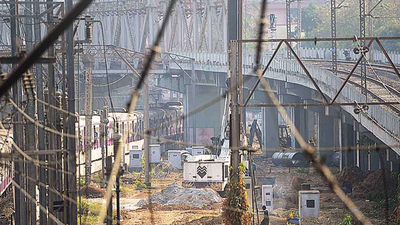
Western Railway plans 45-day rebuild of Bandra-Khar Road flyover for sixth line project | Mumbai News

Western Railway plans 45-day rebuild of Bandra-Khar Road flyover for sixth line project

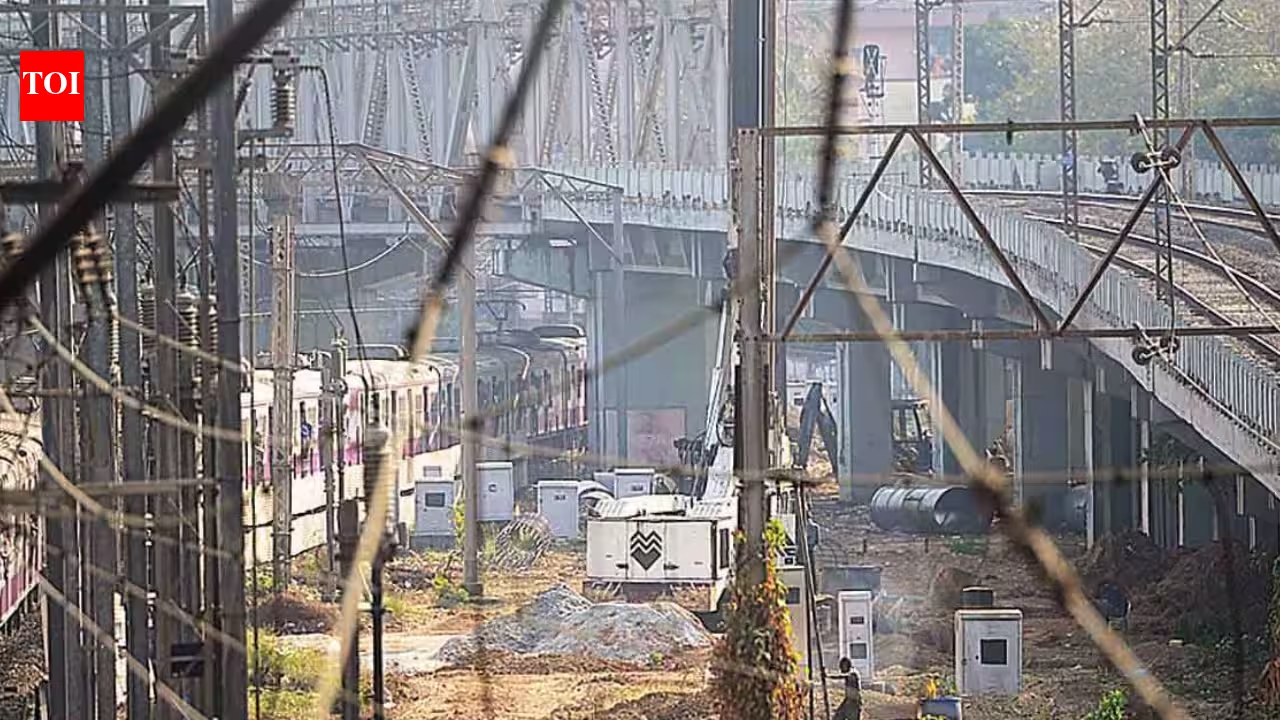
MUMBAI: Western Railway is exploring advanced construction techniques to rebuild the Bandra-Khar Road flyover within an intensive 45-day block period, reducing the originally estimated six-month construction timeline and speeding up the Mumbai Central-Borivali sixth line project.A senior railway official said on Thursday that efforts are underway to adopt innovative methods that would allow the reconstruction to be completed in a much shorter period while minimising disruption to Mumbai’s suburban rail services.The sixth line project, being implemented under the Mumbai Urban Transport Project (MUTP) Phase II in collaboration with the Mumbai Railway Vikas Corporation (MRVC), is a key capacity enhancement initiative for the city’s overburdened rail network. Spanning 30.04 km between Mumbai Central and Borivali, the project aims to increase corridor capacity, improve punctuality, enable additional suburban services and ensure better separation of suburban and long-distance train operations.Officials said the Khar Road-Borivali section has already been commissioned, with work now focused on the more challenging Mumbai Central-Khar Road stretch. The section involves complex engineering work amid dense urban development, along with land constraints, utility diversions and the construction of multiple railway structures.The project has made significant progress in planning and preparation. Land acquisition is almost complete, with only 88.6 square metres of government land at Shakti Mill in Lower Parel awaiting final formalities. All five Engineering Sanction Proposals have been approved, while utility shifting work has begun, with 14 of the 29 identified utilities already relocated.Infrastructure development is also progressing steadily. Four of the five planned Electric Interlocking buildings have been completed, signalling and telecommunications work is underway under three sanctioned packages, and contracts for electrical foundations and overhead equipment work have been awarded.Western Railway has adopted a phased execution strategy involving the construction of 15 bridges, nearly 13.3 km of earthwork, new island platforms, foot overbridges, station facilities and track infrastructure. The project also includes the rehabilitation of affected families in Bandra East, construction of new Platforms 7 and 8 at Bandra, modification of foot overbridges, and relocation of railway structures and utilities at Mahim, Lower Parel and Mumbai Central.Officials said modern techniques such as precast segmental construction will be used wherever feasible to speed up work and minimise inconvenience to millions of daily commuters. Once completed, the sixth line is expected to significantly improve operational efficiency and increase capacity on one of India’s busiest railway corridors.

Young professionals drive India’s shared mobility boom, premium buses emerge as top choice | Mumbai News

Young professionals drive India's shared mobility boom, premium buses emerge as top choice
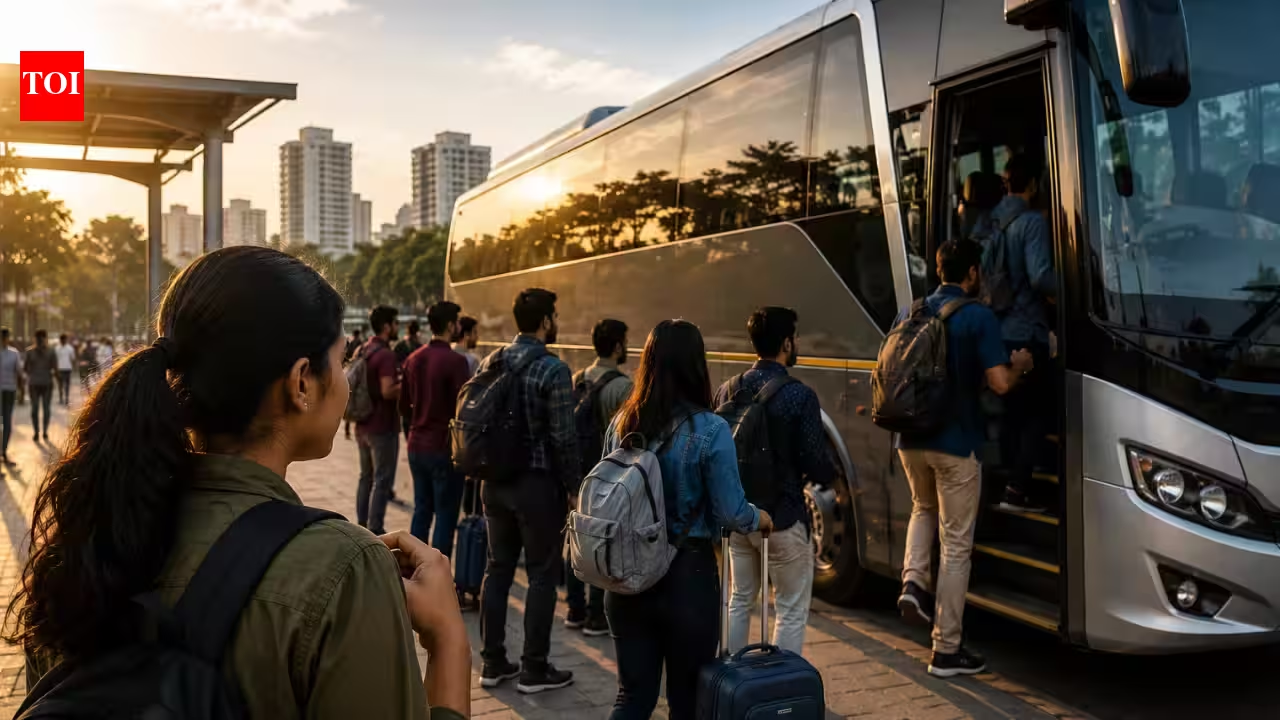
Young professionals are increasingly embracing shared mobility options (Representative image generated using AI)

MUMBAI : India’s intercity travel landscape is witnessing a significant shift as young, working professionals increasingly opt for shared mobility over personal vehicles, according to the IntrCity SmartBus Intercity Mobility Survey 2026 conducted among 13,320 respondents across the country.The survey found that nearly three-fourths (74.3%) of respondents are aged between 18 and 43 years, while 65.9% are salaried professionals, highlighting how the country’s most active travellers are driving the transition towards organised and technology-enabled transport.Shared mobility has moved beyond being merely an economical option to becoming a preferred mode of travel.Nearly half (49.2%) of respondents said all five of their most recent intercity journeys were undertaken using shared transport such as buses and trains.The trend is expected to accelerate, with 76.3% anticipating increased use of shared mobility over the next three years and 63.7% reporting higher usage compared to five years ago.Premium bus travel is emerging as a strong contender against traditional modes of transport.Nearly 70% (69.6%) of respondents said they would prefer a premium shared bus over a personal car, train or flight for a 400-600 km journey if fares were identical.Comfort, convenience, digital accessibility and the ability to avoid the stress of long-distance driving were cited as major factors behind this preference.Technology has become central to the travel experience, with 82.4% describing it as very important.Improved onboard amenities (43%), easier online booking and digital access (42.5%), and reduced driving stress (40.5%) were identified as key drivers of adoption.Safety emerged as the most important consideration for travellers, cited by 43% of respondents, followed by affordability (42.5%) and comfort and cleanliness (40.5%).However, safety also remains the biggest hurdle, with 33% expressing concerns about it.The survey further revealed a growing preference for value over ownership.Although many respondents have access to personal vehicles, 30.4% of car owners said they still prefer not to drive for intercity travel.More than 71% indicated they would be willing to pay more for services that offer better safety, reliability and comfort, underlining a broader shift towards premium shared mobility solutions.

BMC’s Rs 1.5crore Innova plan sparks storm in standing committee; BJP, Congress trade charges | Mumbai News

BMC’s Rs 1.5crore Innova plan sparks storm in standing committee; BJP, Congress trade charges

MUMBAI: The BMC’s proposal to replace Mahindra Scorpio-N SUVs with six new Toyota Innova Crysta vehicles for key political office-bearers led to a heated political exchange at Thursday’s Standing Committee meeting, with the opposition questioning the expenditure and the ruling BJP accusing it of going back on a decision that was taken unanimously by all political parties.Congress corporator and BMC party leader Ashraf Azmi objected to the proposed purchase, saying the civic body should avoid spending on expensive vehicles at a time when it is facing financial constraints. He argued that the BMC should focus on financial discipline instead of upgrading official vehicles.The BJP immediately hit back, claiming that the decision to replace the vehicles had been taken unanimously at a meeting attended by leaders of all political parties.BJP group leader Ganesh Khankar said the controversy was unnecessary as there had been consensus among all parties. “The next time such a decision is taken, I will ensure it is signed by all present and in agreement with such decisions before it is approved, so that such controversies do not arise,” he said.Standing Committee chairman Prabhakar Shinde also defended the proposal, saying opposition members were aware of and had agreed to the decision earlier. “It is incorrect to now create an issue over something that was discussed and accepted by all political parties,” he said.The discussion soon turned into a heated exchange, with ruling party members objecting to Azmi raising the issue as the proposal was not listed on the day’s agenda. They demanded that the chairman restrict the discussion to listed business. Azmi, however, maintained that he was highlighting the need for financial discipline in the BMC, which was essential at the present time.The controversy comes a day after the BMC administration proposed spending around ₹1.5 crore to purchase six Toyota Innova Crysta vehicles for the Deputy Mayor, Leader of the House, Leader of the Opposition, and chairpersons of the Standing, Improvements and Education Committees.The civic administration said political office-bearers had requested more comfortable vehicles for long commutes across the city and official site inspections. The proposal follows the allotment of Toyota Innova Hycross Hybrid vehicles to Mayor Ritu Tawde and Additional Municipal Commissioners.

Solo women pilgrims from Delhi, Mumbai, Bengaluru drive 20 % surge in Amarnath yatra bookings | Mumbai News

Solo women pilgrims from Delhi, Mumbai, Bengaluru drive 20 % surge in Amarnath yatra bookings

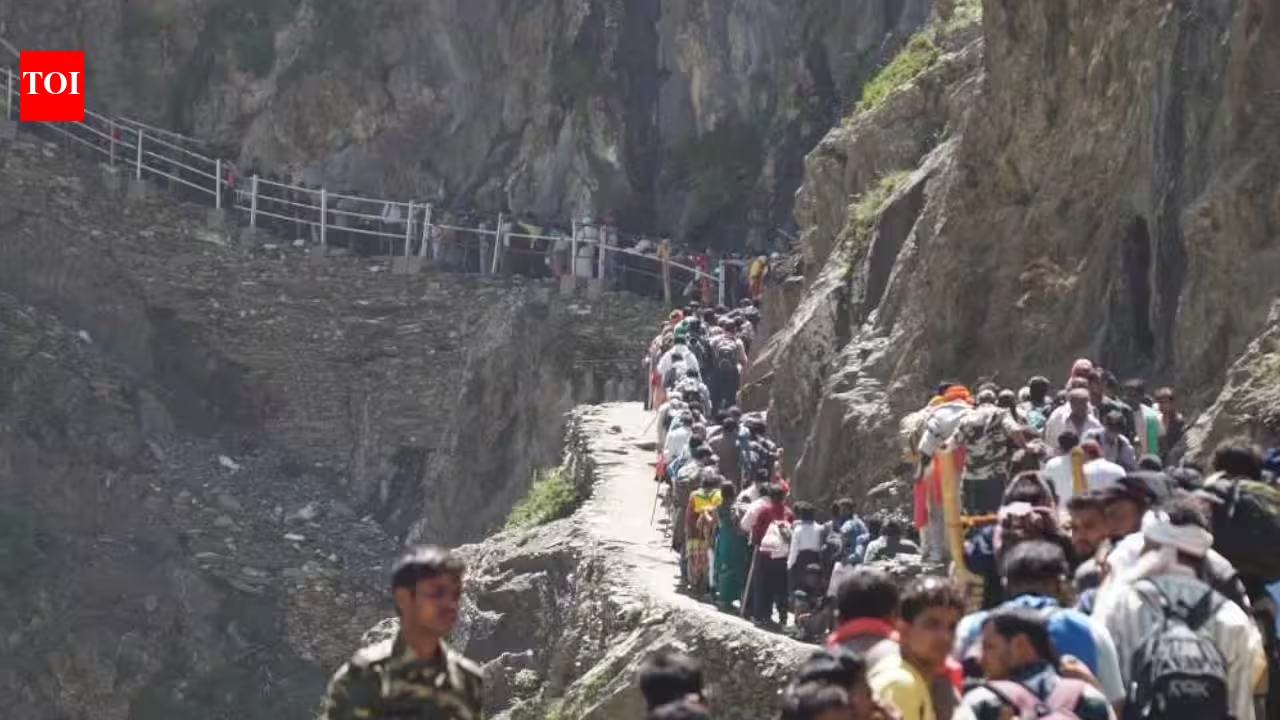
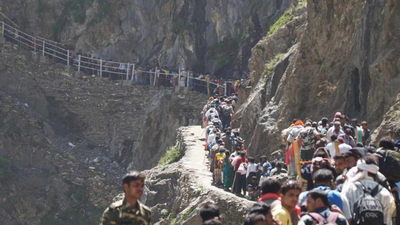
MUMBAI: India’s spiritual tourism boom is drawing travellers of all ages, but one trend stands out this year’s Amarnath Yatra. A growing number of women are choosing to undertake the Amarnath Yatra solo, a pilgrimage long associated with organised groups and family travel. Solo women made up 17.64% of Amarnath bookings this year, which was nearly four times the share of solo men at 4.43%, with Mumbai, Delhi and Bengaluru emerging as the top source cities, according to data shared by an online travel company.The share of solo women travellers has risen from 15.13% in 2025 to 17.64% this year. Bookings by women travelling alone also grew 20% year-on-year, compared with a 6.4% increase among solo male travellers, indicating a faster rise in women undertaking the pilgrimage independently, said Cleartrip.The Amarnath Yatra also drove strong growth across other travel segments. Hotel bookings for the pilgrimage increased 22% from a year earlier, while bus bookings more than doubled, rising 104%, reflecting strong demand for onward travel to the shrine, it said. he Amarnath Yatra is one of Hinduism’s most demanding annual pilgrimages, undertaken to the Amarnath cave shrine in Jammu and Kashmir, which houses a naturally formed ice stalagmite revered as a Shivling. Held each year during the Hindu month of Shravan, typically from late June or early July to August. Pilgrims reach the cave via the traditional 48-km Pahalgam route or the shorter but steeper 14-km Baltal route, both of which involve trekking at altitudes of up to about 3,900 metres. But participation is regulated through mandatory advance registration, with devotees required to obtain a compulsory health certificate from authorised medical institutions because of the high altitude and physically strenuous terrain. Daily pilgrim numbers on each route are capped by the shrine board for safety, crowd management and environmental reasons, while security arrangements are extensive given the region’s terrain and history of militant attacks. Helicopter services are available up to designated points on the route, but the final stretch to the cave must be covered on foot or by pony, palanquin or palki. The trend of solo women travelling to Amaranth in increasing numbers comes amid robust growth in religious tourism across the country, with pilgrimage destinations recording some of the strongest booking gains this year.The Char Dham Yatra circuit was another major driver. Haridwar, one of its main gateway cities, recorded a 161% jump in hotel bookings and a 203% rise in bus bookings, while bus bookings to Rishikesh increased 113%. Train bookings on Char Dham routes also rose sharply, with travellers originating largely from Bengaluru, Mumbai, Hyderabad, Delhi, Pune, Kolkata, Chennai and Ahmedabad. Festival-driven travel also boosted demand across several destinations. Puri, which hosts the annual Jagannath Rath Yatra and Bahuda Yatra, recorded more than 200% growth in hotel bookings. Mathura saw hotel bookings rise 196%, while Varanasi recorded 161% growth during the holy month of Sawan and the Kanwar Yatra.Destinations with year-round religious significance also witnessed sustained demand. Prayagraj, Ayodhya, Haridwar, Udupi, Thanjavur, Thrissur, Gokarna and Tirupati all posted triple-digit growth in hotel and bus bookings. Budget accommodation remained the preferred choice among pilgrims, with bookings for budget hotels rising 386% year-on-year, followed by mid-range hotels, which grew 164%, according to Cleartrip.

‘Even Shivaji was called Chuha by Mughals’: Uddhav Thackeray on ‘cockroach’ jibe at NEET protesters | Mumbai News

'Even Shivaji was called Chuha by Mughals': Uddhav Thackeray on 'cockroach' jibe at NEET protesters
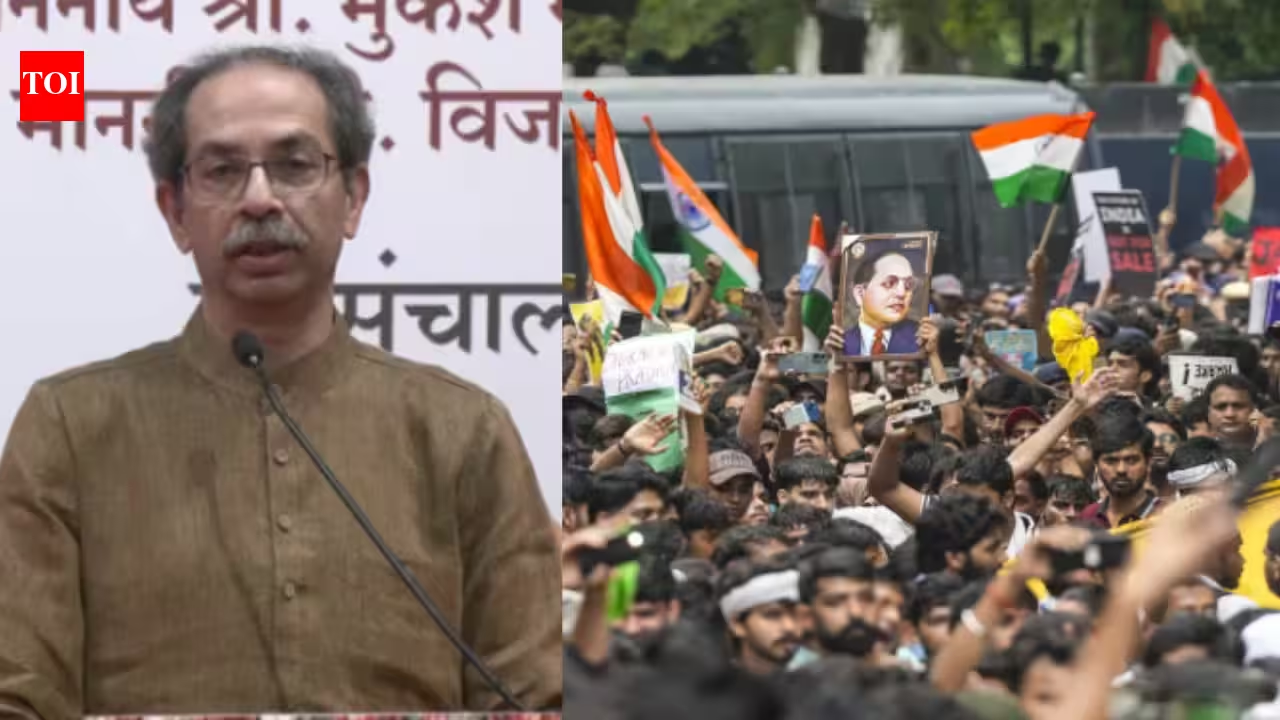
Shiv Sena (UBT) chief Uddhav Thackeray strongly condemned the labelling and heavy-handed targeting of young student protesters

MUMBAI: Shiv Sena (UBT) chief Uddhav Thackeray on Thursday condemned the branding of young student protesters as “cockroaches”, saying history has repeatedly shown how those in power sought to belittle dissent.Drawing a parallel with Chhatrapati Shivaji Maharaj, he recalled that the Maratha king was once referred to as a “rat” by the Mughals, and questioned the targeting of teenage protesters.Addressing the book launch event of Shiv Sena (UBT) spokesperson Harshal Pradhan, Thackeray said the protesters being labelled “cockroaches” were only 16-17 years old.“Yuva Shakti has shown that democracy has lost. Today, if a stone is lifted for the right of justice, the person is called a terrorist. Those referred to as cockroaches were aged 16-17 years. Even Shivaji Maharaj was called Chuha (rat) by the Mughals. You call today’s youth cockroaches! The young girl who stopped the police car is being trolled by the fanatics.”Commenting on the proposed Constitution (131st Amendment) Bill, 2026, Thackeray said the government’s priority should be creating jobs for young people instead of expanding Parliament.“Instead of increasing the number of MPs, it would be better to provide more employment opportunities for these young people. If employment opportunities are increased, you won’t even need to limit MPs; people would happily carry these very same youths on their heads,” he said.The Shiv Sena (UBT) chief also said that if his father, Balasaheb Thackeray, were alive today, the present dispensation would have branded him “anti-Hindu”.“It takes courage to publish a book on the Thackeray family. If Balasaheb Thackeray were there today, he too would have been called anti-Hindu. Religion does not make a man. I can show the words of Balasaheb Thackeray in many speeches that ‘humanity is religion’.”Questioning those who invoke religion for political purposes, Thackeray said:The Shiv Sena (UBT) leader further questioned the moral authority of those who weaponise religion for political dominance, “Don’t you feel ashamed to loot the temple of that very Rama in whose name you gained power?”(With ANI inputs)

NEET (UG) score ‘not as expected’, student moves Bombay high court | Mumbai News

NEET (UG) score 'not as expected', student moves Bombay high court
An individual has sought intervention from the Bombay High Court, requesting a correction to her NEET UG marksheet

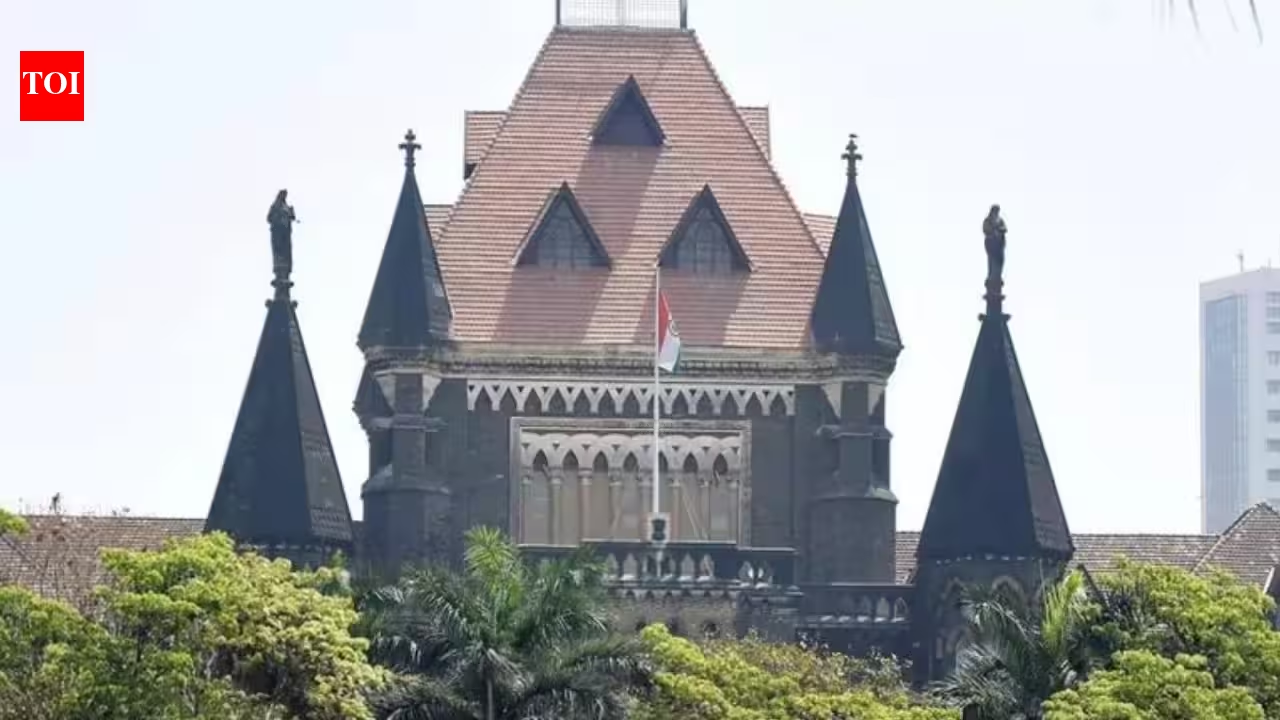
MUMBAI: In what she believes is the first such petition before the Bombay high court principal bench, after the NEET UG 2026-driven protests, an aspirant, on Wednesday, sought rectification of her marksheet.The 18-year-old candidate said she appeared for the National Eligibility-cum-Entrance Test (Undergraduate) and scored only 340 marks when she “ought to have obtained 410.”When her representations via five emails to NTA (National Testing Agency) from July 17 elicited no reply, the candidate moved the high court as she said her counselling rounds, which are time-sensitive, have been scheduled.The HC division bench of Justices Riyaz Chagla and Farhan Dubash posted the matter for hearing later this week, and sought the NTA’s response after hearing her advocate Vivek Arote.The petition says she completed her Secondary School in 2023 and HSC in 2025 with 74%, aspiring to study medicine.She appeared for the National Eligibility-cum-Entrance Test (Undergraduate) on June 21 and, on July 13, on seeing the answer key, she figured her score to be 410.The result announced on July 25, she said, came as a setback. Aggrieved, she sought a correction.With time running out and the admission process underway, she wants the HC to decide whether the NTA that conducts the exam is required to be directed to reassess her answersheet so her scores may stand corrected.The student says she desires to get admission into BDS (Bachelor of Dental Surgery).

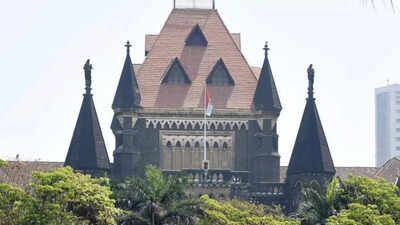
BMC to hold third-party probe into Chembur tree crash death | Mumbai News

BMC to hold third-party probe into Chembur tree crash death

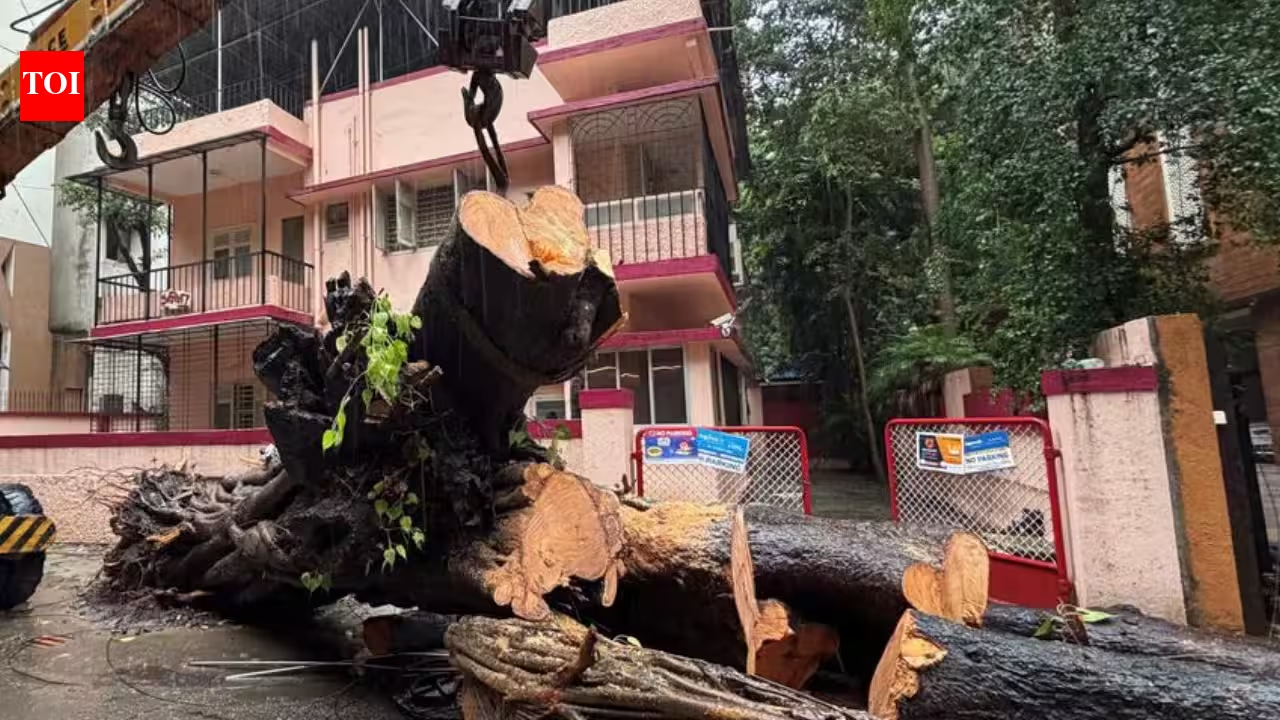
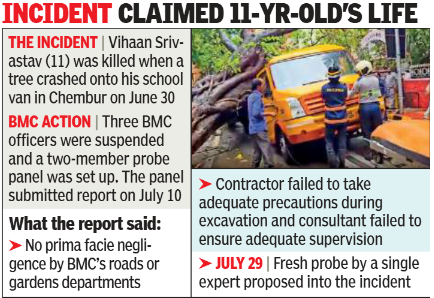
MUMBAI: Following the political outcry over the BMC inquiry report into the death of 11-year-old Vihaan Srivastava in a tree crash last month, which absolved its garden and roads department officials of any wrongdoing, the civic body has decided to set up a third-party inquiry into the incident.On June 30, Vihaan Srivastav died in Chembur after a tree crashed onto the school bus he was travelling in. The inquiry ordered by the municipal commissioner found no prima facie negligence by BMC’s roads or gardens departments. It found that the contractor allegedly failed to take adequate precautions during excavation and the consultant allegedly failed to ensure adequate supervision.

Incident claimed 11-year-old's life

Incident claimed 11-year-old’s life

The fresh inquiry will be conducted by a single expert not attached to the BMC, to avoid any kind of difference of opinion with multiple experts being put on the panel.On July 16, during a BMC meeting, Mumbai mayor Ritu Tawde expressed dissatisfaction with the inquiry report, saying the findings did not go far enough in fixing accountability. Leader of the House Ganesh Khankar, too, slammed the report and tore it during the ongoing meeting to show his disappointment. When no fresh inquiry was announced, Ashraf Azmi, Congress leader in the BMC, said it was surprising that the administration wasn’t paying heed even to the demands made by the ruling party.The BMC officials said that there wasn’t any delay in setting up the fresh inquiry and that they were instead looking for a senior-level expert in the field.The boy’s father, Gaurav Srivastava, told TOI that they are keen that a fresh inquiry be conducted into the incident. “Despite the demand for a re-inquiry, we did not hear anything. We were hopeful that the administration would look into it as we were not satisfied with the earlier report,” he said.Mayor Tawde said that the BMC administration has already suspended three officers in this matter. “No suspension has been revoked, and we will not stay silent till the time an impartial inquiry is conducted into this matter,” she said.

‘Should’ve come after warnings, discussions’: Mumbai restaurants after FDA suspends licenses | Mumbai News

'Should’ve come after warnings, discussions': Mumbai restaurants after FDA suspends licenses
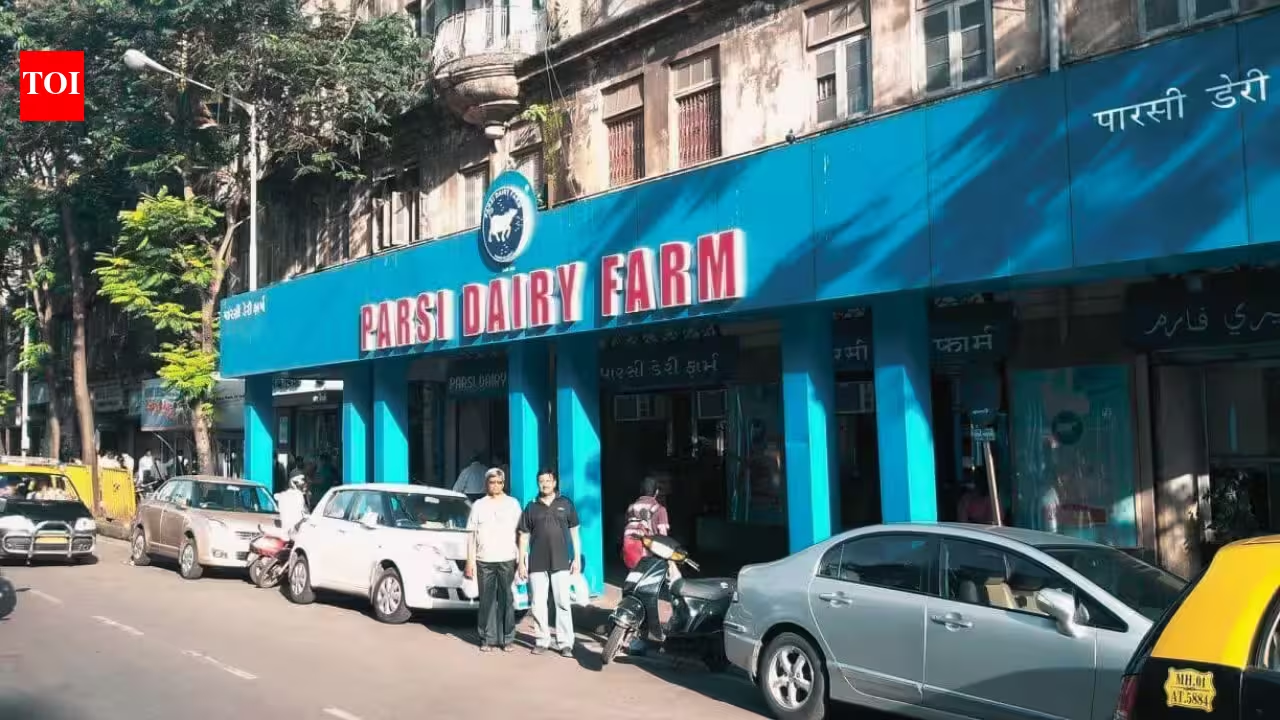
Some, like the Parsi Dairy Farm in Marine Lines, reopened only on Tuesday after another round of inspection was carried out by the area’s food safety team.

MUMBAI: Following back-to-back inspection of food establishments by the FDA, which has been on a licence suspension spree across the city’s restaurant landscape, eateries are finding themselves racing to fix violations and file appeals within 15 days in order to reopen.Many of their workers have been sent back to their villages as business remains shut.There are about 82 appeal applications across the state so far, with half of them originating in the city.Assistant commissioner (food) Santosh Kamble said that after paperwork is submitted, an FDA team conducts a physical verification.“If the compliance is not as required, we ask them to rectify the remaining issues and then allot them a revised date,” he said.Some, like the Parsi Dairy Farm in Marine Lines, reopened only on Tuesday after another round of inspection was carried out by the area’s food safety team.The outlet had faced issues like fungal growth on walls, the storage of raw materials directly on the floor, and pest and rodent infestations. A representative said compliance reports have been submitted regarding all violations and that fixes have been made.Bristol Bakery in Mahim, a sister outlet of Jimmy Boy, reopened on Wednesday after days of renovation work. A person closely associated with the outlet said they have addressed structural issues such as broken tiles, and pest control has been conducted again.The person said that at the time of the inspection, issues such as flour on the floor were pointed out without considering that it is bound to happen around machinery.“All of the inspections are a positive move on the part of the FDA. We only wish they had held talks with us first, because this is very sudden. Most of us conduct monthly repairs and checks, with major repairs done annually.For years, there was very limited interaction, and now suddenly they are in full force,” the person said.FDA commissioner Tukaram Mundhe said that in the early days after he took over, meetings were held with the Indian Hotel & Restaurant Association and similar organisations.“We provided them with all the instructions. They are well aware that certain standards need to be implemented, which have been in force since 2011,” he said.Bhendi Bazaar’s Shalimar restaurant still remains shut a week after its suspension, undergoing extensive renovation work.Its neighbour, Noor Mohammadi, remains closed, but one of its representatives said the kitchen is getting a complete makeover.“We wish they had given us a notice. We have already filed an appeal and have told them we will take some time,” he said.