

Maharashtra releases first list of 553 beneficiaries under farm loan waiver scheme | Mumbai News

Maharashtra releases first list of 553 beneficiaries under farm loan waiver scheme
Cooperation minister Balasaheb Patil said that after the scheme was expanded during the recent state assembly session, the total amount for the loan waiver has gone up from Rs 36,585 crore to Rs 40,980 crore.

Mumbai: The state government announced its first list of 553 beneficiaries from the total of 56 lakh farmers earmarked for the Punyashlok Ahilyadevi Holkar Shetkari Karjmukti Yojana loan waiver scheme to coincide with the 67th birth anniversary of late deputy chief minister Ajit Pawar on Wednesday.Cooperation minister Balasaheb Patil stated that after the scheme was expanded during the recent state assembly session, the total amount for the loan waiver has gone up from Rs 36,585 crore to Rs 40,980 crore.“The implementation of the scheme has begun. We will announce the list in phases after receiving details from the income-tax department since farmers who can pay tax are excluded from the scheme,” said Patil. The beneficiaries are from seven districts including Thane (182), Amravati (58), Latur (133), Nagpur (16) and Pune (85).The total beneficiaries earmarked for the scheme are 56 lakh. The original budget for the scheme was Rs 36, 585 crore. However, during the recent session of the state assembly, the government increased the loan limit for beneficiaries of the 2019 waiver who qualified to the current waiver, from Rs 50,000 to Rs 2 lakh. As a result, the budget for the scheme rose by Rs 4,395 crore. Hence, the total amount for the loan waiver has gone up from Rs 36,585 crores to Rs 40,980 crores, Patil said.Each beneficiary will be given a unique number and will have to authenticate their Aadhaar number based on that number. The facility has been made available through about 32,00 Aaple Sarkar Seva Kendras in the state. However , before that, the farmers will have to register on Agristack. After the Aadhaar authentication is completed, the benefit amount will be directly deposited in the loan account of the eligible beneficiaries through DBT.The state had declared the loan waiver on June 2, and it was among the key promises on Mahayuti’s manifesto before the 2024 assembly polls. It covers short term crop loans taken between April 1, 2019, and March 31, 2025. It has three components: a debt waiver, one-time settlement and incentive benefits for those who regularly service their loans.In the recent monsoon session of the state assembly, the state cabinet had expanded the scope of the scheme. It raised the cap of Rs 50,000 for farmers who had benefited from the 2019 loan waiver to Rs 2 lakh. It also decided to permit incentive payments for farmers even if they had not repaid loans regularly in 2026-27, if they had made regular payments in two out of three previous years.
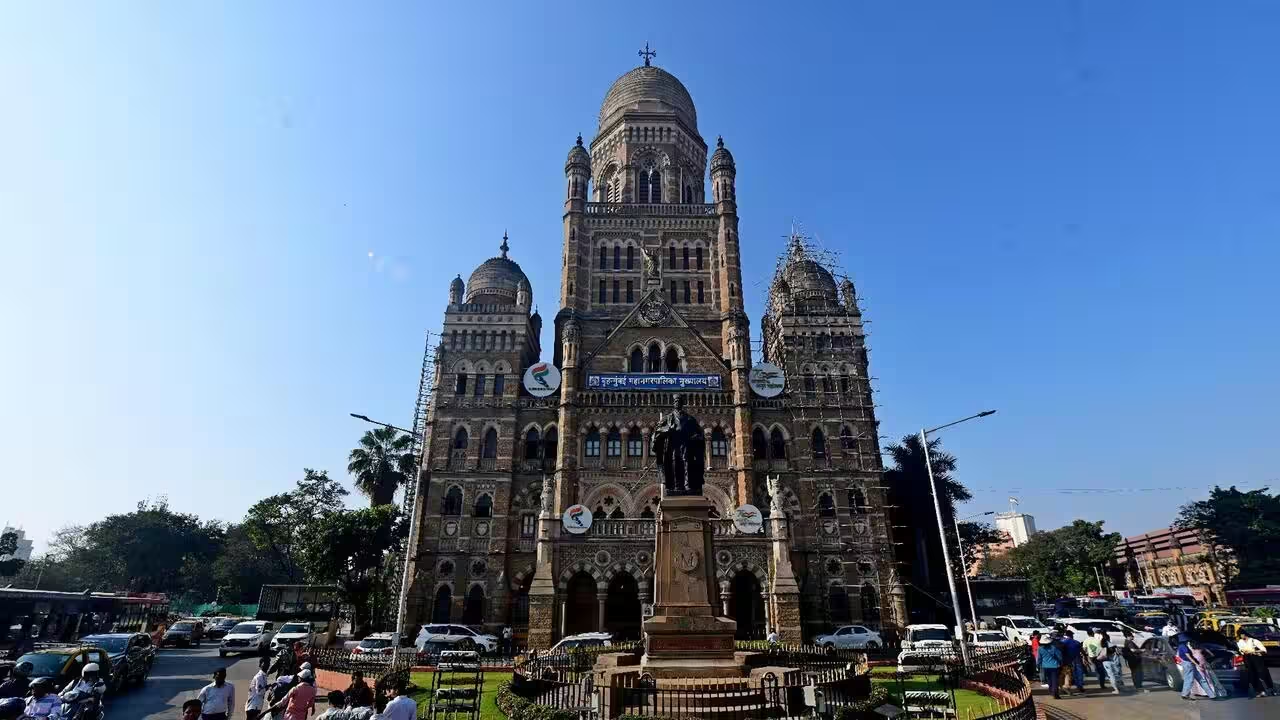

BMC plans AI-powered diagnostics, smart OPDs, and online bed allocation to overhaul civic healthcare in Mumbai | Mumbai News

BMC plans AI-powered diagnostics, smart OPDs, and online bed allocation to overhaul civic healthcare in Mumbai
The reforms were recently reviewed by BMC commissioner Ashwini Bhide at a meeting of senior health officials

Mumbai: The BMC has drawn up a three-phase roadmap to modernise its public healthcare system, with plans to introduce AI-powered diagnostic services, smart outpatient departments (OPDs), online hospital bed allocation and 24×7 dispensaries.The reforms were recently reviewed by BMC commissioner Ashwini Bhide at a meeting of senior health officials.In the first phase, the BMC plans to introduce smart digital OPDs to reduce waiting time, strengthen the hospital management information system and launch a central dashboard to monitor hospital services. A drive to fill vacant medical posts will be carried out even as insurance help desks will be set up in major civic hospitals.In the second phase, BMC will start a pilot online bed allocation system that will allow patients on waiting lists to be allotted vacant beds across civic hospitals. Pilot 24×7 dispensaries will also be started in each municipal ward. Artificial intelligence will be introduced in radiology, pathology and hospital resource management, while hospital staff will undergo training in soft skills, medical ethics and patient care. The BMC also plans to explore public-private partnerships to provide financial assistance of up to 50% to needy patients.The third phase will focus on developing quality standards through NABH accreditation, national and international quality certifications, disability-friendly healthcare facilities and wider adoption of digital health services.

Suspension hasty, says Bombay high court; BMC medical officer reinstated | Mumbai News

Suspension hasty, says Bombay high court; BMC medical officer reinstated
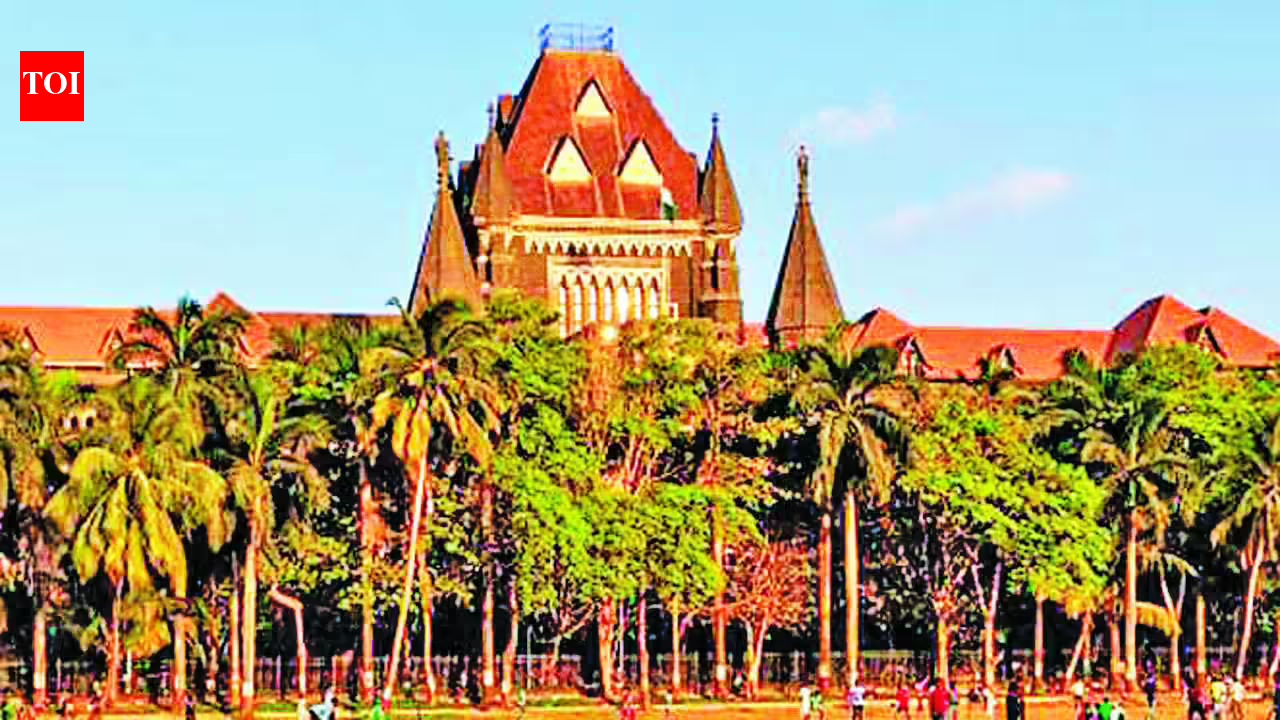
The Bombay high court held that BMC’s May 7 suspension order was passed without following mandatory procedure under Brihanmumbai Municipal Corporation Service Rules, 2015

Mumbai: Bombay high court has quashed and set aside BMC’s suspension of a medical officer over alleged irregularities in birth certificates, observing that he was hastily suspended.Acting Chief Justice Ravindra Ghuge and Justice Gautam Ankhad, in the July 14 verdict, also stated that Dr Shailendra Gujar’s advocate Uday Warunjikar “could be well-placed in his submissions that because a former Parliamentarian proclaimed the suspension of the petitioner on May 2, the Corporation was driven to act in undue haste”. The bench was referring to former MP Kirit Somaiya.The bench held that BMC’s May 7 suspension order was passed without following mandatory procedure under Brihanmumbai Municipal Corporation Service Rules, 2015. They directed Dr Gujar’s reinstatement in service with full salary during the suspension period.Dr Gujar’s petition said he was posted in L ward upto April 4, 2025, and thereafter transferred to H-East ward dispensary. While Somaiya had alleged irregularities in 87,000 birth certificates, in the Jan 10 FIR by Kurla police, there were neither any allegations against him nor was he named an accused. On May 2, Somaiya wrote to Azad Maidan police mentioning that Dr Gujar has been suspended. On May 7, BMC suspended him with retrospective effect from May 4 “in the backdrop” of Somaiya’s claim.BMC’s advocate Pooja Khandeparkar said the May 7 order was issued under Rule 4 A (suspension) and that Rule 4 (B) (preliminary enquiry) was not applicable. Refusing to accept that Rule 4 (A) is a stand-alone provision, the judges said while it gives power to suspend an employee pending disciplinary proceedings, Rule 4 (B) defines the manner in which such suspension could be effected. Both rules are “binding” on the BMC.The judges said “it is apparent from the sequence of events that an undue haste has driven” the BMC to suspend Dr Gujar on May 7. Referring to Warunjikar’s submission on Somaiya, they noted that Dr Gujar was suspended after a first chargesheet and preliminary enquiry (PE) for minor punishment was dropped on March 9, and approval was given for imposing major punishment requiring a full-fledged departmental enquiry. Dr Gujar was issued a fresh chargesheet on April 28. However, the record revealed no PE was conducted. While partly allowing Dr Gujar’s petition, the judges said the BMC can commence PE, “if the new chargesheet is to be taken to a logical end.”

After 10 surgeries in 18yrs, Kalyan teen hopes to finally hear the world more clearly | Mumbai News

After 10 surgeries in 18yrs, Kalyan teen hopes to finally hear the world more clearly
Unlike a conventional hearing aid, the Osia 3 system transmits sound through bone vibrations directly to the inner ear, bypassing damaged portions of the outer and middle ear.

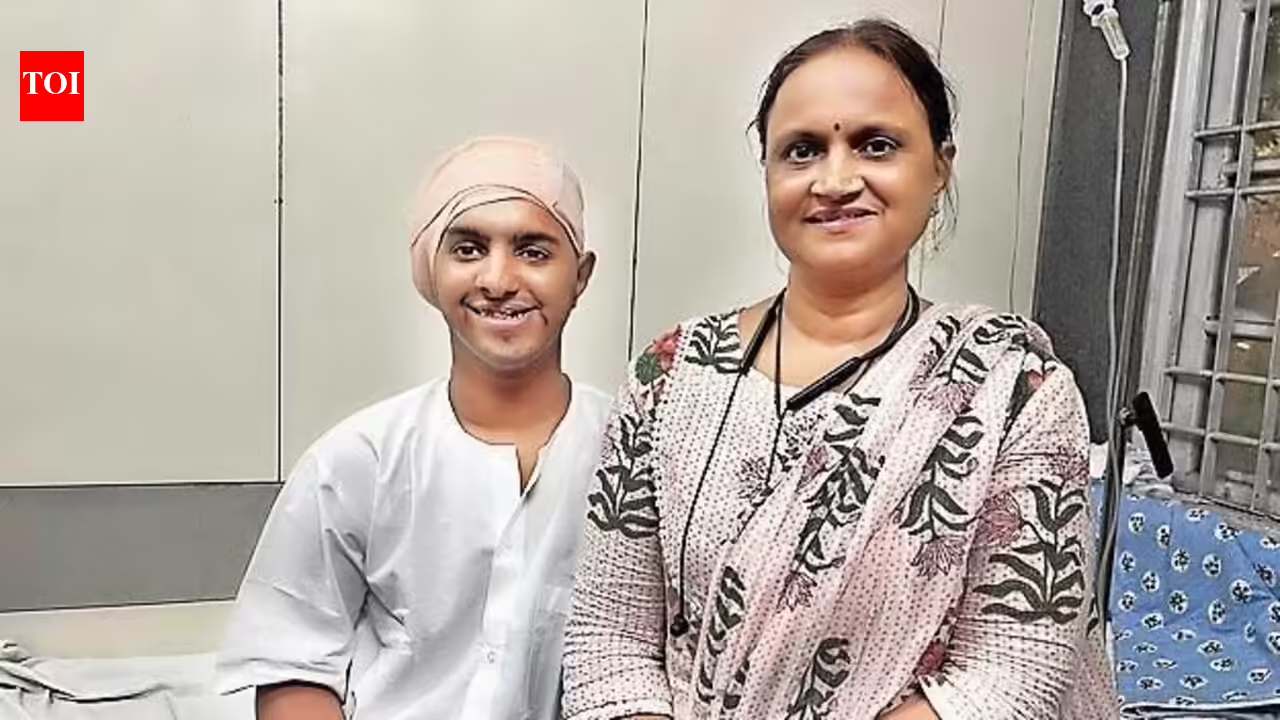
Mumbai: Family holidays have never been a part of the Pareeks’ lives. Every year or so, plans would instead revolve around hospital admissions, surgery dates and recovery.Since he was a month old, 18-year-old Gaurav Pareek from Kalyan has undergone 10 operations to treat a series of congenital anomalies. His first surgery for a hernia was followed by repairs of a cleft lip and palate, repeated operations on both ears and years of living with hearing loss. On Sunday came a milestone — one his family hopes will change his future.Doctors at BMC-run KEM Hospital in Parel implanted an advanced bone-conduction hearing device in Gaurav’s right ear, a procedure expected to improve his hearing when it’s switched on three weeks from now.“We have never been able to take a family vacation because every 12 to 18 months, Gaurav would have another surgery scheduled,” said his mother, Anju Pareek.Despite spending much of his childhood in hospitals, Gaurav has excelled academically; he is pursuing a course in finance at a Matunga college. “He has been good at sports too, and makes friends easily,” said his mother.The implant, which costs over Rs 8 lakh for one ear, was funded through donations mobilised by KEM Hospital. His nine other operations were done at a subsidised cost at Wadia Hospital, Parel. “He is now an adult, so we came to KEM Hospital where, hopefully, the last operation to fix his chin will be taken up next,” said his mother.For KEM Hospital, Sunday’s surgery was significant not only because of the technology involved but also because it was broadcast live to ENT specialists across the country as part of a teaching programme.ENT department head Dr Hetal Marfatia said the implant is particularly beneficial for patients like Gaurav, whose congenital abnormalities affected the Eustachian tubes. Unlike a conventional hearing aid, the Osia 3 system transmits sound through bone vibrations directly to the inner ear, bypassing damaged portions of the outer and middle ear.KEM dean Dr Harish Pathak said, “It’s a matter of immense satisfaction that such cutting-edge technology is now available at KEM Hospital, making advanced hearing rehabilitation accessible within the municipal healthcare system.”

500 people join MNS protest over fatal Chembur tree crash | Mumbai News

500 people join MNS protest over fatal Chembur tree crash

Mumbai: Around 500 people participated in a protest led by Maharashtra Navnirman Sena (MNS) at Azad Maidan on Wednesday, demanding a fair probe into the tree crash incident at Chembur that killed 11-year-old student Vihaan Srivastav on June 30. The huge tree had fallen on Vihaan’s school bus in Chembur. The civic report on the crash came under severe attack in the BMC House, with corporators across party lines asking why officials and contractors had largely escaped responsibility in the case of a child’s death.The protesters also demanded the resignation of the BMC garden department superintendent. MNS’s Sandeep Deshpande said, “Our protest was against the system. Someone should be accountable for it. A neutral committee should be appointed to probe the incident.” He added that they also met BMC commissioner Ashwini Bhide and told her about the discrepancies in the report and lapses in the administrative work.

Mayor’s Medical Assistance Fund Cell begins operations at BMC HQ | Mumbai News

Mayor’s Medical Assistance Fund Cell begins operations at BMC HQ

Mumbai: To ensure medical assistance to patients facing serious illnesses, and to bring speed and transparency to the process, a Mayor’s medical assistance fund cell, on the lines of the Chief Minister’s Medical Assistance Cell, has been made operational at the BMC headquarters on Wednesday. On the occasion, cheques from the Mayor’s medical assistance fund were also handed over to relatives of a total of 10 patients.BJP MLA Amit Satam also handed over a cheque of Rs 25,000 as a donation to the Mayor’s Assistance Fund to Mayor Ritu Tawde. Assistance of up to Rs 25,000 will be provided from the Mayor’s Fund to patients as well as persons in various emergencies. The cell will review the applications of eligible patients, and upon approval, will pay the required financial assistance for their treatment by cheque to the concerned hospital. Efforts will be made to assist, as far as possible, within one week. Assistance will be made available to eligible patients for treatment of cancer, heart disease, liver, brain, critical surgeries for children, as well as other serious illnesses.

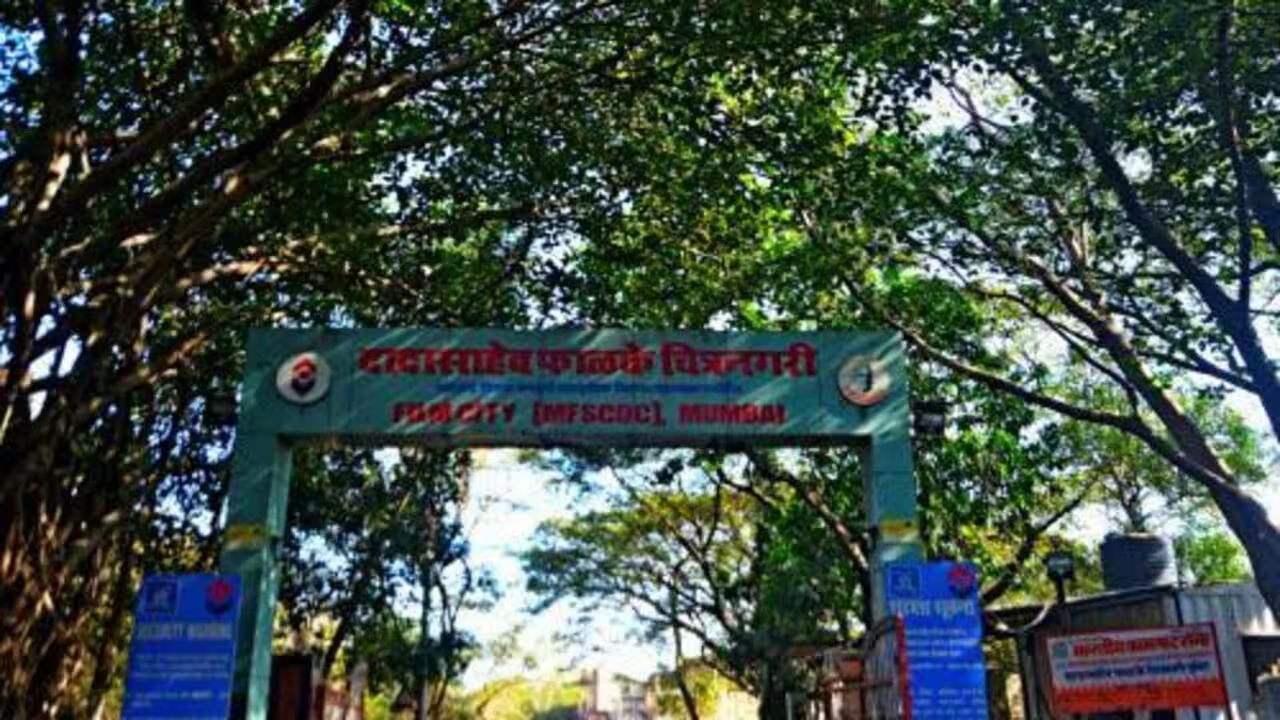
Mumbai’s Film City to be redeveloped | Mumbai News

Mumbai’s Film City to be redeveloped
A draft master plan for the redevelopment of the 521-acre Film City at Goregaon was submitted to the state government on Wednesday

Mumbai: Film City is set to be overhauled. The Dadasaheb Phalke Chitranagari managing director Swati Mhase-Patil on Wednesday submitted to the government a draft master plan for the redevelopment of the 521-acre film shooting zone at Goregaon. A draft of the new film policy was also submitted.Film City currently comprises 16 indoor studios and 40 outdoor shooting locations. The redevelopment master plan has been prepared with the objective of providing world-class infrastructure to Maharashtra’s film, television, OTT and digital content industries, while incorporating all modern facilities required by filmmakers, said state culture minister Ashish Shelar. The film policy focuses on providing incentives and support to the film sector, he added.Shelar said the draft policy would be examined in detail and in consultation with the chief minister and deputy chief ministers it would be finalised and placed for approval before the cabinet.He said the redevelopment of Film City would create world-class, technology-driven production hubs, boosting domestic and international filmmaking while giving a major push to employment, investment and film tourism in the state.

Woman kills husband after quarrel over sarees, tries to pass off murder as heart attack | Mumbai News

Woman kills husband after quarrel over sarees, tries to pass off murder as heart attack

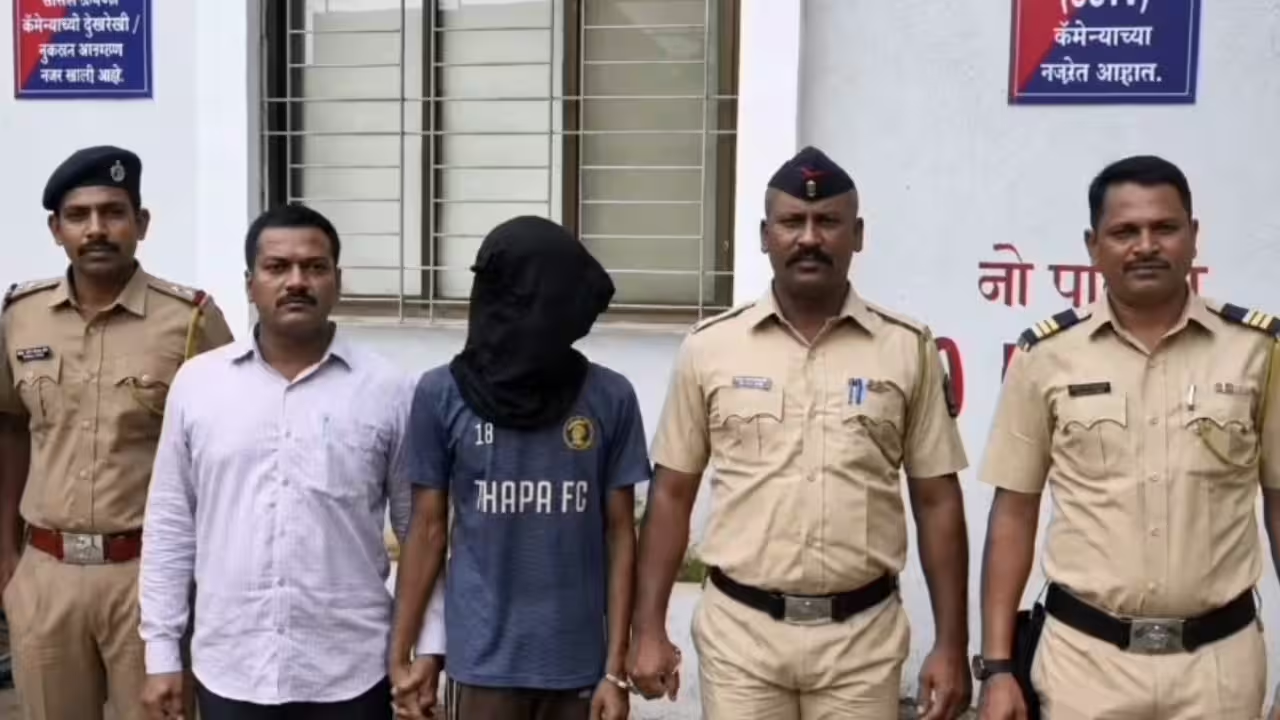
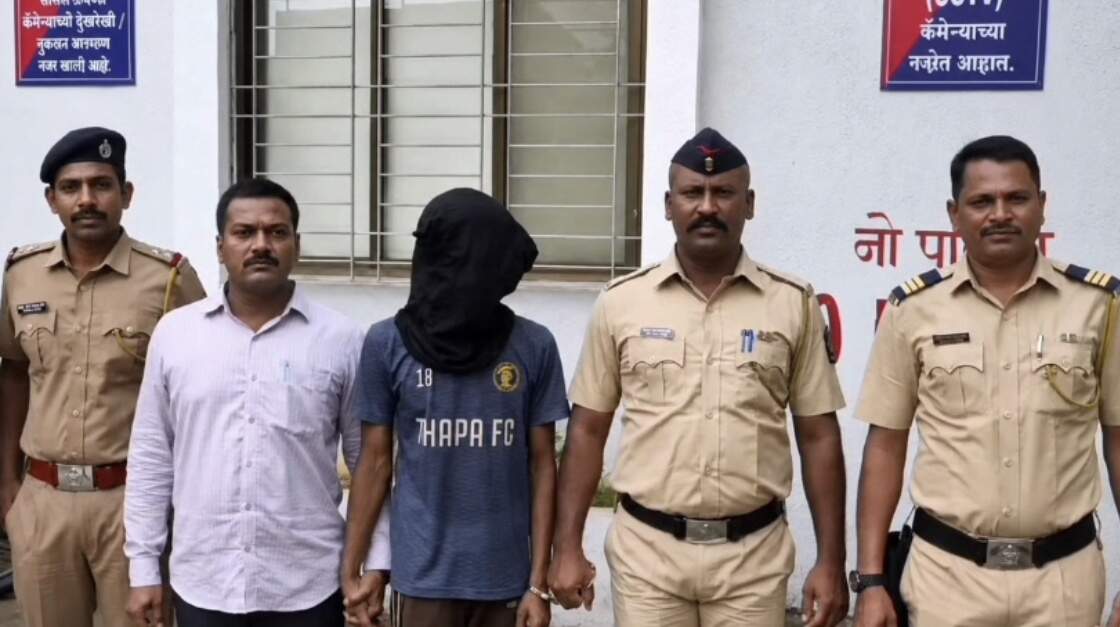
Thane: A domestic dispute over a saree allegedly ended in a murder in Badlapur East, where a 30-year-old woman was arrested for allegedly killing her husband with a pressure cooker lid before strangling him to death and attempting to pass off the crime as a heart attack.The accused, Sunita Hariram Singh, 30, was arrested after police uncovered contradictions in her statement during the investigation. The victim, Hariram Kishunji Singh, 35, died at the couple’s rented house on July 19.Police said the couple, natives of Rohtas district in Bihar, had been living in Badlapur for the past nine years with their seven-year-old son.According to investigators, the couple frequently argued over domestic issues. On the day of the incident, an argument broke out after Hariram allegedly failed to bring sarees for his wife. The verbal altercation soon escalated into a violent confrontation.During the quarrel, the couple’s seven-year-old son ran to the house owner seeking help after witnessing the fight. However, before anyone could intervene, Sunita allegedly struck her husband on the head with the lid of a pressure cooker and then strangled him, police said.To cover up the crime, she allegedly told the house owner that Hariram suffered a heart attack following the argument. Based on her claim, police initially registered an accidental death report (ADR).However, a post-mortem examination revealed multiple injuries that were inconsistent with a natural death, prompting investigators to probe further.“Initially, the accused claimed that her husband died of a heart attack after a domestic quarrel. The autopsy, however, confirmed homicidal death. We subsequently registered a murder case, and during interrogation, she confessed to the crime,” said Nitin Patil, senior police inspector of Badlapur East police station.Police have booked Sunita under relevant provisions of the Bharatiya Nyaya Sanhita, while the couple’s seven-year-old son is currently in the care of relatives. Further investigation is underway. — Pradeep Gupta

Study reveals hidden pollution from diesel generators may be posing bigger health risk than thought | Mumbai News

Study reveals hidden pollution from diesel generators may be posing bigger health risk than thought
Diesel generators pose greater air pollution risks than previously understood (Representative image)

MUMBAI: Diesel generator (DG) sets, relied upon by millions of homes, housing societies, hospitals, offices, industries and construction sites during power outages, could be contributing far more to urban air pollution and public health risks than previously recognised, according to a new study by researchers from Shiv Nadar University.The study, published in the peer-reviewed journal Emission Control Science and Technology, found that stationary diesel generators emit large quantities of ultrafine and submicron particles laden with toxic carbon compounds that can penetrate deep into the lungs, potentially increasing the risk of respiratory illnesses, cardiovascular diseases and even cancer.The findings assume significance for cities such as Mumbai, where diesel generators are widely used in high-rise residential complexes, commercial buildings, hospitals, malls, hotels and infrastructure projects as backup power sources.Led by Prof Sailesh Narayan Behera of the School of Engineering, Shiv Nadar University, the researchers said stationary diesel generators have remained a “hidden” source of pollution despite extensive attention on vehicle emissions, industries and construction dust.“While diesel generators help bridge gaps in electricity supply, their hidden health costs cannot be ignored. Understanding and addressing these emissions is essential if India is to balance energy reliability with public health and environmental sustainability,” Behera said.The research analysed emissions from a stationary diesel engine under six operating loads and characterised 24 trace elements and eight carbon fractions across 10 particle sizes ranging from 56 nanometres to 18 micrometres.It also assessed how these particles deposit within different regions of the human respiratory system using internationally accepted lung deposition models.One of the key findings was that emissions increased sharply as engine load rose.While organic carbon dominated at lower loads, elemental carbon, commonly known as soot or black carbon—became the dominant pollutant when generators operated under heavier demand.Most emissions were concentrated in the submicron size range, making them particularly hazardous because such particles can bypass the body’s natural defence mechanisms.The study found ultrafine particles were capable of reaching the deepest parts of the lungs, while increased engine loads significantly raised the respiratory deposition of particulate matter.Researchers warned that prolonged exposure could trigger pulmonary inflammation, reduce lung function and contribute to chronic respiratory and cardiovascular diseases.The particles may also enter the bloodstream and affect other organs, including the cardiovascular and nervous systems.According to the researchers, the groups most vulnerable to exposure include children, senior citizens, asthma and heart patients, generator operators, maintenance workers, construction labourers and residents living close to generator installations.The paper also points out that previous source apportionment studies by the Central Pollution Control Board had identified diesel power generators as a significant contributor to particulate pollution in major Indian cities, including Mumbai, Delhi, Chennai, Bengaluru, Pune and Kanpur.The researchers have urged policymakers to bring stationary diesel generators more firmly within air quality management frameworks by strengthening emission monitoring, tightening regulatory oversight and encouraging cleaner backup power technologies such as battery energy storage, gas-based systems and renewable-powered alternatives.For urban residents, the study suggests that while backup generators ensure uninterrupted electricity during outages, they may also expose nearby populations to invisible air pollutants with long-term health consequences.It recommends minimising unnecessary generator use, ensuring proper maintenance and locating DG sets away from occupied spaces wherever possible, while accelerating the transition to cleaner backup power systems.

Seven-year-old brutally assaulted by mother’s live-in partner dies in Mumbai | Mumbai News

Seven-year-old brutally assaulted by mother’s live-in partner dies in Mumbai

Ambernath: A seven-year-old boy, who was battling for life after allegedly being brutally assaulted by his mother’s live-in partner in Ambernath, died during treatment at Mumbai’s KEM Hospital, prompting police to register a murder case against the accused.The accused, Vikas Singh (25), has now been booked under charges of murder and taken into custody after the child’s death on Tuesday night.According to the FIR lodged by the victim’s 38-year-old mother Salma (name changed), she came in contact of Singh through one of her relatives and they both fell in love. Last month, on June 26, she separated from her husband and was living with Singh in Kalyan at his house in Ambernath along with her youngest son (7). Her two elder children stayed with their father. She worked at a private company in Ambernath, while the child remained at home during the day with Singh, who does odd jobs for a living.Investigators said Singh allegedly harboured resentment towards the boy because he slept beside his mother at night. The FIR states that the child had repeatedly complained that Singh beat him whenever his mother was away at work. The woman also alleged Singh would force the boy to sleep separately and had earlier threatened to kill him if he continued to come between them.According to the complaint, on July 17, the woman left for work around 9am after seeing her son asleep. Around 11.45am, Singh arrived at her workplace with the child and allegedly told her that he had beaten him. She noticed injury marks on the boy’s face and body, but Singh allegedly dismissed them as minor.Later that afternoon, the child’s condition deteriorated. He complained of severe pain in his stomach and private parts, and repeatedly told his mother that Singh had kicked him there. On examining him, she noticed swelling and immediately rushed him to Central Hospital in Ulhasnagar. As his condition worsened, he was shifted to Sion Hospital, and later referred to Mumbai’s KEM Hospital, where doctors admitted him to the Intensive Care Unit.Despite intensive medical treatment, the seven-year-old succumbed to his injuries.Senior police inspector Shabbir Sayyed of Ambernath Police station said that following the child’s death, they have added section of a murder in the case against Singh, who is already in police custody after victim’s mother lodge complaint with police.Police are awaiting the final post-mortem report and are continuing their investigation into the case. — Pradeep Gupta

6536e77c-005a-469f-b4d0-e7dd147d11f4_1000755973.jpg