


How Nandurbar is stopping sickle cell patients from falling through the cracks | Mumbai News
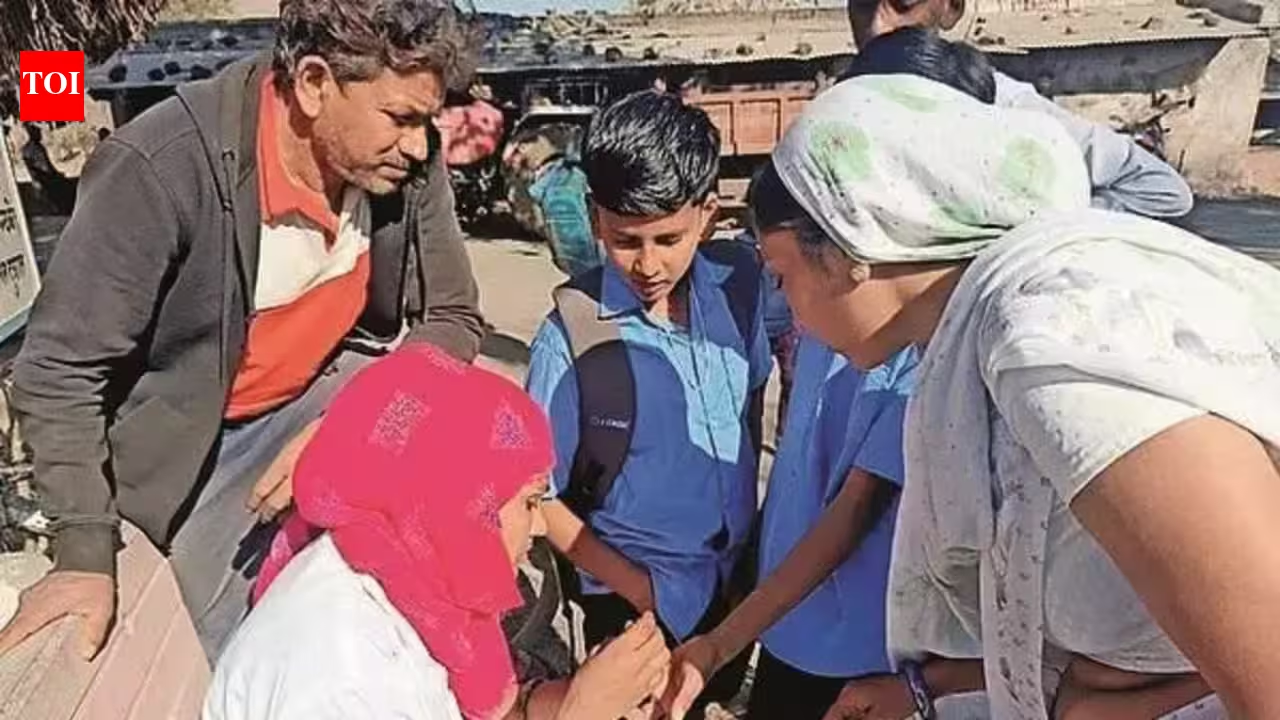
I remember the early days of our sickle cell work not through files or review meetings but through faces.I remember sitting in a tertiary hospital with parents trying to understand how an inherited blood disease they had never been warned about had entered their children’s lives so early, and so harshly. Many were healthy carriers themselves. They had done nothing wrong. They simply did not know. An elderly kaka told us that every few weeks, he left his kheti and travelled nearly 50km for hydroxyurea, a medicine that reduces the frequency and severity of sickle cell crises. A crisis takes over the body, the household and the family economy. On Sickle Cell Day last year, we invited patients to speak. A young woman, only 21, broke down describing how she tells her younger siblings, “Khud ka dhyaan rakho (take care of yourself). No one will come to save you.” It carried both courage and abandonment, and it made the administrative question clear. A public health system cannot wait for people in such circumstances to find their own way through diagnosis, treatment and support. The system has to move first. The National Sickle Cell Anaemia Elimination Mission has created an important mandate. In a high burden tribal district, the real test lies in what happens after screening. Does the patient get hydroxyurea near home? Is there a registry that lets the system remember the patient, instead of the patient having to keep chasing it? Nandurbar has screened nearly 5 lakh people. Trait prevalence here runs nearly 15-20%, against the roughly 10% programme design generally assumes, and disease prevalence is 1-1.5%. Those parents were never told what they were carrying. That is what wide early testing changes, and it matters as much for carriers as for patients. Two tests together made it possible. High performance liquid chromatography gives the fuller picture. Dried blood spot genetic testing, developed by Centre for Cellular and Molecular Biology, lets a frontline worker collect a sample through a finger prick and send it without cold chain, reaching habitations where waiting for people to travel to a lab would have taken years. It has also brought screening forward. The full newborn panel has to wait until the third day, when hormone levels settle enough to read reliably. Sickle cell alone can be caught from a dried blood spot on the first day, wherever the child is born.Diagnosis without treatment is a form of cruelty. Telling someone they have sickle cell disease and then sending them kilometres for medicine transfers the burden back to them. Nandurbar decentralised hydroxyurea to primary health centres, with support and training for doctors. The district also set up a sickle cell helpline unit that does not wait for patients to appear. It calls them, follows up on treatment, connects them to entitlements and builds trust. Disability certificates issued have gone from about 100 a year ago to around 1,500. Monthly sickle cell melas and support groups gave families a place to be tested and to see they were not alone. A Bhili and Pawri language playlist, made with an organisation that has run palliative care in these villages for years, carried stories of hope. Care cannot stay scattered across camp registers, test reports and hospital files. Nandurbar has begun using e-Suchi—its digital health directory—to map patients. Prevention comes next because sickle cell touches marriage, family anxiety and young people’ choices. Elimination is not a campaign but a continuum, and social security delivery and prevention at scale are still unfinished here. For an administration, the real question is not only how many were tested but also how many were found, counselled, treated, followed up and protected from falling through the cracks. That is where the promise of sickle cell elimination will finally be tested.(The writer is Nandurbar’s district collector)